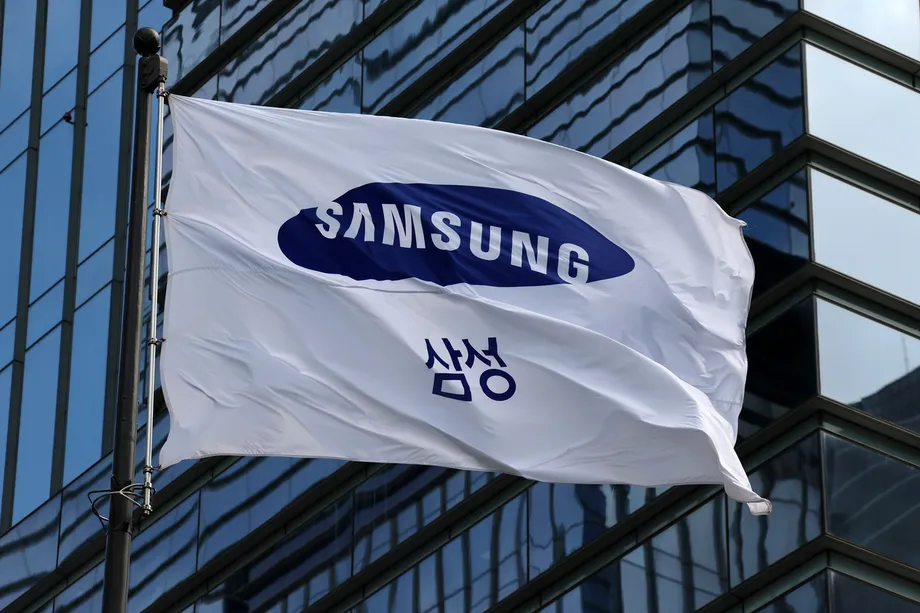
Thai Nguyen prepares for a larger role in Samsung's chip network
Samsung Electronics plans to invest VND105.79 trillion, about $4.08 billion, in memory chip testing facilities at Yen Binh Industrial Park in Thai Nguyen province, northern Vietnam. The first line is scheduled to begin operating in November 2027, followed by another in October 2028, according to details in the project's environmental permit proposal.
Contents
- Thai Nguyen prepares for a larger role in Samsung's chip network
- Why the investment figures range from $1.5 billion to $4.08 billion
- What the factory will actually do
- New machines and a schedule stretching into 2028
- AI demand connects conventional memory and advanced production
- A separate substrate expansion targets powerful processors
- The Vietnamese subsidiary's finances show the scale of the commitment
- Vietnam brings an established workforce, but shipping adds complexity
- Local suppliers will shape how much Vietnam gains
- Key Points
The plan combines new equipment, thousands of potential jobs and a substantial reliance on future profits. Samsung Vietnam Semiconductor expects to install 1,612 principal machines, all newly manufactured in South Korea, and could employ about 3,750 people when the factory reaches its maximum planned scale.
Vietnam would handle final testing of conventional DRAM and NAND flash memory, while Samsung keeps silicon wafer fabrication in South Korea and expands domestic capacity for more advanced products. Chips packaged at Samsung's Cheonan facility would travel to Vietnam for checks before shipment.
The investment sits alongside a separate Samsung Electro-Mechanics program to expand the substrates that connect powerful processors to circuit boards. Together, the affiliates plan semiconductor investments of 12.26 trillion won, approximately $9.15 billion, with nearly 8 trillion won directed to Vietnam.
Samsung's plans therefore give Thai Nguyen two distinct roles: checking memory chips and making components used in sophisticated chip packages. The projects have different funding structures, production schedules and customers, even though both are located at Yen Binh Industrial Park.
Why the investment figures range from $1.5 billion to $4.08 billion
Samsung's broader investment plan puts the memory testing project at VND105.79 trillion. An earlier proposal submitted to local authorities in April valued the initial factory at VND39 trillion, about $1.5 billion, and allowed for up to roughly $2.5 billion of profit reinvestment in a potential second factory. Another investment assessment put Samsung Electronics' commitment at 2.2 trillion won, about $1.6 billion.
The financing details help explain the different scales being described. The broader plan lists $100 million from the investor's own capital, $1.41 billion from Samsung subsidiaries and $2.57 billion from future reinvested earnings. The first two amounts total $1.51 billion, close to the initial factory's stated cost; adding the planned earnings contribution produces $4.08 billion.
Samsung expects reinvested profits to provide VND66.64 trillion, approximately 63% of the total. The remaining VND39.15 trillion accounts for about 37%. Future earnings therefore carry most of the financial burden, rather than the entire investment arriving as new capital at the outset.
The funding proposal lists no planned borrowing from financial institutions. Samsung Vietnam Semiconductor, the entity implementing the project, is owned by a Samsung legal entity in Singapore and has been included in Samsung Electronics' consolidated accounts.
The earlier proposal described reinvestment from project profits, if earned, while the broader plan refers to earnings from Samsung's Vietnamese operations. The amount and timing of that reinvestment will depend on business performance.
What the factory will actually do
DRAM is the fast, temporary memory a device uses while running programs. NAND flash stores files and other information even after power is switched off. Both appear in everyday products, including phones and computers, but they perform different jobs.
Samsung's Vietnamese facilities will test memory chips after packaging at Cheonan. Packaging protects the chip and provides the connections needed to use it in an electronic device. Testing then checks whether the finished component works reliably and identifies defective products before they reach customers.
Silicon wafer fabrication, the stage that creates electronic circuits on thin discs of silicon, will remain in South Korea. The Vietnamese equipment list also includes marking, visual inspection and packing systems associated with preparing tested products for shipment.
The proposed annual capacity is 153.3 billion gigabits of DRAM and 255.6 billion gigabits of NAND. Gigabits measure the amount of memory represented by the chips, rather than the number of individual chips. The two figures total 408.9 billion gigabits a year, with NAND accounting for about 62.5% of that planned capacity.
The plant is intended to focus on older generations of memory. Those products remain essential to many devices, even as chipmakers devote more resources to the advanced memory demanded by artificial intelligence systems.
New machines and a schedule stretching into 2028
Samsung's environmental permit proposal lists 712 DM1600 memory burn-in chambers, 136 Eagle8800 sorting machines, 332 T5833 testing machines and 332 STH5800 chip handlers. Together, those four categories account for the 1,612 principal machines.
Burn-in testing subjects memory chips to demanding operating conditions to help detect faults that could appear early in use. Handlers move chips through the testing process, while sorting equipment separates products according to the results. The factory's production equipment and environmental treatment systems are expected to weigh about 2,000 tonnes.
Vietnamese authorities approved the investment in March, and an environmental permit proposal was submitted in April. Construction had begun, with more than 200 Samsung engineers and staff reportedly working at the site by April. Samsung declined to comment when the initial project details became public, and the status of all required environmental permits was not confirmed.
The planned sequence is:
- March 2026: Vietnamese authorities approved the investment, and Samsung established the project company.
- April 2026: Project documents were submitted to local authorities, with staff already working at the site.
- July 2027: The first phase is scheduled to begin receiving equipment.
- November 2027: The first production line is scheduled to start operating.
- May 2028: Equipment deliveries are planned for the second floor.
- October 2028: The second production line is scheduled to begin operating.
The November 2027 start falls within the fourth quarter target in Samsung's broader investment plan. The more detailed equipment schedule gives a clearer picture of the work required before each line can begin testing chips.
AI demand connects conventional memory and advanced production
AI data centers need large amounts of memory, encouraging major producers to dedicate more manufacturing capacity to advanced products. That shift has contributed to shortages of conventional memory used in smartphones, laptops and automobiles.
Joo Seung-hwan, a professor at Inha University's Graduate School of Manufacturing Innovation, said Samsung's plan appeared aimed at retaining valuable products such as high-bandwidth memory at Cheonan and Onyang while moving more conventional memory work to Vietnam.
High-bandwidth memory, usually called HBM, combines memory chips in stacks to move large amounts of data quickly. It helps powerful AI processors receive the information they need without long delays. Conventional DRAM and NAND serve a wider range of devices with different performance requirements.
Samsung's Vietnamese testing lines could free space at its Korean facilities for advanced products. Samsung has not disclosed the future division of testing volumes, including how much Vietnam would add to existing capacity and how much work it would take over from South Korea.
Vietnamese consumers are already encountering pressure in the memory market. Samsung's Galaxy S26 price increases raised listed prices by VND4 million across the range compared with the March launch period. The standard model rose from VND26 million to VND30 million, approximately 15.4%, during a broader shortage of smartphone components.
The testing factory's first scheduled start is late 2027. Its contribution to the memory supply chain will therefore arrive after equipment installation and commissioning, rather than during the current period of component pressure.
A separate substrate expansion targets powerful processors
Samsung Electro-Mechanics announced on September 29 that it would invest 6.78 trillion won in flip-chip ball grid array substrate capacity. Sejong in South Korea will receive 4.27 trillion won, while the Vietnamese operation will receive 2.51 trillion won.
A substrate is a precisely wired platform between a processor and the main circuit board. It carries electrical signals and power through a compact package. AI servers require larger and more complex chip packages, increasing demand for substrates that can support those designs.
Vietnam's allocation represents about 37% of the substrate program, calculated from 2.51 trillion won out of 6.78 trillion won. South Korea receives the remaining 63%. This distribution differs from the combined affiliate investment program, in which Vietnam receives nearly two thirds of the spending.
Samsung Electro-Mechanics plans mass production at its expanded Sejong facility in September 2028. Its Vietnamese expansion targets construction completion and operation by June 2030. Sejong will concentrate on products with greater value and more demanding technical requirements, while Vietnam will serve growing global orders. Vietnam already makes advanced substrates, so those roles overlap.
The previously announced Vietnam substrate expansion also carried a scheduling discrepancy: investment filings cited April 2028, while the company announcement gave June 2030. The dates were not explained as separate project stages, leaving June 2030 as the company's stated operating target.
Samsung Electro-Mechanics says global customers are supporting the expansion with funding and purchase commitments covering the medium and longer term. Those arrangements help meet initial costs and provide a base of orders for the additional production capacity.
The Vietnamese subsidiary's finances show the scale of the commitment
Samsung Electro-Mechanics Vietnam, wholly owned by its parent, recorded revenue of 2.98 trillion won and profit of 47.68 billion won in 2025, according to the company's audited financial statements. Its profit was equivalent to approximately 1.6% of revenue.
The subsidiary held assets of 2.65 trillion won and liabilities of 1.68 trillion won on December 31, 2025. Subtracting liabilities from assets gives approximately 970 billion won in equity, the accounting value left for the owner after obligations are deducted.
The planned Vietnamese substrate investment of 2.51 trillion won is equivalent to about 95% of that subsidiary's assets at the end of 2025. That comparison shows how substantial the expansion is relative to the existing business.
Samsung Electro-Mechanics Vietnam and Samsung Vietnam Semiconductor are different entities. The former's revenue and profit figures describe the established substrate business; the latter is responsible for the new memory testing project.
Vietnam brings an established workforce, but shipping adds complexity
Samsung Electronics has manufactured smartphones in Thai Nguyen since 2013. The chip testing site is being built beside a large complex producing smartphones and tablets, around 60 kilometres north of Hanoi. Samsung has committed more than $23 billion to Vietnam over several decades.
Samsung has also sent 103 Vietnamese engineers to its Cheonan and Onyang facilities for training in memory testing and equipment operation. That preparation connects the new Vietnamese workforce with the Korean plants that will supply packaged chips.
Moving packaged memory between countries adds transport costs and requires production schedules to be coordinated. Korean packaging operations and Vietnamese testing lines will need to work together so chips arrive when testing equipment and staff are ready.
Vietnam already hosts semiconductor assembly, packaging and testing operations belonging to Intel, Amkor Technology and Hana Micron. Korean companies account for 45.3% of the country's semiconductor foreign direct investment. Intel is pursuing an additional $2.6 billion investment, while Japan's Meiko has begun building a substrate plant valued at $500 million.
The investment surge extends beyond semiconductors. Vietnam registered $40.6 billion in foreign direct investment during the first eight months of the year, an increase of 55.4% from the corresponding period a year earlier. Samsung's projects form part of that wider expansion in manufacturing commitments.
Local suppliers will shape how much Vietnam gains
Vietnam's potential benefits include factory employment, technical training and a larger role in Samsung's production network. Building local businesses that supply materials, equipment and services would spread the gains beyond the factories themselves.
An unnamed semiconductor industry source described the difference between opening an overseas plant and developing a wider network of local businesses:
Expanding production facilities overseas and building a local semiconductor ecosystem are two different things.
The same source identified local purchasing and supplier participation as the practical issues that will determine Vietnam's role:
What matters is which materials and equipment can be sourced locally, and how far local suppliers can participate in the process. Without that foundation, Vietnam's role may remain limited to hosting additional production facilities.
Vietnamese officials have sought broader technology cooperation with Samsung. In June 2025, Minister of Public Security Luong Tam Quang discussed AI, cybersecurity, chips integrating AI for data centers and telecommunications, and possible semiconductor technology transfer. He also requested support for AI workforce training and cooperation with Vietnam's National Data Center.
Samsung's current testing proposal provides concrete machinery, capacity and employment targets. The wider opportunity for Vietnam depends on whether local companies can win supply contracts and whether workers can build skills that extend across the semiconductor industry.
Key Points
- Samsung Electronics plans VND105.79 trillion, about $4.08 billion, in memory chip testing investment at Yen Binh Industrial Park.
- The financing structure combines approximately $1.51 billion in initial capital with $2.57 billion in planned profit reinvestment.
- The first testing line is scheduled for November 2027 and the second for October 2028.
- The factory plans 1,612 new principal machines and could employ about 3,750 people at maximum scale.
- Chips packaged in South Korea will undergo testing in Vietnam; silicon wafer fabrication will remain in South Korea.
- Samsung Electro-Mechanics separately plans 2.51 trillion won in Vietnamese substrate expansion, with operation targeted for June 2030.
- Samsung has not disclosed how future memory testing volumes will be divided between Vietnam and South Korea.