A growing export business meets an even bigger import bill
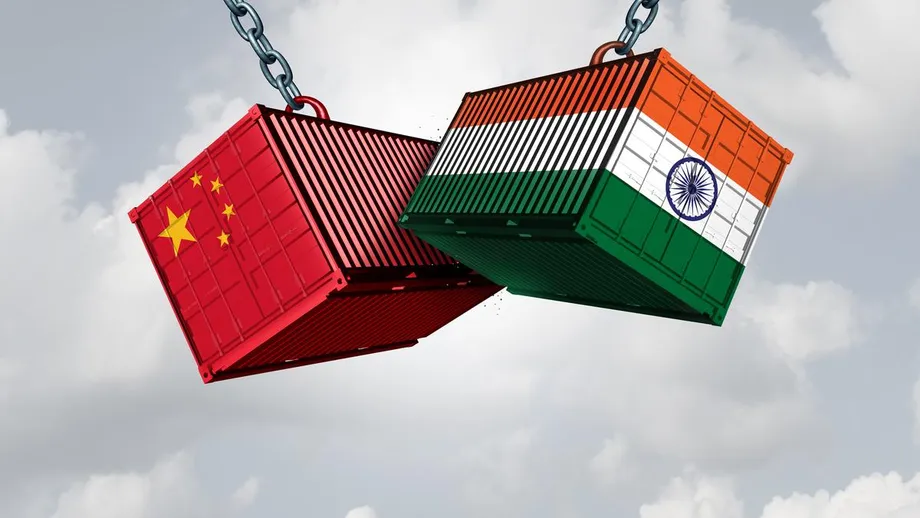
India bought $125.19 billion worth of goods from China between January and September 2026 while selling $19.26 billion in return, leaving a trade deficit of $105.93 billion. Figures released by China's General Administration of Customs on October 14 show that the gap widened 20.7% from the same period a year earlier, despite a 40.7% jump in Indian exports.
Contents
- A growing export business meets an even bigger import bill
- Why faster export growth still leaves a wider gap
- Two reporting calendars and conflicting annual totals
- Chinese supplies reach deep into Indian factories
- Indian export gains include components as well as commodities
- Modi and Xi put market access on the diplomatic agenda
- How the relationship reached this point
- Toys show progress, while electronics show deeper dependence
- China's wider export boom adds pressure
- Investment and industrial policy must work together
- The Bottom Line
Total trade reached $144.45 billion, up 25.4%. Chinese exports to India increased 23.3%, a slower percentage rise than Indian exports to China but a much larger increase in dollars. The imbalance has become a central issue in efforts to rebuild relations between the two countries, including talks between Prime Minister Narendra Modi and Chinese President Xi Jinping in New Delhi in September.
The figures describe trade in goods: products such as machinery, electronics, chemicals and seafood. A trade deficit means that a country spends more buying goods from a trading partner than it earns selling goods to that partner. India's gap with China reflects both the size of its demand for Chinese products and the difficulty Indian businesses face expanding sales in China.
Why faster export growth still leaves a wider gap
India's exports grew from a much smaller starting point. Using the published growth rates, its sales to China in January through September 2025 were approximately $13.69 billion, while purchases from China were about $101.53 billion. Those figures put the subsequent export increase at roughly $5.57 billion and the import increase at $23.66 billion.
China therefore added more than four dollars to its sales to India for every extra dollar India earned from sales to China. Subtracting the two increases gives an approximate $18.09 billion widening of the deficit. The calculation uses rounded published figures, so the result is approximate.
Chinese shipments accounted for about 86.7% of bilateral goods trade in the first nine months of 2026. India bought roughly $6.50 in goods from China for every $1 it sold there. These comparisons explain why strong export growth can coexist with a growing deficit: the larger side of the trading relationship keeps expanding faster in actual money.
Two reporting calendars and conflicting annual totals
China publishes trade figures for the January to December calendar year. India generally presents annual trade figures for its financial year, which runs from April through March. The reported deficit for calendar year 2025 was $116.12 billion. The $105.93 billion gap recorded in the first nine months of 2026 was already about 91% of that amount, with three months still to be counted.
For India's 2025-26 financial year, figures attributed to the Commerce Ministry put bilateral goods trade at $151.1 billion, comprising exports of $19.47 billion and imports of $131.63 billion. Subtracting exports from imports gives a deficit of $112.16 billion, up from $99.21 billion in 2024-25; a competing published figure puts the 2025-26 deficit at $112.6 billion.
Another published set gives 2025-26 bilateral trade of $127.7 billion and a deficit of $99.19 billion, compared with $118.39 billion and $85 billion respectively a year earlier. However, it also lists exports of $19.47 billion and imports of $131.62 billion, which add up to $151.09 billion and yield a $112.15 billion deficit. Those totals contain an internal arithmetic inconsistency.
China's General Administration of Customs publishes figures by trading partner in its Monthly Bulletin. The agency cautions that statistics can change after verification following publication and says its latest release is more accurate. Readers comparing annual totals therefore need to check both the reporting period and the underlying export and import amounts.
Chinese supplies reach deep into Indian factories
China supplies India with machinery, electronic goods, computer equipment, integrated circuits, telecommunications components and lithium-ion batteries. Chemicals, solar cells and materials used to make batteries also support Indian production. Some imports arrive as finished products; others are parts, raw materials or equipment used by Indian factories.
The Observer Research Foundation puts electrical machinery and electronic products at 36% of India's imports from China, with machinery and other mechanical equipment accounting for another 21.7%. Together, those categories represent 57.7% of the import bill covered by its breakdown.
Ajay Srivastava of the Global Trade Research Initiative says China supplies more than 30% of India's industrial imports and that India depends on it for more than 100 important products. Soumya Bhowmick of the Observer Research Foundation warns that interrupted supplies could stop factory production, extending the damage beyond shortages of consumer goods.
Indian export gains include components as well as commodities
Seafood, naphtha and printed circuit boards feature among India's major exports to China in 2026. Naphtha is a petroleum product used as a feedstock, or starting material, for making chemicals. Printed circuit boards hold and connect electronic components, making them essential parts of many devices.
India's exports also include ores, fuels and agricultural products. The rise in circuit board shipments is a useful development because India previously bought these products in large quantities from China. It shows that the trading relationship includes Indian sales of manufactured components alongside raw materials and food.
Indian exports of $19.26 billion in the first nine months of 2026 were already close to the $19.47 billion reported for the entire 2025-26 financial year. The periods overlap and use different calendars, but the figures illustrate the current pace of sales.
India has repeatedly sought better access to Chinese markets for information technology, medicines and agricultural products, with limited progress. Kevin Zhongzhe Li, of the Asia Society Policy Institute's Center for China Analysis, points to tariffs and other barriers facing Indian products. He identifies pharmaceuticals as a possible opportunity as China's population ages and health spending grows, while arguing that gains in a few sectors would be too small to close a deficit of this size.
Modi and Xi put market access on the diplomatic agenda
Modi and Xi discussed trade at the BRICS summit in New Delhi on September 12, 2026. Their meeting followed efforts to normalise relations after talks in October 2024. India's Ministry of External Affairs described trade imbalance, supply chains and access to markets as subjects addressed by the leaders.
The ministry said the two leaders:
underlined the need to address each other's concerns, including structural trade imbalance and supply chain issues, and facilitation of meaningful and predictable market access
Predictable market access means businesses can plan sales with reasonable confidence about the rules and permissions they will face. A structural imbalance is a persistent gap rooted in the kinds of goods each country produces, buys and permits into its market, rather than a brief change in shipments.
China's Foreign Ministry expressed its position after the meeting:
two sides should also address each other's economic and trade concerns in a balanced way and promote the sound and steady development of economic and trade relations.
India has also raised concerns about Chinese export controls affecting fertilisers and rare earths. Export controls are government restrictions on selling particular goods abroad. Rare earths are a group of elements used in products including powerful magnets and electronic equipment, so access to them matters for industrial production.
How the relationship reached this point
India's trade dependence has grown through a period of strained political relations and subsequent diplomatic repair. The main developments span several years:
- 2020: Clashes in the Galwan Valley badly damaged relations. India subsequently restricted several Chinese apps and imposed additional duties on some imports.
- October 2024: Modi and Xi met as the two countries moved towards normalising relations.
- 2025: India's reported calendar year trade deficit with China reached $116.12 billion.
- April 2025 to March 2026: Indian government figures put goods trade at $151.1 billion, with a calculated deficit of $112.16 billion.
- September 12, 2026: Modi and Xi discussed trade imbalance and supply chains at the BRICS summit in New Delhi.
- October 14, 2026: Chinese customs figures showed a $105.93 billion deficit for January through September.
India used anti-dumping duties as part of its response to imports that threatened domestic producers. These are extra charges imposed when imported goods are judged to be sold at unfairly low prices and to be harming local industry. Such measures can protect particular businesses, while factories that need imported machinery and materials continue buying them.
Srivastava estimates that the deficit could reach $134 billion if imports keep growing rapidly. That is a forecast tied to the continuation of current trends; the customs total covers the nine months already completed.
Toys show progress, while electronics show deeper dependence
India's toy industry offers a concrete example of import reduction. Toy import duties rose from 20% to 60% and later to 70%, alongside tighter quality requirements. Annual toy imports fell from about $300 million in 2020 to roughly $100 million, while exports increased from $129 million to about $200 million.
Those amounts indicate an import decline of about two thirds and an export increase of roughly 55%. China once held a 70% share of India's toy market. The change demonstrates how tariffs and production policies can alter a specific industry.
Electronics present a more complicated task. More than a quarter of the world's iPhones are now made in India, yet production still relies on Chinese components and materials. Srivastava argues that much large scale manufacturing in India remains focused on assembling imported parts.
An Indian factory can therefore increase output while also increasing purchases from China. Making the finished device locally and making its components locally are different stages of industrial development. Reducing dependence requires more Indian production of the parts, materials and equipment used inside the factory, as well as the final product.
China's wider export boom adds pressure
China's exports to all destinations rose 36.3% in September to $447.18 billion, while imports increased 31% to $313.65 billion. Its monthly trade surplus, the amount by which exports exceeded imports, reached $133.53 billion. For January through September, the surplus was $938.11 billion.
Demand for technology products is helping support that growth. Spending on artificial intelligence infrastructure creates demand for semiconductors, electronic components, computing equipment and electricity networks. At the same time, weak household demand and continuing problems in China's property sector increase the importance of overseas sales to Chinese producers.
China's annual economic growth target is 4.5% to 5%. Strong exports support that goal, although rising factory prices and softer consumer inflation point to different pressures on businesses and households. Producers face higher costs while domestic spending remains comparatively subdued.
Chinese manufacturers also have substantial production capacity in sectors such as steel, solar panels and electric vehicles. Srivastava says some output is reaching India as Indian industry expands and Western countries impose tariffs and other restrictions on Chinese goods. China recorded a surplus of nearly $1.2 trillion in 2025, and its 2026 total could again exceed $1 trillion if export momentum continues.
Investment and industrial policy must work together
Commerce and Industry Minister Piyush Goyal has said India is working to rebuild relations with China while seeking fair terms and dependable engagement. Speaking at the Bloomberg New Economy event, he described India's approach to partnerships:
We are open to all countries around the world as long as we get a fair deal, as long as we ensure a continuity in the engagement, and as long as the geopolitical situation does not deteriorate. I think we had some concerns in the past. We are working to develop relations with China once again, but the last word has not yet been scripted on this journey,
India tightened rules for foreign direct investment from countries sharing its land borders. Foreign direct investment means a company or investor takes a lasting stake in a business abroad, such as building a factory or buying part of a company. More recent accounts describe some easing of investment rules, but the precise changes and their implementation dates were not specified.
Srivastava argues that investment decisions should favour technology transfer, domestic component production and exports from India. He warns that investment focused on sales networks or assembly of Chinese parts could increase imports. His proposed industrial response also includes affordable electricity, cheaper credit, better transport and stable rules tailored to individual industries.
Singapore's Deputy Prime Minister and Minister for Energy, Trade and Industry, Gan Kim Yong, said Singapore and India are discussing cooperation in semiconductors and training for Indian workers. Such partnerships fit the task facing India: building the skills and production capacity needed for more demanding stages of manufacturing.
The Bottom Line
- India's trade deficit with China reached $105.93 billion in January through September 2026, up 20.7%.
- Indian exports rose 40.7% to $19.26 billion, while imports rose 23.3% to $125.19 billion.
- The larger import base meant purchases increased by far more dollars than export earnings.
- Machinery, electronics and industrial inputs link Chinese supplies closely to Indian factory production.
- Modi and Xi discussed trade imbalance, supply chains and predictable market access in September.
- India's policy choices include better access to China, domestic component manufacturing and investment that brings technology and production capacity.
- Chinese calendar year figures and Indian financial year figures cover different periods; some published annual totals also contain arithmetic inconsistencies.