
A public AI utility moves from promise to pressure test
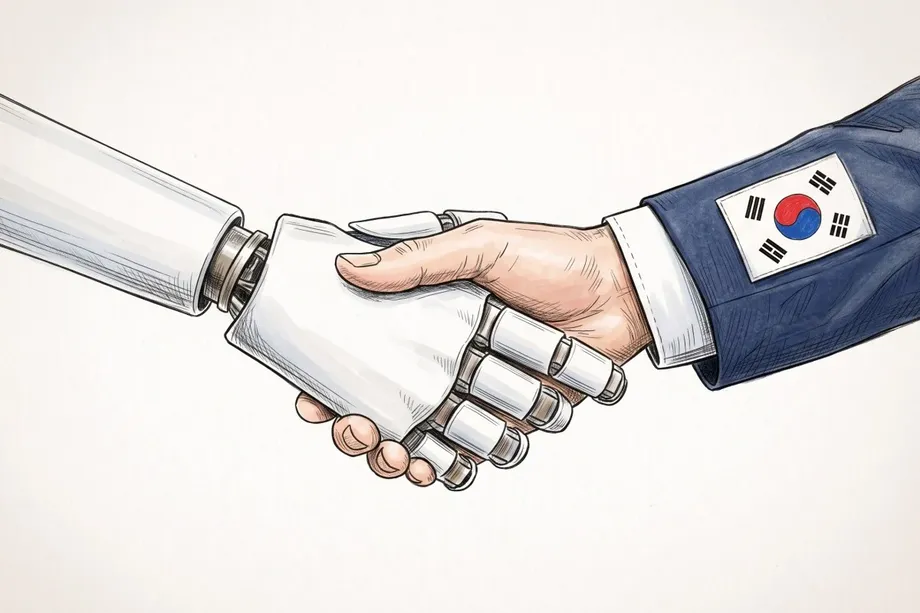
South Korea is preparing to give every citizen free access to artificial intelligence, placing chatbots and AI agents within reach of people who may use them for schoolwork, health care, public services, and daily decisions. The initiative, called “AI for All,” is meant to spread the technology widely and help the country compete with the United States and China. It also brings a difficult question into sharp focus: can safeguards keep pace when AI becomes a routine part of public life?
Contents
President Lee Jae Myung’s government plans to begin with a beta service, then consider turning the trial into a permanent, taxpayer-funded utility from next year. The proposed service would connect people with general-purpose AI tools developed by three domestic consortiums led by SK Telecom, KT, and Kakao. The government has lent the groups hundreds of Nvidia B200 graphics processing units, specialized chips used to train and run demanding AI systems.
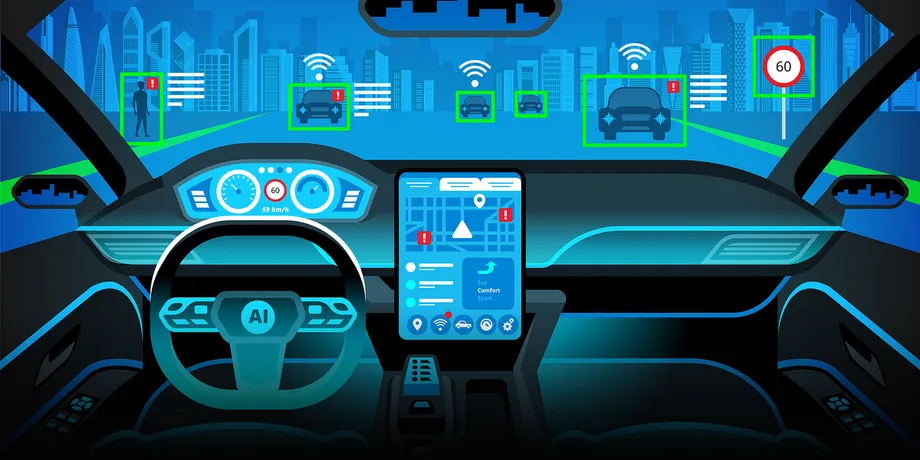
Officials eventually envision AI intermediaries helping people book medical appointments, look for housing, and seek tax guidance through government-connected services. That prospect could make public systems easier to navigate, particularly for people who struggle with complex forms or long waits. It also means that errors, privacy failures, or biased recommendations could affect people dealing with essential services.
The government has allocated 250 billion won for the rollout through 2027, on top of a 10 trillion won AI budget for the current financial year. The scale reflects a national strategy to build AI capacity and make access broad rather than limited to people who can afford private subscriptions. The trial will test whether free access translates into useful public infrastructure, and whether citizens can trust the systems handling their information and questions.
Why are AI leaders warning about the technology?
South Korea’s plans arrive as prominent figures in the AI industry warn that rapid development carries serious risks. Anthropic chief executive Dario Amodei has called for the industry to slow down. A former engineer at Anthropic who had also worked at OpenAI said after leaving the company that he was “genuinely frightened” unchecked development could mean “we could all die in the immediate future.” Computer scientist Geoffrey Hinton, a Nobel Prize winner often called the “godfather of AI,” has also warned that advanced systems could pose an existential danger if they escaped human control.
Those warnings concern possibilities that range from autonomous weapons and machine-driven cyberattacks to mass unemployment. Other risks are already more familiar: convincing fake images and videos, discriminatory automated decisions, and people relying on systems that produce confident but inaccurate answers. A public rollout does not create all these dangers, yet it can increase exposure by making AI easier to use at scale.
General-purpose AI systems generate responses by identifying patterns in data, rather than understanding the world in the human sense. They can be useful for drafting, summarizing, and navigating information, but they may state falsehoods as if they were facts. In government or health-related settings, users need a clear way to check answers and reach a human who has authority to correct them.
What safeguards is Seoul putting in place?
South Korea is relying on its AI Basic Act, which took effect in January, to set rules for the expanding use of AI. The framework calls for human oversight, impact assessments, and clear labeling of synthetic content. These measures aim to make AI-generated material easier to identify and require organizations to examine potential harms before deploying systems.
A state-funded AI Safety Institute is also tasked with evaluating risks and serving as a technical watchdog. Its work will matter as much as the formal rules: assessing whether systems behave reliably, whether sensitive data is protected, and whether users can challenge consequential decisions. An impact assessment is useful only if it examines real-world effects and leads to changes when problems appear.
The planned connection to government services makes accountability especially important. If an AI assistant gives incorrect tax guidance or mishandles a medical appointment request, users should know which agency is responsible and how to get help. The system should not become a barrier between citizens and the officials who make decisions. Human review is most meaningful when it is accessible, timely, and able to override an automated recommendation.
Free access also does not mean cost-free operation. Public agencies will need to pay for computing, security, maintenance, and evaluation, while deciding how much personal information a service should retain. The government’s investment in computing hardware and software is only one part of a lasting public service; oversight and support will require continuing resources.
Jobs and deepfake abuse are already part of the debate
Some of South Korea’s concerns are grounded in harms that are happening now. The Bank of Korea reported that the number of working people aged 15 to 29 fell by 285,000 between June 2022 and June this year. It estimated that 94 percent of the decline occurred in sectors highly exposed to automation. The figures point to a serious overlap between youth employment and changing technology, but they do not establish that AI alone caused the decline. Economic conditions and other shifts in hiring can also affect employment.
Automation can replace particular tasks without eliminating an entire occupation. That distinction still offers little comfort to workers whose entry-level duties are automated or whose employers reduce hiring. Younger workers may be especially exposed if routine administrative or service tasks have traditionally provided a route into employment. Policymakers will need to track job quality and hiring patterns, not just headline employment totals, as AI adoption spreads.
For many South Koreans, the most immediate fear is criminal misuse, especially sexually abusive deepfakes. The Nth Room case, a 2020 online sexual exploitation scandal, and later cases helped drive stronger deepfake laws in 2024. Yet police recorded 1,553 deepfake-related offences last year, according to figures presented at a recent Amnesty International Korea forum.
Won Eun-ji, director of digital sex-crime investigation group Team Flame, has spent much of this year entering roughly 50 Telegram chat rooms alongside investigative outlet Newstapa. She has documented how AI tools have expanded the pool of anonymous perpetrators and lowered the age of victims. Image-generation and face-swapping tools can make it easier to create abusive material, while encrypted or anonymous online spaces can make investigation and accountability more difficult.
Criminal law is one part of a response, but prevention and support also matter. Victims need prompt removal of images, practical help reporting abuse, and protection from further circulation. As AI tools become more widely available, public access policies will have to account for the possibility that systems can be used to create or distribute harmful material, even when their intended purpose is benign.
Schools face a separate test of AI’s value
Education has become another point of friction. Educators protested last year against the government’s short-lived plan to spend 1.2 trillion won on AI-powered textbooks. Their concerns were not limited to whether the software worked. They also questioned what students lose when a system supplies an answer before a learner has worked through a problem.
Song Keun-sang, a fifth-grade teacher in South Chungcheong province who joined the protest, said AI “simply gives you the answers” and “doesn’t have much educational value.” His criticism speaks to a basic distinction in education: completing a task is not the same as learning how to do it. A tool that explains a difficult idea or adapts practice to a student may help. One that bypasses reading, reasoning, or writing may weaken those skills.
Concerns about declining reading scores add urgency to the debate, although they should not be treated as proof that AI caused changes in students’ performance. Schools need evidence about how particular tools affect comprehension, attention, and independent work. Teachers also need a role in choosing when AI supports instruction and when it should be kept out of the learning process.
Rules for classrooms may differ from rules for general public chatbots. Students need age-appropriate protections, clear limits on data collection, and assignments that assess their own understanding. AI can assist a teacher with preparation or give a learner another explanation, but it cannot replace the educational relationship or reliably judge every student’s needs.
Can universal access build public trust?
“AI for All” is an ambitious effort to treat access to AI as public infrastructure. The model could reduce a gap in which advanced tools are available mainly to wealthy individuals and large companies. A reliable assistant might help people find information, complete routine paperwork, or reach services that are hard to navigate. Those gains depend on the quality of the tools and the ability of users to get an answer from a person when the system fails.
Universal access also changes the consequences of design choices. A flaw in a private chatbot affects its users; a flaw in a public service can reach a much larger share of the population. If a system is connected to public records or agency workflows, security breaches and inaccurate outputs could have effects beyond a single conversation. Strong privacy limits, independent testing, clear records of system performance, and routes for appeals will help determine whether the service earns confidence.
South Korea has a strong technology sector and the resources to run a significant trial. Its central challenge is to make the service answerable to the public as well as technically capable. That means explaining what data systems collect, identifying who is responsible for mistakes, and publishing enough information for outside scrutiny. It also means measuring whether the service helps people, rather than treating the number of users or available features as proof of success.
The rollout will test whether public investment can widen access while preserving human judgment in areas where mistakes carry real costs. South Korea’s laws and safety institute provide a framework, but their value will be judged by how they work in practice, as AI enters classrooms, workplaces, and government offices.
Key Points
- South Korea plans a free AI trial led by consortiums associated with SK Telecom, KT, and Kakao.
- The government hopes to make AI a permanent public utility connected to services such as appointments and tax guidance.
- The AI Basic Act requires human oversight, impact assessments, and labeling of synthetic content.
- Employment concerns include a decline in working people aged 15 to 29, concentrated in sectors exposed to automation.
- Police recorded 1,553 deepfake-related offences last year, amid continued concern about sexual abuse enabled by AI tools.
- Teachers have challenged AI-powered textbooks, arguing that instant answers can interfere with learning.