Vietnam buyers face a 4 million dong increase
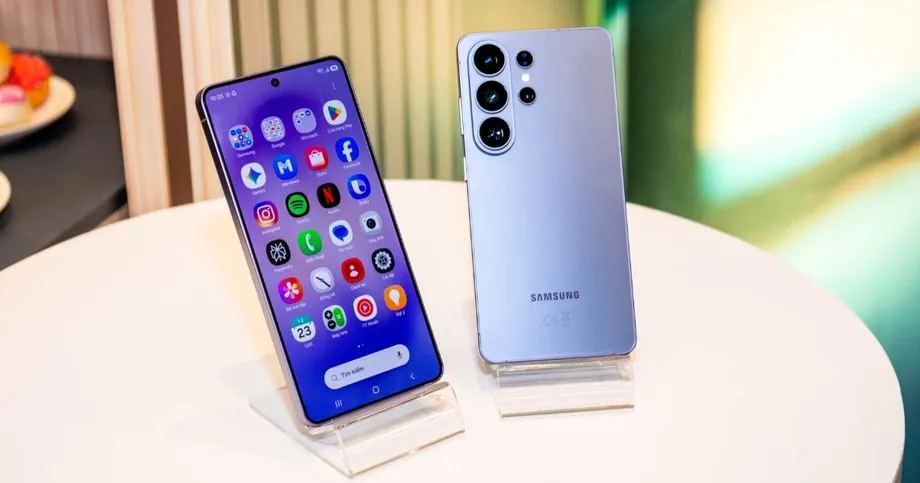
Samsung has raised listed prices across its Galaxy S26 range in Vietnam by 4 million dong compared with the March launch period, bringing the Galaxy S26 256GB to 30 million dong and the Galaxy S26+ 256GB to 34 million dong. The Galaxy S26 Ultra price cited for the market has risen from 37 million to 41 million dong.
Contents
- Vietnam buyers face a 4 million dong increase
- US prices rise, with a larger increase for 1TB
- Which devices and sellers have not changed prices?
- How the price changes unfolded
- Why memory costs are putting pressure on phones
- Samsung gains share while shipping fewer phones
- Apple and Chinese brands face different pressures
- Consumers are stretching replacement cycles
- What is still uncertain for the rest of 2026?
- Key Points
The changes, recorded in early October 2026, mean the same cash increase falls differently across the range. The standard S26 has risen from 26 million dong, an increase of about 15.4%. The S26+ has climbed from 30 million dong, or about 13.3%, while the Ultra increase is approximately 10.8%. Those percentages are calculated from the launch and revised prices.
Samsung has not announced an official explanation for the adjustment. The increases nevertheless arrive during a severe squeeze on smartphone components, with manufacturers raising prices while shipping fewer devices.
Counterpoint Research's October market assessment, published on October 12, puts global smartphone shipments in the third quarter of 2026 down 20% from a year earlier. Its preliminary Market Monitor estimates indicate the lowest shipment volume for any third quarter since 2012. The firm also says global smartphone retail prices have risen 20% so far in 2026.
US prices rise, with a larger increase for 1TB
The Vietnam adjustment is part of a broader pricing shift, although increases differ by market and configuration. In the United States, most Galaxy S26 configurations have risen by $100. The exception is the Galaxy S26 Ultra 1TB, which has increased by $200, from $1,799.99 to $1,999.99.
Some reports describe a $100 increase across the entire range, but their detailed figures show the larger increase for the 1TB Ultra. Reports also differ in presentation: one rounds prices to whole dollars, while another includes the 99 cents. Their stated increases agree.
The US prices before and after the adjustment are:
- Galaxy S26 256GB: $899.99 to $999.99.
- Galaxy S26 512GB: $1,099.99 to $1,199.99.
- Galaxy S26+ 256GB: $1,099.99 to $1,199.99.
- Galaxy S26+ 512GB: $1,299.99 to $1,399.99.
- Galaxy S26 Ultra 256GB: $1,299.99 to $1,399.99.
- Galaxy S26 Ultra 512GB: $1,499.99 to $1,599.99.
- Galaxy S26 Ultra 1TB: $1,799.99 to $1,999.99.
The largest dollar increase does not produce the largest percentage increase. The standard 256GB S26 rises by approximately 11.1%, almost the same percentage as the 1TB Ultra. The Ultra 256GB rises by about 7.7%. These calculations show why a uniform headline figure can obscure differences between configurations.
Which devices and sellers have not changed prices?
The revised US prices appeared on Samsung's own online store, while Amazon and Best Buy had not updated their prices when the changes were reported. That gap establishes a difference between sales channels at that point, not a guarantee that other retailers will maintain their previous prices.
The increases also do not extend to every recent Samsung handset. In Vietnam, the Galaxy Z Flip8, Galaxy Z Fold8 and Galaxy Z Fold8 Ultra were reported to have unchanged prices. Reports from the US likewise said Samsung's foldable devices had not received the same adjustment.
The Galaxy S26 FE, introduced in August, had also shown no sign of a further increase. Its launch price was already $50 above the previous generation. The standard S26 and S26+ had similarly launched in the US at higher prices than their predecessors, making October's change a further increase during their product cycle.
These distinctions matter for buyers comparing models. A revised list price is not necessarily the final purchase price, which can depend on retailer discounts, carrier arrangements and the credit offered for an old device. US prices also should not be treated as a schedule that automatically applies to Vietnam or other countries.
How the price changes unfolded
The adjustments developed over several months, with older Apple devices also becoming more expensive in Vietnam before Samsung's October move. The sequence places the S26 increase within a wider industry shift rather than an isolated launch decision.
- March 2026: The Galaxy S26 range went on sale in Vietnam at prices 4 million dong below the newly reported levels.
- August 2026: Samsung introduced the Galaxy S26 FE, with its US price reported to be $50 above the previous generation.
- Mid September 2026: Prices for several older iPhone models in Vietnam, including the iPhone 15, iPhone 16 and iPhone 17, increased by 2 million to 5 million dong, depending on the version.
- Early October 2026: Galaxy S26 list price increases were recorded in Vietnam and the US.
- October 12, 2026: Counterpoint published its preliminary assessment of the third quarter shipment decline and rising retail prices.
The timing also limits comparisons. Counterpoint's shipment figures cover the third quarter, whereas the reported Samsung adjustments began in October. The S26 increases therefore should not be presented as a cause of the preceding quarter's decline.
Why memory costs are putting pressure on phones
Counterpoint identifies rising DRAM and NAND prices as central to the market squeeze. DRAM provides the working memory a phone uses while running applications. NAND stores photographs, software and other files when the device is switched off.
Higher prices for these components raise a handset's bill of materials, the combined cost of the parts used to build it. Counterpoint says repeated memory price increases inflated those costs during the third quarter, while shortages also limited the components manufacturers could obtain. Producers faced both a cost problem and a supply problem.
The research firm says manufacturers passed higher component costs to consumers, contributing to the 20% rise in global retail prices during 2026. Average selling prices also increased. That measure reflects the mix of phones sold as well as their individual prices: a market selling proportionally more expensive devices can record a higher average even while total shipments fall.
Reports also connect pressure on memory supplies to demand for infrastructure serving artificial intelligence. That provides context for the broader shortage, but it does not establish how much of Samsung's specific price increase comes from AI demand, individual components or commercial decisions.
Samsung has not published a breakdown explaining the adjustment. The nearly $2,000 US price of the 1TB Ultra creates a larger gap above its other configurations, but treating that as proof of a deliberate pricing strategy would go beyond what the company has confirmed.
Samsung gains share while shipping fewer phones
Samsung retained first place globally in the third quarter, with a 23% shipment share, according to Counterpoint. Its shipments fell 3% from a year earlier, much less than the market's 20% decline.
That difference explains how a manufacturer can gain share without selling more units into distribution channels. Market share measures a company's portion of the total. If the total contracts faster than that company's shipments, its share rises.
Counterpoint attributes Samsung's relative strength to better access to components, strong early demand for the Galaxy Z Fold8 series and comparatively stable component supplies for its A series in emerging markets. Some Chinese competitors were reducing their presence in those markets.
The firm also says Samsung's focus on higher average selling prices and revenue supported stronger performance by value despite lower volumes. The contrast with unchanged foldable prices is useful: demand for premium models and price increases across a manufacturer's entire portfolio are separate developments.
Apple and Chinese brands face different pressures
Apple reached a 22% global shipment share, its first result above 20% in any third quarter, even though its shipments also declined. Together, Samsung and Apple accounted for 45% of global shipments, calculated from Counterpoint's figures.
Counterpoint links part of Apple's volume decline to the absence of a base iPhone 18, which meant less inventory entered sales channels during the launch month than with the full iPhone 17 family a year earlier. The iPhone 18 Pro models had a stronger launch than their predecessors, particularly in China and India, while continuing iPhone 17 demand softened the decline.
Xiaomi's shipments fell more than 30%, leaving it with a 10% share. Counterpoint says it reduced exposure to cheaper segments and some overseas markets while raising average selling prices and tightening shipment plans to avoid uneconomic margins. Its Xiaomi 18 series and foldable devices received a positive response in China's more expensive segments.
OPPO and vivo each recorded shipment declines exceeding 20%, with shares of 9% and 8%, respectively. Both raised prices across their entry and middle price ranges. OPPO consolidated its portfolio and operations across OPPO, realme and OnePlus to reduce duplication, while vivo concentrated on India and China.
These figures show a market in which protecting profit increasingly takes precedence over shipping the greatest possible number of devices. They do not mean every brand, model or country is experiencing the same price increase.
Consumers are stretching replacement cycles
Counterpoint Senior Analyst Shilpi Jain described a change in purchasing behavior as the memory shortage continued. She said consumers were delaying replacement and considering alternatives to new phones:
Consumers are holding on to their devices longer than estimated, increasingly considering refurbished devices and prioritizing higher-value devices, while OEMs are adjusting portfolios, pricing, and market strategies to protect profitability.
Jain said demand for premium devices remained comparatively resilient, while affordability pressures were greater in the mass market. That distinction helps explain why shipments can fall sharply even as manufacturers concentrate more heavily on expensive products.
For a Vietnam buyer, the extra 4 million dong is an immediate increase in the listed cost of upgrading, regardless of whether the chosen model sits at the bottom or top of the S26 range. In percentage terms, however, the increase is heaviest on the least expensive of the three cited models.
The temporary difference between Samsung's US store and other retailers also illustrates why list prices and final transaction prices need to be kept separate. No confirmed schedule has been given for when other sellers might adopt the revised prices, and no equivalent increase across every market has been established.
What is still uncertain for the rest of 2026?
Counterpoint expects manufacturers to continue cutting production, narrowing product ranges and concentrating on premium devices while component costs remain elevated. It says a meaningful recovery in shipment volumes is unlikely until costs and supply conditions improve.
That is a conditional outlook, not a dated recovery forecast. The research firm has not identified a specific month when the shortage will ease. Its third quarter shipment estimates are also preliminary and should be distinguished from final figures.
Samsung has not disclosed the detailed reasons for the S26 adjustment, whether further models will follow or whether unchanged foldable prices will remain in place. The extent to which promotions offset higher listed prices will also vary by seller and market.
The central development is already visible: Vietnam's S26 prices have risen during a global contraction in smartphone shipments. Samsung is weathering that contraction better than many competitors, but its stronger market position has not insulated buyers from higher listed prices.
Key Points
- Galaxy S26 listed prices in Vietnam rose by 4 million dong compared with the March launch period.
- The S26 256GB now costs 30 million dong, the S26+ 256GB costs 34 million dong, and the cited Ultra price is 41 million dong.
- Most US configurations increased by $100, while the Ultra 1TB rose by $200 to $1,999.99.
- Samsung has not announced an official explanation for the increases.
- Counterpoint estimates global smartphone shipments fell 20% in the third quarter, while retail prices rose 20% during 2026 so far.
- Samsung held 23% of global shipments and Apple 22%, despite both shipping fewer devices than a year earlier.
- Memory costs, component availability and consumer affordability remain central constraints, with no specific recovery date given.