A film about freedom without full access to the past
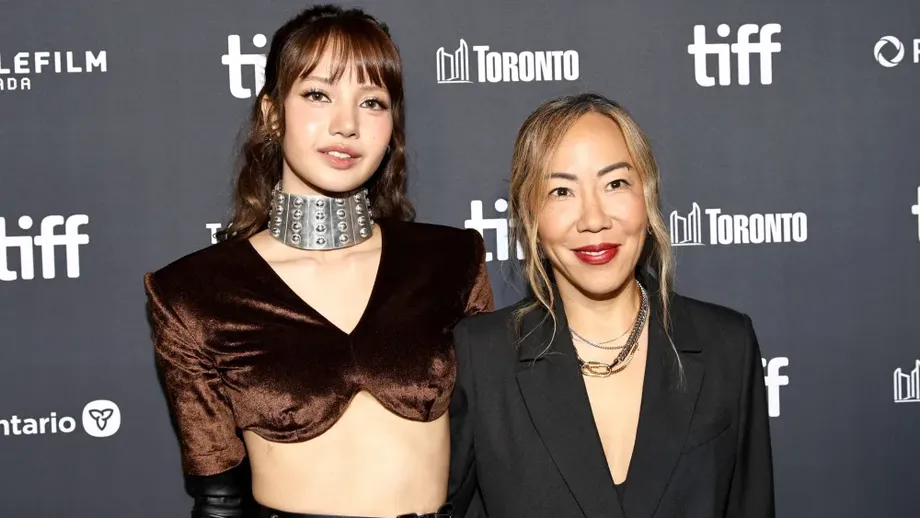
YG Entertainment did not approve requests to license Blackpink songs, music videos or Lisa's early trainee footage for Always Lalisa, director Sue Kim says. The refusal left a documentary about the singer's move toward independence unable to use some of the material that would explain how her career began.
Contents
- A film about freedom without full access to the past
- What the licensing refusal changes
- Who controlled the documentary?
- Independence began with uncertainty
- The teacher who helped her find a voice
- Music, acting and the risk of starting again
- The leaked video and Lisa's apology
- Privacy does not mean silence about relationships
- A return to Blackpink and the release timeline
- Key Points
The film follows a year away from Blackpink in which Lisa built her solo business, released Alter Ego, made her acting debut in HBO's The White Lotus and performed at the Academy Awards and Coachella. Its central story is less about leaving a group than learning to make decisions after years of closely supervised work.
Kim, the documentary's director, described the production's dealings with YG as limited to unsuccessful licensing requests.
We did not work with YG at all on this film.
She said the team tried to obtain material from Lisa's training years alongside Blackpink recordings. A separate account of her explanation makes the outcome explicit:
Despite our best efforts, we were not allowed to license the music or the footage, so that was it.
That establishes a restriction on the documentary's use of particular recordings, not a ban on discussing Blackpink. The group remains part of the story, and the film ends with Lisa preparing to return to it. Kim's account does not establish why YG rejected the requests or whether the company objected to the documentary's broader approach.
What the licensing refusal changes
Licensing means securing permission to use protected material, such as a song recording or music video. Access to an artist does not automatically give a filmmaker permission to reproduce recordings associated with that artist's earlier career.
For Kim, the missing material had a specific purpose: allowing audiences to hear and see Lisa's development within Blackpink. She said she wanted some of that history while keeping the documentary focused on the singer's year outside the group.
The distinction matters because the absence of familiar Blackpink performances reflects both an editorial decision and a rights restriction. Kim did not intend to make a comprehensive history of the group, but she also could not include every piece of historical material she wanted.
The film instead builds its portrait through present day access, childhood memories and interviews with family, friends and colleagues. Those choices bring Lisa's individual experience to the foreground without replacing the missing archive with a complete account of Blackpink's history.
Who controlled the documentary?
Kim said Sony Music Vision, her creative partner and the project's owner, gave her complete creative freedom. Another account describes the documentary as commissioned by the film division of Lisa's record label. Its commercial connection to the singer's music business is therefore part of the context in which viewers should understand it.
Creative freedom and corporate financing can coexist. Kim's account is that neither YG nor Lisa directed her editorial choices. She said Lisa offered no creative instructions during filming and, after seeing the finished documentary, did not request the removal of a scene.
Kim described the singer as guarded at first, with trust developing through time spent together rather than a single persuasive meeting. That growing comfort becomes part of the film's progression: Lisa gradually speaks more openly as she adjusts to making decisions outside her previous working structure.
The access was extensive, but the schedule was difficult to follow. Filming involved travel between Thailand, the United States and other countries. Kim said crew members became ill while trying to keep pace, and the production eventually stationed separate teams in different countries to capture Lisa's activities.
Independence began with uncertainty
Lisa and fellow Blackpink members Jennie, Jisoo and Rosé agreed to take a year away from group activities to pursue their individual interests. Lisa said the original idea was not to fill every available moment with work. She considered travelling before the opportunity to act in The White Lotus helped turn the break into a packed professional calendar.
At the beginning of the documentary, Lisa describes restrictions during her time working in South Korea: no drinking, dating or obtaining a driver's license, limited freedom to meet friends, and monitoring of her movements. These are her descriptions of her experience, rather than a published set of company rules.
Freedom initially brought anxiety. Lisa, Blackpink's rapper and dancer who debuted with the group in 2016, described the difficulty of becoming responsible for her next decision.
Nobody was telling me what to do and I'm the one who has to choose the road to go down next.
Kim identified a small but revealing example in the recording studio: Lisa sometimes did not know whether she could speak directly to producers. The challenge was not simply choosing a song or booking a performance. It was learning to express preferences in situations where she had previously expected direction.
Her solo path included establishing LLOUD and signing a United States deal with RCA Records. Those changes concern her individual career; the documentary's return to Blackpink makes clear that pursuing separate work did not mean abandoning the group.
The teacher who helped her find a voice
The film's account of Lisa's ambitions reaches back to Thailand and her childhood dance instructor, Teacher Nok. Lisa said she initially wanted to become a dance teacher like him, before his encouragement pushed her toward singing and a more visible place onstage.
Her mother, Chitthip Bruschweiler, recalled Nok challenging her daughter to stop remaining in the background. Lisa subsequently entered competitions that involved singing as well as dancing. Bruschweiler credited the instructor with recognising potential that she had not yet seen herself.
Lisa, describing Nok's influence in the documentary, said:
I think he changed my life. When I was little, I wanted to be a dance teacher like him.
Nok later became ill with cancer. According to Bruschweiler, Lisa was accepted as a YG trainee before he died and was able to tell him the news. Lisa was selected at about 13 from roughly 4,000 applicants.
That history gives the film's independence story a more personal foundation. Her ambition did not begin with Blackpink's success or a plan to enter the American market. It grew from childhood instruction, competitions and encouragement from someone whose loss remains painful for her.
Music, acting and the risk of starting again
The documentary records a concentrated series of professional milestones: the debut solo album Alter Ego, a James Bond theme performance at the Academy Awards, a solo Coachella appearance and the role of Mook in the third season of The White Lotus.
Alter Ego presents five characters, Roxi, Kiki, Vixi, Sunny and Speed, as different sides of Lisa's artistic identity. The film places that project alongside less polished moments, including uncertainty about her singing and difficult work with a vocal coach.
Her celebrity did not automatically make the acting opportunity straightforward. Series creator Mike White and executive producer David Bernad described initial reservations about casting her. Bernad said they worried about security, unwanted attention from fans and the demands that might accompany a major music star.
White, explaining his early reaction to the proposed casting, said:
This felt like it was stunt casting or we were trying to generate interest in the show...like I didn't want to do this.
Meeting Lisa and her mother changed his assessment. White said she did not behave like someone accustomed to constant external attention. Their recollections add a concrete counterpoint to the concert milestones: in acting, Lisa had to overcome doubts about whether her fame would distract from the work.
The leaked video and Lisa's apology
The documentary also addresses footage from Blackpink's trainee years showing members performing songs containing an anti Black racial slur. One account dates its resurfacing to March 2025; others describe the controversy unfolding as Lisa prepared for her 2025 solo Coachella performance.
Lisa said she was 15 or 16 when the recording was made for a monthly evaluation by label executives. She explained that English was not her first language and that she had not understood the word's significance. She also acknowledged that using it was wrong.
Lisa, discussing the recording in the documentary, said:
Now I would never ever do that because, now, I've got education.
But I did wrong.
Kim said the scene was filmed on the day the videos emerged and was not scripted. According to the director, Lisa spoke spontaneously for about an hour after being invited to describe what she was experiencing. Lisa later apologised publicly during a September interview associated with the documentary's Toronto premiere.
Accounts of the film say LLOUD wanted to issue a statement after the leak, but YG opposed that step. That reported disagreement is separate from the refusal to license music and archive footage. The two concern different decisions, even though both show YG's continuing relevance to Lisa's story.
The documentary also records death threats and safety concerns during the period around Alter Ego and Coachella. Lisa continued making public appearances while describing those concerns as occupying her thoughts. The threats do not erase the need to address the slur; they are a separate part of the pressure the film documents.
Privacy does not mean silence about relationships
The film does not establish the widely discussed speculation linking Lisa to Frédéric Arnault, son of LVMH chairman Bernard Arnault. Kim said she did not see boyfriends during filming and did not know about Lisa's dating life.
That boundary should not be confused with an absence of discussion about love. Lisa says Dream, a song on Alter Ego, concerns a first love she experienced at 25. She describes worrying that a relationship becoming public could damage Blackpink's popularity, to the point that she considered ending one if it became a problem for the group.
The documentary therefore distinguishes between naming a partner and discussing the emotional cost of secrecy. It offers Lisa's account of that pressure without confirming the identity of the person behind the song or current relationship rumours.
Lisa also says she wants to marry and have children. Asked about sharing those hopes, the singer explained what she wanted fans to understand:
I'm just a girl, we want the same thing at the end of the day. That's it. I just want them to understand me more.
Kim's stated interest was personal growth rather than romantic disclosure. The film's relationship material serves that purpose by showing Lisa reconsidering whether ordinary adult aspirations must conflict with maintaining a public career.
A return to Blackpink and the release timeline
The documentary ends in June 2025, when Lisa returns to Seoul to prepare for Blackpink's next group activities. Kim described the moment as bittersweet, reflecting concern about retaining the freedom Lisa had experienced rather than hostility toward the group.
Lisa's later description of the reunion was more upbeat. She said the members had learned during their break and returned with renewed energy. The ending leaves independence and group membership alongside each other, rather than treating them as mutually exclusive choices.
The chronology reported around the film and its release is:
- 2016: Lisa debuts with Blackpink after her years as a YG trainee.
- March 2025: One account dates the resurfacing of the trainee footage to this month, before her solo Coachella performance.
- June 2025: The documentary ends with Lisa returning to Seoul and Blackpink preparations.
- September 2026: The film premieres at the Toronto International Film Festival, according to the Thai screening account.
- October 12, 2026: Reports give this date for the limited cinema release, including worldwide cinema and IMAX screenings.
- October 18: Thai cinema screenings are scheduled to conclude, with tickets starting at 350 baht.
Reports differ in their descriptions of the streaming destination. One identifies YouTube Premium and says streaming was planned later in 2026; another calls it YouTube Premier and gives no confirmed date. A precise streaming launch date is therefore not established. An upcoming Lisa EP, Press Play, is also reported for October 23, alongside plans for a Las Vegas residency.
Key Points
- Sue Kim says YG denied requests to license Blackpink music, music videos and Lisa's trainee footage.
- Kim says Sony Music Vision gave her creative freedom and Lisa requested no scene removals.
- The documentary follows Lisa's solo work, acting debut and adjustment to making her own decisions.
- Lisa addresses the leaked trainee video, acknowledges wrongdoing and discusses threats she received.
- The film discusses love and family aspirations without confirming current relationship rumours.
- It ends with Lisa returning to Blackpink in June 2025; reports place the limited cinema release in October 2026.
- A streaming release is planned, but its precise date is not confirmed.