A completed airport without a regular international carrier
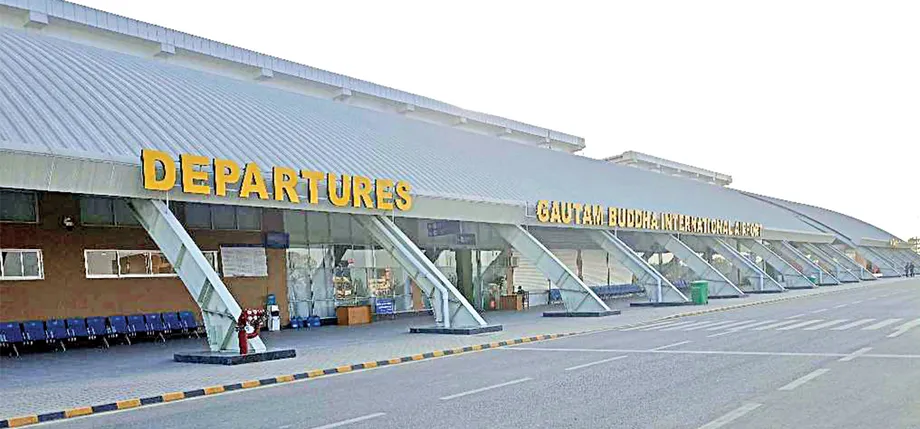
Gautam Buddha International Airport in Bhairahawa has recorded 69,377 international passenger movements since its inauguration on May 16, 2022. Yet the latest account describes an international flight drought lasting six and a half months, despite approximately NPR 36 billion in public investment and continuing spending on staff, equipment and maintenance.
Contents
- A completed airport without a regular international carrier
- How early expectations gave way to repeated interruptions
- What the passenger figures show
- The public bill is larger than the construction cost
- Private investment estimates range from NPR 80 billion to more than NPR 100 billion
- Why cheaper flights are not enough
- Weather and access routes add separate obstacles
- Temporary diversions helped businesses, but did not secure a lasting market
- Business pressure continues, with no confirmed restart
- Key Points
The last recorded international service was Thai AirAsia's Bangkok flight on March 25, 2026. It brought 14 passengers into Bhairahawa and carried 106 back to Bangkok. Airport information officer Pawan Agrahari Baniya said no airline had submitted a new international schedule. A proposed charter from Delhi on October 12 had not received approval.
The distinction between international inactivity and a complete airport shutdown matters. Domestic operations are described in other accounts, including as a source of revenue. The immediate problem is the absence of regular international services at an airport intended to connect Lumbini with overseas visitors and provide an alternative to Kathmandu's Tribhuvan International Airport.
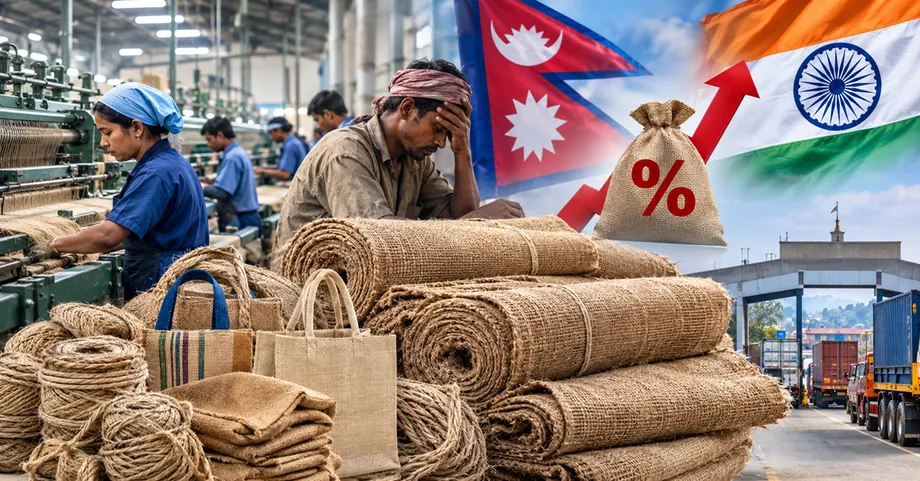
Businesses built hotels, restaurants, transport services and other ventures around that promise. Their concern now extends beyond empty terminal space: investments financed through bank loans still require repayments, even when the expected passengers do not arrive.
How early expectations gave way to repeated interruptions
Construction began in January 2015 as a national pride project. The airport opened more than seven years later, but successive periods of international activity failed to develop into a dependable schedule. The principal milestones show both the scale of the ambition and the interruptions that followed:
- January 2015: Construction began on the international airport project.
- May 16, 2022: The airport was inaugurated for commercial operations.
- November 2024: Work to expand capacity at Tribhuvan International Airport brought some international services to Bhairahawa, with four or five flights arriving or departing on some days.
- March 25, 2026: Thai AirAsia operated the latest recorded international flight, carrying 14 arriving and 106 departing passengers.
- October 12: A Delhi charter was proposed, but approval was still pending in the latest account.
An earlier account described five carriers operating between September and November: Jazeera Airways, Flydubai, Thai AirAsia, Qatar Airways and Nepal Airlines. It then described their withdrawal for the summer season. Its relative dates are not precise enough to place every development within the later 2026 chronology.
That distinction prevents separate interruptions from being treated as one continuous shutdown. Bhairahawa has attracted airlines at different points, particularly when Kathmandu faced operational constraints. What it has not secured is a lasting international timetable independent of those temporary circumstances.
What the passenger figures show
The latest cumulative figures record 1,222 scheduled and charter international flights, with 31,932 arrivals and 37,445 departures. Departures exceeded arrivals by 5,513 and represented approximately 54 percent of the 69,377 passenger movements. These are journeys through the airport, not necessarily 69,377 different people.
The final Thai AirAsia service showed a much larger directional imbalance: 106 passengers departed against 14 who arrived. One flight cannot establish the profitability of a route, and the aircraft's seating capacity is not given. It does, however, show why an international service cannot be assessed solely by the number of tourists it brings into Nepal.
A separate account recorded 4,279 passenger movements in November, 3,878 in December and 1,365 in January, followed by 6,779 in February and 7,034 in March. January's figure was about 68 percent below November's, while March's was more than five times January's. Winter fog was cited as a reason for the January decline.
That recovery did not protect the subsequent timetable. Airport general manager Pratap Babu Tiwari said airlines did not apply for Bhairahawa slots when the summer schedule began. A slot is an allocated time for an aircraft to arrive or depart. Without applications and confirmed services, rising passenger numbers in preceding months did not translate into continued flights.
The public bill is larger than the construction cost
The principal account puts public spending at about NPR 36 billion, including NPR 22 billion in compensation for land acquired across 500 bighas. On those figures, land compensation represented approximately 61 percent of the total. The remaining NPR 14 billion went toward the runway, control tower, other infrastructure and equipment.
Reports differ on the investment total. Another estimate puts state expenditure near NPR 35 billion. Rajesh Kumar Agrawal, a central member of the Federation of Nepalese Chambers of Commerce and Industry, cited around NPR 40 billion and said continuing infrastructure expansion was pushing the figure higher. These estimates should not be treated as identical measures of expenditure.
The government also continues paying interest on a concessional loan from the Asian Development Bank. A concessional loan offers more favourable terms than ordinary commercial borrowing, but debt payments do not stop simply because the airport lacks international flights. No interest rate, outstanding balance or annual debt payment is specified.
Operating costs vary across accounts too. The latest account describes more than 100 permanent, temporary and contract staff, with annual operating and administrative expenses above NPR 80 million. Another lists 141 Civil Aviation Authority personnel, 422 security personnel and additional Nepal Police support, alongside NPR 350 million in annual operating costs and NPR 250 million in revenue. That produces a reported NPR 100 million annual loss. Different dates and accounting boundaries may explain part of the gap, but the figures are not reconciled.
Private investment estimates range from NPR 80 billion to more than NPR 100 billion
Netra Prasad Acharya, president of the Siddhartha Chamber of Commerce and Industry, estimated that local businesses invested approximately NPR 80 billion in ventures connected with the airport. Those investments include hotels and restaurants across Bhairahawa, Tilottama, Lumbini and Butwal, as well as property purchased in anticipation of greater demand.
Sagar Adhikari, a tourism entrepreneur and former president of the Nepal Association of Tour and Travel Agents Lumbini Chapter, put private investment at more than twice state expenditure. He explained why businesses committed their money:
"The private sector invested on the belief that the airport would operate smoothly, regular international flights would commence, and tourist arrivals in Lumbini would soar. However, prolonged inactivity in regular flights has deprived us of expected returns," he said.
An earlier estimate from Bishnu Sharma, a former president of the association's Lumbini Province chapter, placed private investment above NPR 100 billion. These are business representatives' estimates, not a single audited total. Their scope and dates differ, so they cannot be combined into a precise measure of losses.
Investment at risk is also different from money already lost. No consolidated figures establish hotel occupancy, unpaid loans, business closures or the value of assets written down. Nevertheless, businesses financed with bank borrowing must continue servicing debt while the anticipated market remains uncertain. Thakur Kumar Shrestha, president of the federation in Lumbini Province, said investors had relied on government assurances and called for the airport to be brought into operation.
Why cheaper flights are not enough
The government has offered concessions on parking and aviation fuel to attract airlines. Tiwari said reductions in fuel prices and passenger service charges took effect in April in the period covered by his account. Earlier incentives included full discounts on several airport fees during the first year and a 50 percent reduction in ground handling charges.
Ground handling covers services needed while an aircraft is on the ground, such as baggage handling and preparations for departure. Reducing these charges can lower an airline's costs. It does not remove the separate difficulty facing passengers who must travel to Kathmandu to complete paperwork before leaving Nepal.
Kishor Joshi, senior vice president of the Siddhartha Hotel Association Nepal, identified missing visa services, no objection letters, medical examinations, insurance and recruitment agencies. Other airport officials and business representatives described the same problem. For migrant workers, labour approvals and required medical checks are part of the departure process, not optional services.
The latest account says decisions made two years earlier to establish a labour office, health checks, a visa office and emergency passport services had not been implemented through three successive governments. Tiwari's account places a Cabinet decentralisation decision in July of the preceding year. The dates are expressed differently, but both describe promised services that had not opened.
The practical consequence is straightforward: a traveller who must first go to Kathmandu may choose to depart from Kathmandu rather than make another journey to Bhairahawa. Airport discounts alone cannot solve that inconvenience.
Weather and access routes add separate obstacles
An earlier interruption was linked to heavy winter fog and poor visibility. Jazeera Airways returned to Kathmandu after flight diversions, while announced return dates shifted from January 15 to the first week of February. That account described international flights as having stopped for a month, a different episode from the later six and a half month absence.
Govinda Dahal, the airport's general manager at that time, said weather was only one factor. The airport had an Instrument Landing System, or ILS, but its use was described as requiring Indian permission because of the proximity to the border. ILS provides radio guidance for aircraft approaching a runway, helping pilots land when visibility is reduced.
Former Civil Aviation Authority director general Rajkumar Chhetri also cited the absence of suitable entry routes from India. He said aircraft approaching through Simara needed an additional nine to 10 minutes, increasing operating costs. These earlier statements identify operational constraints; they do not establish whether subsequent diplomatic or technical arrangements resolved them.
Commercial demand remained a separate concern. Biz Airways withdrew a proposed service of three weekly flights between Bhairahawa and Abu Dhabi, citing insufficient business. Jazeera Airways and Himalaya Airlines also shifted operations back to Kathmandu during the earlier period. Chhetri argued that traffic volumes were essential to retaining carriers:
"An international airport can't achieve commercial success only by having three or four flights a week. If there is no business, the airlines will not come back," said Chhetri.
Temporary diversions helped businesses, but did not secure a lasting market
The activity associated with Tribhuvan's capacity expansion in November 2024 gave local businesses a glimpse of the demand they had anticipated. Small hotels, taxis and auto rickshaws benefited when several international aircraft arrived or departed in a day. Once those services disappeared, the accompanying trade weakened again.
Tiwari proposed using Bhairahawa as an alternative when Kathmandu becomes congested. That could provide traffic and relieve pressure at Tribhuvan, but occasional diversions are different from regular services that travellers and businesses can plan around. A hotel cannot reliably build bookings around an aircraft that may or may not be redirected.
Lumbini's role as the birthplace of Buddha remains central to the tourism case. Chandra Prakash Shrestha, president of the Siddharth Hotel Association in an earlier account, urged coordinated tourism development and connections with Buddhist destinations, naming Sri Lanka, Thailand, Myanmar, Mongolia, Vietnam and China. These were proposed markets, not confirmed routes.
A separate report describes Flydubai launching daily Dubai to Pokhara flights with a Boeing 737 MAX 8 on September 23, although it does not specify the year. The development renewed Bhairahawa entrepreneurs' hopes. It does not establish equivalent demand or operating conditions at the two airports, and no matching Bhairahawa service was announced.
Business pressure continues, with no confirmed restart
Local business groups have used memorandums, meetings, protests and parliamentary appeals to demand regular flights. Siddharthanagar entrepreneurs held a 15 day sit in before taking their demands to federal officials in Kathmandu. Some protesters threatened to close the customs office and halt ticketing services, but the accounts do not establish that those threats were carried out.
Delegations raised the airport's problems with former prime ministers KP Sharma Oli, Pushpa Kamal Dahal and Sher Bahadur Deuba. The latest account says the government led by Prime Minister Balendra Shah has renewed local hopes, with representatives again approaching the prime minister and the tourism minister. It gives no confirmed airline agreement or implementation deadline.
Acharya, the chamber president, has urged the government to secure at least one regular carrier. That is a narrower and more measurable demand than simply declaring the airport operational: construction is complete, but dependable international connectivity is missing.
The next unresolved event is the proposed October 12 Delhi charter. Approval was pending, and even an approved charter would not establish a recurring route. No date is given for the missing passenger services to open, for an international schedule to resume or for a decision on the operational issues described in earlier accounts.
The central problem is therefore a gap between readiness and use. Nepal has paid for an international airport, businesses have invested around it, and staff continue maintaining its facilities. Securing regular flights requires passengers who can conveniently depart from Bhairahawa, workable operating conditions and airlines willing to maintain services beyond temporary diversions.
Key Points
- The latest account describes six and a half months without international flights after Thai AirAsia's March 25, 2026 service.
- Cumulative international traffic stands at 69,377 passenger movements across 1,222 scheduled and charter flights.
- The principal construction estimate is NPR 36 billion, including NPR 22 billion in land compensation; other estimates differ.
- Business representatives estimate private investment at approximately NPR 80 billion or more, but no consolidated loss figure is established.
- Missing travel and migration services, earlier weather disruptions and access route concerns have complicated regular operations.
- No international restart is confirmed. A proposed October 12 Delhi charter remained awaiting approval.