A cheaper home connection is the goal
Indonesia's Ministry of Communication and Digital, known as Komdigi, is studying how to bring home internet costing around Rp300,000 a month down to a target of Rp100,000 for a connection offering 100 megabits per second. The plan combines wider access to fixed broadband with further investment in mobile networks, including areas where residents still lack adequate service.
Contents
- A cheaper home connection is the goal
- What the price target would mean for households
- Why Komdigi wants more fixed broadband
- The 1.4 GHz plan came before the latest announcement
- The network behind the home connection
- A commercial example, with costs still to consider
- Coverage and capacity pull in different directions
- Reaching the places still without service
- Fixed and mobile networks must grow together
- Key Points
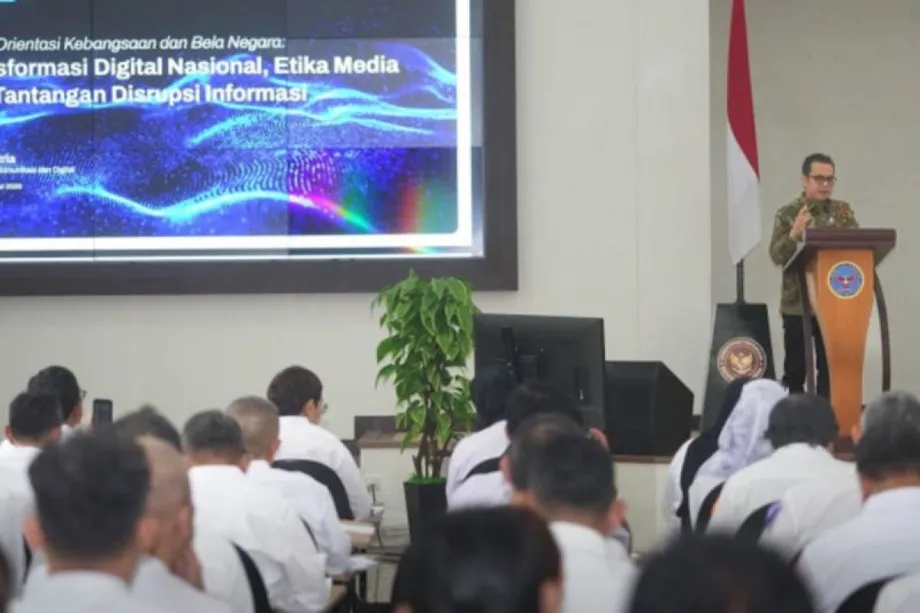
Deputy Minister Nezar Patria outlined the target after the Digital Infrastructure Summit 2026 in Central Jakarta on October 12, 2026. In its October 12 statement, numbered 209/HM-KKD/10/2026, the ministry said fixed broadband accounted for about 22% of total connectivity and that the government wanted to raise that figure to around 50%.
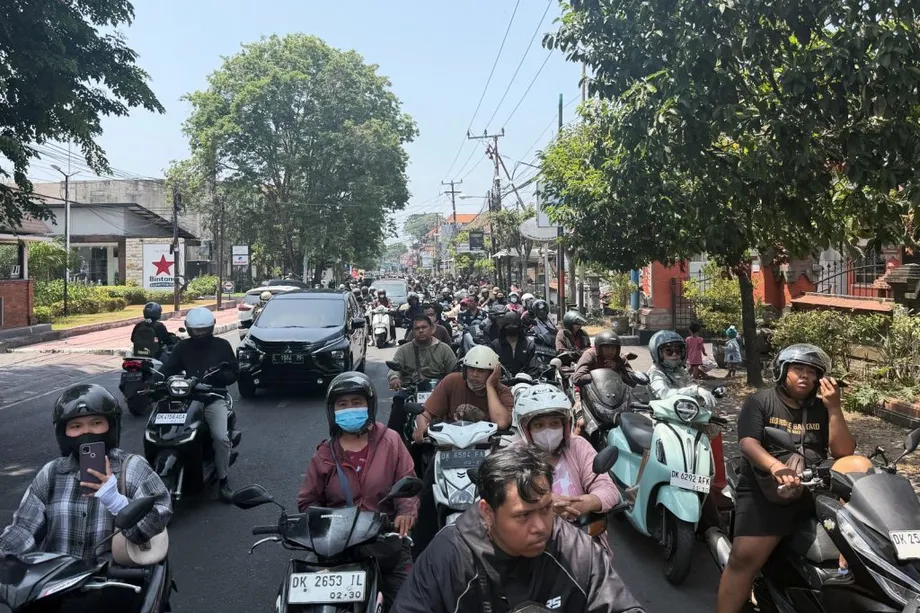
Nezar linked the price target to a broader problem: having a network nearby is useful only when people can afford a connection and receive adequate service. Komdigi wants households to have more choices beyond mobile internet, particularly in densely populated places where connectivity remains expensive.
The ministry's announcement follows discussion in February 2025 of using the 1.4 GHz radio spectrum band to deliver connections offering speeds up to 100 Mbps for Rp100,000 to Rp150,000 a month. Those earlier discussions identified a practical requirement behind the attractive price: operators need strong networks to carry data between local connections and the wider internet.
Komdigi has given no date for nationwide availability of the Rp100,000 service or for reaching its fixed broadband target. The proposal remains a policy goal under study, with network expansion, service quality and operators' ability to cover their costs central to delivery.
What the price target would mean for households
Nezar described current internet subscription costs of around Rp300,000 a month as too expensive. He said Indonesia's income per person was approaching US$5,000 and suggested that household internet should ideally be affordable at around Rp200,000 a month.
A Rp100,000 subscription would be Rp200,000 below the Rp300,000 figure he cited, a reduction of roughly two thirds. Over 12 months, the subscription bill would fall from Rp3.6 million to Rp1.2 million, saving Rp2.4 million before any other charges. The Rp100,000 target is also half of his Rp200,000 affordability benchmark.
Nezar attributed his assessment that Indonesian subscription prices remain high to data from the International Telecommunication Union, the United Nations agency responsible for information and communication technologies. The ministry's statement gave the assessment without identifying a particular ITU dataset or publishing a country comparison.
Income per person is a national average, while households have different earnings and expenses. For families with limited spending money, the monthly price matters alongside installation charges and any equipment costs. A lower advertised tariff therefore needs to translate into an affordable bill for the people the policy aims to reach.
Why Komdigi wants more fixed broadband
Fixed broadband provides an internet connection for a particular location, such as a home or office. Mobile broadband serves phones and other devices through cellular networks. A fixed connection can arrive through a cable or through a wireless link to equipment installed at the premises.
Nezar's 22% figure refers to fixed broadband's share of total connectivity, as described by the ministry. Raising that share to about 50% would mean an increase of 28 percentage points and more than twice the current proportion. The ministry's wording gives a connectivity measure rather than a count of households with subscriptions.
Nezar said the government wanted to reduce costs by strengthening fixed broadband alongside mobile broadband. His reasoning places the expansion of home connections at the centre of the affordability effort: more access would give residents additional service choices instead of leaving them dependent on a single type of connection.
Densely populated areas are a particular focus because many potential users live close together, yet the ministry says some still face relatively expensive connectivity. Serving more customers within a network's reach can spread infrastructure costs across more subscriptions. Operators must also provide enough capacity for those customers to use the service at the same time.
The 1.4 GHz plan came before the latest announcement
Komdigi policy coordinator Benny Elian described an earlier route toward cheaper internet during a Morning Tech event in Jakarta on February 24, 2025. He said selection for the 1.4 GHz spectrum band was intended to support monthly prices of Rp100,000 to Rp150,000 for speeds up to 100 Mbps.
Spectrum is the range of radio frequencies used to carry wireless signals. Allocating a band gives operators access to frequencies on which they can build services, subject to government rules and licensing conditions. The earlier price range and Nezar's later Rp100,000 target share the same ambition, with the latest announcement focusing on the lower end.
The main developments span two years:
- February 19, 2025: APJII Secretary General Zulfadly Syam questioned whether a Rp100,000 service offering 100 Mbps could sustain its speed and remain profitable.
- February 24, 2025: Benny outlined the Rp100,000 to Rp150,000 pricing ambition for the 1.4 GHz spectrum selection and said operators needed adequate backhaul.
- October 12, 2026: Nezar announced the Rp100,000 target after the Digital Infrastructure Summit and discussed expanding fixed broadband from about 22% to around 50% of total connectivity.
The February discussion focused on a particular wireless delivery route. The October statement described a wider effort covering fixed broadband expansion, mobile coverage and the affordability of service.
The network behind the home connection
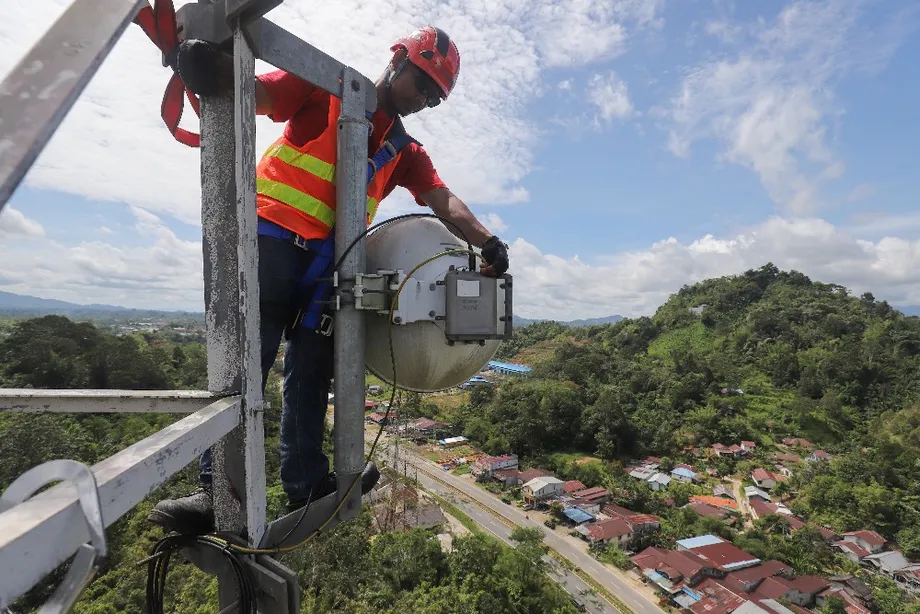
Benny identified backhaul as a requirement for affordable internet with dependable speed. Backhaul is the connection that carries data from a local access network, such as a wireless tower, into an operator's main network and onward to the internet.
A home connection may have a fast link to a nearby tower, but every request still needs to travel beyond that tower. If the connecting network has insufficient capacity, several households using it together can experience slower service. Backhaul therefore matters as much as the final connection to the home.
Benny said prospective operators needed existing cable infrastructure, particularly fibre optic networks, to support deployment. Fibre carries data using light through thin strands and can transport large amounts of traffic between network locations. His argument was that the main network had to be in place before the local service could work efficiently.
Benny, Komdigi's policy coordinator for digital infrastructure provision, explained that requirement in remarks translated from Indonesian:
That is why the requirement is the backhaul. The main network must already be there first. It must be someone with a cable network.
His statement connects the proposed retail price to an investment question. An operator with existing fibre infrastructure starts from a different position from one that must build the main network as well as the connections serving customers.
A commercial example, with costs still to consider
PT Solusi Sinergi Digital Tbk, known as Surge or WiFi, offered a Starlite package advertised at Rp100,000 for 100 Mbps. The package included free installation, one free month of service and no fair usage policy, meaning no stated usage threshold under such a policy for restricting customers' consumption.
The offer used fixed wireless access, or FWA, among the technologies supporting delivery. FWA connects a home or other fixed location by radio rather than requiring a cable for the entire final stretch. Fibre or another high capacity connection can still be needed behind the wireless equipment.
Deployment costs help explain why such pricing requires careful planning. Estimates discussed alongside the February 2025 proposal put the cost of a base transceiver station site at Rp1.5 billion to Rp4 billion, depending on its capacity and tower. A base transceiver station, often shortened to BTS, is equipment that sends and receives wireless signals.
FWA deployment costs were described as comparable to cellular deployment. Surge's actual spending on the Starlite network was not disclosed. The commercial example gives a concrete price and package, while the infrastructure estimates show the scale of investment operators may need to recover through customer payments.
Coverage and capacity pull in different directions
The February 2025 discussion identified 1.8 GHz, 2.1 GHz and 2.3 GHz as bands used for Indonesian 4G and 5G services, with 1.4 GHz considered for FWA. The proposed lower frequency was described as offering broader coverage, with lower capacity than 1.8 GHz in the deployment comparison.
Broader reach can allow a radio site to serve a larger area and may reduce the number of sites needed. Capacity determines how much traffic the network can handle. Actual performance depends on equipment, available spectrum, backhaul and the number of customers connected at once.
A speed of 100 Mbps means the connection can transfer 100 million bits of data per second under the conditions of the service. Several users streaming video, downloading files or joining calls together place demands on shared network capacity. Maintaining speed during busy periods is therefore a different task from making a signal reach a home.
Zulfadly Syam, secretary general of the Indonesian Internet Service Providers Association, known as APJII, questioned whether the low price could consistently support the speed target while keeping providers profitable. He said successful delivery depended on placing infrastructure in suitable locations and attracting enough customers.
Zulfadly also warned that increasing customer numbers would put pressure on the wireless network. Operators need subscription income to pay their costs, but serving more users requires enough capacity to keep the service useful. He also pointed to limited purchasing power as a barrier for some households even at the proposed price.
Reaching the places still without service
Komdigi says 4G coverage has reached about 97% of inhabited areas. Nezar said some places with relatively small populations still lacked telecommunications infrastructure, making access expansion a continuing priority alongside cheaper service in densely populated areas.
The ministry said it was incorporating obligations to build networks in underserved areas into spectrum auction policy. Operators receiving spectrum would be expected to help bring 4G and 5G connections to those places, as well as strengthen service where networks already operate.
Nezar described the obligation for operators winning spectrum rights in remarks translated from Indonesian:
We require all spectrum winners, when building 4G and 5G connections, to pay attention to these areas.
Spectrum allocation gives the government a way to attach public service requirements to a valuable resource. The approach links operators' access to frequencies with responsibilities toward communities that still need connectivity.
Fixed and mobile networks must grow together
Nezar put Indonesia's 5G penetration at around 8.5% and called for faster development. He connected that effort to growing demand for digital services and the need to strengthen connectivity in densely populated areas where access remains expensive.
The ministry's figures describe different measures: 97% is 4G coverage of inhabited areas, 8.5% is the stated 5G penetration figure, and 22% is fixed broadband's share of total connectivity. Each points to a different task, reaching places, developing newer mobile services or widening access to fixed connections.
Komdigi's approach joins those tasks rather than choosing only one. Fixed broadband expansion is intended to improve choice and affordability for homes, while mobile investment addresses coverage and capacity across communities.
The outcome for households will depend on three practical results: whether a service reaches them, whether its monthly bill fits their budget and whether the connection performs well when they need it. The Rp100,000 target gives the affordability effort a concrete benchmark, while the backhaul and spectrum discussions identify the work needed behind that price.
Key Points
- Komdigi is studying a target of Rp100,000 a month for home internet offering 100 Mbps.
- Nezar Patria announced the target on October 12, 2026, alongside an ambition to raise fixed broadband's share of connectivity from about 22% to around 50%.
- The proposed price is roughly two thirds below the Rp300,000 monthly cost cited by the deputy minister.
- Earlier discussions tied the 1.4 GHz spectrum selection to prices of Rp100,000 to Rp150,000 and required adequate backhaul.
- Surge's Starlite package offered a commercial example of Rp100,000 internet at 100 Mbps, with installation and introductory incentives.
- APJII raised concerns about consistent speed, customer purchasing power and providers' ability to remain profitable.
- Komdigi is also pursuing coverage obligations for spectrum recipients, with 4G reaching about 97% of inhabited areas and 5G penetration put at 8.5%.