Almaty talks focus on how much workers will receive
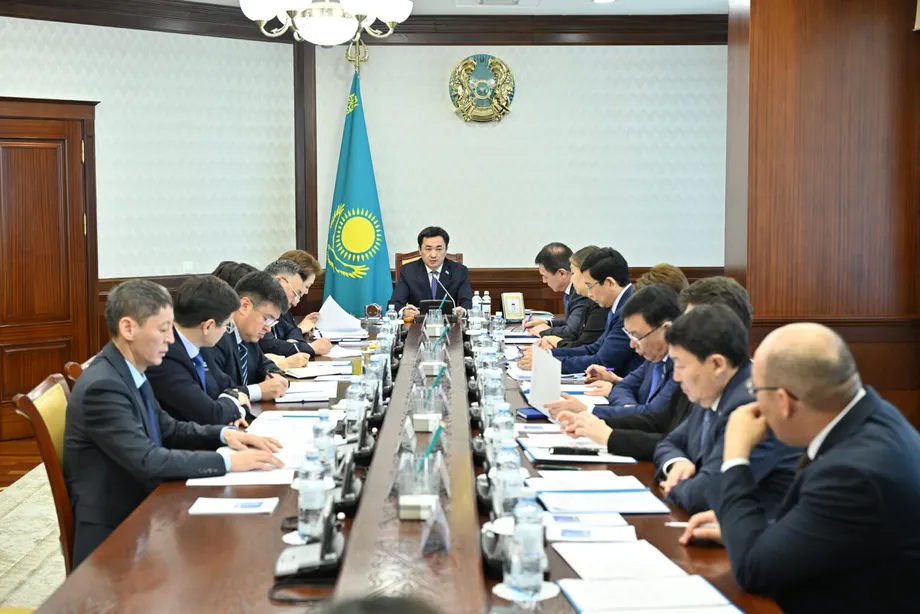
Kazakhstan is preparing proposals to increase retirement savings as compulsory employer pension contributions rise to 3.5% of employee income in 2026. At a working meeting in Almaty, Labour and Social Protection Minister Askarbek Yertayev and Unified Accumulative Pension Fund chairman Zhanat Kurmanov examined how regular payments from workers and employers could support larger future pensions.
Contents
- Almaty talks focus on how much workers will receive
- Employer contributions are already rising
- Why personal savings will carry more weight
- The savings gap begins during working life
- A proposed split would change who owns employer contributions
- State support is also part of the debate
- Earlier plans show how the timetable changed
- Investment choices could shape future balances
- Forecasts will test the choices before adoption
- Key Points
The discussions bring together two concerns: whether pensions will cover everyday needs and whether the system can keep paying them for decades. An assessment published by the pension fund shows the gap between those goals. Kazakhstan ranked seventh for financial sustainability in the 2023 Mercer CFA Institute Global Pension Index, but 38th for pension adequacy among 47 countries.
Financial sector specialists Bolat Zhamishev and Yelena Bakhmutova also attended the meeting. An interdepartmental working group chaired by Yertayev is developing proposals under a presidential instruction to strengthen pension finances and retirement provision.
The group is examining state payments alongside savings accumulated during employment, rather than treating each part separately. Its work includes forecasts of population changes, longer lives, employment patterns and future pension payments. No final package or adoption timetable was announced at the meeting.
For workers, the central issues are concrete: how regularly money reaches their pension accounts, whether employer contributions become their personal property, how investments perform and what state support they receive when they retire. Several proposals address these questions, while contribution increases already follow an established schedule.
Employer contributions are already rising
The pension fund's employer contribution notice sets out the current schedule. Employer compulsory pension contributions began at 1.5% of employee income in January 2024, rose to 2.5% in 2025 and reached 3.5% on January 1, 2026. They are scheduled to increase to 4.5% in 2027 and 5% in 2028.
The contributions principally cover employees born on or after January 1, 1975. This group has little or no employment history before the 1998 pension reform, which limits its entitlement to the older state solidarity pension.
Employers are exempt from these contributions for employees born before 1975, people of retirement age, people with permanent disabilities in groups 1 and 2, military personnel and equivalent categories. The Ministry of Finance's State Revenue Committee monitors whether employers pay fully and on time.
The fund describes three future payment components for eligible employees: a state basic pension, a funded pension built from compulsory worker contributions and a notional funded pension supported by employer contributions. A notional account records a person's pension entitlement, while the money supports a shared payment system rather than belonging to that person as individual savings.
The distinction matters for families. Under current rules, payments from the employer component last for life but stop after permanent emigration or a change of citizenship. Employer contributions cannot be inherited. Money associated with participants who die or lose Kazakh citizenship remains available for payments to other participants.
Why personal savings will carry more weight
The fund's pension system overview describes a structure combining state provision, compulsory savings contributions of 10% of monthly income and voluntary contributions. Workers can use voluntary payments to add to their retirement savings.
The older solidarity pension depends on employment before January 1, 1998. The fund's overview describes eligibility for people with at least six months of employment before that date. As younger generations retire, their qualifying service becomes shorter and this pension component declines.
An expert assessment published by the fund expects new solidarity pension awards to cease in the early 2040s. Its system overview places the transition toward the accumulative model around 2040. For younger workers, regular contributions and investment results therefore carry increasing weight alongside the state basic pension.
The savings gap begins during working life
The fund's expert reform proposals, discussed by its Public Council on June 14, 2024, contain a striking finding: 37% of people retiring in 2024 had accumulated savings for fewer than five years, compared with the 26 years possible since the 1998 reform.
The experts identified low earnings, understated declared income, irregular contributions and informal employment as major causes. People working for themselves, including those outside formal employment arrangements, were particularly affected by small or infrequent payments.
A higher contribution rate produces limited savings when payments arrive only occasionally. The proposals therefore combine changes to contribution rules with incentives to bring more workers into the system and make their payments regular.
One recommendation would introduce matching state contributions for people without a permanent employer who have earned income and contribute independently. The proposed conditions include payments equivalent to at least 12 contributions a year, based on income of at least one minimum wage, with an option to pay the annual amount at once.
The experts also recommend treating contributions based on at least one minimum wage as full participation when calculating qualifying service and matching support. Their intended result is both a larger savings balance and a stronger employment record for calculating the basic pension.
A proposed split would change who owns employer contributions
The expert group includes Grigory Marchenko, Oraz Zhandosov, Bolat Zhamishev, Kadyrzhan Damitov, Anvar Saidenov and Yelena Bakhmutova. Its recommendations would redirect the eventual employer contribution of 5%: four percentage points would enter individual pension accounts, while one percentage point would finance a guarantee of continuing payments after personal savings run out.
Under that design, more of the employer contribution would build savings belonging to the worker. The shared insurance component would address a different problem: people may live longer than the period their individual balance can finance.
The experts also propose extending employer contributions beyond the current birth date restriction. The pension fund's 2026 notice confirms that individual ownership and broader age coverage remain under discussion.
The group's calculations project that the median monthly payment from the current employer component could be only 8,000 to 10,000 tenge in 2040, expressed in 2024 prices. Using a fixed year's prices helps readers understand future purchasing power without inflation making the amount appear larger.
The experts expect the first payments from this component in 2038. Their assessment argues that its projected benefits would be too small to replace the declining solidarity pension and identifies a risk of benefit reductions or budget support under the existing design.
State support is also part of the debate
The 2024 expert recommendations propose strengthening the basic pension as the solidarity pension fades. They suggest using the minimum wage, rather than the subsistence minimum, as the common reference for pension calculations. The subsistence minimum is a benchmark for basic living costs; the minimum wage connects the calculation more directly to earnings.
The experts argue that pension support can fall behind working incomes when its reference amount rises only with forecast inflation. They also propose maintaining state pension expenditure at no less than 3% of gross domestic product, allowing support to grow with the economy.
Moore Kazakhstan's pension changes briefing describes another proposal: a social pension calculated using a person's average monthly income relative to the median wage, together with employment history. The median wage is the middle wage when workers' earnings are arranged from lowest to highest.
The briefing also describes consideration of an employment record of 40 years as a retirement condition, with more flexible timing for public sector employees whose service exceeds that threshold. It presents these measures as proposals awaiting review.
Moore lists measures already implemented from January 1, 2026: a 10% increase in basic and solidarity pensions and a rise in the maximum basic pension from 110% to 118% of the subsistence minimum. A further increase to 120% is planned for 2027.
Earlier plans show how the timetable changed
Kazakhstan has debated changes to these components for several years. Proposals described on March 29, 2022, envisaged employer contributions of 5% beginning in 2023 and a transition from the basic pension to a minimum guaranteed pension from 2028. The employer scheme ultimately began in 2024 at 1.5%, with the full 5% scheduled for 2028.
The 2022 discussion included projections that, without decisive measures, pensions would replace 39.2% of lost earnings in 2040 and 29.5% in 2060. A replacement rate measures how much of a worker's former income a pension provides. The projected decline was 9.7 percentage points between those dates.
At that time, the average pension was reported as 105,538 tenge, comprising 72,914 tenge in solidarity payments and 32,624 tenge in basic payments. Those figures show the substantial role the solidarity component played in the state pension then.
The main dates in the reform discussion are:
- March 29, 2022: proposals envisaged employer contributions of 5% from 2023 and changes to minimum pension support from 2028.
- January 1, 2024: employer contributions began at 1.5% of income.
- June 14, 2024: the pension fund's Public Council discussed the expert reform package.
- January 1, 2026: employer contributions rose to 3.5%.
- 2027 and 2028: the scheduled employer rates are 4.5% and 5%, respectively.
- 2038: the expert assessment expects the first payments from the employer contribution component.
Investment choices could shape future balances
Investment returns form another major part of the discussion. Ramazan Dosov, chief analyst at the Association of Financiers of Kazakhstan, puts accumulated investment income at more than 40% of total pension savings. His assessment highlights why contribution collection and investment management need to be considered together.
The financial regulator's portfolio framework provides for risky, moderate and conservative strategies. The risky option is intended for people with more than 13 years until retirement and has an assessment period of 60 months. The moderate strategy uses 36 months and the conservative strategy 12 months.
The reported reference allocations range from 80% in shares for the risky strategy to 20% for the conservative strategy. Shares can offer growth but fluctuate sharply; bonds generally provide more predictable payments, although their prices also change. A worker approaching retirement has less time to recover from a market fall.
Minimum performance requirements are tied to market benchmarks: 95% of benchmark returns over 12 months for the conservative strategy, 90% over 36 months for the moderate strategy and 85% over 60 months for the risky strategy. A benchmark is a reference measure against which investment performance is assessed.
Managers must cover a shortfall below the required minimum from their own capital. The amount of protection depends on performance relative to that threshold. Purchasing power, meanwhile, depends on how investment returns compare with inflation.
The transfer rules described for September 7, 2026, allow contributors to place up to 100% of their pension savings with private managers, compared with the previous limit of 50%, and to distribute savings among managers. Applications can be made through the fund's online account using a digital signature or at a branch, with transfers taking up to 30 calendar days.
Figures dated September 1, 2026, put assets with private managers at 151.3 billion tenge, or 0.53% of pension assets totalling 28.45 trillion tenge. Earlier figures put total savings at 28.3 trillion tenge. Private management therefore accounted for a small share of the system at the September measurement.
Forecasts will test the choices before adoption
The Almaty working group is using actuarial calculations to assess proposed changes. These calculations combine assumptions about contributions, wages, investment returns, retirement and life expectancy to estimate future payments and the money needed to finance them.
Yertayev, the labour and social protection minister, described the review's objective at the meeting:
Our task is to develop approaches to the development of the pension system that will ensure its sustainability and at the same time create conditions for decent pension provision for citizens in the future.
The minister said each proposed decision must receive a comprehensive assessment that takes account of both current and future generations. Kurmanov said the pension fund was ready to continue working with government bodies and the expert community.
The Labour Ministry, the pension fund, the State Social Insurance Fund and experts will continue preparing recommendations. Their task links three practical needs: helping workers contribute consistently, building sufficient personal savings and financing payments that can continue throughout retirement.
Key Points
- Kazakhstan is preparing pension proposals focused on larger savings, broader participation and sustainable payments.
- Employer contributions rose to 3.5% in 2026 and are scheduled to reach 5% in 2028.
- Experts propose directing four percentage points into personal accounts and one into a lifetime payment guarantee.
- In the 2024 assessment, 37% of new retirees had fewer than five years of accumulated savings.
- State pension support, contribution incentives and investment management are all under review.
- The Almaty meeting announced no final reform package or adoption deadline.