Restoration targets combine water investment with wider access to land
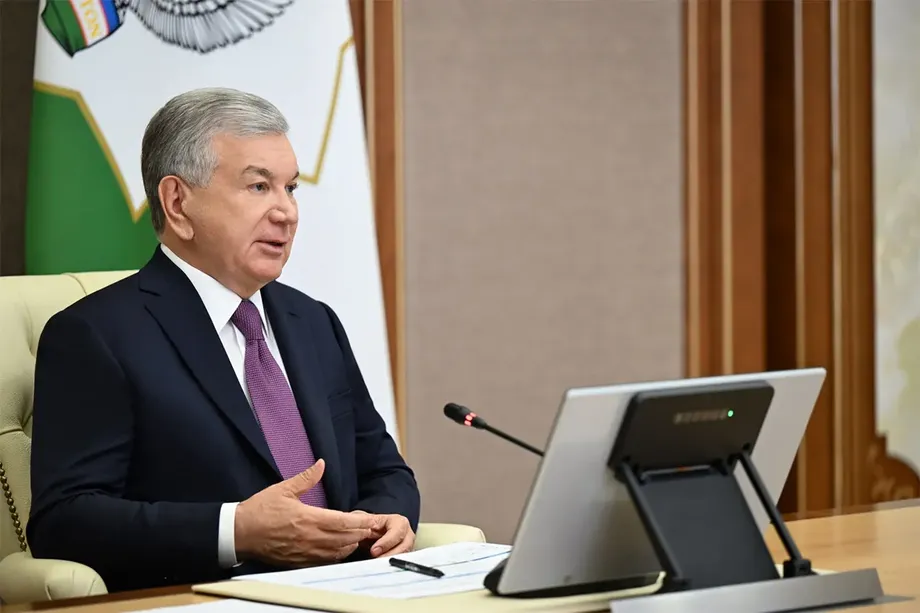
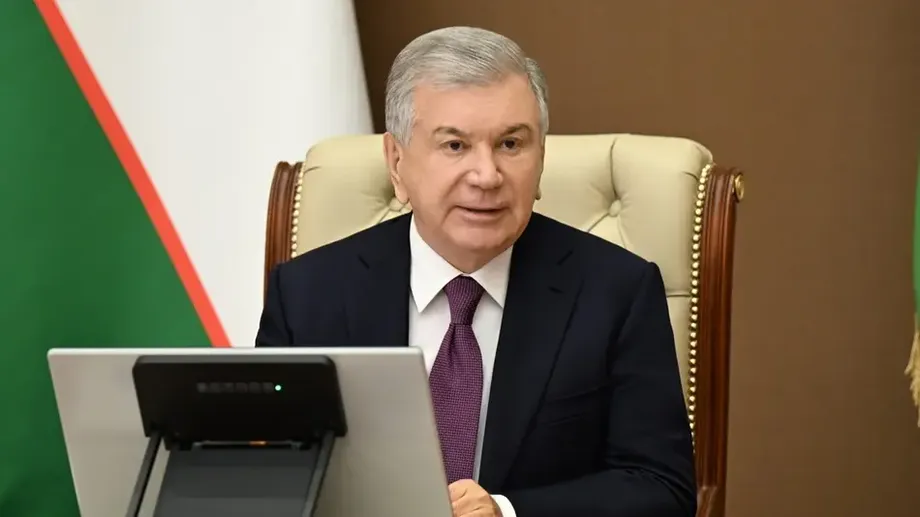
Uzbekistan has set targets to restore 620,000 hectares of pasture by the end of 2026 and another 3.7 million hectares in 2027, while granting 470 communities free access to grazing land for 49 years. The measures were outlined at a presentation reviewed by President Shavkat Mirziyoyev on October 13, 2026, linking pasture recovery, water infrastructure and changes to land use rights.
Contents
- Restoration targets combine water investment with wider access to land
- Governors have one month to approve recovery programmes
- Lease revenue will fund additional wells
- A three year irrigation programme has a funding ambiguity
- Kengsoy links a pumping station to a fodder target
- Nishon irrigation is to be extended to two more districts
- Community leases and existing grazing rights are separate measures
- Livestock complexes can be built without reclassifying pasture
- Other activities will be allowed under restoration conditions
- Key Points
The presidency's pasture restoration statement says the country has 21.255 million hectares of pasture, but only 40 percent is used effectively. That amounts to about 8.502 million hectares, leaving 12.753 million hectares outside the area described as effectively used. The statement does not say that all of that remaining land is degraded.
The two annual restoration targets total 4.32 million hectares, equivalent to about 20.3 percent of the national pasture area. The 2027 target is almost six times the 620,000 hectares assigned for 2026. Those figures describe planned restoration and productivity improvements, rather than completed work.
Mirziyoyev connected better use of pasture resources with food security. The programme addresses that goal through several distinct measures: repairing and drilling wells, expanding irrigation and fodder production, securing existing grazing rights, and opening pasture leases to other activities under requirements to preserve and restore the land.
Governors have one month to approve recovery programmes
The presentation concerned implementation of a recently signed Presidential Resolution on effective pasture use. Regional governors must work with the Livestock and Pasture Development Agency to approve comprehensive programmes within one month. These programmes are intended to reduce degraded pastureland by 10 percent in 2026 and 20 percent in 2027.
These percentage targets are separate from the hectare restoration targets. The presidency does not give a starting figure for degraded pastureland or specify whether the two annual reductions use the same baseline. They therefore cannot reliably be converted into hectares or added together as a promised 30 percent reduction.
The distinction matters because improving productivity and reversing degradation are related but different tasks. Better water access may allow pasture to support more livestock or fodder production, while recovery also requires the land to regain its ability to sustain vegetation. The announcement sets targets for both, without publishing the measures that will be used to judge completion.
Several deadlines run alongside the regional programmes:
- Within one month of the October 13, 2026 presentation: governors and the agency are to approve comprehensive recovery programmes.
- By the end of 2026: restore 620,000 hectares, repair 1,600 wells and construct 161 irrigation facilities.
- By the end of 2026: arrange community leases covering 627,000 hectares and extend the commission handling existing pasture use rights.
- In 2027: restore 3.7 million hectares, improve water supplies across 1.5 million hectares and construct 81 further irrigation facilities.
- In 2028: construct another 81 irrigation facilities.
Lease revenue will fund additional wells
Revenue from pasture leases will remain with regional pasture management organisations. Those funds are to finance 448 additional wells, with improved water supplies expected across 1.5 million hectares in 2027. Separately, 1,600 existing wells are scheduled for repair by the end of 2026.
The approach ties income from pasture use to investment in the same sector. It also places substantial weight on restoring existing infrastructure: the number of wells due for repair is more than three times the number of additional wells planned.
The stated water coverage of 1.5 million hectares is equivalent to about 7.1 percent of Uzbekistan's total pasture area. This is a coverage target, not a claim that every hectare will receive crop irrigation. The statement does not describe the capacity of individual wells, the water sources they will draw on or how the improved supply will be distributed.
Nor does it specify whether these 1.5 million hectares overlap with areas covered by other irrigation projects. Adding the water coverage figure to the restoration targets would risk counting the same land more than once.
A three year irrigation programme has a funding ambiguity
The construction schedule calls for 323 irrigation facilities: 161 in 2026, followed by 81 in each of 2027 and 2028. Together, they are expected to make restoration possible across 969,000 hectares, about 4.6 percent of the country's pasture area.
The presidency's English statement associates 100 billion soums in state budget funding with the full programme of 323 facilities. Reports differ on the scope of that allocation. Some attach the 100 billion soums specifically to the 161 facilities planned for 2026, then list the later construction separately.
The construction totals and annual schedule agree across those accounts, but the funding description does not. The published statement does not provide a breakdown by year or facility, so it is not possible to establish from it whether the allocation covers all three years or the first phase alone.
The 969,000 hectares are another project coverage figure, rather than an additional restoration commitment that can simply be added to the 4.32 million hectare target. The announcement does not map the relationship between the irrigation programme, new wells and annual regional recovery plans.
Kengsoy links a pumping station to a fodder target
In Navoi region, 30 billion soums from the local budget have been allocated to reconstruction of the Kengsoy pumping station. The project is intended to enable development of 20,000 hectares of pasture. Eleven entrepreneurs have begun building water reservoirs and introducing sprinkler irrigation.
The planned annual output is 250,000 tonnes of fodder for 60,000 cattle. Across the full 20,000 hectares, that would average 12.5 tonnes per hectare each year. This calculation describes the scale of the production target, not a yield already achieved.
Reports differ on the pumping station's completion status. The presidency's English statement says it is being reconstructed, while other accounts describe reconstruction as completed. Both describe pasture development and entrepreneurs' reservoir and irrigation work, but the station's precise status is not settled by those descriptions.
The fodder target also lacks a specification of crop types or whether tonnage refers to fresh material or dry matter. That limits any assessment of its feeding value. What is explicit is the intended connection between public investment in pumping infrastructure and private work on reservoirs and irrigated fodder production.
Nishon irrigation is to be extended to two more districts
In Nishon district of Kashkadarya region, pivot irrigation systems are being introduced across 1,332 hectares alongside new fodder crops adapted to local conditions. A pivot system uses sprinklers mounted on equipment that rotates around a central point to distribute water across a field.
Officials were instructed to extend this experience to Muborak and Dehkanabad districts. They were also told to establish 9,400 hectares of seed production areas within one year. These areas are intended to produce seed, a different function from land used directly to grow livestock feed.
The presidency does not name the new fodder crops, assign areas to each district or give expected yields for the expansion. The instructions therefore establish a direction and an area target, rather than a detailed production plan. The seed programme could support wider planting, but its eventual output is not quantified.
Community leases and existing grazing rights are separate measures
For residents of remote areas who keep livestock in their households, 627,000 hectares of community pasture are to be leased free of charge to 470 mahallas by the end of 2026. Mahallas are local community bodies. The leases will last 49 years, and the land will be exempt from taxation.
Dividing the total area by the number of communities gives an average of about 1,334 hectares per mahalla. That is only an arithmetic average: the announcement does not say allocations will be equal or identify how much land each community will receive.
A separate measure concerns farmers who have used pasture for many years. The mandate of the commission handling their rights will be extended until the end of 2026 so it can formalise existing use of 623,000 hectares currently supporting 260,000 livestock.
The two measures should not be confused. One creates free community leases for household grazing; the other formalises rights for existing users. The presidency describes the latter as land use rights, which does not establish that farmers will receive outright ownership. It also does not state whether the two land areas overlap, so they cannot confidently be combined into a single total of newly allocated pasture.
Livestock complexes can be built without reclassifying pasture
The new framework will permit construction of livestock complexes without changing the land's pasture classification. Starting prices for plots and land tax will be calculated on the same basis as agricultural land. This is a different arrangement from the tax exemption announced for community pasture leases.
Plans have been approved for 15 complexes in Navoi, Samarkand and Surkhandarya regions. They will occupy a combined 130 hectares and have capacity for more than 55,000 livestock. That capacity averages more than 3,666 animals per complex, although individual sites may differ in size.
The 130 hectares describe the combined complex sites, not the total grazing area needed to support their animals. The announcement does not specify livestock types, construction dates, operating costs or the amount of surrounding pasture available to each project.
Other activities will be allowed under restoration conditions
Pasture leases will also be available for ecotourism, beekeeping, medicinal plant cultivation, seedling production, hunting and sericulture. Sericulture means raising silkworms for silk production. These uses broaden the activities permitted on pasture beyond conventional livestock farming.
The permission comes with a stated condition: projects must preserve the natural condition of pastures and ensure their restoration. The presidency does not describe monitoring arrangements, environmental thresholds or penalties for failing to meet those requirements.
The programme therefore combines wider economic use with a restoration obligation. Its next concrete tests are the regional programmes due within a month and the extensive work scheduled before the end of 2026. The announcement provides targets and instructions, but not evidence that the national restoration goals, community allocations or infrastructure programme have already been completed.
Key Points
- Uzbekistan plans to restore 620,000 hectares of pasture in 2026 and 3.7 million hectares in 2027.
- Only 40 percent of the country's 21.255 million hectares of pasture is described as effectively used.
- Regional recovery programmes must be approved within one month of the October 13 presentation.
- Plans include 448 additional wells, repairs to 1,600 wells and 323 irrigation facilities through 2028.
- Some 470 mahallas are to receive 627,000 hectares under free, tax exempt leases lasting 49 years.
- A separate commission will formalise existing pasture use rights covering 623,000 hectares.
- Fifteen livestock complexes are planned, while other permitted pasture activities must preserve and restore the land.