53 MPs Back Debate on the Ras Malé Agreement
A demand to publish the Maldives government's agreement with Eagle Hills has secured parliamentary debate with support from 53 MPs, including members of the ruling People's National Congress. The proposed Maldives Waterfront and Marina development involves roughly 500 hectares of reclaimed land at Ras Malé, property leases of up to 99 years and investment estimates ranging from USD 12 billion to USD 20 billion.
Contents
- 53 MPs Back Debate on the Ras Malé Agreement
- What Has Been Signed, and What Is Still Unfinished?
- The Central Dispute Is Whether Lease Rights Can Keep Restarting
- The Court Filing Was Rejected on Procedure, Not Its Merits
- USD 12 Billion and USD 20 Billion Are Different Accounts
- Revenue Sharing Does Not Yet Explain the Full Public Return
- The 5,000 Homes Are an Initial Investment, Not Clearly a Gift
- Tourism and Job Forecasts Depend on Delivery
- Nationality Checks Are the Government's Answer to Settlement Concerns
- Religious Concerns Extend Beyond Property Eligibility
- The Next Decisions Are Legislative and Contractual
- Key Points
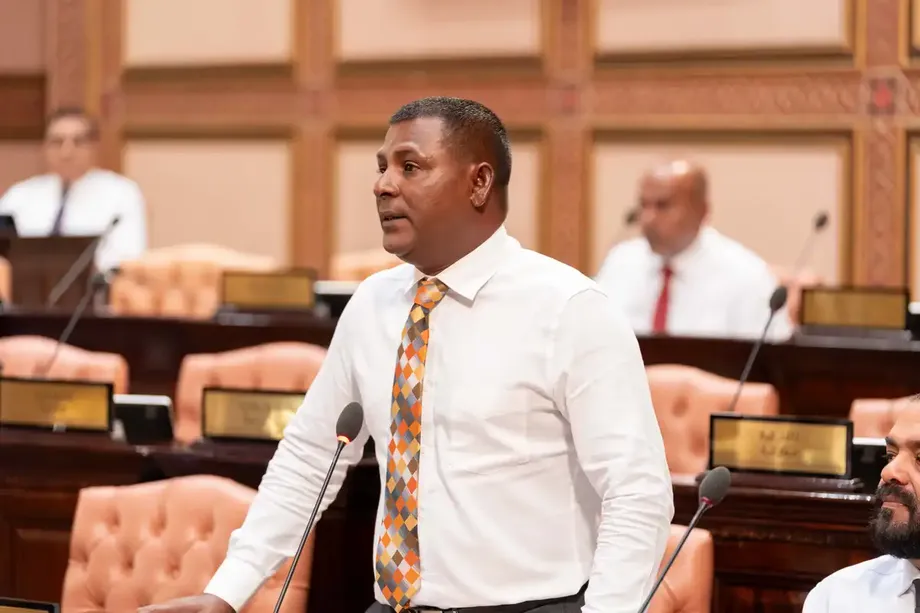
South Galolhu MP Meekail Ahmed Naseem, of the opposition Maldivian Democratic Party, submitted the disclosure motion as Parliament resumed its third session on October 5, 2026. He wants the full commercial terms agreement published and lawmakers to examine how the arrangement protects public land and finances. Acceptance for debate does not mean Parliament has endorsed his allegations or ordered disclosure.
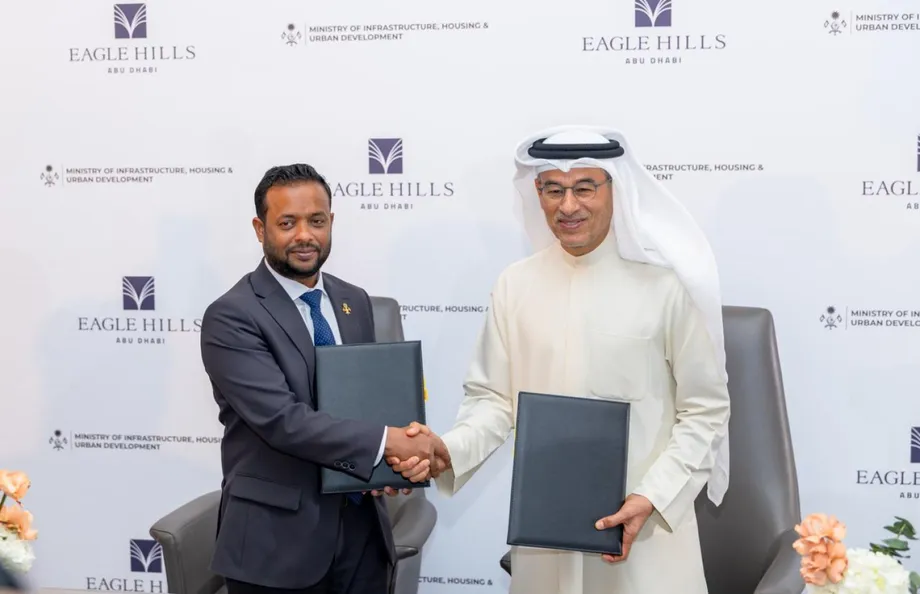
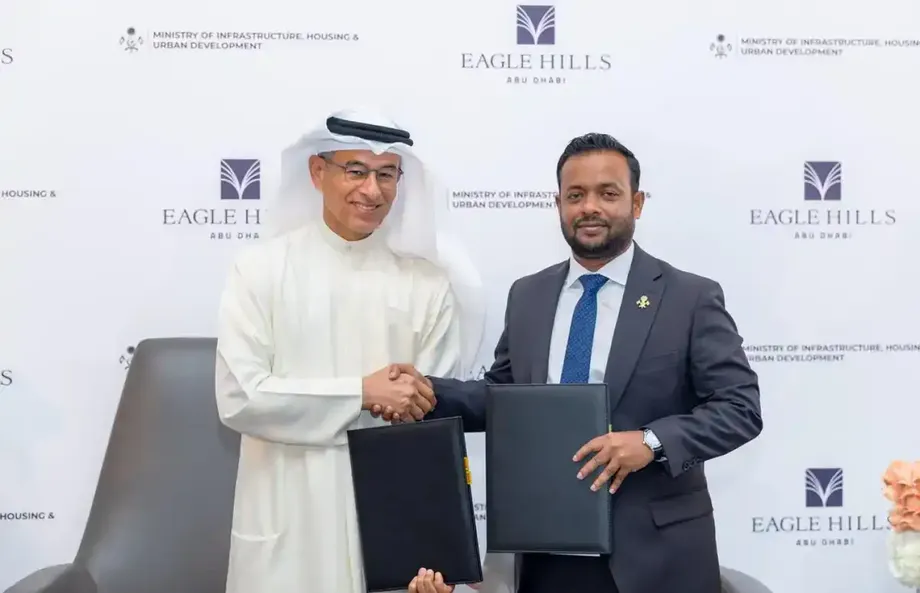
The government and Abu Dhabi developer Eagle Hills signed the agreement on September 21, 2026. Its full text remains unpublished. Public statements describe a major destination combining hotels, residences, a marina, shops, restaurants, schools and healthcare facilities, but leave important questions about investment commitments, revenue calculations and land rights unresolved.
Introducing the motion, Meekail warned that secrecy could expose public assets and finances to losses and create opportunities for corruption.
"Keeping an agreement for a project of this scale secret could cause significant losses to state assets and finances and create opportunities for corruption," Meekail said.
The government rejects claims that Maldivian land is being sold. President Dr. Mohamed Muizzu says ownership will remain Maldivian and that the project carries no sovereign guarantee, government loan, tax exemption or duty exemption. The dispute concerns what the agreement actually commits each side to do, and whether its lease arrangements comply with constitutional limits.
What Has Been Signed, and What Is Still Unfinished?
Eagle Hills' official project announcement says the commercial terms agreement establishes the shared vision and principal commercial terms, with detailed terms to be developed as the project progresses. That distinction matters: an agreement on the main commercial structure is not the same as a complete set of contracts governing construction, financing, property transfers and enforcement.
Attorney General Ahmed Usham says implementation requires further agreements and relevant legislation. He has identified a newly drafted Real Estate Act as part of the proposed framework and said physical construction would begin only after Parliament passes the legislation and final agreements are signed following further discussions.
Eagle Hills chairman Mohamed Alabbar says detailed agreements are still being finalised and will be disclosed when complete. During his October visit to the Maldives, he offered a brief assurance about transparency:
There is nothing to hide.
That promise does not resolve Meekail's request for the document already signed. The distinction is between publishing the existing commercial terms now and releasing future agreements once negotiations have concluded.
The Central Dispute Is Whether Lease Rights Can Keep Restarting
The most consequential published provision concerns what happens when a property changes hands. Eagle Hills says properties will be offered under Maldivian law through leases lasting up to 99 years. Upon each sale or inheritance transfer, a new term of up to 99 years will begin.
Infrastructure, Housing and Urban Development Minister Dr. Abdulla Muththalib says buyers would own the developed property, not the underlying land. He also says transfers require government approval, the seller's rights end upon resale, and the buyer receives a new lease directly from the government.
In explaining those controls, Muththalib said:
"No property in Rasmalé can be bought, sold, or transferred between individuals without government permission. When selling any property, it must be submitted to the government. Furthermore, the government retains the discretion to review the recipient of that property and decide whether or not to grant approval," he stated.
A lease gives a party the right to use land for a defined period without transferring permanent land ownership. The legal concern here is narrower than a simple allegation of sale: critics argue that repeatedly starting a fresh 99 year term could allow foreign land rights to continue without a definite final expiry date.
Muththalib says holders cannot renew leases indefinitely at their own discretion. That assurance and Eagle Hills' transfer provision are not necessarily identical propositions. Government approval could control each transaction while successive approved transfers still restart the clock. The unpublished contracts and proposed legislation would need to explain how those rules work together.
The Court Filing Was Rejected on Procedure, Not Its Merits
Lawyer and former Kendhoo MP Ali Hussain sought to have the agreement declared unlawful and void from the outset. He also requested an interim injunction, a temporary court order that would stop implementation while the constitutional challenge was considered.
The Supreme Court Registrar declined to accept the case at the initial filing stage, saying a case of this nature could not be brought directly to the Supreme Court first. The registrar's decision can be submitted to the judges' council for review. This was a procedural rejection, not a judgment confirming that the agreement is constitutional.
Hussain's argument centres on Articles 250 and 251 of the Constitution. Article 250 requires dealings involving state property to follow the law. Article 251 bars foreign ownership of Maldivian territory and limits leases to foreign parties to 99 years. Hussain contends that the government lacks the necessary legal authority for the arrangement and that repeated lease resets could breach the constitutional limit.
Meekail's motion also invokes Article 29 on access to information and Article 70 on Parliament's responsibility to oversee the executive. His resolution recalls Muizzu's July 26, 2024 Independence Day assurance that Ras Malé would not be leased or given free to foreign parties, contrasting it with the proposed Eagle Hills arrangement.
The foreign ownership rule has changed before. A constitutional amendment adopted in 2015 allowed qualifying foreign investments above USD 1 billion to obtain ownership where at least 70 percent of the project site was reclaimed. Its repeal in April 2019 restored the foreign ownership ban and the 99 year lease limit. The current challenge concerns that restored framework.
USD 12 Billion and USD 20 Billion Are Different Accounts
The project's financial scale is disputed. Government descriptions place the envisaged development at USD 20 billion. Other accounts put Eagle Hills' estimate across the phases at about USD 12 billion. Alabbar has also described a possible scale approaching USD 20 billion, while the official company announcement does not give a specific investment amount.
Maradhoo MP Ahmed Deedee says the government and company accounts do not match. He points to an USD 8 billion difference between USD 20 billion and USD 12 billion. The lower figure is 40 percent below the higher one, a substantial gap that cannot be explained without knowing what each estimate includes.
The government separately projects more than USD 30 billion in gross foreign investment over the project's lifetime, including about USD 18 billion in net investment. These figures should not be treated as interchangeable with construction costs or a guaranteed developer commitment. Gross flows can measure more money moving through a project than the amount retained as net investment.
Nor are the estimates of public income directly comparable. Muththalib has described expected state revenue above USD 11 billion over the development period; Alabbar has estimated nearly USD 20 billion in taxes over the project's lifetime. Those statements concern different periods and potentially different categories of income. Neither establishes how much the state is contractually guaranteed to receive.
Revenue Sharing Does Not Yet Explain the Full Public Return
Muththalib has outlined a proposed 10 percent developer revenue share for the state and a 4 percent levy on property transactions. He says each resale requires a payment equal to 4 percent of its value. Tourism goods and services tax and other applicable taxes would also remain payable.
The government says property sale proceeds would enter an escrow account in the Maldives under government control. An escrow account holds money subject to agreed conditions for release. Officials argue that routing proceeds through domestic banks would help ease the dollar shortage and strengthen official reserves, although the scale and timing of that benefit depend on actual sales and the account's rules.
One government estimate puts the state's land value return at USD 3 billion, or MVR 47 billion, from a 10 percent share of revenue associated with more than 8,800 properties over a development period of roughly ten years. The precise calculation base, duration of the share and treatment of costs remain unresolved publicly.
Meekail alleges that taxpayer funded reclamation costs would not be recovered and that Eagle Hills would receive land without an acquisition payment or rent. The government presents future revenue, housing and taxes as the public return instead. Determining whether that exchange protects the state requires the payment schedules, deductions, development obligations and remedies if the developer fails to deliver.
The 5,000 Homes Are an Initial Investment, Not Clearly a Gift
A central government argument is that Eagle Hills would develop 5,000 housing units in Hulhumalé before physical work on the wider Ras Malé project begins. Alabbar estimates their cost at approximately USD 500 million, or about USD 100,000 per unit. Other descriptions place the housing package between USD 400 million and USD 500 million.
Officials say the state would receive the units without borrowing or providing guarantees. Alabbar describes them as Eagle Hills' first investment, with the company recovering the money as the wider development progresses. Another account says the housing costs would be deducted from the government's revenue share.
These descriptions distinguish initial financing from ultimate cost. Eagle Hills paying first does not necessarily mean the homes are provided without a later charge to the state's project receipts. The recovery formula is therefore central to understanding the value of the housing package.
The land allocation figures also vary. Finance Minister Hassan Zareer has described 500 hectares out of 1,100 hectares planned for reclamation, including three resorts. Muththalib says another 500 hectares would remain for locals. Other project descriptions give totals of 1,153 hectares or 1,009 hectares, while the developer's proposed site has also been described as 520 hectares. Using Zareer's figures, 500 hectares represents about 45 percent of the planned area. A definitive boundary and consistent masterplan would resolve those differences.
Tourism and Job Forecasts Depend on Delivery
Government projections anticipate more than one million annual visitors and more than USD 2 billion in annual tourism revenue when the destination reaches maturity. Against a reported annual Maldives tourist total of 2.2 million, one million additional tourists would represent an increase of about 45 percent, if all were genuinely additional arrivals.
Employment forecasts use different measures. The government projects more than 54,000 direct and indirect jobs. Alabbar estimates 40,000 jobs during construction and between 15,000 and 18,000 permanent jobs once the destination is operating. Construction employment, continuing employment and jobs generated indirectly through suppliers are not equivalent counts.
Alabbar has promised opportunities for Maldivian companies, local investors and domestic banks. Describing the company's approach elsewhere, he said:
All our contractors are local to that country, as are all our suppliers and architects.
The Egyptian Marassi development offers a useful comparison of scale, rather than proof of what Ras Malé will deliver. Marassi reports 12 hotels and 8,000 residences across 6.5 million square metres, equivalent to 650 hectares, with 63 percent left as open space. That area is 30 percent larger than a 500 hectare Ras Malé site.
Marassi reports USD 3.7 billion invested, USD 1.7 billion in revenue and USD 600 million in taxes through 2026, alongside 1,626 contractors and suppliers and more than 130,000 jobs through its operations. It also reports producing 5.8 million cubic metres of fresh water and 1.2 million cubic metres of recycled water annually. These figures illustrate the infrastructure and supplier demands of such a development, but their time periods and employment measures do not make them direct forecasts for the Maldives.
Nationality Checks Are the Government's Answer to Settlement Concerns
Muththalib says Israeli citizens and companies controlled by Israel would be barred from participating as buyers, beneficial owners, shareholders, financiers or sales agents. A beneficial owner is the person who ultimately owns or controls an asset, even when a company or intermediary holds it formally.
He says purchasers and beneficial owners would have to disclose every current and former nationality, with checks repeated whenever ownership changes. False disclosure could lead to lease termination, state confiscation of the property and forfeiture of payments.
Deedee argues that people holding Israeli and other passports could enter using another nationality, and questioned whether authorities could remove 1,000 or 2,000 such arrivals. Those numbers were hypothetical, not reported arrivals. The minister's proposed checks go beyond the passport presented at entry by requiring disclosure of nationality history.
The Maldives has barred entry on Israeli passports since April 2025. Muththalib says residence would be available only through the existing Corporate Resident Visa scheme, with immigration law continuing to apply. Property purchase would not automatically grant a buyer or family members permission to reside.
The minister also dismissed fears of Jewish settlement and said the project would not permit it. That broader religious description should be distinguished from the nationality and corporate control restrictions he outlined. Jewish identity and Israeli citizenship are not interchangeable, and the stated screening mechanism concerns nationalities and ownership structures.
Religious Concerns Extend Beyond Property Eligibility
On October 13, 2026, the Maldivian Scholars Association raised concerns with Islamic Minister Dr. Mohamed Shaheem Ali Saeed about foreign settlement, Islamic identity, sovereignty, independence, economic autonomy and culture. It asked him to convey those concerns to Muizzu.
The association said its position reflected information obtained from relevant government authorities. It also met Muththalib, Attorney General Usham and Economic Minister Saeed. Those meetings show that the debate extends beyond the opposition's parliamentary and legal challenges.
Religious scholar Sheikh Adam Nishan separately described the issues as "extremely concerning and dangerous" and warned about land, independence and Maldivians becoming subordinate in their own country. These are objections and warnings, not established outcomes of the development.
Eagle Hills says it will comply with Maldivian law. Its official announcement also promises development on reclaimed land without further dredging by the company and independent marine monitoring during construction. Those commitments do not settle questions about earlier reclamation work. The project's wider history includes cancellation of a CMCC reclamation contract, a reported USD 21 million payment and an Anti Corruption Commission investigation opened in March 2024. That investigation should not be treated as a finding against the Eagle Hills agreement.
The Next Decisions Are Legislative and Contractual
Parliament must consider both the disclosure demand and the legislation needed for implementation. No confirmed vote date for the proposed Real Estate Act, deadline for publishing the signed agreement or date for final contracts has been announced in the accounts of the project.
Construction schedules differ. One account gives the first quarter of 2027 as a target, while Alabbar said during his October visit that construction would begin in about a year. Usham's requirement for legislation and final agreements makes either schedule conditional. Emaar Properties has also been described as a potential participant, but another account makes its involvement dependent on an investment committee decision. The signed agreement is with Eagle Hills.
The principal milestones are:
- July 26, 2024: Muizzu gave an Independence Day assurance against leasing or giving Ras Malé to foreign parties, later cited in Meekail's motion.
- April 2025: The Maldives barred entry on Israeli passports.
- September 21, 2026: The government and Eagle Hills signed the commercial terms agreement.
- September 27, 2026: Muththalib explained that property purchases would not transfer land ownership or automatically grant visas.
- October 5, 2026: Parliament resumed and accepted the disclosure motion for debate with 53 MPs supporting it.
- October 2026: Alabbar promised disclosure of completed agreements, while religious scholars sought further government assurances.
The documents still needed are practical as well as legal: the developer's own lease, binding investment deadlines, the public revenue formula, housing cost deductions and the consequences of missed commitments. Publishing them would allow lawmakers and the public to judge the project against enforceable obligations rather than competing forecasts.
Key Points
- Parliament accepted a motion seeking disclosure of the Eagle Hills agreement for debate, supported by 53 MPs.
- The full commercial terms agreement signed on September 21, 2026 remains unpublished.
- Eagle Hills says sales and inheritance transfers would start new property leases of up to 99 years.
- The Supreme Court Registrar rejected a constitutional challenge at filing stage, without deciding its merits.
- Investment estimates differ between USD 12 billion and USD 20 billion; public revenue projections use different periods and measures.
- Eagle Hills would initially finance 5,000 Hulhumalé homes, with costs recovered as the wider project progresses.
- The government says land remains Maldivian, transfers require approval and property purchases do not automatically grant residence.
- Further legislation and final agreements are required before implementation, and construction timing remains uncertain.