No Criminal Charges, but Dismissals Still Stand
The Maldives Prosecutor General's Office has declined to prosecute former Supreme Court justices Dr Azmiralda Zahir and Mahaz Ali Zahir, adding a new dimension to the dispute over their removal by Parliament on 14 May 2025. Each dismissal received 68 votes. The decisions against criminal prosecution do not reverse the parliamentary votes or settle whether the disciplinary proceedings were lawful.
Contents
- No Criminal Charges, but Dismissals Still Stand
- Abbas Challenges the Independence of Judicial Oversight
- What the JSC Alleged Against the Justices
- The Vote Passed, but the Procedure Is Disputed
- From a Constitutional Challenge to Removal
- How the February Changes Interrupted the Court
- The UN Calls for Protection of Judicial Independence
- Legal Associations Demand More Than a Majority Vote
- What the Prosecutorial Decisions Leave Unresolved
- Key Points
For Azmiralda, prosecutors found no evidence supporting a criminal act in a police investigation into alleged abuse of position, and police subsequently closed that case. For Mahaz, the office reviewed a request for prosecution from the Anti-Corruption Commission and concluded that the evidence did not establish a criminal act. The dates of these prosecutorial decisions are not specified in the reports describing them.
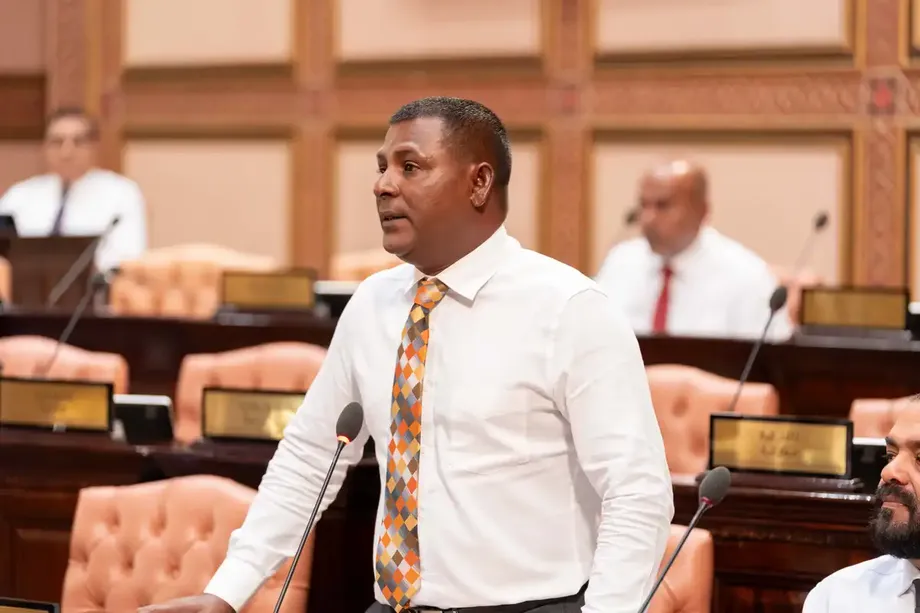
The developments give fresh relevance to criticism from Velidhoo MP Mohamed Abbas, who argued that legal reforms would bring little benefit to the public unless political influence over the judiciary ended and the Judicial Service Commission (JSC) became independent. During debate concerning amendments to criminal procedure legislation, he condemned the removal of the two justices as rushed and unsupported by evidence he considered convincing.
The dispute now involves three separate questions: whether criminal offences could be established, whether judicial misconduct justified removal, and whether the judges received a fair opportunity to defend themselves. Prosecutors have declined charges in the cases described, while the JSC's disciplinary findings and Parliament's dismissals remain distinct decisions.
That distinction matters because criminal prosecution and judicial discipline address different legal questions. A decision not to prosecute does not automatically invalidate an ethical finding. It does, however, make the evidence and reasoning behind such a serious sanction especially important to public scrutiny.
Abbas Challenges the Independence of Judicial Oversight
Abbas directed his criticism at the institutions responsible for supervising judges and changing the law. He argued that successive governments had promised an independent JSC without delivering one, and that amendments passed for a narrow political purpose, or to imprison a particular person, would not serve the population.
He described Azmiralda and Mahaz as capable, educated judges and said lawmakers had acted against them within roughly 10 to 15 minutes. That was his assessment of the speed of parliamentary action, not a documented measure of the entire investigation. He also accused those responsible for their removal of discrediting Parliament and the public.
His central argument was that changing criminal procedure rules cannot compensate for political pressure on the people applying those rules. The JSC investigates judicial conduct and can recommend removal. Independence at that stage therefore affects whether disciplinary powers function as accountability or become a means of pressure.
Abbas also raised separate complaints about stalled development projects on islands and accused visiting ministers of giving residents false information. Those were allegations made by the MP. They did not establish facts about the judicial cases, but formed part of his broader criticism of government accountability.
What the JSC Alleged Against the Justices
The dismissal proceedings included allegations that Azmiralda and Mahaz improperly influenced Criminal Court judges in connection with the detention of Dr Ismail Latheef, Azmiralda's husband and a doctor at Indira Gandhi Memorial Hospital. Latheef was taken into police custody on 4 April 2025.
The reported JSC finding was that the two justices exerted influence through Criminal Court Judge Safath Habeeb on Judge Ibrahim Zihuny, who was handling Latheef's detention case. The commission concluded that their conduct breached the Constitution, the Judicature Act and the Code of Conduct for Judges, and recommended their removal.
Later accounts of the investigations also describe a complaint alleging that the justices called and intimidated a Criminal Court judge. Another matter concerned Azmiralda's presence when High Court Assistant Registrar Hussain Mohamed Haneef was summoned to the Supreme Court and Justice Husnu Al Suood allegedly addressed him harshly.
These allegations should not be treated as one proven criminal episode. The February suspensions preceded Latheef's April detention, and the reports do not establish that every investigation concerned identical conduct. The full evidence and reasoning connecting the different complaints are not set out in the public accounts described here.
The Vote Passed, but the Procedure Is Disputed
Parliament approved each justice's dismissal with 68 votes on 14 May. One account records 11 votes against removal. Using those figures, supporters represented approximately 86 percent of the 79 votes cast, above the constitutional requirement of two thirds of members present and voting.
The numerical threshold was not the only requirement. In its statement on the dismissals, dated 10 May 2025, the Commonwealth Lawyers Association cited Articles 154(a) and 154(b) of the Constitution. These protect judges who maintain good behaviour and judicial ethics, and permit removal when the JSC finds gross incompetence or gross misconduct and Parliament approves the required resolution.
Accounts differ sharply on whether the process met those requirements. Parliament's Judiciary Committee reportedly found no procedural irregularities and accepted the JSC's conclusions. Parliament's Counsel General Fathimath Filza, however, reportedly advised that the commission had failed to complete the proper investigative procedures.
There is also a disagreement about the judges' opportunity to respond. One account says they were not given that opportunity; a later account says they responded to the JSC investigation. The International Bar Association's Human Rights Institute (IBAHRI) described concerns that their chosen lawyers were prevented from speaking and that details of the allegations were not initially disclosed.
Those accounts cannot be reduced to a simple assertion that no response ever occurred. Providing some response is different from receiving adequate notice, legal representation and a meaningful chance to challenge evidence. The dispute concerns the quality and fairness of the defence opportunity as well as whether one existed.
From a Constitutional Challenge to Removal
The sequence matters because disciplinary action interrupted a Supreme Court challenge to constitutional amendments governing when lawmakers lose their seats after leaving or being expelled from their parties. Critics argued that these provisions gave party leaders greater control over elected representatives.
The main recorded developments were:
- 18 February 2025: The Supreme Court heard a challenge to the constitutional provisions concerning changes of party allegiance.
- 24 or 25 February: A bill to reduce the Supreme Court from seven justices to five was introduced. Reports differ on the introduction date.
- 26 February: Parliament passed the bench reduction bill, and the JSC suspended Azmiralda, Mahaz and Husnu Al Suood. A scheduled hearing on a request to suspend enforcement of the constitutional provisions was cancelled.
- 4 April: Police took Dr Ismail Latheef into custody, an event central to one subsequent misconduct allegation.
- 4 May: The JSC recommended the dismissal of Azmiralda and Mahaz.
- 14 May: Parliament voted to remove both justices.
- 19 May: The UN Human Rights Office publicly raised concerns about judicial independence.
- 9 June: IBAHRI published its statement condemning the removal process.
The February introduction date is a genuine discrepancy: IBAHRI gives 25 February, while the detailed parliamentary chronology places introduction on 24 February and preliminary debate on 25 February. Both accounts place passage and the suspensions on 26 February.
How the February Changes Interrupted the Court
The February bench reduction passed with 68 votes in favour and nine against, with 79 MPs present. That was a separate vote from the May dismissals. Reducing the court from seven positions to five meant eliminating two seats, approximately 29 percent of its previous size.
The bill prescribed a rapid process: the JSC was to deem two justices incompetent within five days of ratification, followed by a parliamentary decision on removal within seven days, including holidays. Critics objected that the legislation required the identification of judges for removal before a conventional disciplinary assessment had established grounds.
Opposition MPs protested, 71 lawyers petitioned Parliament to reject the bill, and Counsel General Filza questioned the fairness of selecting two justices for removal. Constitutional law scholar Shamsul Falah described the speed of passage as an abuse of parliamentary urgency powers. Ruling party MP Ahmed Azaan Marzooq also opposed the measure, despite saying he remained with the government.
The suspensions followed notification of an Anti-Corruption Commission investigation. IBAHRI identified Section 25(p) of the Judicial Service Commission Act as the provision used, explaining that it permits suspension based on an investigation by another body without an opportunity for the judges to challenge that initial decision.
The Commonwealth Lawyers Association said the suspensions prevented the scheduled application for a stay from proceeding. A stay would temporarily stop enforcement of the disputed constitutional provisions while the court considered the challenge. Its 10 May statement said that application and the determination of the constitutional challenge were still pending at that time.
Husnu Al Suood subsequently resigned in protest and reportedly alleged that the disciplinary action sought to influence the pending constitutional case. The timing establishes that the suspensions disrupted the court's work; it does not, by itself, prove the motive alleged by critics.
The UN Calls for Protection of Judicial Independence
The UN Human Rights Office addressed the removals in its 19 May statement. Spokesperson Jeremy Laurence connected the dismissals with the February investigations, the resignation of a third justice and the subsequent retirement of the Chief Justice.
Laurence said the parliamentary action raised concerns extending beyond the individual disciplinary cases:
The dismissal by the Maldives Parliament of two Supreme Court justices raises serious concerns about respect for the independence of the judiciary.
The office also pointed to the sequence following the constitutional challenge over lawmakers changing party allegiance. It reminded Maldivian authorities of their obligations under the Constitution and international human rights law to maintain an independent judiciary.
The statement did not decide whether the justices committed misconduct or issue a binding ruling overturning their removal. Its concern was institutional: courts must be able to examine government and parliamentary action without improper pressure, so that constitutional limits and human rights protections remain effective.
Legal Associations Demand More Than a Majority Vote
The Commonwealth Lawyers Association urged Parliament to examine both the evidence and the process before approving removal. Its statement called for scrutiny of notice, preparation time, the opportunity to present evidence and question witnesses where relevant, legal representation and the reasons for the JSC's decision.
It also said the justices had disputed the allegations and requested a hearing before Parliament's Judiciary Committee. As of its 10 May statement, the committee had not granted that request. The association urged rejection of the recommendation if constitutional, procedural or evidentiary requirements were not met.
IBAHRI's 9 June statement cited Article 14 of the International Covenant on Civil and Political Rights, Human Rights Committee General Comment No 32, the UN Basic Principles on the Independence of the Judiciary, the Commonwealth Latimer House Principles and the Bangalore Principles of Judicial Conduct.
IBAHRI Co-Chair Hina Jilani urged a change to the suspension provision itself:
The Maldives Government should consider amending Section 25(p) of the Judicial Service Commission Act to ensure that disciplinary measures against judges are subject to independent oversight review, and that judges are afforded a fair and public hearing.
Her proposal addresses a specific weakness identified by the institute: an investigation by another institution can trigger suspension before an independent review of whether that action is justified. The institute also objected to proceedings conducted without public hearings, adequate notice or a meaningful opportunity to respond.
Although published after the May dismissals, the IBAHRI statement included a call from Co-Chair Mark Stephens CBE to halt the dismissal proceedings. That wording should not be read as evidence that the parliamentary removals were still awaiting a vote in June.
What the Prosecutorial Decisions Leave Unresolved
The decisions against criminal prosecution do not amount to court judgments acquitting the former justices after trial. They mean prosecutors did not find a basis to bring the criminal charges described. Azmiralda's police case was closed, while Mahaz's decision followed review of an Anti-Corruption Commission referral.
An earlier account said a decision on Mahaz had not yet been announced. A subsequent account records that prosecutors declined to prosecute him as well. These describe successive stages rather than conflicting outcomes. No corresponding prosecutorial decision concerning Husnu Al Suood is identified.
The exact relationship between the criminal files and every disciplinary allegation remains uncertain. The reports do not provide the complete files, the JSC's detailed evidentiary reasoning or a final judicial ruling on the legality of the dismissals. Without those, neither a blanket claim that all allegations were disproved nor a claim that every disciplinary finding was substantiated is justified.
IBAHRI also noted a 25 May report that investigations had begun against two judges who opposed the dismissals. It warned that punishment or the threat of punishment could discourage judges from acting independently. The statement did not establish the outcome of those investigations.
No date is identified for a hearing to review the removals, a decision on reinstatement, or resolution of the constitutional challenge. The concrete position is narrower: two justices lost office through a process challenged by their defenders and international legal institutions, and prosecutors later declined the criminal cases described against both.
Key Points
- Parliament removed Dr Azmiralda Zahir and Mahaz Ali Zahir on 14 May 2025, with 68 votes supporting each dismissal.
- Prosecutors subsequently declined to bring criminal charges against both former justices in the cases described.
- Velidhoo MP Mohamed Abbas argued that legal reforms require an independent judiciary and JSC to benefit the public.
- The Judiciary Committee accepted the removal procedure, while Parliament's counsel general and international legal bodies raised objections.
- The February suspensions interrupted a hearing linked to constitutional rules on lawmakers changing party allegiance.
- The UN Human Rights Office, IBAHRI and Commonwealth Lawyers Association raised concerns about judicial independence and fair procedures.
- The prosecutorial decisions do not automatically reverse the dismissals, and no reinstatement or review hearing date is identified.