Platforms get a response window before urgent removal orders
Indonesia's Ministry of Communication and Digital says platforms have 12 hours to respond to an initial notice about urgent content before an unanswered notice can lead to an order requiring access to be cut within four hours. The explanation puts two separate deadlines at the centre of a debate over disinformation, public safety and freedom of expression.
Contents
- Platforms get a response window before urgent removal orders
- What happens before the four-hour clock starts?
- How the three ministerial decisions fit together
- Which content can face action?
- Why the ministry says criticism and journalism are protected
- AJI's objection centres on a specific restriction
- What the communication scholar wants changed
- What can users do after a mistaken removal?
- How the debate developed during 2026
- Key Points
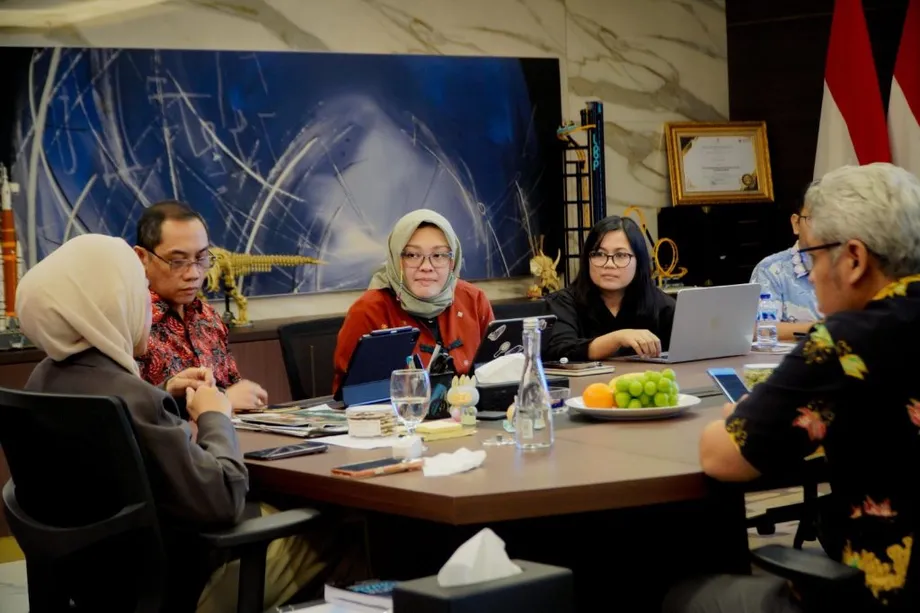
Speaking in Central Jakarta on November 2, 2026, Mediodecci Lustarini, secretary of the ministry's Directorate General of Digital Space Supervision, said Ministerial Decisions No. 127 and No. 128 of 2026 guide the process. KM 127 sets handling deadlines, while KM 128 supplies criteria and procedures for assessing disinformation and hate speech.
Komdigi, as the ministry is known, says the four-hour requirement applies to urgent content carrying a high risk, after a formal order reaches the platform. Before that, officials must verify the complaint or finding, examine its legal basis and supporting evidence, and give the platform an opportunity to respond.
For users, the stakes extend beyond how quickly a post disappears. The rules also concern how authorities distinguish dangerous falsehoods from criticism, how journalism is protected, and how someone can recover a post removed by mistake.
Maulina Pia Wulandari, an associate professor of communication at Universitas Brawijaya, accepts that dangerous content can require rapid action. Her objection concerns the risk that broad criteria and a short deadline could push platforms to remove lawful expression, including criticism of public officials. The Independent Journalists Alliance, known as AJI, has separately called for KM 127 to be withdrawn.
What happens before the four-hour clock starts?
Komdigi describes a process that begins with verification of a public complaint or content found by officials. Reviewers examine the legal basis for action, the link to the content and supporting evidence. When they find grounds for a violation, the ministry sends a notification to the platform.
Platforms then have 12 hours to respond concerning urgent content and 24 hours for content classified as nonurgent. During this stage, they may ask for clarification or submit a response, including an assessment against their own community guidelines, the rules each service sets for its users.
If the platform gives no response within the relevant window, Komdigi says it can proceed to a formal order through its Content Moderation Compliance System, known as SAMAN. The platform must then cut access within four hours for urgent content or 24 hours for nonurgent content.
The urgent response window is therefore three times as long as the subsequent removal deadline: 12 hours compared with four. For nonurgent cases, both stages allow 24 hours. Verification and the issuing of an order are separate steps, so readers should understand these as deadlines for particular actions rather than a single countdown beginning when a post appears.
How the three ministerial decisions fit together
KM 127 and KM 128 operate alongside Ministerial Decision No. 522 of 2024, which amended Decision No. 172 of 2024. The older framework concerns procedures for administrative fines imposed on private electronic system providers that fail to meet obligations to cut access to prohibited content.
The providers covered include services carrying user-generated content, meaning posts, videos, comments and other material uploaded by users. In practical terms, the compliance process places duties on the companies operating those services.
SAMAN helps Komdigi track and verify content, send requests to cut access and calculate administrative fines when providers fail to meet their obligations. Acting public relations bureau head Farida Dewi Maharani has also said KM 127 must be read together with KM 128, because the criteria and handling mechanisms sit alongside the deadline.
Which content can face action?
Komdigi says its focus is disinformation and hate speech meeting the criteria in KM 128. Mediodecci identified information inconsistent with facts, attempts to divide society, harm, potential social conflict and fear among the public as factors in the assessment.
In an explanation on October 29, the ministry described factual problems as including claims that conflict with credible information, lack trustworthy references or place accurate information in a misleading context. Potential harm can concern social and economic conditions, reputation or public health.
Public order considerations include the potential for violence, damage to public facilities, disruption of government services or other unlawful activity. The explanation of hate speech includes attacks, insults, provocation or calls for hatred and discrimination based on a person's or group's identity.
These criteria require judgments about both content and context. A reviewer examining a disputed claim must consider what it says, the evidence supporting it and the harm authorities identify. Wulandari argues that factual accuracy and public interest need particular attention when the subject is alleged corruption, poor public services or the conduct of officials.
Why the ministry says criticism and journalism are protected
Mediodecci says lawful criticism, differences of opinion and expressions of public aspirations are protected in the ministry's approach. She also says Komdigi's handling of content does not target journalism produced by the press, including investigative reporting.
That assurance matters because investigative stories often contain allegations that institutions or officials dispute. Wulandari argues that authorities must distinguish threats to public safety from harm to the reputation of those in power. Her concern is that the same institution facing criticism may have influence over a decision to restrict it.
Indonesia's Press Law, Law No. 40 of 1999, provides a separate framework for press freedom. Article 4 protects press freedom and prohibits censorship, suppression and broadcasting bans against the press. The law also provides for rights of reply and correction, while the Press Council has a role in resolving matters involving journalistic work.
For a newsroom distributing investigations through social media, access to a platform is part of reaching readers. Komdigi's assurance about journalism therefore sits alongside a practical demand from press advocates: clear procedures for recognising journalistic work and correcting restrictions quickly.
AJI's objection centres on a specific restriction
AJI called on April 7, 2026, for KM 127 to be revoked and access to the Instagram account of Magdalene.id to be restored. The organisation cited a restriction on April 3 involving investigative coverage of the acid attack against KontraS activist Andrie Yunus.
According to AJI, the affected material concerned reporting based on the work of the Advocacy Team for Democracy. The organisation objected to language concerning content that unsettles society or disturbs public order, arguing that broad interpretation could affect the distribution of journalism.
The reason for the platform's restriction and its connection to a government instruction remain unconfirmed. AJI's complaint nevertheless gives a concrete focus to the dispute: a news organisation's ability to keep investigative reporting accessible while authorities and platforms make moderation decisions.
What the communication scholar wants changed
Wulandari warns of excessive moderation, where platforms remove lawful material while trying to meet regulatory demands. She also describes a chilling effect: people choosing to stay silent because they fear that expressing an opinion could bring removal or sanctions.
Her recommendations include clearer boundaries between unlawful content, criticism, opinion and journalism; written reasons for restrictions; effective objections and restoration; and independent audits of removal decisions. She also favours dialogue and clarification where those responses are proportionate to the problem.
Wulandari argues that government communication should include listening to complaints and responding with evidence. A widely shared criticism of a public service can help officials identify failures that need attention. Removing the complaint can leave the underlying problem unresolved.
She proposes evaluating the policy through the accuracy of decisions, the prevention of real threats and the restoration of material restricted in error. Those measures would give the public a fuller picture of the policy's operation than a count of removed posts alone.
What can users do after a mistaken removal?
Komdigi says content owners may submit objections and request restoration if they believe moderation was mistaken. Mediodecci said this also covers suspected errors made independently by a platform, allowing those concerns to be communicated further.
The ministry's November 2 explanation did not specify a deadline for resolving objections or restoring content. For someone whose post concerns an unfolding emergency or a current public controversy, the speed of that correction can determine whether the information reaches people while it is useful.
Wulandari connects these procedural protections to Indonesia's Constitution. She points to Article 28E(3), protecting freedom of expression, Article 28F, concerning information rights, and Article 28J(2), setting conditions for restrictions on rights.
She also cites Constitutional Court Decision No. 311/PUU-XXIV/2026, dated September 29, 2026, as requiring digital or written notice, with reasons, before access to unlawful information is cut. Her position is that the handling process must make reasons accessible and provide a workable route to challenge mistakes.
How the debate developed during 2026
The controversy has unfolded over several months, from the adoption of KM 127 to objections by journalists and later explanations from Komdigi. The principal dates are:
- March 2026: KM 127 was adopted. Wulandari cites March 13; another chronology lists March 12 to 13, leaving the precise signing date awaiting confirmation.
- April 3: AJI says access to the Instagram account of Magdalene.id was restricted in connection with investigative coverage concerning Andrie Yunus.
- April 7: AJI called for KM 127 to be withdrawn and access to the account restored.
- September 29: The Constitutional Court decision cited by Wulandari addressed notice and reasons before access restrictions.
- October 29: Komdigi explained the content criteria and the relationship between KM 127 and KM 128.
- November 2: Mediodecci detailed the notification windows, removal deadlines, protections for lawful expression and opportunity to seek restoration.
Komdigi's explanation sets out a staged process rather than immediate removal after a complaint. The central disagreement concerns its application: the ministry promises targeted action against harmful content, while Wulandari and press advocates seek clearer limits, accessible reasons and effective correction when decisions go wrong.
Key Points
- Urgent cases carry a 12-hour response window before an unanswered notification can lead to a formal order requiring access to be cut within four hours.
- Nonurgent cases allow 24 hours to respond and 24 hours to carry out an access restriction order.
- KM 127 sets deadlines, KM 128 guides assessment, and SAMAN supports compliance monitoring and administrative fines.
- Komdigi says lawful criticism and journalism, including investigations, are protected.
- AJI has sought withdrawal of KM 127, while Wulandari recommends written reasons, effective appeals and independent audits.
- Content owners can object and seek restoration, including over suspected moderation errors made independently by platforms.