Two floating reactors planned for North Halmahera
Russia's state nuclear corporation Rosatom and Indonesia's PT Pembangkit Listrik Nuklir have agreed on a project to supply 200 megawatts of electricity from two floating nuclear power units to northern Halmahera Island in North Maluku. The agreement was signed during Russian Energy Week in Moscow on October 16, 2026, opening a commercial route toward nuclear electricity for eastern Indonesia.
Contents
- Two floating reactors planned for North Halmahera
- What the 200 MW project would deliver
- Why floating power appeals to an island region
- Buying electricity while Rosatom keeps the units
- The reactor technology and its operating record
- A five-year clock tied to the contract
- From earlier cooperation to the Moscow signing
- Energy security and the 2060 climate target
- Key Points
The plan calls for two units producing 100 MW each. Rosatom would retain ownership of the floating facilities, while the contract would cover purchases of electricity throughout their planned operating life of 60 years. The companies describe the project as a commercial arrangement financed through private investment, without funding from Indonesia's state budget.
Electricity could begin reaching consumers about five years after the main terms of the supply contract take effect. The signing therefore starts a process whose timetable depends on the contract becoming effective, rather than setting a fixed opening date.
Rosatom Director General Alexey Likhachev described the agreement as the world's first export deal for electricity supplied by a floating nuclear power unit. For North Maluku, the practical goal is more dependable electricity for communities and businesses, including industries that need power continuously. For Rosatom, the project would extend its floating nuclear business beyond Russia through a model built around selling electricity rather than transferring ownership of the generating units.
What the 200 MW project would deliver
Each proposed floating unit would contribute half of the project's combined capacity. The units are described as FPU-100, or PEB-100, and would use reactors from Rosatom's RITM family. Technical descriptions identify the proposed reactor version as RITM-200M, adapted for operation in warm climates.
A megawatt measures how much power a generator can supply at a particular moment. At its full rated output, a 200 MW installation operating for one hour would generate 200 megawatt-hours of electricity. The amount delivered over a year would depend on operating time, maintenance and other conditions.
The destination is the northern part of Halmahera, rather than the whole Indonesian archipelago. The project is intended to serve consumers in North Maluku and support electricity needs in eastern Indonesia. Its local effect would depend on the connections between the floating units, coastal infrastructure and the networks carrying electricity to users.
Why floating power appeals to an island region
Indonesia's geography is central to the proposal. The country has more than 13,000 islands, and a generating station serving one area cannot automatically supply communities across distant stretches of sea. Rosatom presents floating nuclear units as an option for remote coastal locations where electricity infrastructure can be difficult to build.
The proposed approach moves much of the construction work to shipyards. The units would be assembled there and then towed to their destination. This shifts a large part of the construction activity away from the final site, although electricity still needs a connection from the floating facility to consumers on land.
North Maluku's mineral processing industries, including nickel processing, are part of the demand behind interest in dependable power. Such facilities can require electricity around the clock. A steady source of generation, often called baseload power, supplies the continuing portion of demand rather than operating only during short periods of heavy use.
Project investor Haji Romo Nitiyudo Wachjo said the 200 MW development was expected to support energy independence and economic development in North Maluku and eastern Indonesia. Wachjo, also known as Haji Robert, owns Indotan Group. His stated ambitions connect the electricity project with industrial growth, alongside the needs of local communities.
Buying electricity while Rosatom keeps the units
Rosatom's continued ownership is a defining feature of the arrangement. Indonesia would receive electricity from facilities owned by the Russian company, with purchases covered by a contract spanning their planned operating life of 60 years. The relationship would therefore continue long after construction and delivery.
PT Pembangkit Listrik Nuklir director Yudi Utomo Imardjoko, an Indonesian nuclear scientist, said the project was designed as a business-to-business initiative. In ordinary terms, the companies intend to organize investment and electricity supply commercially, using private capital rather than an allocation from Indonesia's national budget, known as the APBN.
Likhachev said the project had reached legally binding commercial agreements, an advance payment was on its way, and construction of an energy fleet for Indonesia would begin in 2026. Those statements describe the commercial steps Rosatom expects to take before electricity production begins.
The investment value, electricity price, detailed financing arrangements and precise operating date have not been disclosed. The status of all regulatory approvals and implementation requirements is also unresolved publicly. These details matter to consumers because they will help determine when electricity arrives and what it costs.
The reactor technology and its operating record
Rosatom says the RITM reactor family has an established record aboard Russia's nuclear icebreakers. The company describes those systems as efficient, reliable and safe after years of operation. The Indonesian proposal would apply technology from that family to electricity generation in a tropical coastal setting.
A nuclear reactor produces heat through controlled splitting of atoms. A power station uses that heat to produce steam and drive equipment that generates electricity. On a floating plant, the generating equipment sits on a vessel or platform that supplies users ashore.
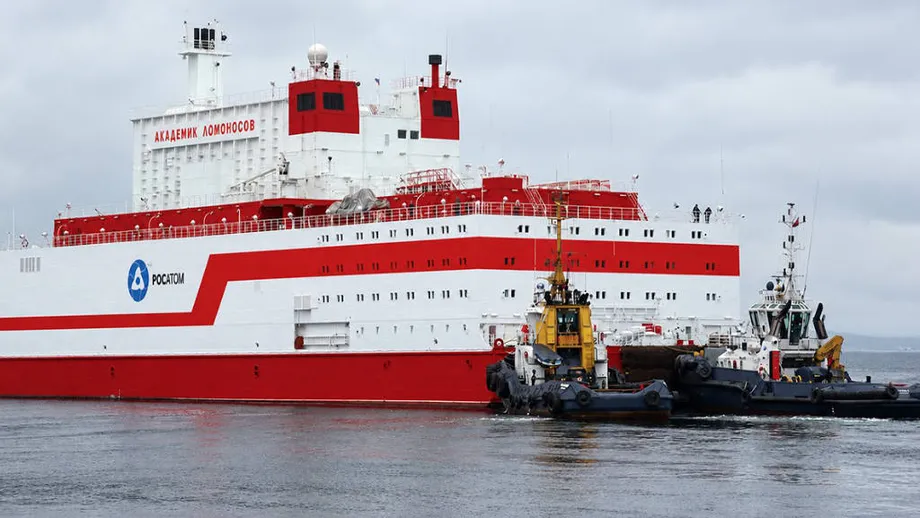
Russia already operates the Akademik Lomonosov floating nuclear power plant in Chukotka, in the Arctic. The facility has operated since 2020 and, according to Rosatom, has generated nearly 1.4 billion kilowatt-hours of electricity. That figure measures accumulated electricity production over time, while the Indonesian project's 200 MW figure describes generating capacity.
The Akademik Lomonosov uses two KLT-40S reactors. Indonesia's proposed units would use RITM-200M reactors, which Rosatom describes as more compact and capable of higher output than earlier marine designs. The company is also developing floating units for industrial customers in Russia and a small nuclear plant in Uzbekistan using RITM-200N reactors.
A five-year clock tied to the contract
The first electricity deliveries are expected roughly five years after the main contractual terms become effective. Some project descriptions use the earliest possible timing of five years. The useful planning point is that the clock is tied to the contract's effective conditions, not simply to the ceremony in Moscow.
North Halmahera's consumers would therefore face a substantial wait even if the project proceeds as planned. The floating construction model is intended to reduce work at the final site, while the wider project still includes preparing the location and arranging the connections needed to deliver power.
Rosatom's other overseas work shows why nuclear project milestones need precise descriptions. In Turkey, Likhachev said the Akkuyu plant was expected to enter physical startup in the second half of December 2026. Physical startup includes fuel loading and the steps toward a sustained nuclear chain reaction; connection to the electricity grid comes later.
Akkuyu began construction in 2018 after a bilateral agreement in 2010, and its original operating target of 2023 was postponed repeatedly. It is a much larger project, with four VVER-1200 reactors and a cost exceeding $20 billion. Its history gives context for understanding nuclear construction schedules, while Indonesia's smaller floating proposal has its own design and commercial structure.
From earlier cooperation to the Moscow signing
Russia and Indonesia discussed nuclear cooperation well before the latest agreement. In 2015, JSC Rosatom Overseas signed a memorandum with Indonesia's National Nuclear Energy Agency covering a large nuclear power plant and floating nuclear plants. The parties had also signed a broader memorandum on developing cooperation in nuclear energy.
Prabowo Subianto later raised Indonesia's interest in working with Rosatom during a July 2024 visit to Moscow. At the time, he was defence minister and president elect. Subsequent discussions widened to include infrastructure, training and uses of nuclear technology outside electricity generation.
- 2015: Rosatom Overseas and Indonesia's National Nuclear Energy Agency signed a memorandum covering large and floating nuclear plants.
- July 2024: Prabowo discussed interest in cooperation with Rosatom during talks with Russian President Vladimir Putin in Moscow.
- 2025: Indonesia included nuclear energy in its national energy planning.
- May 2026: President Prabowo met Likhachev to discuss peaceful nuclear cooperation, infrastructure and personnel training.
- October 16, 2026: Rosatom and PT Pembangkit Listrik Nuklir signed the floating electricity supply agreement in Moscow.
Rosatom has proposed a development sequence beginning with small floating units, followed by larger nuclear plants on land. The North Maluku project fits the first part of that proposal. The agreement described here covers the floating electricity project, while the broader discussions extend to a possible larger nuclear programme.
Energy security and the 2060 climate target
Indonesia has set a target of carbon neutrality by 2060. The companies present the floating project as a way to support that objective while meeting rising electricity demand. Nuclear generation can provide electricity without burning coal or diesel during operation, making the choice of which existing or future generation it replaces central to its climate value.
Yudi Utomo Imardjoko, director of PT Pembangkit Listrik Nuklir, described reliable electricity as a central part of the company's purpose:
"Leading Indonesia's energy transition is our foremost objective and responsibility as a national investor. We firmly believe that providing our people with clean, reliable and carbon-free electricity is essential to securing Indonesia's long-term energy future," Yudi said.
North Maluku's combination of communities spread across islands and energy demand from industry gives that ambition a specific setting. More continuous generation could support factories and local services, while the proposed private financing model seeks to deliver the project without direct national budget funding.
Rosatom says it is constructing 27 nuclear plants in nine countries. The Indonesian agreement would add a different type of overseas relationship to that business: electricity supplied from floating facilities that remain under Rosatom's ownership. For Indonesia, the immediate task is turning the commercial agreement into an operating supply arrangement with clear costs, permissions and delivery milestones.
Key Points
- Rosatom and PT Pembangkit Listrik Nuklir signed the agreement in Moscow on October 16, 2026.
- Two floating units, each rated at 100 MW, are planned for northern Halmahera in North Maluku.
- Rosatom would retain ownership, with electricity purchases covered throughout a planned operating life of 60 years.
- The companies propose private investment without funding from Indonesia's national budget.
- First electricity is expected about five years after the main contract terms become effective.
- The project uses proposed RITM-200M reactors and forms part of wider nuclear cooperation between Russia and Indonesia.
- Investment costs, electricity prices and a firm operating date have not been announced.