Indonesia Gets a December Launch Window
Xiaomi Indonesia will bring the Xiaomi 18 Pro Series to Indonesia in December 2026, following its global presentation in Paris on 17 November. The range consists of the Xiaomi 18 Pro and Xiaomi 18 Pro Max, the company's flagship phones, meaning the models at the top of its smartphone line. Country Director Michael Feng said their arrival forms part of Xiaomi's effort to bring its newest technology to Indonesian consumers. Marketing Director Andi Renreng gave a narrower arrival window of early December, although neither an exact launch date nor an Indonesian price has been announced.
Contents
- Indonesia Gets a December Launch Window
- What the Two Global Models Have in Common
- Why the Back Display Is the Main Attraction
- Can AI Make a Second Screen Genuinely Useful?
- Dual 200MP Cameras and a Privacy Screen
- Why Chinese and International Specifications Differ
- What Prices in Other Markets Say About Indonesia
- Reviews, Support and the Wider Launch
- Key Dates Before Indonesian Sales Begin
- What to Know
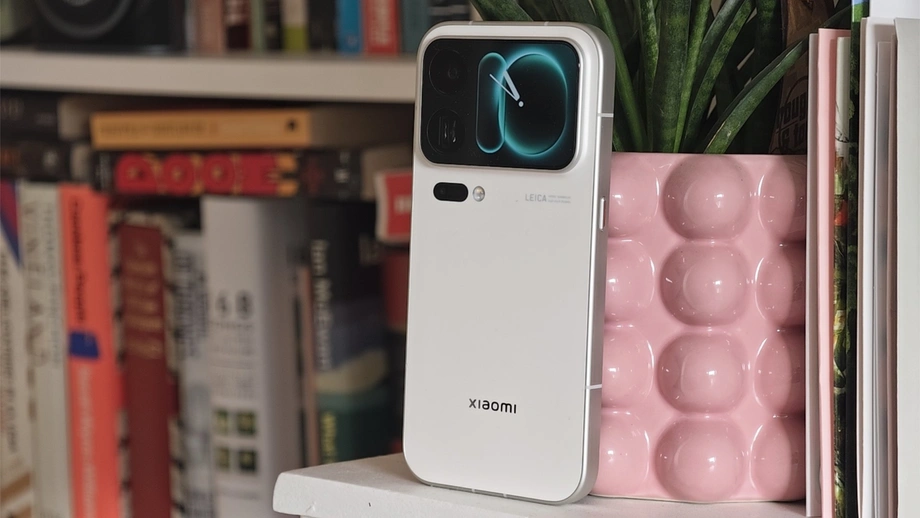
The central attraction is the Back Display, a touch screen built into the rear camera area. It works as a viewfinder for the main cameras, a space for notifications and widgets, and a small canvas for tools and images generated with artificial intelligence. Xiaomi pairs it with a camera system developed with Leica that includes 200MP main and telephoto cameras. The company is promoting that combination under the slogan Back for more.
Indonesian registration through the Priority Book program began on 18 November 2026 for a limited period. Xiaomi says registrants have the opportunity to receive six benefits: replacement of a device for covered hardware damage during one year, a quality guarantee lasting two years, one free screen replacement, one free battery replacement, an exclusive VIP service and international warranty coverage. The company has not published an end date for registration.
After registering, consumers should receive confirmation through WhatsApp and email, followed by a reminder before official sales begin. Priority Book registration is neither a payment nor a sales agreement. It is an initial expression of interest, and any subsequent purchase remains subject to the program's terms. Memory configurations, colors, prices and the final Indonesian specification list are still pending.
What the Two Global Models Have in Common
Xiaomi's Malaysian launch page confirms the division between the two models. The Xiaomi 18 Pro uses Qualcomm's Snapdragon 8 Elite Gen 6 and a battery with a typical capacity of 6,000mAh. The Xiaomi 18 Pro Max moves to the Snapdragon 8 Elite Extreme Gen 6 and a 7,050mAh battery. Both listings include a 200MP Leica main camera, a 200MP Leica telephoto camera and the new Back Display. A larger mAh figure means more stored electrical charge, although screen size, software and usage still determine how long the phone lasts.
The Pro has a 6.4 inch main display, while the Pro Max has a 6.9 inch panel. Both use LTPO AMOLED technology with Xiaomi HyperRGB 2.0, a variable refresh rate from 1Hz to 120Hz and peak brightness rated at 4,000 nits. LTPO allows the screen to refresh slowly for a static clock or notification, saving power, and then accelerate to 120Hz for smoother scrolling and games. A nit is a unit of screen brightness.
International versions run HyperOS 4 based on Android 17. The Pro supports 90W wired charging, while the Pro Max supports 100W; both offer 50W wireless charging. The processors were introduced at the Chinese flagship launch, where Xiaomi described a 2nm manufacturing process and new cooling hardware. In simple terms, 2nm refers to the scale of features inside the chip, allowing more computing resources to be packed into a small area while improving efficiency.
Why the Back Display Is the Main Attraction
The international Pro has a 2.7 inch rear AMOLED screen with a resolution of 912 by 596 pixels. The Pro Max increases that to 2.9 inches and 976 by 596 pixels. Both can refresh at up to 120Hz. Rather than acting only as a decorative light or clock, each panel supports touch controls, applications and a live camera image.
The camera function is the easiest benefit to understand. A person taking a self portrait can turn the phone around, see the composition on the Back Display and use the much larger main camera instead of the front camera. The same arrangement helps with group photographs and vlogging. Users can raise a palm to trigger a capture, while vlogging controls can include zoom and recording. The system can also switch to the ultrawide camera when it detects several faces.
With the phone resting face down, the small panel can show notifications, activities, calendar cards, timers, music controls, weather, boarding passes, ride information and QR codes. A pin command places a favorite function on the screen with one tap. Built in support for Google Maps, Spotify and YouTube Music allows directions or playback controls to appear without waking the large front display.
Other uses include pinned notes, screenshots, activity tracking, dynamic wallpapers and clocks. A translation mode can use the front and rear screens together so that two people facing each other can read different languages. These functions explain why Xiaomi sees the panel as a second interface rather than simply an extension of the camera housing.
Can AI Make a Second Screen Genuinely Useful?
Xiaomi's answer is to let owners describe the small tool they want and have generative AI create it. Generative AI produces new text, images or software from a written request. In China, the Xiao AI assistant demonstrated examples including a drinking water reminder, an egg timer and recipe recommendations. International versions integrate Google Gemini, with Malaysian material describing a HyperOS creation space for compact applications designed around the rear screen.
A request can produce a polished mini app in roughly three to five minutes. Demonstrated examples include dice, coin flippers, shopping lists, habit trackers, scorecards, cartoon weather displays, digital pets and small puzzle games. Xiaomi also supplies games and utilities such as a miniature piano and an activity tracker. One tester asked for a weather app with cartoon graphics and received a working display with the correct location and forecasts for three days.
There are limits. Users can install as many as 12 generated or supplied mini apps at once, and app creation is subject to a monthly quota. The European implementation prevents created apps from accessing the internet or personal data. Xiaomi's official terms also say that setup is required, compatibility and availability can vary, and Google AI features carry an age requirement of 18 or older.
Veteran technology journalist Nirave Gondhia used both phones for a week and argued that personal app creation solves the usual problem of waiting for a manufacturer or outside developers to imagine every useful second screen function.
Simply put: GenAI apps are magnificent, and a glimpse of how we'll use our phones in the future.
Created apps currently cannot be shared with other owners. Gondhia called for Google to support rear displays in core Android and for the Play Store to identify compatible apps, which could eventually allow people to distribute their creations. His enthusiasm matches other early assessments that checking a small screen can reduce how often the main display is awakened, although some reviewers remain concerned about the added cost and energy required to generate personal apps.
Dual 200MP Cameras and a Privacy Screen
Both phones have three rear cameras developed with Leica. The main camera uses a 200MP sensor measuring 1/1.28 inches, while the periscope telephoto camera also has 200MP, a sensor measuring 1/1.56 inches and 3.2 times optical zoom at a 75mm equivalent focal length. A periscope camera folds the light path inside the phone, creating room for magnification without requiring an enormous lens bump. A 50MP ultrawide camera completes the rear system, and the front camera is also 50MP.
Leica's software includes Authentic and Vibrant color treatments, alongside other shooting profiles and customizable filters. The telephoto camera can focus as close as 12cm for detailed photographs of small subjects. Video capabilities extend to 8K recording at 30 frames per second and 4K at 120 frames per second with Dolby Vision. Early camera testing praised the main and telephoto cameras for consistent color and natural background blur, while placing their photographic performance close to Xiaomi's more expensive Ultra models.
The front screens introduce a separate feature called Privacy Display. Hardware in the panel narrows the useful viewing angle, making messages, passwords and other information harder to read from the side. It can be activated for selected apps, notifications, floating windows and split screen views. A dedicated AI button on the left side provides quick access, and another function can warn when someone nearby may be looking.
One detailed review found that the Xiaomi implementation still left a dim trace of the screen visible from an angle and was less effective than Samsung's comparable system. The reviewer nevertheless considered it useful because text became extremely difficult to read from the side without making the normal frontal view unusable.
Why Chinese and International Specifications Differ
At the September debut in Beijing, Xiaomi said international sales would follow later in 2026. The Chinese phones announced on 23 September had larger batteries than the versions now reaching Malaysia and Europe. The Chinese Pro carried 7,000mAh and the Chinese Pro Max carried 8,500mAh, with both listed for 100W wired charging and 50W wireless charging.
The international Pro instead has 6,000mAh, a reduction of 1,000mAh, while the international Pro Max has 7,050mAh, down 1,450mAh. Xiaomi attributed the European reductions to regulatory requirements. Charging also changes: the international Pro drops from 100W to 90W wired charging, while the Pro Max retains 100W. Chinese material listed IP69 ingress protection, whereas the international launches specify IP68 dust and water resistance.
These are substantial regional differences rather than rounding variations. Xiaomi Indonesia has not said which battery capacities, charging speeds or protection ratings will appear on the Indonesian retail specification sheet. That local table will matter as much as the headline features when sales begin.
What Prices in Other Markets Say About Indonesia
Malaysia launched both phones on 18 November in Black, White, Cosmic Blue and Velvet Red, the latter offering a deep burgundy appearance. Malaysian preorders ran from 18 to 26 November. Using an exchange rate of about Rp4,445 per ringgit, the normal prices convert as follows, with preorder prices shown alongside them:
- Xiaomi 18 Pro with 12GB of RAM and 256GB of storage: RM4,799, or about Rp21.3 million; preorder price RM4,499.
- Xiaomi 18 Pro with 12GB of RAM and 512GB of storage: RM5,299, or about Rp23.6 million; preorder price RM4,999.
- Xiaomi 18 Pro Max with 12GB of RAM and 256GB of storage: RM5,999, or about Rp26.7 million; preorder price RM5,499.
- Xiaomi 18 Pro Max with 12GB of RAM and 512GB of storage: RM6,499, or about Rp28.9 million; preorder price RM5,999.
Xiaomi's official Malaysian offers also advertise savings of up to RM800 on the early bird price, gifts and benefits worth as much as RM4,598, a bonus of up to RM300 for trading in another device, and installment plans charging 0% interest for up to 24 months. Protection includes one replacement of the back cover, rear screen or camera lens within 24 months, one main screen replacement within 24 months and one battery replacement within 36 months. Trials lasting three months are listed for YouTube Premium and Google AI Pro, with a 14 day iQIYI Standard VIP trial. Eligibility is limited and terms apply.
Other launches underline the premium positioning. Chinese prices started at CNY5,999 for the Pro and CNY6,999 for the Pro Max, approximately $895 and $1,045 at announcement. European sales began at €1,399 and €1,599 respectively. In Australia, the Pro costs AUD1,799 for 256GB and AUD2,099 for 512GB, while the Pro Max costs AUD1,999 and AUD2,299.
The rupiah conversions are currency arithmetic, not an Indonesian price forecast. Taxes, distribution costs, local memory choices and Xiaomi's launch strategy will determine the final figures. Malaysia does, however, show that Indonesia should expect a premium price band rather than the inexpensive flagship positioning associated with Xiaomi's earlier years.
Reviews, Support and the Wider Launch
A British review priced the Xiaomi 18 Pro at £1,199 and praised its compact size, fast performance and versatile cameras. Its charging test reached 34% in 15 minutes and a full charge in 76 minutes. Battery endurance was described as adequate rather than leading the category, and the reviewer noted preinstalled software alongside a generally polished HyperOS 4 interface. Xiaomi's internal testing of the Pro Max produced an AnTuTu score of 5,031,155, supported by a cooling design that connects the processor area to a vapor chamber through copper.
Xiaomi promises five Android operating system upgrades and six years of security updates for the series. That commitment gives buyers a clearer picture of how long the phones should receive software improvements and security fixes. AI functions include Gemini integration, Circle to Search with Google, note assistance, speech recognition and image editing, with availability varying by region and software version.
The phone launches are accompanied by the Xiaomi Smart Band 11, Watch S5 41mm and Clip earbuds, with Australia also receiving the UltraThin Magnetic Power Bank 10000 25W. The Smart Band 11 has a 1.72 inch AMOLED display, a claimed battery life of up to 21 days and remote camera shutter control, which can complement group photographs framed through the phone's Back Display.
Xiaomi expects its global research and development spending to exceed €24 billion from 2026 through 2030 across AI, operating systems, semiconductors, vehicles, robotics and manufacturing. For Indonesian consumers, the immediate question remains more practical: how much of the international package will arrive locally, and at what price.
Key Dates Before Indonesian Sales Begin
The expansion from China to Southeast Asia has happened over three months:
- 23 September 2026: Xiaomi introduced the Pro and Pro Max in Beijing and opened Chinese sales with starting prices of CNY5,999 and CNY6,999.
- 17 November 2026: The global launch took place in Paris, and European sales began.
- 18 November 2026: Malaysia launched the series, while Indonesia's Priority Book registration opened.
- 18 to 26 November 2026: Malaysian preorder pricing and gifts were offered.
- Early December 2026: Andi Renreng's stated Indonesian arrival window, within Xiaomi Indonesia's broader December commitment.
No Indonesian launch day, retail price, memory configuration or final color list has been released. Priority Book registrants should receive a reminder before official sales open.
What to Know
- Xiaomi has confirmed the 18 Pro and 18 Pro Max for Indonesia in December 2026, with early December given as the expected arrival window.
- Priority Book registration opened on 18 November and offers six potential ownership benefits, but it is not a purchase.
- The Back Display supports camera previews, notifications, travel information, media controls and mini apps generated with AI.
- International models have 6,000mAh and 7,050mAh batteries, smaller than the Chinese versions.
- Malaysian prices start at RM4,799, roughly Rp21.3 million by direct conversion, but Indonesian prices remain unannounced.
- Both models combine Snapdragon 8 Elite Gen 6 family processors, HyperOS 4 and dual 200MP Leica cameras.