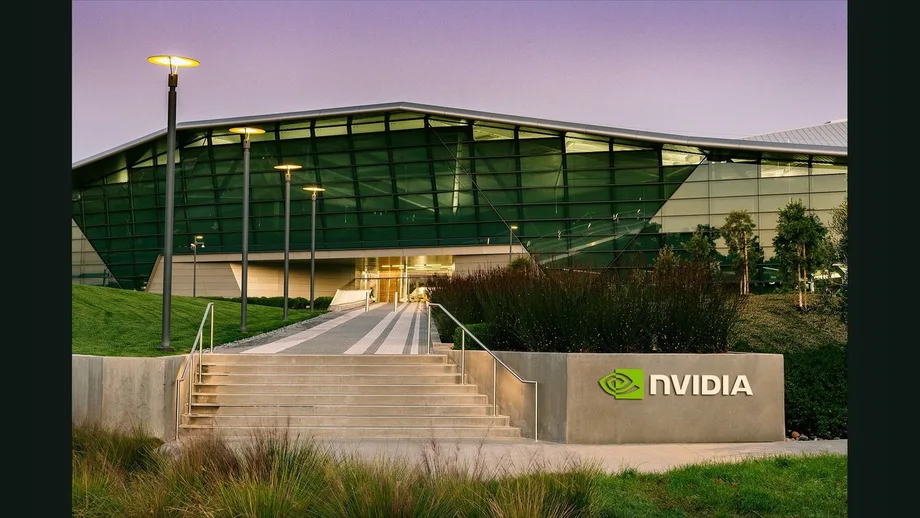
A sudden stop for server deliveries
Nvidia has told manufacturing partners to stop shipping servers containing its chips to Malaysia, Singapore, Thailand and Indonesia, according to three people familiar with the matter. Dell and Supermicro, which assemble Nvidia chips into complete servers, informed buyers in the four countries that Nvidia would not allow their orders to be shipped. The pause became public on Nov 26, one week after new US export controls took effect.
Contents
- A sudden stop for server deliveries
- What Washington's new rule actually does
- The rules already shaping compliance
- Why a licence delay can stop a $5 million server
- Malaysia's investment boom meets a hardware bottleneck
- Singapore's central role in chips, cloud and scrutiny
- Market losses and a search for other markets
- Why India expects little direct impact
- What buyers can establish while orders wait
- What to Know
The suspension concerns finished servers, rather than only individual processors. That distinction matters because a data centre can have its building, electricity, cooling and network connections ready while remaining unable to run new artificial intelligence workloads without the machines themselves. It was unclear whether Nvidia intended a temporary pause while it and its partners worked through the compliance requirements, or a longer interruption.
The shipment account could not immediately be independently verified. Nvidia, Dell and Supermicro did not respond immediately to requests for comment made outside regular business hours. The companies also gave no public indication of how many orders, customers or server configurations were affected.
Brazil is covered by the new US licensing rule but was not included in the reported shipment halt. For buyers in the four Southeast Asian countries, the immediate problem is simpler than the legal terminology surrounding it: purchase orders that had been expected to become installed computing capacity now have no dependable delivery date.
What Washington's new rule actually does
The Commerce Department's Bureau of Industry and Security (BIS) announced an interim final rule on Nov 16, with effect from Nov 19. It requires licences for qualifying exports, reexports and transfers of advanced computing hardware to or within Malaysia, Singapore, Thailand, Indonesia and Brazil. BIS identified these destinations as presenting an elevated risk of advanced chips being diverted without authorization. The measure adds a government approval checkpoint rather than imposing a blanket ban on every sale.
The controls also address computing power rented from overseas data centres. Chinese developers do not need to possess a Nvidia chip physically to benefit from it; they can pay for access to processors installed abroad. A US licence is required for certain arrangements in which an overseas data centre supplies more than 12 million in aggregate Total Processing Performance to companies connected with China, Macau or destinations in Country Group D:5, a US export control grouping. Total Processing Performance is the measure used by the controls to quantify computing capacity, while the aggregate threshold looks at the capacity supplied across an arrangement.
Companies headquartered in China, Macau or other designated jurisdictions are covered even when the operation obtaining the computing power is elsewhere, including where their ultimate parent companies are headquartered there. This brings corporate ownership and the identity of the final customer into decisions that previously might have focused mainly on where a server was delivered.
Qualifying end users headquartered in the United States, and companies whose ultimate parents are headquartered there, are excluded from the destination-based licensing requirement, subject to reporting obligations. Subsidiaries of major US technology companies operating in Malaysia can therefore qualify for exemptions if their suppliers provide monthly compliance reports. Other export controls can still apply.
Covered cloud providers have 90 days to obtain licences by demonstrating that they do not serve restricted entities. Existing computing arrangements also fall under a licensing provision lasting 90 days. The reported shipment pause does not mean that servers already operating in regional data centres have been ordered to shut down.
The rules already shaping compliance
The November measure builds on controls introduced on Oct 7, 2022, Oct 17, 2023 and Dec 2, 2024. On Jan 15, 2025, BIS set out January 2025 rules intended to improve checks by chip manufacturers and prevent diversion to the People's Republic of China. BIS acts under the Export Control Reform Act of 2018 and the Export Administration Regulations (EAR).
Foundries, which manufacture chips designed by other companies, and packaging companies received a broader licensing requirement. An export could proceed without that requirement under one of three conditions: an approved or authorized chip designer attested that the product fell below the relevant performance threshold; a fabricator outside Macau or a Country Group D:5 destination packaged the chip and verified its final transistor count; or an approved outsourced semiconductor assembly and test company performed that verification. The rules also created a route for additional designers and packaging companies to gain approved status.
The January package improved reporting for transactions involving newer customers considered to present a heightened diversion risk. It updated parts of the EAR connected with the AI Diffusion rule so that licence exceptions would be limited to transactions involving approved or authorized designers. A technical correction also revised the definition of advanced-node integrated circuit in § 772.1 for Dynamic Random Access Memory, or DRAM, chips.
BIS added 16 entities to its Entity List at the same time, including Sophgo Technologies Ltd. and entities in China and Singapore. Placement on that list brings individual licensing requirements because the US government believes the parties are involved in, or present a significant risk of becoming involved in, activities contrary to US national security or foreign policy interests.
Gina M. Raimondo, who was commerce secretary when the January 2025 package was issued, explained its purpose in the department's statement.
These rules will further target and strengthen our controls to help ensure that the PRC and others who seek to circumvent our laws and undermine U.S. national security fail in their efforts.
Alan F. Estevez, then under secretary for industry and security, said the due diligence requirements made foundries accountable for verifying that chips were not diverted. Acting Assistant Secretary for Export Enforcement Kevin J. Kurland identified investigations and Entity Listings as enforcement tools. The department's stated security concerns include the use of advanced AI in military planning, electronic warfare, radar, signals intelligence, jamming and surveillance systems.
Why a licence delay can stop a $5 million server
At least two Nvidia server partners stopped shipments for new orders on Nov 20, citing legal caution and uncertainty over how the licensing process would operate. Their financial exposure is substantial: a GB200 NVL72, a large AI server installed as a rack, costs nearly $5 million. A manufacturer that builds such equipment and then fails to obtain the necessary licence could be left holding extremely expensive inventory with no clear route to delivery.
The response across the supply chain was not uniform. One partner continued shipping while planning to seek licences for orders placed after the rule took effect. That variation helps explain why some buyers may face an immediate stop while others receive requests for more documents rather than an outright cancellation.
An unnamed cloud provider executive said federal officials had supplied no practical guidance on how to apply for the new licences, describing the situation as "causing sheer chaos in the region." Compliance concerns surrounding Megaspeed, an Nvidia partner that rents computing power from its data centres, had already encouraged companies to examine customer lists more carefully before the formal licensing requirement arrived.
Several November dates show how quickly the pressure accumulated:
- Nov 13: Malaysia's Ministry of Investment, Trade and Industry said it had never cleared Megaspeed or its Malaysian subsidiary, Speedmatrix Sdn Bhd.
- Nov 16: BIS announced the new controls, and Singapore's government said it was engaging businesses and US authorities.
- Nov 18: Lenders paused work on a proposed $480 million loan to Aolani Cloud, based in Singapore, for GPU purchases at a Malaysian data centre serving ByteDance.
- Nov 19: The new licensing rule took effect.
- Nov 20: At least two server partners stopped shipments for new orders.
- Nov 23: Nvidia's board reinstated Jensen Huang as CEO after his resignation.
- Nov 26: The broader shipment pause became public, and Malaysian data centre stocks fell sharply again.
Malaysia's investment boom meets a hardware bottleneck
Malaysia has approved approximately RM385.7 billion in data centre and AI infrastructure investments since 2021, with much of the activity concentrated in Johor and the Klang Valley. More recent figures from the Malaysian Investment Development Authority show RM123.5 billion in approved data centre and cloud computing investments across 86 projects between January and September 2026. The authority has not said how many of those projects depend on shipments now facing delays.
Officials in Putrajaya said Malaysia's AI infrastructure investments remained on track because major US computing companies operating locally could qualify for exemptions. Independent Malaysian and regional operators that rely on server deliveries from suppliers such as Dell and Supermicro face a different position: their hardware can remain unavailable while they establish who needs a licence and how to obtain one.
Malaysian authorities were already conducting domestic compliance checks. The investment ministry said on Nov 13 that it was working with the Royal Customs Department to verify whether servers equipped with Nvidia chips and imported into Malaysia had subsequently been exported again in breach of local regulations.
In June 2025, the ministry clarified that AI servers were not controlled items under Malaysia's Strategic Trade Act 2010. Local data centres were consequently free to make commercial leasing decisions under Malaysian law. Washington's remote computing restrictions address that gap by examining who uses the computing capacity, not merely where the physical machine is located.
Economist Tan Peck Leong separately warned that prolonged political instability could encourage investors to move projects to other states. The licensing disruption adds a practical delivery risk to that broader competition for investment.
Singapore's central role in chips, cloud and scrutiny
Singapore occupies several positions in this story at once. It is a destination covered by the licensing rule, a base for cloud companies, a regional booking centre for Nvidia and a location connected with entities that Washington has placed under greater scrutiny. Its government began engaging businesses and US authorities on Nov 16, the day the new controls were announced.
Nvidia recorded $104 billion of revenue through its Singapore subsidiary in 2025, an increase of 72% over 12 months. The unit also records some revenue from China and Taiwan, so the figure reflects Singapore's role in Nvidia's regional corporate structure as well as business connected directly with the city state.
Butterfly Effect, a company originally from China and operating in Singapore, illustrates the region's attraction for AI developers. It created Manus, which Meta attempted unsuccessfully to acquire. Chinese developers continue to seek Nvidia's most advanced hardware even though China has produced alternatives such as Huawei's Ascend 960DT.
Megaspeed, based in Singapore, rents computing capacity and has come under scrutiny over possible illegal diversion of advanced AI chips to China. The proposed Aolani Cloud financing shows how regulatory uncertainty can reach lenders as well as equipment buyers. Pausing a $480 million loan can delay GPU purchases even before a supplier decides whether a particular server order can ship.
Nvidia also experienced an unusual leadership episode during the same period. Jensen Huang resigned following reports of an affair with a suspected Chinese spy who had previously worked at Megaspeed. The Commerce Department published the new rule days after that resignation, and Nvidia's board reinstated Huang as CEO on Nov 23.
Market losses and a search for other markets
YTL Power and other Malaysian stocks connected with data centres fell sharply on Nov 26. Earlier in November, YTL Power, NationGate Holdings, MN Holdings, Critical Holdings, Pekat Group and Jati Tinggi Group had also suffered steep declines, with some temporarily suspended from intraday trading after Washington announced tighter controls. MN Holdings and Critical Holdings each lost nearly 20% in the market reaction following the licensing announcement.
Hong Leong Investment Bank said local sentiment remained pressured by tighter US restrictions on AI chip exports and data centre construction, alongside continuing foreign outflows and volatility in US technology stocks. Those movements reflect investor concern about project timing and equipment supply, rather than a cancellation of every approved investment.
One server maker has begun redirecting its attention toward Japan and South Korea, which are not designated as higher risk destinations under the new rule. In the United States, hardware vendors have struggled to find replacement customers for some advanced Nvidia processors, and large volumes of GPUs have entered the open market. At the same time, Dell's record backlog of AI server orders indicates that obtaining a suitable replacement system may still be difficult for buyers whose preferred configuration is delayed.
Why India expects little direct impact
India was not added to the group comprising Brazil, Indonesia, Malaysia, Singapore and Thailand. That distinction means Indian data centres do not face the same destination-based licensing requirement merely because hardware is being delivered to India.
S Krishnan, secretary at India's Ministry of Electronics and Information Technology, said the country was viewed differently within the US system.
I do not think there is any significant impact on India. The restrictions on the supply of chips to data centres do not apply to Indian data centres, and I think India is seen as a trusted partner.
Indian operators can still encounter licensing requirements if they provide remote computing capacity to restricted companies. The location of the data centre therefore does not remove the need to examine the identity, ownership and activities of the customer using its processors.
What buyers can establish while orders wait
IT teams with pending orders can reduce uncertainty by separating several questions that are often bundled into a single delivery promise:
- Give suppliers purchase order numbers and exact server configurations, then request written confirmation of shipment clearance and revised delivery dates.
- Establish which party must obtain each licence and what documentation identifying the final customer must be supplied.
- Review cancellation rights, delivery penalties and contractual provisions for obtaining equipment through another route.
- Identify AI workloads that can run on existing infrastructure while new servers remain undelivered.
- Ask cloud providers whether reserved GPU capacity is already installed or depends on servers still awaiting shipment.
Operators with existing computing arrangements must separately assess the licensing window of 90 days. A reservation for GPU capacity does not establish that the hardware has arrived, just as an approved construction investment does not establish that its servers have been delivered. No date has been given for a general resumption of shipments to the four Southeast Asian countries.
What to Know
- Nvidia reportedly stopped server shipments through manufacturing partners to Malaysia, Singapore, Thailand and Indonesia, with Dell and Supermicro notifying affected buyers.
- The US rule announced on Nov 16 and effective from Nov 19 requires licences for qualifying advanced computing shipments to those four countries and Brazil.
- The controls also cover certain overseas arrangements that rent substantial computing capacity to companies connected with China, Macau and other designated jurisdictions.
- A GB200 NVL72 server costs nearly $5 million, giving partners a strong financial reason to pause when licence procedures are uncertain.
- Malaysia has approved RM385.7 billion in data centre and AI infrastructure investment since 2021, but the number of projects dependent on delayed hardware is unknown.
- Nvidia recorded $104 billion through its Singapore subsidiary in 2025, up 72%, while Megaspeed and related Malaysian imports remain under scrutiny.
- India expects little direct impact because it is not among the five newly listed destinations, although remote services for restricted firms can still require licences.