A Jakarta Trophy for the Fight Against Financial Crime
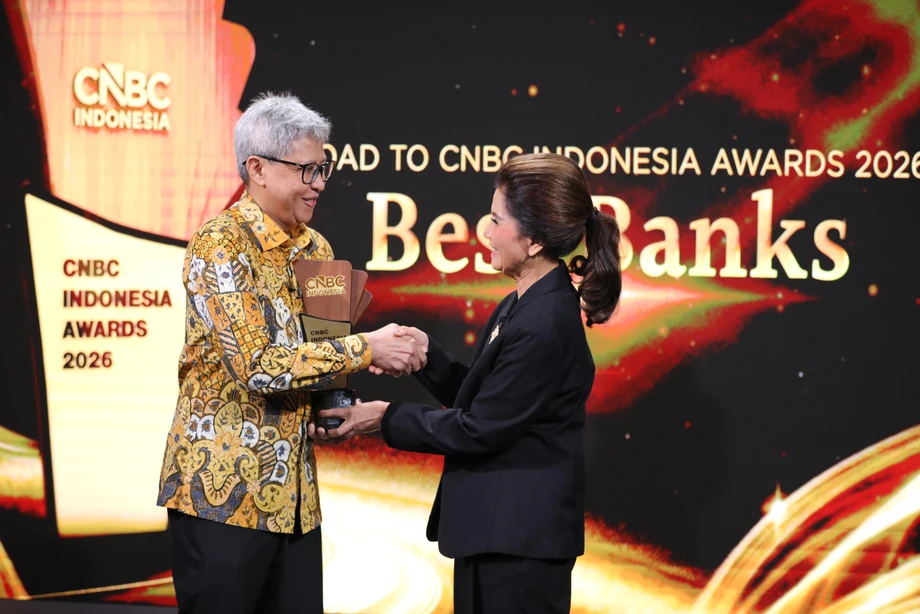
On Tuesday, 24 November 2026, PT Mitra Mandiri Informatika received the award for Best Financial Risk, Fraud, and Regulatory Compliance Solution Provider at Road to CNBC Indonesia Awards 2026 Best Financial Services, held in Jakarta. Mukhamad Misbakhun, chairman of House Commission XI, the parliamentary committee that oversees finance and banking, handed the trophy to MMI managing director Febrianto Siboro.
Contents
- A Jakarta Trophy for the Fight Against Financial Crime
- Why the Criminals Are More Comfortable With AI
- What Forrester Measured, and What SAS Scored
- Why Fraud and Money Laundering Are Being Treated as One Problem
- From Counting Losses to Catching Them Early
- Agentic AI Moves Governance to the Centre
- The Local Half of the Deal
- Compliance That Can Be Shown, Not Just Promised
- What Has Not Been Disclosed
- Key Points
The awards programme recognises companies in financial services and in the sectors that support them for widening public access to financing, payment services, protection and guarantees, with the aim of strengthening financial inclusion and the resilience of the national financial system.
Febrianto put the recognition down to the clients rather than the company.
"First of all, thank you to CNBC Indonesia for the recognition and the trust given to us. This award belongs to all the people of PT MMI and is also a form of appreciation for our banking and insurance clients who have chosen SAS as their solution for fraud, risk and regulatory compliance," he said.
MMI is an information technology services company whose work now turns on three subjects: fraud, risk management and regulatory compliance for financial institutions. It sells consulting, implementation, support and analytics. Its customers include banks, insurers, capital market firms and government agencies.
Why the Criminals Are More Comfortable With AI
Febrianto describes five years of pressure from two directions at once. Financial crime has become more sophisticated, and regulators have become more demanding about proof that rules are being followed. The scale of crime, in his account, grows with the business itself: as banks and insurers expand and post stronger results, the risk they carry grows alongside.
The sharper problem is technology. The tools a bank buys to speed up its services sit in the hands of the people attacking it too, and those people have more practice with them.
"In essence, what we use is also what the people committing crimes use. If we are familiar with AI, they are far more familiar with it," Febrianto said during the discussion at the awards event.
Artificial intelligence here means software that learns patterns from large volumes of data instead of following rules written by hand. A bank can use it to flag a payment that looks nothing like a customer's normal behaviour. A criminal can use the same family of techniques to test stolen card numbers at speed, imitate a customer's writing style or probe the weak points of a screening system.
MMI's answer is to take the detection engine from a global supplier and add its own local execution. The company works as a partner of SAS, the American analytics firm, on fraud, risk management and regulatory compliance for institutions moving deeper into digital services built around AI.
What Forrester Measured, and What SAS Scored
SAS announced on 24 August 2026 that Forrester Research had named it a Leader in the Forrester Wave evaluation of financial crime management solutions for the third quarter of 2026. Fifteen vendors were assessed. SAS took the highest score in the current offering category, 4.70 out of 5, and the highest possible mark in nine of 11 criteria, more than any other firm in the study.
The nine criteria cover much of the daily work of a financial crime team: data integration, administrator management, watchlist management and screening, risk scoring based on AI and machine learning, transaction type support, queue definitions and alert routing, case management, integrations with third party systems, and regulatory and operational reporting. SAS was the only vendor with no below par score in any current offering criterion, and customers surveyed for the study rated its tools for building and testing machine learning models above average.
Forrester set out the company's direction in the report.
SAS' vision shines with its converged support for AML and fraud management plus agentic AI capabilities for investigations and decisioning.
SAS, which marked its 50th anniversary in 2026, runs the suite on SAS Viya, its cloud platform for data and AI. A separate assessment by Chartis Research, the Enterprise and Payment Fraud Solutions, 2026: Quadrant Update, named the company's support for joining fraud and anti-money laundering work as "a key differentiator."
Why Fraud and Money Laundering Are Being Treated as One Problem
Forrester defines financial crime management solutions as integrated platforms that bring together enterprise fraud management with know your customer (KYC) and anti-money laundering (AML) capabilities. KYC is the process of checking who a customer is, at the start of a relationship and afterwards. AML is the set of checks that look for money being moved to hide where it came from. Fraud is the narrower offence of obtaining money or property by deception.
The industry shorthand for running the two together is FRAML. The argument for it is data. The same person, account, device or payment pattern can appear in a fraud case and in a laundering investigation, and those records usually sit in separate systems that do not talk to each other.
"Financial institutions cannot converge fraud and AML detection on fragmented data, and they cannot safely scale agentic AI without trusted data and governance," said Stu Bradley, senior vice president of risk, fraud and compliance solutions at SAS.
Bradley ties the Forrester result to the same point, describing the pressure institutions face to connect scattered data sources, work across different technologies and programming languages, and apply analytics consistently across both fraud and financial crime detection.
From Counting Losses to Catching Them Early
Official figures give a sense of the wider problem. Nezar Patria, deputy minister at the Communication and Digital Affairs Ministry, cited Indonesia Anti-Scam Centre data showing approximately Rp9.3 trillion in reported digital scam losses, covering November 2024 to June 2026, and roughly 600,000 fraud cases over the same period. He referred to the figures at a Digital Leader Summit in Jakarta on 13 November 2026. The figures are historical totals for that period, not losses incurred in a single day or week in November 2026. They do not establish that every report resulted in a confirmed conviction or that the losses were recovered.
For a bank in Indonesia, the change on offer is about timing. Most institutions act after money has gone: a customer reports a transfer they did not make, an investigator traces it, controls are tightened once the loss is booked. Febrianto calls the alternative a productive defence, in which analytics and AI sit inside the decision itself, at the moment a payment, a loan or a new account is approved. The term he uses is enterprise decisioning, meaning a system that applies models and rules to very large volumes of data so that each decision is scored the same way and within seconds.
His description of the goal is about volume as much as speed.
"The goal for the financial industry is for data that is used together to be processed through AI, with data at a large scale, to analyse indications of fraud before they develop into losses," he said.
Scale matters because a single suspicious payment is hard to judge on its own. Patterns emerge across thousands of accounts, devices and merchants, which is why the analytics work is tied to data integration in Forrester's scoring.
Agentic AI Moves Governance to the Centre
Agentic AI refers to systems that carry out a sequence of tasks with less human direction: pulling records from a source, opening a case, drafting a summary for an investigator. Forrester's report points to a "powerful AI agent" in SAS software that extracts schemas, the underlying structure of data, from source systems, alongside prebuilt connections to many data sources and a wide range of custom algorithms for risk scoring.
The more work agents take on, the more weight falls on governance: who may see which data, what an agent is allowed to change, and how a decision can be explained months later to a regulator or a court. Forrester states that "AI governance is also integral" to the company's approach.
"As AI agents play a greater role in investigations and decisioning, strong governance and human oversight are paramount. Not to automate for automation's sake, but to give investigators better context, more intelligent prioritization and trusted decision support so they can confidently tackle evolving threats. That's the kind of responsible, data-driven AI SAS delivers," Bradley said.
The Local Half of the Deal
MMI's contribution is the part that has to work inside Indonesian offices and in the filings that supervisors read. Febrianto said the company has gone through a business transformation over the past five years and has worked as a high value partner of SAS in Indonesia over the same stretch.
"We see compliance as the starting foundation for building an intelligent defence based on AI that safeguards customer assets and business continuity," he said.
He added that the five years of close collaboration had let the company show that a great technology needs a great partner to strengthen public trust and the resilience of Indonesia's financial industry. On the choice of SAS, he pointed to its standing in global assessments of analytics suppliers.
"We see SAS as a leading technology. It is recognised globally, so it can be counted among the leaders," he said.
That combination, a global platform with local delivery, is the pitch MMI makes to lenders and insurers that need systems in place quickly and in line with Indonesian rules.
Compliance That Can Be Shown, Not Just Promised
The regulatory half of the business is less visible than a blocked payment but shapes what banks buy. Febrianto said the industry faces rules that require compliance to be measured, which means an institution has to demonstrate how each requirement is met rather than treating compliance as a general aim. That pushes work toward reporting that runs continuously, records that show why an alert was cleared, and data clean enough to survive a supervisor's questions.
Indonesia's authorities have been tightening the surrounding legal machinery. On 18 November 2026, the working committee of House Commission III approved the final drafting report for the asset forfeiture bill, which would let the state recover assets linked to corruption and other offences without first securing a criminal conviction, and scheduled a first level decision for that afternoon. Negotiators had narrowed its scope from 13 categories of crime to corruption and six others, and lawmakers were aiming for passage in November. The bill deals with enforcement after the fact, while the systems MMI sells are aimed at detection before a loss is booked.
What Has Not Been Disclosed
MMI did not say how many banks or insurers use its fraud tools, which institutions have the analytics suite in production, or what the partnership with SAS is worth. The company itself gave no figure for fraud losses in Indonesia's financial sector, and no date was set for the next stage of the work. Febrianto did not name the specific regulations his clients must satisfy. Forrester's study covers 15 vendors in total, but the announcement identified only where SAS placed.
What the award and the evaluation settle is narrower. A company whose name rarely reaches the public now holds a category prize from a national business broadcaster and a partner whose platform scored at the top of a 15 firm field. Whether that translates into fewer losses at Indonesian banks will show in the institutions' own fraud data, which has not been published.
Key Points
- PT Mitra Mandiri Informatika won Best Financial Risk, Fraud, and Regulatory Compliance Solution Provider at Road to CNBC Indonesia Awards 2026 Best Financial Services on 24 November 2026 in Jakarta.
- House Commission XI chairman Mukhamad Misbakhun presented the award to MMI managing director Febrianto Siboro.
- Febrianto warned that criminals are more familiar with AI than many financial institutions are, and that risk grows with business expansion.
- MMI works as a high value partner of SAS in Indonesia, supplying consulting, implementation, support and analytics for banks, insurers, capital market firms and government agencies.
- SAS was named a Leader in The Forrester Wave: Financial Crime Management Solutions, Q3 2026, with the highest current offering score of 4.70 out of 5 among 15 vendors.
- SAS earned the top possible mark in nine of 11 criteria and was the only vendor with no below par score in the current offering.
- Forrester credits SAS with converged fraud and anti-money laundering support, known as FRAML, and agentic AI for investigations.
- Chartis Research called the FRAML support a key differentiator in its Enterprise and Payment Fraud Solutions, 2026 update.
- Indonesia Anti-Scam Centre data cited by Nezar Patria recorded approximately Rp9.3 trillion in reported digital scam losses and roughly 600,000 fraud cases between November 2024 and June 2026.
- MMI did not disclose client numbers, contract values or a timeline for deployments.