Three coastal locations move into focus
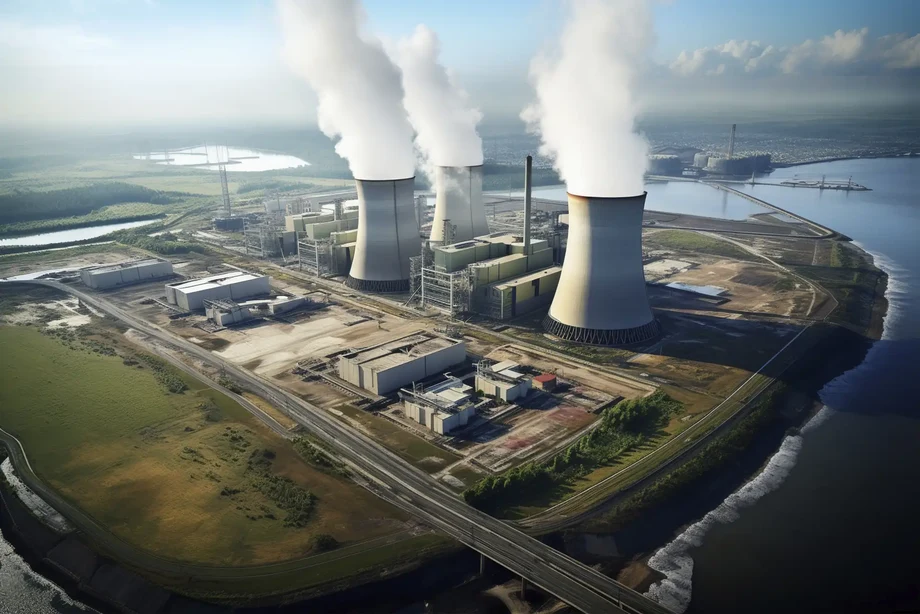
Indonesia is stepping up studies of three coastal areas in East Kalimantan for a future nuclear power plant: Sangatta in East Kutai, Samboja in Kutai Kartanegara, and Babulu in North Penajam Paser. The National Energy Council names the third location more specifically as Babulu Laut.
Contents
- Three coastal locations move into focus
- Why the coast needs close examination
- Safety research extends beyond earthquakes
- How three locations fit a national search
- The dates putting pressure on preparations
- Choosing reactors and preparing the grid
- Who pays and who carries the risk?
- Licensing and local participation remain central
- Workers and fuel need their own plans
- Key Points
The National Research and Innovation Agency, known as BRIN, is examining both the locations and the reactor technology as rising industrial electricity demand adds urgency to Indonesia's energy plans. The immediate challenge is to turn promising coastal locations into sites that meet safety, environmental and electricity system requirements.
BRIN Head Arif Satria described nuclear power as increasingly necessary for the country's industrial development and transition toward an economy with lower carbon emissions.
"A nuclear power plant has become an inevitability. BRIN continues to conduct research to determine the most appropriate type of technology and the most suitable location for its development," Arif said.
The planning figures have expanded. An earlier government proposal envisaged a plant supplying 250 megawatts to the grid in 2032. PLN's Electricity Supply Business Plan for 2025–2034 includes an initial 500 megawatts, with connection targeted for 2032–2034. That is twice the capacity of the earlier proposal.
No final East Kalimantan site, reactor supplier or financing arrangement has been announced. The next decisions involve more than choosing land: officials must match the reactor to regional demand, establish who will operate it, secure funding and complete the required safety assessments.
PLN is seeking to begin a tender or select a development partner in 2027. Its preparations make East Kalimantan's studies part of a much broader national effort, with Sumatra and Kalimantan being considered for the first projects.
Why the coast needs close examination
Sangatta, Samboja and Babulu have attracted attention because of their access to seawater for cooling and geological conditions considered relatively sheltered from major earthquakes. Nuclear plants produce heat to generate electricity, and cooling systems must safely remove heat during operation.
Coastal locations also require detailed checks for flooding, tsunamis and changes to the shoreline. BRIN's geological study statement describes assessments covering soil and rock, earthquake potential, volcanic activity, liquefaction and ground movement. Liquefaction occurs when shaking causes waterlogged soil to lose strength.
The statement records a technical discussion between BRIN and the Geological Agency at the Energy and Mineral Resources Ministry's Secretariat General Building in Jakarta on May 4. Geological Agency Head Lana Saria explained the basis required for the assessments.
"The analyses conducted must be grounded in field facts and scientific approaches as part of the initial evaluation of site conditions from geological aspects," she said.
Two stages of field surveys were discussed at the meeting. BRIN nuclear energy research organization chairman Syaiful Bakhri said several candidate sites were still undergoing preliminary or desk evaluation, meaning researchers were reviewing existing information before conducting more detailed investigations.
BRIN also includes weather, ocean conditions, coastal erosion and the accumulation of sediment in its studies. These processes can change the land and water around a facility over decades. The agency says nuclear plants can be designed to operate for up to 80 years, making conditions far into the future relevant to today's location decisions.
Safety research extends beyond earthquakes
BRIN researcher Khusnul Khotimah presented work on Indonesian coastal nuclear sites at the International Atomic Energy Agency's NIRC–2025 conference in Vienna from October 20 to 24, 2025. Her study examined earthquakes, tsunamis and coastal flooding.
According to BRIN's conference research account, the study used HIRADC, short for Hazard Identification, Risk Assessment, and Determining Control. In plain language, the method identifies what could go wrong, assesses the risk and determines measures to manage it.
The conference brought together 374 participants from 70 IAEA member states and nine international organizations. Discussions included the IAEA safety requirements and guides SSR-1, SSG-9, SSG-18 and SSG-68, which provide references for evaluating sites and external hazards.
BRIN identified the IAEA, the Korea Atomic Energy Research Institute and the Japan Atomic Energy Agency as collaborators in research on external hazards, the ability of installations to withstand them, and coastal risk management. This work gives Indonesia a route to compare its methods with international practice while developing recommendations for its own conditions.
How three locations fit a national search
The Energy and Mineral Resources Ministry and PLN are preparing 28 potential locations nationally. Earlier assessments by the National Nuclear Energy Agency, whose functions are now incorporated into BRIN, identified 28 sites with an estimated combined development capacity of about 70.5 gigawatts.
BRIN policy director Ratih Damayanti has described a map of 27 potential locations, while National Energy Council member Agus Puji Prasetyono announced 29. The institutions have not explained how their lists align.
The national search stretches beyond East Kalimantan to places including the Riau Islands, Bangka Belitung, West Kalimantan, Java, Sulawesi and Papua. Broader government discussions also include Halmahera. The historical estimate of 70.5 gigawatts describes potential development capacity across candidate locations; each location still needs its own technical assessment.
Eniya Listiani Dewi, the ministry's director general of new, renewable energy and energy conservation, said previous studies need review against technical conditions, community acceptance and regional electricity demand. Some locations have completed assessments, while others remain at preliminary survey or screening stages.
Agus said candidate locations should be free from tsunami risk and at least five kilometers from volcanoes and faults. BRIN's geological work sets out the detailed investigations needed to examine local hazards, including those along the coast.
The dates putting pressure on preparations
Indonesia's plans combine an early operating target with preparations that are still developing. The National Long Term Development Plan for 2025–2045, established through Law No. 59 of 2024, targets nuclear plant operation beginning in 2032.
Several dates show how the program has progressed and what officials hope to do next:
- December 19, 2023: A BRIN discussion examined mineral resources for nuclear fuel development. An energy ministry official cited plans to begin nuclear plant construction during 2025–2029.
- October 20–24, 2025: BRIN presented coastal site safety research at the IAEA conference in Vienna.
- October 22, 2026: Deputy Energy and Mineral Resources Minister Yuliot Tanjung said site preparation needed to begin because construction takes around seven to 10 years.
- November 2026: PLN sought completion of initial site studies in the second or third week of the month.
- 2027: PLN aims to begin a tender or select a development partner, with an IAEA infrastructure readiness assessment sought for the first or second quarter.
- 2032–2034: The electricity supply plan targets the first 500 megawatts connected to the grid.
PLN Director of Technology, Engineering and Sustainability Edwin Nugraha Putra has also described a development process taking about 15 years and discussed operation of a large nuclear plant in 2037. His schedule concerns a broader preparation process and a large plant, alongside the earlier target for initial capacity.
CORE Indonesia economist Yusuf Rendy Manilet pointed out that a tender beginning in 2027 would leave roughly five years before 2032 for licensing, engineering, financing and construction. Indonesian Nuclear Society chair Prof Djarot Sulistio Wisnubroto has called for clear stages, stronger institutions and realistic scheduling.
Choosing reactors and preparing the grid
PLN's initial 500 megawatt program is expected to use small modular reactors, or SMRs. These are reactors with smaller individual generating capacity than conventional large nuclear units, using designs intended to allow more standardized construction. Indonesia is also considering larger reactors.
Earlier National Energy Council discussions mentioned reactors cooled by gas at high temperatures and thorium among possible technology approaches. Thorium is a potential nuclear fuel material rather than a complete reactor design. Energy transition minister Bahlil Lahadalia has described exploration of technology partnerships with Russia, the United States, South Korea and Japan.
PLN is preparing preliminary feasibility studies, developer qualification requirements, requests for proposals and electricity purchase arrangements for both smaller and larger plants. These documents will help define what developers must deliver and how PLN would buy the electricity.
The national electricity plan sets targets of 500 megawatts in 2032, seven gigawatts in 2040, 21 gigawatts in 2050 and 35 gigawatts in 2060. One gigawatt equals 1,000 megawatts, so reaching seven gigawatts would require adding 6,500 megawatts beyond the initial 500.
Broader projections put nuclear capacity at 35–42 gigawatts by 2060 and its share at up to 12.1 percent of the primary energy mix. Primary energy includes energy before conversion into electricity or other usable forms, so this measure covers more than electricity generation.
PLN has estimated transmission infrastructure needs at about Rp434 trillion, approximately US$24.7 billion. It cited expected returns of 2–4 percent against an estimated funding cost of about eight percent. That financing gap creates a separate challenge from paying for the reactors themselves: electricity also needs a network capable of carrying it to users.
Who pays and who carries the risk?
National Energy Council member Satya Widya Yudha supports planning several reactor units as a continuing program. He argues that experience from the first unit could help reduce costs and shorten construction for later units.
Yusuf has proposed a joint venture controlled by PLN and Danantara, with a technology supplier as a strategic partner. Under his proposal, the supplier could bring construction experience and support from export credit agencies, which help finance purchases from their home countries.
Yusuf's proposed division of responsibilities would place policy risk, nuclear liability and the management of waste over the long term with the government. The technology supplier would take responsibility for technology and construction, while PLN could commit to electricity purchases through a take or pay agreement. Such an agreement generally requires payment for an agreed quantity even if the buyer takes less.
Energy Shift Institute Managing Director Putra Adhiguna has stressed the need for a firm PLN buying commitment, transparent electricity purchase agreements, stable regulation and clear institutions. For investors, the price PLN agrees to pay and the reliability of those payments will help determine whether a project can attract financing.
Licensing and local participation remain central
Bapeten, Indonesia's nuclear regulator, has a licensing system covering site evaluation, design approval, construction and operation. Its official Nur Syamsi Syam says national readiness follows the IAEA's three stages: consideration, preparation and implementation.
The framework covers 19 areas of infrastructure, including policy, institutions, sites, technology, financing, workers and emergency preparedness. Nur Syamsi identified the appointment of an operator, financing arrangements and rules on liability for nuclear damage as areas needing further attention.
For communities near the East Kalimantan candidates, the studies concern practical matters: environmental conditions, distance from population centers, emergency preparations and the effects of development. Djarot has called for public access to information about benefits, risks and impacts.
Arif said BRIN wants local universities involved in evaluating the locations and developing the people needed for the program.
"We want to ensure that all stages of this study are carried out transparently, accurately, and involve local universities so that technological readiness and human resources can go hand in hand," he said.
Workers and fuel need their own plans
BRIN is preparing an integrated workforce roadmap and master plan aligned with milestones in 2032, 2040, 2050 and 2060. Syaiful Bakhri says staffing should combine further training for existing PLN employees with education and training for new workers.
The plan covers operation, maintenance, construction, fuel management, radioactive waste and supporting infrastructure. It calls for government bodies, regulators, universities, industry and prospective technology suppliers to help shape training, including learning at operating facilities and preparing instructors.
Fuel research has a separate history. In its uranium research statement about the December 19, 2023 discussion, BRIN recorded Syaiful's call for detailed studies of Indonesian uranium resources. That statement referred to a reactor producing 36 megawatts of electricity by 2060, while later national plans set out a much larger program measured in gigawatts.
Energy ministry coordinator Moehamad Awaludin called for preparing mining license areas and developing critical mineral resources. Universitas Gadjah Mada researcher Himawan Tri Bayu Murti Petrus explained that minerals differ between regions, so processing methods must suit the actual raw materials.
East Kalimantan's location studies therefore sit within several connected preparations: proving a site suitable, choosing a reactor, training its workforce, arranging fuel and waste management, and building a financially workable route to the electricity grid.
Key Points
- BRIN is examining Sangatta, Samboja and Babulu in East Kalimantan as possible nuclear plant locations.
- Studies cover earthquakes, coastal flooding, tsunamis, ground conditions, shoreline changes and environmental suitability.
- The current electricity supply plan includes an initial 500 megawatts targeted for grid connection in 2032–2034.
- PLN seeks a tender or development partner selection in 2027 and an IAEA readiness assessment in the first half of that year.
- Financing, operator selection, liability rules, workforce preparation and grid investment remain key tasks.
- National electricity planning targets seven gigawatts of nuclear capacity in 2040 and 35 gigawatts in 2060.