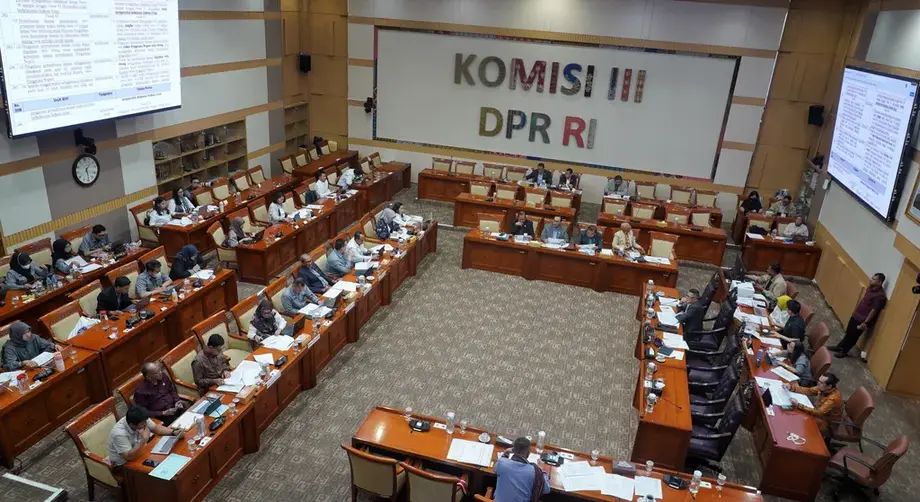
Working committee approves final drafting report
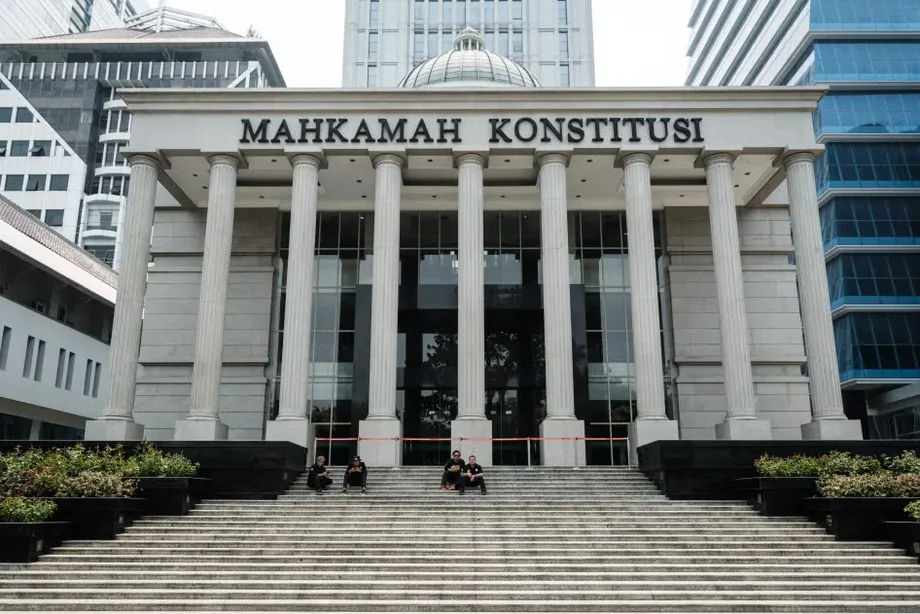
Indonesia's asset forfeiture bill moved closer to a parliamentary vote on November 18, 2026, after the working committee of House Commission III approved the final drafting and synchronization report. A meeting to take the first level decision was scheduled for 1 p.m. Western Indonesian Time that day, before the bill could advance to a plenary session of the House of Representatives, or DPR.
Contents
- Working committee approves final drafting report
- What the final drafting work involved
- How the bill reached this stage
- Why recovering assets matters
- Which crimes would fall within the bill?
- How forfeiture without a conviction would work
- Safeguards for owners and other affected people
- Who would manage and supervise recovered assets?
- Public access and compensation for victims
- Key Points
The draft now bears the title Bill on Asset Forfeiture Related to Corruption and Other Criminal Offenses. Its proposed powers include recovering assets without first securing a criminal conviction against an alleged offender, while retaining a role for the courts.
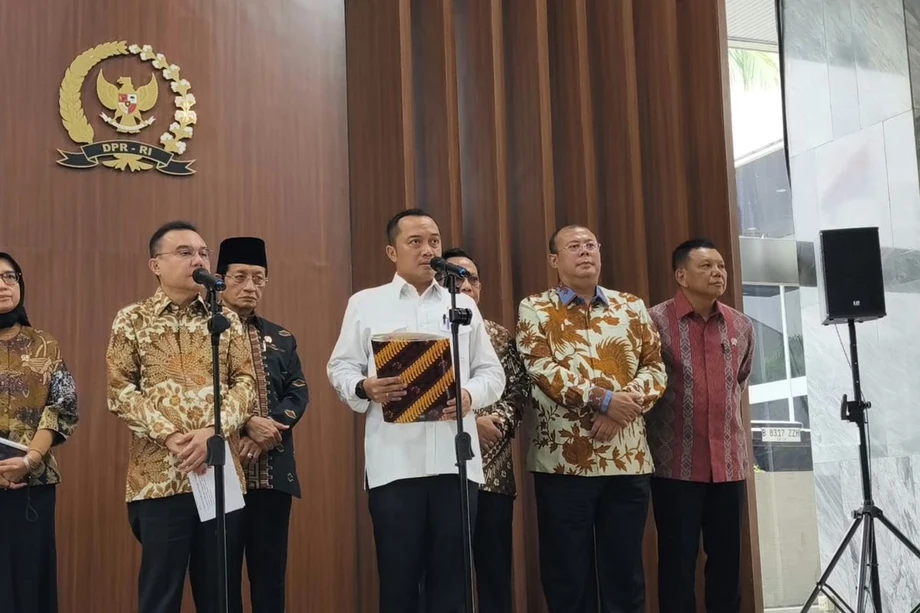
Commission III chairman Habiburokhman, who also leads the working committee, said approval of the report completed the committee's series of meetings. Members present agreed to accept the work of the drafting team, known as timus, and the synchronization team, known as timsin.
The next decisions concern a bill whose reach has narrowed during negotiations. An initial list of 13 categories of crime has been reduced to corruption and six other categories. Negotiators have also agreed on provisions concerning criminal liability, asset management and oversight.
Lawmakers are seeking passage in November, ahead of an earlier December 15 target. The latest update records completion of the working committee stage and the scheduling of the next meeting; the outcome of that meeting and a date for the plenary vote were not given.
What the final drafting work involved
Soedeson Tandra, deputy chairman of the working committee, said the two technical teams had completed their assignments using the Daftar Inventarisasi Masalah, or DIM. This is an inventory of issues and proposed changes used to organize negotiations between lawmakers and the government.
Language specialists and legislative drafters checked sentences, phrases, punctuation, article numbering and the structure of the bill. They worked with reference to Law No. 13 of 2022, which amended Law No. 12 of 2011 on the Formation of Laws and Regulations.
The teams also checked references between articles and the explanatory notes accompanying the provisions. Soedeson said their task was to align the text with working committee agreements and avoid contradictions or competing interpretations between articles. For a law governing when property can be taken, those connections determine how officials and courts apply its powers.
The government submitted 397 DIM items: 160 to remain unchanged, 135 involving editorial revisions, 40 involving substantive changes, 44 proposed deletions and 18 introducing new substance. The last three groups totaled 102 items requiring closer policy discussion, while the technical teams handled the large block of editorial work.
How the bill reached this stage
The proposal has a much longer history than the latest round of negotiations. The Financial Transaction Reports and Analysis Center, or PPATK, initiated work in 2008, and a first draft was prepared in 2012. A government draft, supporting academic paper and presidential letter reached the DPR in May 2023.
The DPR took over the proposal as a House initiative in 2025. Commission III began drafting discussions on January 15, 2026, before the proposal advanced through the following stages:
- August 25, 2026: Habiburokhman set out a timetable aiming for passage by December.
- October 6: The DPR approved the proposal as a House initiative. A letter submitting it to the president carried the same date and the number T/13900/LG.01.01/10/2026.
- November 5: Deputy Law Minister Edward Omar Sharif Hiariej submitted the government's proposed revisions.
- November 9: The working committee agreed on many substantive provisions, including the continued criminal liability of offenders whose assets are forfeited.
- November 11: Technical discussions approved a proposed Rp1 billion minimum asset value for forfeiture without a prior criminal judgment.
- November 18: The working committee accepted the final drafting report and scheduled the first level decision meeting for 1 p.m.
The accelerated November timetable follows years of stalled proposals. It has also sharpened disagreement over whether the public has had enough access to the changing text.
Why recovering assets matters
Indonesia Corruption Watch's 2024 study of corruption judgments recorded Rp330.9 trillion in state losses, with 4.84% recovered. Applying that percentage to the recorded losses gives approximately Rp16 trillion recovered and Rp314.9 trillion left unrecovered within the study's figures.
Only 48 of the 364 corruption cases monitored by ICW used Article 18 of the corruption law, which provides for measures including asset confiscation. That is about 13.2% of the cases. Five used money laundering provisions to trace and recover assets.
The scale extends beyond corruption. PPATK identified suspected transactions during 2025 and the first half of 2026 totaling Rp195.77 trillion linked to corruption, Rp7.72 trillion to narcotics, Rp25.15 trillion to banking crime and Rp684.71 trillion to mining. These figures describe financial flows identified for suspected links to offenses; the ICW study measures losses and recovery in corruption judgments.
Auriga's Outlook on Natural Resource Crime estimated annual state losses from fisheries crime at Rp101 trillion. Civil society groups argue that asset recovery must reach the financiers and beneficial owners, meaning the people who ultimately control or profit from a business, rather than stop with people carrying out offenses on the ground.
Which crimes would fall within the bill?
The agreed scope centers on corruption and six other categories: narcotics and psychotropic substances; terrorism and terrorism financing; people smuggling; smuggling weapons, ammunition and hazardous materials; human trafficking; and fraud or embezzlement using information technology or affecting the wider public economy.
The initial text covered 13 categories, including tax crimes. Lawmakers said narrowing the scope was intended to reduce the risk of misuse against civil society and to keep the powers proportionate to their purpose. They cited the United Nations Convention Against Corruption as a reference for the approach.
The narrower list changes the practical reach of the proposal. The government had described corruption, money laundering, narcotics trafficking and tax crimes as threats to development, public finances and the economy when submitting its position. The agreed list concentrates the new framework on a smaller set of offenses.
Soedeson said negotiators deliberately avoided a broad reference to economic crimes in the title because that wording could extend too widely. The new name places corruption at the center while retaining specific additional offenses.
How forfeiture without a conviction would work
Non-conviction-based forfeiture, often shortened to NCB, allows a court to decide whether assets should be forfeited without first convicting the alleged offender. Negotiators discussed its use when a suspect dies, flees, suffers permanent illness or disability, or faces a legal obstacle preventing a criminal trial. Earlier drafts also addressed assets discovered after a final conviction.
DIM No. 66 proposed a minimum asset value of Rp1 billion for this route, and the drafting team approved that proposal on November 11. The proposed procedure runs from tracing, blocking and seizure through filing an application, summonses, a court hearing, a decision, enforcement and legal remedies.
Soedeson described the mechanism as a limited last resort when other laws could no longer address the situation. He said seizure and forfeiture must go through the courts. Blocking restricts access to assets, seizure places them under legal control, and forfeiture determines their final transfer under the law.
Dhahana Putra, director general of legislation at the Ministry of Law, presented the government's proposed Article 6A during the November 9 discussions. He explained that recovering assets would leave the offender's criminal responsibility intact:
Asset confiscation without a criminal conviction against the perpetrator of the crime as referred to in Article 3 letter b does not eliminate criminal liability for the perpetrator.
The committee accepted the provision. Asset recovery and the pursuit of criminal responsibility would therefore continue as distinct legal tasks.
Safeguards for owners and other affected people
Commission III's August progress statement identified court control, clear evidence standards, objection procedures and protection for lawful third parties as central issues. It also discussed reverse proof requirements, under which an asset holder may be required to explain the property's lawful origin after the state meets an initial evidence threshold.
Deputy Human Rights Minister Mugiyanto has argued that safeguards should be built into the bill from the start. He pointed to directions presented by Deputy Law Minister Hiariej on November 5, including protection for third parties acting in good faith, opportunities to object and compensation mechanisms.
Muhammad Isnur, chairman of the Indonesian Legal Aid Foundation, or YLBHI, warned that misuse could involve political pressure or extortion. He described the different consequences that a legal battle over assets could have for large and small organizations:
For wealthy defendants, this may mean an expensive legal battle. For small businesses, community organizations, environmental advocates, or civil society groups, it could mean the loss of the ability to survive or carry out activities.
Professor Erma Rusdiana of Trunojoyo University also warned against arbitrary seizures and recommended a single institution for asset management. The concerns connect the initial decision to restrict property with the handling of that property afterward.
Who would manage and supervise recovered assets?
November negotiations produced agreement on an asset management agency under executive authority and a separate Asset Confiscation Supervisory Agency. The supervisory body's chair and deputy chair would undergo a parliamentary selection process before appointment by the president.
Lawmakers rejected the government's proposed name of Supervisory Board. PDI-P legislator I Wayan Sudirta argued for an independent body with stronger external oversight, while PKS legislator Nasir Djamil called for supervision with an operational structure suited to the technical work of asset recovery. A system using technology would be regulated through a presidential decree.
The division of financial responsibilities had required further discussion on November 9. DIM 329 Letter A concerned transferring confiscated assets associated with state losses to the Ministry of Finance, with negotiators examining possible overlap with the proposed management agency. Soedeson said coordination with the ministry was needed before technical drafting could finish.
Earlier criticism focused on an unclear management structure in the July draft. The November agreements provide more institutional detail, making responsibility for custody, records, disposal and oversight a central part of assessing the completed text.
Public access and compensation for victims
A civil society coalition's August 27 statement, published by Transparency International Indonesia, identified three concerns with the DPR draft dated July 10: removal of provisions on illicit enrichment, a narrower NCB mechanism and uncertainty over asset management.
Illicit enrichment refers here to wealth out of proportion to lawful income whose legal origin cannot be explained. The coalition said the 2023 government draft addressed such assets, while the July DPR version removed that provision. ICW's Wana Alamsyah also questioned whether the narrower text could reach criminal assets whose offender or owner was unknown.
Public access became a further point of dispute. Habiburokhman later cited at least 62 public hearings, eight working visits, dozens of constituency visits and hundreds of written submissions since September 2025. The August parliamentary statement had recorded 35 hearings and three regional visits. The coalition demanded publication of the draft, academic paper and DIM before the first level decision, while ICW researcher Almas Sjafrina criticized the compressed timetable.
The coalition invoked the Constitutional Court's requirements for meaningful participation, associated with decision 91/PUU-XVIII/2020: the right to be heard, to have views considered and to receive an explanation. Its objections concerned the July text; subsequent negotiations introduced changes including the new management and supervisory arrangements.
Victims also have a direct stake in where recovered property goes. In a November 17 parliamentary statement, Commission III member Andi Amar Ma'ruf Sulaiman called for recovery mechanisms that return assets to people harmed by crime, rather than automatically directing everything to the state.
Speaking during the November 10 discussions, Andi Amar urged accurate identification of victims and distribution based on victim data. He also called for strong evidence and protection of property belonging to people unconnected to an offense. His proposal puts the final destination of recovered assets alongside the debate over the state's power to take them.
Key Points
- The working committee approved the bill's final drafting report on November 18, 2026.
- A first level decision meeting was scheduled for 1 p.m. that day, before a later plenary decision.
- The agreed scope covers corruption and six additional categories of crime.
- A proposed mechanism permits forfeiture without a prior criminal conviction, with court involvement and a Rp1 billion minimum asset value.
- Negotiators agreed that asset forfeiture would leave criminal liability intact.
- Public access, lawful ownership, oversight and compensation for victims remain central concerns in the debate.