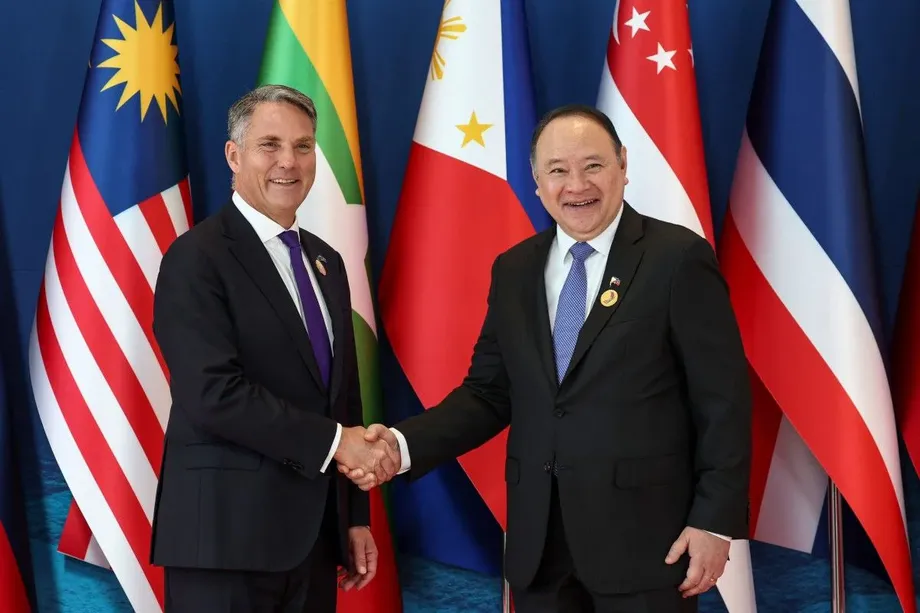
Manila agreements target digital abuse and criminal networks
Leaders at the 49th ASEAN Summit in Manila adopted a declaration against online child sexual exploitation, including abuse involving artificial intelligence, while the 21st East Asia Summit approved stronger cooperation against online scams and related offenses, Philippine President Ferdinand Marcos Jr. said.
Contents
- Manila agreements target digital abuse and criminal networks
- What the child protection declaration addresses
- A regional action plan already covers 2026 to 2030
- Why survivors want a role in the response
- Philippine figures add urgency to proposed laws
- Online scams carry a second cost in human trafficking
- What stronger cooperation would involve
- Digital growth and digital protection advance together
- From the November forum to Singapore's chairmanship
- Key Points
The two measures address threats that cross national borders: abusive images can circulate through digital platforms, fraudsters can target victims overseas, and people recruited into scam centers can become victims of trafficking. The agreements place child protection, police coordination and information sharing within the region's wider digital agenda.
The Philippines initiated the ASEAN Leaders' Declaration on Preventing Online Child Sexual Exploitation and Abuse and Child Sexual Abuse Materials in the Digital and Artificial Intelligence-Enabled Environment. Its intended reach covers ASEAN's 11 members, including Timor-Leste, which participated in the bloc's leaders' summit for the first time.
Marcos said the declaration reaffirmed the region's responsibility to protect children. Describing its purpose, the Philippine president said it:
reaffirms ASEAN's commitment to safeguarding children's rights and ensuring a safer digital environment for our children.
The East Asia Summit's Leaders' Statement on Strengthening Cooperation Against Online Scams and Related Offenses extends the response beyond ASEAN. That forum brings together Southeast Asian leaders and counterparts from the United States, China, Russia, Japan, South Korea, India, Australia and New Zealand.
Marcos said the summit produced more than 100 outcome documents, but stressed that agreements must become concrete action. For families, the practical test will be whether authorities make abuse easier to report, improve protection and recovery services, and coordinate more effectively against criminal networks.
What the child protection declaration addresses
The child protection declaration puts artificial intelligence alongside other digital technologies in ASEAN's response to sexual exploitation. AI can generate or alter images, audio and video, giving offenders more ways to create abusive material, impersonate people or threaten victims.
Child sexual abuse material, often shortened to CSAM, means material depicting the sexual abuse or exploitation of children. Technology facilitated child sexual exploitation and abuse is a broader term: it includes abuse arranged, committed, recorded or distributed using digital tools.
Online grooming was another concern discussed during the preparations for the summit. Grooming involves an offender building a child's trust to manipulate or exploit them. Authorities also examined exploitation crossing borders and the responsibility of digital platforms whose services can be used to contact children or circulate abusive content.
The regional declaration gives governments a shared commitment. National laws, reporting systems, investigations and services for affected children are the means through which that commitment reaches households. No detailed timetable for implementing the newly adopted declaration or the anti-scam statement was announced in the summit accounts.
A regional action plan already covers 2026 to 2030
About 350 representatives gathered at the ASEAN ICT Forum 2026 on Child Online Protection at the Grand Hyatt Manila on November 4 and 5. Participants included officials, police, technology and financial companies, international organizations, academics, civil society and survivor advocates.
The forum launched the extended ASEAN Regional Plan of Action for the Protection of Children from All Forms of Online Exploitation and Abuse for 2026 to 2030. Its priorities include prevention, victim protection, access to justice, recovery services, industry accountability and cooperation among countries.
Philippine Justice Secretary Fredderick Vida told the gathering that hosting the forum brought a responsibility to turn discussion into sustained work:
For the Philippines, leading this year's Forum carries a responsibility to help translate our discussions into sustained action. We take on that responsibility in a spirit of partnership.
Vida called for stronger reporting mechanisms, closer cooperation among law enforcement agencies and policies built around survivors' needs. Together, those priorities connect three stages of protection: helping someone report abuse, enabling authorities to investigate it and supporting the person harmed.
Why survivors want a role in the response
Patricia Berame, a survivor advocate from the Philippine Survivor Network, urged leaders to put prevention first and give survivors a meaningful role in shaping policy. At the forum, she explained why their participation matters:
Survivors are not just numbers, and our experiences must matter in every decision made to protect children.
Berame's call gives a concrete meaning to policies centered on survivors. Reporting abuse and pursuing justice must be accompanied by protection and recovery services, which are among the regional action plan's stated priorities.
Elizabeth Aguiling-Pangalangan, the Philippine representative for children's rights to the ASEAN Commission on the Promotion and Protection of the Rights of Women and Children, said policy must keep pace with technological change:
The digital environment is now an integral part of children's lives. Their rights must be protected there, just as they must be protected in their homes, schools and communities.
The Department of Justice organized the forum through its national coordination center against online sexual abuse and exploitation of children. Partners included the Philippine and Thai representatives to the ASEAN commission, International Justice Mission Philippines and UNICEF Philippines.
Philippine figures add urgency to proposed laws
The Philippines recorded a CSAM rate of 91.59 per 10,000 people in 2025, according to figures attributed to INHOPE, an international network of hotlines dealing with child sexual abuse material. Vietnam's figure was 78.22 and Malaysia's was 59.52. On that measure, the Philippine rate was about 17% higher than Vietnam's.
A compilation drawing on INHOPE data, the 2025 CyberTipline Report and population data also placed estimated technology facilitated child sexual exploitation and abuse prevalence in the Philippines at 20.2%, followed by Cambodia at 11.4% and Thailand at 9.2%. Details of the methodology and the population covered by that estimate were not specified.
Philippine First Lady Liza Araneta-Marcos cited the proposed Smart Kids Act and Safe Kids Act as efforts to strengthen online safeguards. She spoke at the Fostering the Future Together event at the Hilton Hotel in Pasay City, held alongside the summit.
Vida separately highlighted the proposed Batang Ligtas measure, which had been ratified by both houses of Congress and was awaiting presidential consideration. That proposal seeks to address abuse involving technology, strengthen digital platform accountability and improve national child protection mechanisms.
The measures were at different stages. The Smart Kids Act and Safe Kids Act were described as proposed legislation, while Batang Ligtas had reached the president for consideration. No date for presidential action was given.
Online scams carry a second cost in human trafficking
The East Asia Summit statement addresses online scams as a problem involving both financial crime and human exploitation. Authorities in Southeast Asia have described workers lured by recruitment syndicates into scam centers, including operations in the Philippines and Cambodia.
Some workers have faced threats and torture when trying to escape or refusing orders. People inside these operations may be forced to deceive victims abroad while themselves being held under coercion. That makes identifying and protecting trafficking victims part of the response to fraud.
Before adoption, the draft East Asia Summit statement called for sharing threat assessments and practical experience, strengthening coordination among authorities and cooperating to dismantle scam centers. It also addressed human trafficking associated with those operations.
A July report by the United Nations Office on Drugs and Crime put estimated combined scam losses in 2025 at $88.3 billion to $114.1 billion. It described criminal groups based in Southeast Asia expanding through integrated networks and technology into other regions.
The UN findings also described criminals using AI to steal from victims and global financial systems to move illicit proceeds. Generative AI, which creates new content, and deepfakes, which imitate a person's appearance or voice, can support impersonation, sexual extortion and exploitation.
What stronger cooperation would involve
Information sharing is central to the adopted anti-scam measure. A fraud operation can involve recruiters in one country, workers in another, victims elsewhere and payments passing through several financial systems. Authorities need ways to connect those pieces.
The draft statement's proposal to exchange threat assessments would let governments share what they know about criminal methods, networks and emerging risks. Cooperation to dismantle scam centers would connect that intelligence with investigations and enforcement.
Leaders also planned to address conditions that help scam operations grow: poverty, weak social protection, outdated domestic laws, corruption, gaps in coordination between public and private organizations, and limited economic opportunities. Those concerns place prevention alongside police action.
The draft called for responses consistent with international law and respectful of human rights. That principle has practical relevance where a raid may encounter trafficking victims as well as people directing criminal activity.
ASEAN leaders were also expected to release the first ASEAN Regional Trafficking in Persons Report, a Philippine initiative described as an assessment led and owned by the region. Its planned purpose was to document collective progress, achievements and lessons in carrying out commitments against trafficking. Its release was not confirmed in the summit closing details.
Digital growth and digital protection advance together
Marcos presented the ASEAN Digital Economy Framework Agreement, known as DEFA, as a major achievement of the Philippine chairmanship. He said work had begun in January and involved multiple meetings before completion.
The president said implementation would support commerce across borders and common rules on data and digital payments. Those same areas connect with the safety agenda: digital platforms link people across countries, while payment services can become channels for fraud proceeds.
Marcos also argued that ASEAN countries should participate in developing AI rather than remain consumers of emerging technologies. At the Fostering the Future Together event, the discussion similarly paired children's access to technology with their safety when using it.
US First Lady Melania Trump said in a video message that nearly 60 nations had joined her coalition, which brings together first spouses and equivalent leaders to support children through the safe use of technology, including AI. Araneta-Marcos described online exploitation, cyberbullying and harmful content as concerns accompanying the opportunities digital tools give children.
The safety declarations therefore sit beside an economic agreement intended to expand digital activity. Their shared practical challenge is to make wider access to technology come with reporting systems, institutional responsibility and protection for people exposed to harm.
From the November forum to Singapore's chairmanship
The Manila decisions followed a sequence of technical discussions and leaders' meetings. The planned summit programme placed the 21st East Asia Summit and the transfer of ASEAN's chairmanship on November 17, alongside meetings with major international partners.
- November 4 to 5, 2026: The ASEAN ICT Forum in Manila addressed AI generated abuse material, grooming, platform accountability and cooperation across borders, and launched the regional action plan for 2026 to 2030.
- November 15 to 17, 2026: The main leaders' programme brought ASEAN members and dialogue partners together in Manila. Marcos subsequently announced adoption of the child protection declaration and the anti-scam statement.
- 2027: Singapore takes over ASEAN's chairmanship under Prime Minister Lawrence Wong, during the bloc's 60th anniversary year.
- 2026 to 2030: The extended child protection action plan provides a continuing framework for prevention, protection, justice and recovery services.
Marcos handed the chairmanship to Wong at the closing ceremony. Singapore's leadership will follow a summit that produced more than 100 documents, with child protection and action against scams among the commitments requiring continued cooperation.
For children, families and trafficking victims, the most concrete priorities are already identified: accessible reporting, coordinated investigations, accountable digital platforms, protection from further harm and support for recovery.
Key Points
- ASEAN adopted a Philippine initiated declaration against online child sexual exploitation, including abuse involving AI.
- The East Asia Summit approved stronger cooperation against online scams and related offenses.
- A regional child protection action plan covers 2026 to 2030 and includes prevention, justice, recovery services and industry accountability.
- The proposed Philippine Batang Ligtas measure was awaiting presidential consideration after ratification by both houses of Congress.
- Scam centers are also a trafficking concern, with some workers subjected to coercion, threats and torture.
- Singapore assumes ASEAN's chairmanship in 2027 as implementation of the Manila commitments continues.