November 17 Meeting Puts Defence and Trade in Focus
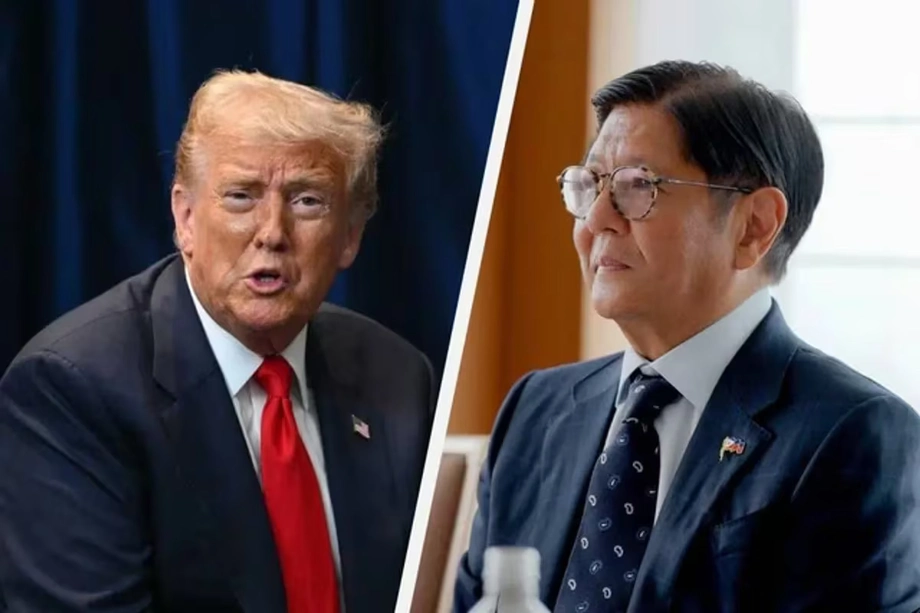
Philippine President Ferdinand Marcos Jr. and US President Donald Trump are scheduled to meet in Manila on November 17, alongside an ASEAN gathering that will address maritime security, digital trade and the conflict in Myanmar. Philippine officials have also raised the prospect of an announcement involving American defence equipment and capabilities.
Contents
- November 17 Meeting Puts Defence and Trade in Focus
- A Short Visit Within a Crowded Schedule
- Defence Equipment Could Be Announced
- Tariffs Bring Exporters Into the Discussion
- Pax Silica Talks Have a Separate Timetable
- South China Sea Negotiations Face a Year-End Target
- Digital Trade and Asian Partners Share the Agenda
- Myanmar and Visiting Guests Broaden the Meetings
- Metro Manila Prepares for Leaders and Protests
- Key Points
Dominic Imperial, executive director of the Department of Foreign Affairs ASEAN Office, said Thursday that Trump was expected to arrive that day and would hold talks with Marcos. The American president is also expected at the ASEAN-US Special Summit, the closing diplomatic event of the main leaders' programme at the Philippine International Convention Center in Pasay City.
Imperial, an official involved in summit preparations, confirmed the planned meeting between the two presidents:
"President Trump is coming so there will definitely be a bilateral engagement between President Trump and President Marcos," he said.
The DFA has not announced the bilateral agenda. Defence Secretary Gilberto Teodoro has suggested that commitments involving equipment could be announced during the visit, while Social Welfare Secretary Rex Gatchalian wants leaders to discuss the effect of higher American tariffs on Philippine exporters.
The talks come as the Philippines completes its year as ASEAN chair and prepares to hand leadership to Singapore. Marcos is also expected to meet the leaders of Australia, Brazil, Japan and South Korea, making the summit a concentrated round of negotiations with several major partners.
A Short Visit Within a Crowded Schedule
Philippine Ambassador to the United States Jose Manuel Romualdez said Trump's visit would be brief because the president would also attend the Asia-Pacific Economic Cooperation summit in Shenzhen, China, later in November. Trump last visited the Philippines for an ASEAN summit in 2017, during his first term.
Romualdez described Southeast Asia as a "very important market" for the United States and said peace and security in the region mattered to the wider Indo-Pacific. His comments place commercial ties alongside security interests as reasons for Trump's attendance.
The DFA's leaders' programme runs from November 15 to 17, ending with the ASEAN-US Special Summit; the broader summit hosting period has also been described as November 15 to 18. The main events are scheduled as follows:
- November 15: ASEAN leaders hold plenary and retreat sessions, review the Philippine chairmanship and discuss Myanmar.
- November 16 to 17: ASEAN holds meetings with dialogue partners, including Australia, China, India, Japan, South Korea and the United States.
- November 17: Marcos chairs the 29th ASEAN Plus Three Summit and the 21st East Asia Summit, then hands the ASEAN chairmanship to Singapore before the ASEAN-US Special Summit.
- November 16 to 18: Special nonworking days apply across Metro Manila under a Malacañang declaration intended to ease traffic and support security arrangements.
Defence Equipment Could Be Announced
Teodoro has pointed to a command and control initiative as an area where American commitments could produce an announcement. Command and control refers to the systems that help officials and military units exchange information, make decisions and coordinate their actions.
The defence secretary linked the initiative to protecting computer networks and sharing sensitive information. Speaking earlier in November, Teodoro explained its purpose:
"The command and control initiative is essential for our cyber and IT resilience and it forms the basis of our sharing of classified information with like-minded ASEAN partners and within us too because it is very porous," he said.
Secure communications matter when governments exchange classified material, meaning information restricted because its disclosure could harm national security. A weakness in the computers or networks handling that material can expose information beyond the office where the weakness begins.
Teodoro said any assistance he was discussing would take the form of equipment and capabilities. He described the proposed support this way:
These are not cash grants, these are hard grants of equipment and capabilities so no cash is involved.
His comments point toward practical support for communications and information protection. They also give the bilateral meeting a possible defence outcome alongside the broader regional discussions taking place around it.
Tariffs Bring Exporters Into the Discussion
Gatchalian, who also chairs the ASEAN Socio-Cultural Community Council, said meetings alongside the summit could provide an opportunity to discuss the economic effects of Trump's tariff increases. He identified concerns for Philippine exporters and other economies selling goods into the American market.
A tariff is a tax charged when goods enter a country. The importer pays it at the border, but the cost can spread through the trading relationship. Buyers may seek lower prices from suppliers, accept smaller profits or charge customers more. Philippine exporters can therefore face pressure even though the tax is collected in the United States.
Gatchalian said Marcos and Trade Secretary Cristina Roque were continuing to seek more favourable conditions for exporters. He also warned that tariffs intended to protect American industries could carry costs for the US economy.
Security, trade, investment and relations between people were all subjects that Gatchalian said leaders could address in bilateral meetings. He suggested such gatherings could help advance free trade agreements, which set rules for trade and can reduce barriers between participating economies.
Romualdez, meanwhile, said Philippine relations with Washington benefited from support in both major American political parties. That was his basis for expecting continuity in US policy toward the Philippines despite changes in Congress.
Pax Silica Talks Have a Separate Timetable
US Ambassador to the Philippines Lee Lipton said on November 7 that no announcement of a Pax Silica agreement was planned during the ASEAN summit. His statement provides a specific timetable for a project that had attracted speculation about a signing during Trump's visit.
The proposed Pax Silica Economic Security Zone would be located in New Clark City, in Capas, Tarlac. The initiative aims to strengthen supply chains for industries including semiconductors and advanced manufacturing. Semiconductors are the chips used in products ranging from phones and computers to industrial equipment.
Trade Undersecretary Ceferino Rodolfo said on November 10 that the two countries still aimed to sign the project's legal framework before the end of 2026. A legal framework would set the rules governing the initiative. Palace Press Officer Claire Castro said the Philippines was awaiting the American response to a draft agreement.
The Bases Conversion and Development Authority had submitted a memorandum to the Office of the President to guide negotiations. Lipton said decisions would involve consultation with the Philippine government and consideration of effects on stakeholders.
Environmental and community groups have expressed concerns about farmers, Indigenous communities, water supplies and the environment. The BCDA says consultations with local governments and other stakeholders are continuing. For communities around the proposed site, those discussions concern land, resources and livelihoods as well as industrial investment.
South China Sea Negotiations Face a Year-End Target
ASEAN's negotiations with China over a South China Sea Code of Conduct are among the major regional issues surrounding the summit. ASEAN foreign ministers set a target of completing the negotiations by the end of 2026.
The proposed code is intended to help prevent confrontations at sea, including encounters between Chinese and Philippine vessels, from escalating into armed conflict. ASEAN and China first pledged to work toward a code in a declaration signed in 2002. The 2026 target therefore comes 24 years after that initial commitment.
The force of any agreement will depend on its final wording, including what obligations governments accept and how compliance is handled. Rules that governments can enforce carry different consequences from a statement of shared intentions.
Completion before the Philippines ends its chairmanship is uncertain. Negotiations would continue under Singapore if terms are not settled by the deadline. Marcos will consequently hand over both ASEAN's leadership and responsibility for managing a difficult unfinished regional negotiation.
Digital Trade and Asian Partners Share the Agenda
The Philippines expects to present the proposed ASEAN Digital Economy Framework Agreement during the summit. The initiative is intended to create binding regional rules for digital trade and cooperation.
Digital trade includes economic activity conducted through digital systems, such as online transactions and services delivered electronically. A regional agreement would give participating governments a common framework for an area of commerce that crosses national borders quickly.
The proposal brings an economic priority into a gathering also occupied by security disputes. Businesses trading across ASEAN would have a direct interest in the rules governments negotiate and the obligations they eventually accept.
Marcos will also chair the ASEAN Plus Three Summit with China, Japan and South Korea on November 17. The East Asia Summit on the same day will address broader strategic, political and economic concerns. These meetings provide separate settings for regional discussions before Trump's expected appearance at the ASEAN-US gathering.
Myanmar and Visiting Guests Broaden the Meetings
Myanmar will be represented by the director general of its Foreign Ministry's ASEAN Affairs Department. ASEAN has kept the country's leaders out of its summits since the military removed Aung San Suu Kyi's elected government in 2021.
The bloc has withheld recognition of the subsequent election that made military chief Min Aung Hlaing a civilian president. ASEAN also postponed Myanmar's turn to chair the organisation, with the Philippines assuming the role instead. Myanmar's situation is scheduled for discussion during the opening sessions.
Leaders from the other ASEAN members are expected, including Timor-Leste, which joined as the bloc's 11th member in 2025. Brazilian President Luiz Inacio Lula da Silva, Canadian Prime Minister Mark Carney and an International Monetary Fund representative will participate as Guests of the Chair and speak at the plenary.
Chinese President Xi Jinping is not expected in Manila. The DFA said Premier Li Qiang had customarily led China's delegation to recent ASEAN meetings, although official confirmation of his attendance was still pending as of the previous week. New Zealand is expected to send its deputy prime minister and foreign minister, while Russia will be represented by its foreign minister.
Metro Manila Prepares for Leaders and Protests
Malacañang's declaration of special nonworking days from November 16 to 18 gives the summit an immediate effect beyond the meeting rooms. The measure is intended to reduce traffic and help authorities secure visiting leaders and delegates across Metro Manila.
Civil society groups have announced plans to protest Trump's expected visit. Their plans add a public political dimension to a programme otherwise centred on meetings between governments.
ASEAN leaders will also meet lawmakers, business groups and youth representatives. Those sessions give the gathering channels beyond presidential discussions, while the main diplomatic outcomes will depend on the agreements and statements governments are ready to approve.
Key Points
- Marcos and Trump are scheduled to meet in Manila during Trump's expected November 17 visit.
- Trump is also expected at the ASEAN-US Special Summit before travelling to China for APEC.
- Teodoro has suggested an announcement involving defence equipment and capabilities; Gatchalian wants tariff concerns discussed.
- No Pax Silica announcement is planned for the summit, while negotiators target a legal framework before the end of 2026.
- ASEAN faces a year-end target for its South China Sea code negotiations and is preparing a digital economy agreement.
- Singapore will take over the ASEAN chairmanship, and Metro Manila has special nonworking days from November 16 to 18.