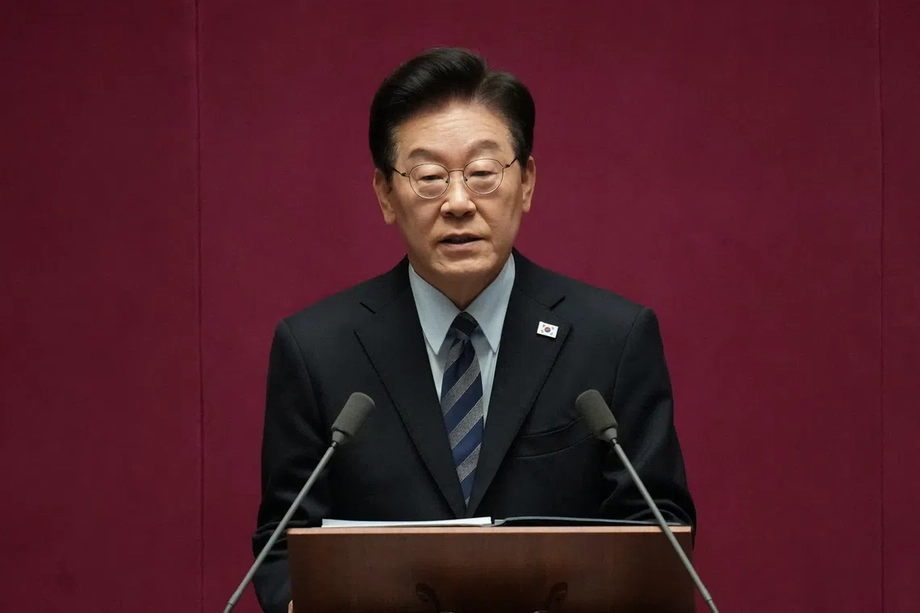
Four Days of Talks on Security, Trade and Regional Cooperation
South Korean President Lee Jae Myung will visit Manila and Shenzhen from November 16 to 19, 2026, seeking cooperation on critical minerals, online scams and energy supplies while asking regional leaders to support renewed dialogue with North Korea.
Contents
- Four Days of Talks on Security, Trade and Regional Cooperation
- Manila Opens With a Review of ASEAN Cooperation
- Five Mekong Partners Put Minerals and Crime on the Agenda
- ASEAN Plus Three and Lee's First East Asia Summit
- The Itinerary From November 16 to 19
- Shenzhen Moves the Focus to Business and Prosperity
- Seoul Seeks Support for Renewed North Korea Talks
- Blue House Sees Little Prospect of a Trump-Kim Meeting
- A Longer ASEAN Calendar Extends to 2029
- Key Points
National Security Adviser Wi Sung-lac announced the itinerary at a Blue House briefing on November 12. The trip begins with meetings involving Southeast Asian leaders in the Philippine capital and ends with the Asia-Pacific Economic Cooperation (APEC) summit in China.
Lee will meet leaders of five Mekong countries, Cambodia, Laos, Myanmar, Thailand and Vietnam, on November 16. He will also attend the South Korea-ASEAN summit that day, followed by ASEAN Plus Three and the East Asia Summit on November 17.
The Shenzhen programme begins on November 18 with the APEC CEO Summit and a welcome dinner hosted by Chinese President Xi Jinping and his wife, Peng Liyuan. Lee will attend the APEC leaders' plenary on November 19 before returning home.
Wi said the president would use bilateral meetings, involving two governments, and multilateral meetings, involving several, to build trust and address shared regional problems. South Korea's agenda combines economic cooperation with a diplomatic campaign for peaceful coexistence on the Korean Peninsula.
The schedule gives Lee several audiences for that campaign: Southeast Asian partners, China and Japan through ASEAN Plus Three, the broader East Asia Summit, and the economies participating in APEC. Alongside those security discussions, Seoul wants progress on practical issues affecting businesses and households, including reliable supplies of energy and food and responses to crime operating across borders.
Manila Opens With a Review of ASEAN Cooperation
Lee's November 16 meeting with the Association of Southeast Asian Nations (ASEAN) will review implementation of the South Korea-ASEAN Comprehensive Strategic Partnership Vision presented last year. Leaders will discuss progress and ways to expand economic and diplomatic cooperation.
A comprehensive strategic partnership is a framework for cooperation across several policy areas rather than a single project. For this visit, the task is to examine how the commitments made under that framework are being put into practice.
Wi described ASEAN as a key economic and diplomatic partner for South Korea. Lee is expected to seek closer ties with the bloc while sharing progress on the partnership's agreed direction.
Wi said Lee would propose stronger cooperation in future-oriented fields, including artificial intelligence and cultural and creative industries, to help South Korean companies sustain their expansion into the region.
Manila will also host other major diplomatic engagements during the same period. Philippine President Ferdinand Marcos Jr. and US President Donald Trump are scheduled for November 17 talks alongside the ASEAN gathering. Philippine officials have also identified South Korea among the countries whose leaders Marcos is expected to meet.
Five Mekong Partners Put Minerals and Crime on the Agenda
The South Korea-Mekong summit on November 16 will bring Lee together with leaders from Cambodia, Laos, Myanmar, Thailand and Vietnam. Wi said Lee would express his commitment to strengthening the strategic partnership with those countries.
Critical minerals and joint responses to transnational crime are among the planned subjects. Critical minerals are materials needed for industries such as electronics, batteries and energy equipment, whose supply can be vulnerable to disruption.
Cooperation on those materials connects diplomacy with the needs of manufacturers. Reliable access matters to companies planning production, while the details of any future arrangements would determine how governments and businesses participate.
Transnational crime crosses national borders, making cooperation between governments necessary. Lee's wider Manila programme specifically includes online scams, giving the crime discussions a concrete focus beyond a general promise to work together.
ASEAN Plus Three and Lee's First East Asia Summit
Lee will attend ASEAN Plus Three on the morning of November 17. The format brings ASEAN together with South Korea, China and Japan, placing Seoul's cooperation with its Northeast Asian neighbours within a wider Southeast Asian setting.
The partnership marks its 30th anniversary next year. Lee plans to outline future directions for cooperation ahead of that milestone, according to the briefing.
Those discussions will include responses to food and energy crises.
The East Asia Summit follows that afternoon. It will be Lee's first attendance since taking office, and he plans to explain his government's position on regional issues, including online scams, while presenting his vision for peaceful coexistence on the Korean Peninsula.
The two meetings give Seoul different settings for related priorities. ASEAN Plus Three focuses on cooperation among ASEAN and the three Northeast Asian partners, while the East Asia Summit offers a broader group of leaders an opportunity to discuss regional security and political issues.
The Itinerary From November 16 to 19
Lee's announced programme divides the four days evenly between Manila and Shenzhen. The first two days centre on ASEAN and its partners; the final two move to APEC's business and leaders' meetings.
- November 16: Depart for Manila and attend the South Korea-ASEAN and South Korea-Mekong summits.
- November 17: Attend ASEAN Plus Three in the morning and the East Asia Summit in the afternoon.
- November 18: Travel to Shenzhen, attend the APEC CEO Summit and join the welcome dinner hosted by Xi Jinping and Peng Liyuan.
- November 19: Participate in the APEC leaders' plenary and return to South Korea.
Wi said bilateral meetings would accompany the regional gatherings. The announced programme places cooperation on energy supply chains, transnational crime and food security among Lee's priorities across the trip.
A senior presidential official said bilateral meetings with major leaders, including Trump, were still under discussion and had not been confirmed. The office was adjusting the schedule to accommodate the necessary meetings.
Shenzhen Moves the Focus to Business and Prosperity
Lee will begin his APEC programme with the CEO Summit on November 18, putting a business gathering ahead of the leaders' plenary. The welcome dinner that evening will bring him together with other participants under China's hosting arrangements.
The November 19 discussions will focus on a prosperous Asia-Pacific community, with openness, innovation and cooperation among the stated themes. Lee plans to share South Korea's policies and experience and set out how Seoul intends to contribute to APEC's development and regional prosperity.
South Korea hosted APEC last year. Wi said Lee would draw on that experience during the Shenzhen discussions, linking Seoul's previous role as chair with its contribution to the current programme.
Wi said Lee would seek to establish artificial intelligence cooperation and responses to demographic change, which South Korea advanced at last year's Gyeongju summit, as core APEC priorities. He would also call for responses to energy supply-chain shocks originating in the Middle East and cooperation to restore the multilateral trading order.
APEC brings together 21 member economies, using the term economies rather than countries so that participants with different diplomatic circumstances can work together. Taiwan, which participates as Chinese Taipei, has appointed Acer founder Stan Shih as its Shenzhen summit envoy.
Energy supply chains and food security give the economic agenda practical meaning. Energy supply chains cover the production, transport and delivery systems that keep fuel and power available. Food security concerns people's ability to obtain enough safe and nutritious food. Wi identified both as common regional challenges on which South Korea wants to contribute.
Seoul Seeks Support for Renewed North Korea Talks
Lee plans to ask ASEAN and APEC participants to support Seoul's efforts to resume dialogue between the two Koreas and between North Korea and the United States. His stated aim is peaceful coexistence, shared growth and lasting peace on the peninsula.
Wi Sung-lac, South Korea's national security adviser, described the message Lee intends to deliver:
We intend to reaffirm the unwavering support of ASEAN and APEC member states for our policies on peaceful coexistence and shared growth on the Korean Peninsula, and to send a positive message for peace and stability on the peninsula.
The diplomatic effort extends beyond securing expressions of support. Wi said Seoul would seek continued backing and constructive contributions to restarting dialogue, placing regional governments within South Korea's broader attempt to reopen communication.
"We will ask countries in the region for their continued support and constructive contributions to our government's efforts to resume inter-Korean and North Korea-US dialogue and establish lasting peace on the Korean Peninsula," Wi said.
Lee's East Asia Summit appearance and APEC remarks will carry that message to overlapping groups of leaders. The combination allows him to discuss economic cooperation and peninsula security during the same journey, while asking partners to support both.
Blue House Sees Little Prospect of a Trump-Kim Meeting
A senior presidential official said North Korean leader Kim Jong Un was unlikely to attend the Shenzhen gathering and assessed the likelihood of contact between North Korea and the United States during the summit period as low.
The official cautioned that contact could not be ruled out entirely because unpredictable factors remained. "It is difficult to give a clear answer now, and I am cautious about saying there is no possibility at all," the official said, while stressing that the likelihood appeared low.
Trump is expected to attend the regional meetings and has expressed interest in meeting Kim. The official said contact before or after the gatherings was difficult to predict, while explaining that the presidential office was preparing for possible contact and communicating with Washington.
If a North Korea-US meeting took place, the official considered a date outside the ASEAN and APEC summit period more likely than one during the meetings. That did not mean the likelihood was high even when the period before and after the trip was included. "We are making preparations and communicating with the United States," the official said.
No North Korea-US meeting or separate US-China-Russia leaders' meeting had been confirmed. The official said Seoul was watching the possibility of the latter gathering and whether Korean Peninsula issues might be discussed, while maintaining communication with relevant governments.
"We cannot rule out the possibility," the official said of US-China-Russia talks, adding that discussions of Korean Peninsula issues could not be ruled out either.
The presidential office also said recognition of North Korea as a state possessing nuclear weapons was outside the options South Korea was considering. That position accompanied its preparations for possible diplomacy between Washington and Pyongyang.
Asked about the possibility of US recognition following a North Korea-US summit, the official said: "Recognition of North Korea's nuclear-weapon-state status is not something we contemplate."
Seoul's immediate task is therefore to seek support for dialogue while keeping in touch with governments that could shape it. Lee's announced itinerary centres on those consultations rather than a scheduled encounter with North Korea.
A Longer ASEAN Calendar Extends to 2029
Wi said a special South Korea-ASEAN summit is planned for 2029. That gives the relationship another scheduled milestone beyond the partnership review in Manila and ASEAN Plus Three's anniversary next year.
The November trip links those longer diplomatic plans with immediate discussions on minerals, crime, energy and food. For South Korea and its partners, the practical work is to turn shared priorities into cooperation that governments, businesses and communities can use.
Key Points
- Lee Jae Myung will visit Manila and Shenzhen from November 16 to 19, 2026.
- His Manila programme includes South Korea-ASEAN, South Korea-Mekong, ASEAN Plus Three and East Asia Summit meetings.
- Critical minerals, online scams, transnational crime, energy supplies and food security are planned discussion areas.
- Lee will attend the APEC CEO Summit on November 18 and the leaders' plenary on November 19.
- Seoul will seek regional support for renewed inter-Korean and North Korea-US dialogue.
- The presidential office considers North Korean attendance and North Korea-US contact during APEC unlikely, but does not entirely rule out contact and is preparing while communicating with Washington.
- A special South Korea-ASEAN summit is planned for 2029.