Fewer ships on watch, a sharper debate over missile intelligence
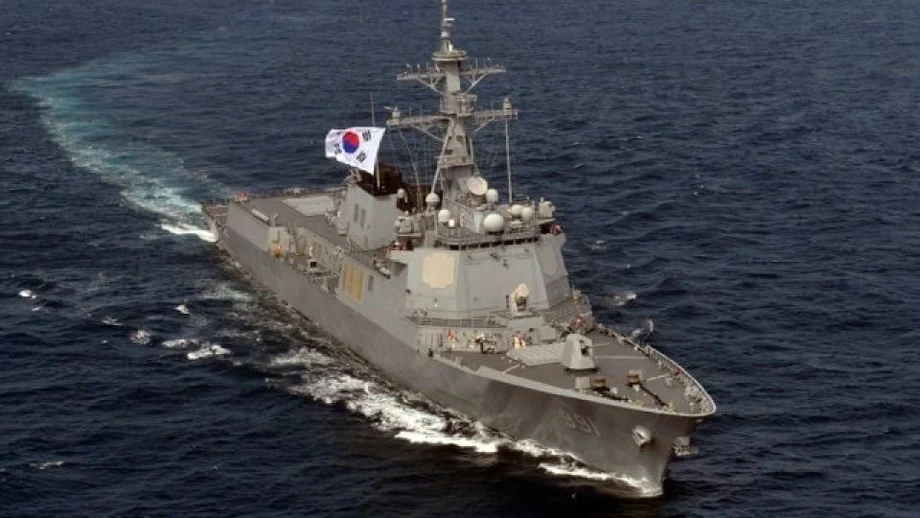
South Korea stopped keeping an Aegis destroyer continuously deployed in the East Sea in September 2025, following a Navy request citing personnel shortages and the strain of prolonged operations at sea. The decision has created a dispute within the military over how much detailed information Seoul can collect about North Korea's increasingly varied missiles.
Contents
- Fewer ships on watch, a sharper debate over missile intelligence
- Why the Navy changed its deployment pattern
- A succession of tests complicates the watch
- Why the November 4 missiles were difficult to identify
- What ground radar and ships each contribute
- Allied warning data supports the defense network
- Why repeated observations matter to analysts
- The decision weighs intelligence against crew demands
- Key Points
The Joint Chiefs of Staff (JCS), which approved the change, maintains that ground radar and intelligence cooperation with the United States and Japan can sustain missile detection, tracking and defense readiness. Military personnel involved in analyzing missile data say the absence of a permanent maritime watch has made it harder to consistently collect information about North Korean weapons.
South Korea currently operates four Aegis destroyers, warships equipped with advanced radar that can detect and track ballistic missiles over long distances. Ending continuous deployment changes when those ships are available to observe launches, rather than removing them from the surveillance force.
The practical issue is whether South Korea can preserve enough opportunities to study North Korean missiles while reducing the demands on ships and crews. Detecting a missile that threatens South Korean territory and collecting a detailed record of a test flight over the sea are related tasks, but they require different amounts of information.
Why the Navy changed its deployment pattern
The Navy asked the JCS for permission to end the continuous East Sea deployment in September 2025. Its reasons were personnel shortages and the operational burden of keeping warships at sea for extended periods. The Navy had three Aegis destroyers when the continuous deployment proposal was made, compared with four now.
Following the suspension, the intended approach was reportedly to dispatch an Aegis destroyer when intelligence indicated that North Korea was preparing a missile launch. That would concentrate maritime surveillance around anticipated tests instead of maintaining an uninterrupted presence.
North Korea has increasingly launched missiles without clear advance indications, according to a military official familiar with the arrangement. A deployment model triggered by warning signs depends on those signs appearing early enough for a ship to take up a useful observation position.
The fleet has grown by one ship, but the Navy's stated reasons for requesting the change concern personnel and sustained operations as well as ship numbers. A larger inventory still requires crews and resources to keep vessels at sea.
A succession of tests complicates the watch
North Korea's tests in late October and early November 2026 involved several kinds of weapons and claimed warhead capabilities. The sequence gives South Korean analysts different flight patterns to examine, including those of ballistic missiles, cruise missiles and weapons intended to attack aircraft.
A ballistic missile generally follows an arcing path after its initial powered flight, while a cruise missile uses sustained propulsion and aerodynamic lift to fly through the atmosphere. A surface-to-air missile is designed to engage a target above the ground. Radar can record movement, but identifying a weapon also requires interpreting its speed, altitude, route and other characteristics.
The recent sequence unfolded as follows:
- September 2025: South Korea approved the Navy's request to suspend continuous Aegis destroyer deployment in the East Sea.
- October 29, 2026: North Korea fired multiple rounds from its 600 mm super-large multiple-rocket launchers.
- October 31: Pyongyang claimed it tested a tactical ballistic missile carrying a cluster warhead.
- November 2: North Korea said it assessed a cluster warhead on a strategic cruise missile and the weapon's vertical strike flight characteristics.
- November 4: Several missiles were launched toward the East Sea from the Sondok area of South Hamgyong Province.
- November 5: North Korea's state news agency described a new surface-to-air missile test and a firing exercise involving strategic cruise missiles of long range.
A cluster warhead is designed to release multiple smaller munitions rather than deliver a single explosive charge. North Korea's statements presented the October 31 and November 2 tests as assessments of that capability. For South Korean analysts, the flight behavior of the missiles carrying those warheads is another part of the information they seek to accumulate.
Why the November 4 missiles were difficult to identify
The JCS initially described the November 4 projectiles simply as missiles, rather than immediately classifying them as ballistic missiles. South Korean and American authorities examined several possibilities, including ballistic missiles of close range, surface-to-air missiles and cruise missiles.
A military official explained that ballistic missiles of close range and surface-to-air missiles can have overlapping ranges and flight characteristics. Launch angle and altitude can also change the trajectory, making identification from radar observations difficult.
South Korea faced a similar need for further analysis after the October 12 missile launches from the Pyongyang area. The JCS then identified several ballistic missiles, with at least one traveling more than 900 kilometers, while South Korean and American authorities continued examining their specifications.
Whether a continuously deployed Aegis destroyer would have allowed immediate identification of the November 4 launches remains uncertain, a military official cautioned. The concern raised by missile analysts is broader: fewer opportunities to collect maritime radar observations can leave them with less information for studying weapons over time.
What ground radar and ships each contribute
The JCS says radar on land can detect missiles heading toward South Korean territory and track much of the flight of missiles launched toward the East Sea. Fixed radar sites provide stable operations and precise tracking, forming a continuing part of the surveillance network.
Earth's curvature can limit what a radar observes as a missile moves farther away, particularly during the later stages of flight. In simple terms, a radar's view is constrained by the horizon: a distant object can move beyond its line of sight.
A ship can change its observation position. A senior military official explained that maritime radar may therefore collect additional flight information by moving to a location with better coverage. That mobility is the central benefit cited by officials concerned about ending continuous deployment.
South Korea can still obtain information needed to respond to missiles threatening its territory without following every part of a test flight over the East Sea, the official said. Defense personnel need timely information about a threat's direction and movement. Weapons analysts also want detailed observations that help them reconstruct how a missile performed throughout its flight.
Allied warning data supports the defense network
The JCS identifies real time missile warning data sharing among South Korea, the United States and Japan as a way to supplement tracking limitations. Intelligence cooperation with Washington and Tokyo provides another source of information alongside South Korea's own sensors.
A shared warning network allows the three countries to exchange observations rather than depend solely on what one radar can see. Their different observation positions can help build a more complete picture of a launch and support decisions about possible threats.
The three governments have also continued coordinating their wider approach to North Korea. At their October 30 diplomatic talks in Atlanta, their foreign ministers renewed support for North Korea's complete denuclearization while backing dialogue and implementation of United Nations sanctions.
The JCS's position is that national radar coverage and allied cooperation together sustain surveillance readiness. The concern from personnel analyzing Aegis data focuses more narrowly on the regular supply of detailed maritime observations used to assess missile characteristics.
Why repeated observations matter to analysts
A military official assigned to a ground unit that analyzes Aegis radar data said the suspension had made it harder to obtain maritime surveillance information consistently. The official said analysts need to keep accumulating records of missile ranges, flight trajectories and other characteristics to prepare for future threats.
Repeated observations let analysts compare one launch with another. When North Korea tests different weapons or changes a flight profile, a larger record gives them more information against which to assess the new behavior. A trajectory is simply the route a missile follows through the air.
The November sequence illustrates that workload. Analysts were examining launches associated with large rockets, claimed cluster warheads, cruise missiles and a new surface-to-air missile within a short period. Each type presents a different identification task.
For those personnel, the value of an Aegis patrol lies partly in being present when an unexpected launch occurs. A ship already at sea can collect observations from its position immediately, while a deployment based on advance warning depends on preparations being detected before launch.
The decision weighs intelligence against crew demands
Keeping an Aegis destroyer continuously deployed brings substantial operating costs and personnel demands, according to the senior military official who described the differences between maritime and ground radar. The Navy's request reflected those pressures on a small fleet.
The military must weigh the additional flight information a permanent patrol can gather against the resources needed to maintain it. Crew shortages make that calculation especially concrete: sustaining the surveillance mission requires people as well as advanced equipment.
South Korea's debate therefore involves two operational priorities. The JCS is defending the adequacy of the network used to detect and track threats. Missile analysts are seeking a steadier flow of observations to understand weapons North Korea may use in the future.
The deployment change leaves Aegis destroyers available for surveillance missions while ending their uninterrupted East Sea presence. Its central consequence is a different balance between persistent intelligence collection and the cost of keeping ships and crews on station.
Key Points
- South Korea suspended continuous Aegis destroyer deployment in the East Sea in September 2025 after a Navy request citing personnel shortages and operational strain.
- The Navy currently operates four Aegis destroyers equipped with radar capable of tracking ballistic missiles over long distances.
- The JCS says ground radar and cooperation with the United States and Japan sustain missile surveillance and defense readiness.
- Personnel analyzing Aegis radar data say consistent collection of detailed maritime observations has become harder.
- North Korea's November 4 launches prompted examination of several possible missile types before Pyongyang described surface-to-air and cruise missile activities.
- The military is balancing additional intelligence from continuous patrols against operating costs and demands on crews.