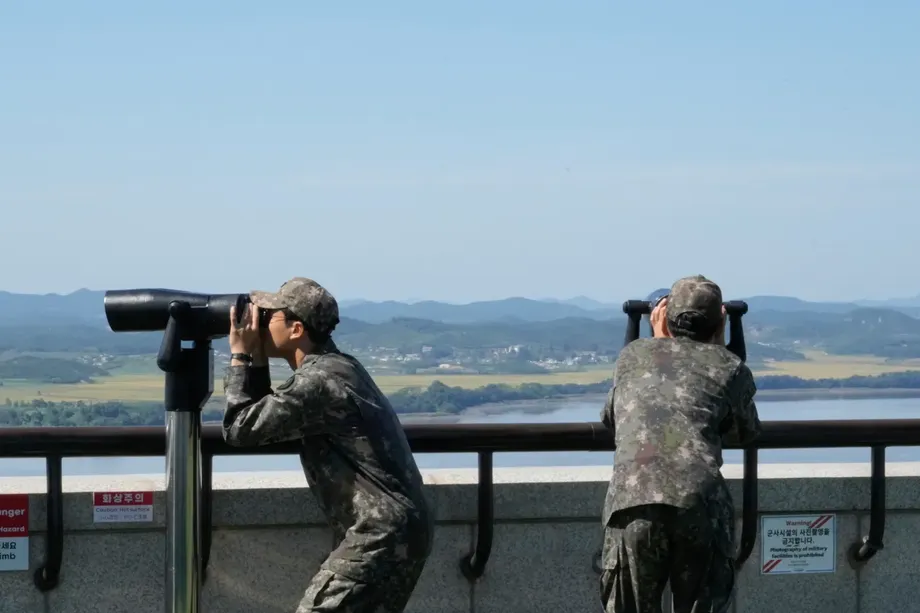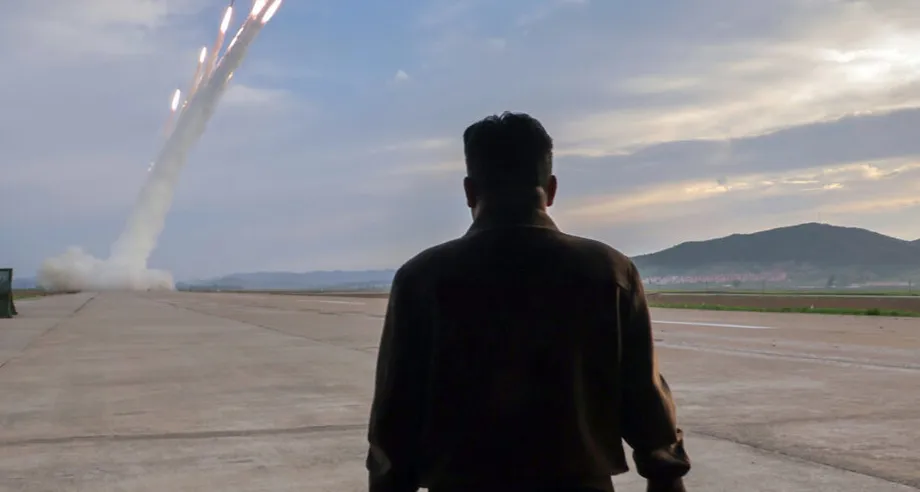
Launches near Pyongyang replace an initial unidentified projectile alert
North Korea fired multiple ballistic missiles from the Pyongyang area toward the sea east of the Korean Peninsula on October 12, according to South Korea's Joint Chiefs of Staff (JCS). The launches were detected at about 9:20 a.m. local time, and at least one missile traveled more than 900 kilometers. They came nine days after a missile launch from Wonsan and shortly after South Korea publicly disclosed its first test of a domestically developed hypersonic weapon.
Contents
- Launches near Pyongyang replace an initial unidentified projectile alert
- What the flight figures establish
- Japan issues two notices and checks maritime safety
- The October 3 test offers a comparison, with conflicting distances
- South Korea's hypersonic test becomes part of the confrontation
- The landmine dispute adds another flashpoint
- A sequence of tests and emergency responses
- Condemnation, military readiness and unresolved diplomacy
- Key Points
The information expanded on an initial emergency notice that described an unidentified projectile without giving its type, range or trajectory. Later military statements identified multiple ballistic missiles, although their precise specifications remained under examination by South Korean and American authorities.
JCS spokesperson Jang Do-young described the detection in a briefing:
Around 9:20 a.m. on October 12, we detected several ballistic missiles fired toward the East Sea from the Pyongyang area in North Korea.
Japan separately issued notices about two suspected ballistic missiles and assessed that they appeared to have fallen outside its exclusive economic zone. The waters involved are known as the East Sea in South Korea and the Sea of Japan in Japan.
The launches brought together three sources of tension: competing weapons tests, a dispute over landmine explosions that injured South Korean soldiers, and stalled diplomacy over North Korea's nuclear program. South Korea's military interpreted the latest launches as a response to its hypersonic test, but that assessment does not establish North Korea's own explanation for the event.
What the flight figures establish
The later accounts agree that multiple missiles were launched, but differ on how broadly the reported distance of more than 900 kilometers applies. Some describe one missile or one missile type reaching that distance. Another quotes Jang as saying the detected missiles flew more than 900 kilometers. South Korea did not publicly specify an exact missile count in the accounts describing its assessment.
The distinction matters because the missiles reportedly appeared to be of different types. A distance measured for one weapon cannot automatically be assigned to every weapon in a salvo. Japan's two projectile notices also do not establish the total number detected by South Korea.
Jang said South Korean and American authorities were continuing their technical examination:
The detected North Korean missiles flew more than 900 kilometers, and South Korean and U.S. authorities are conducting a detailed analysis of their exact specifications.
A ballistic missile generally follows an arcing flight path after its powered launch phase, although some systems can maneuver during parts of their flight. Distance alone does not identify the missile model, its payload or its maximum possible range. The latest launches have not been established as hypersonic tests simply because they followed hypersonic demonstrations by both countries.
Japan issues two notices and checks maritime safety
Japan's Coast Guard issued a notice at about 9:26 a.m. based on information from the Ministry of Defense, saying a suspected North Korean ballistic missile appeared to have already fallen outside Japan's exclusive economic zone. A further notice at about 9:40 a.m. concerned another suspected missile.
Those times refer to Japanese announcements, rather than necessarily identifying two separate launch times. South Korea placed its detection at about 9:20 a.m., equivalent to 00:20 GMT.
The Coast Guard urged vessels to exercise caution. Japan's Ministry of Defense gathered information to determine whether the launches had affected Japan, while an emergency response team assembled at the Prime Minister's Office Crisis Management Center.
Prime Minister Sanae Takaichi instructed officials to collect and analyze information and confirm the safety of aircraft and vessels. The assessment that the projectiles fell outside the exclusive economic zone describes their likely landing areas; it does not by itself complete the checks for damage or disruption.
The October 3 test offers a comparison, with conflicting distances
The previous North Korean ballistic missile launch took place on October 3 from the Wonsan area in Kangwon province. South Korea's military said that missile traveled more than 700 kilometers toward the eastern sea.
North Korean state media subsequently described the event as a strategic weapons firing drill supervised by leader Kim Jong Un. It identified the weapon as an intermediate range strategic missile carrying a hypersonic warhead, or as a hypersonic intermediate range ballistic missile.
The distance figures differ. South Korea reported more than 700 kilometers, while North Korea claimed 1,000 kilometers. One account gives the North Korean claim as more than 1,000 kilometers. Those descriptions should not be treated as a single agreed measurement.
The October 12 figure of more than 900 kilometers is above the 700 kilometer threshold cited by South Korea for October 3. However, both South Korean figures are lower bounds, not precise distances. They cannot support a calculation of the exact increase between the two events, nor establish that the same missile system was used.
The reported launch location also changed, from Wonsan on October 3 to the Pyongyang area on October 12. One account identifies the latest event as the first launch from the capital area since August 20, when about 10 presumed KN-25 missiles were fired toward the eastern sea.
South Korea's hypersonic test becomes part of the confrontation
South Korea's recent test involved its first domestically developed hypersonic glide vehicle, observed by President Lee Jae-myung. The most detailed account places the launch on October 8, from an offshore barge at the Agency for Defense Development's Anheung test site.
Reports differ on the timing. Some describe the test as occurring on Thursday or Friday, while another distinguishes an October 8 launch from a government disclosure on Thursday. The consistent point is that South Korea publicly presented the test shortly before North Korea's October 12 launches.
A hypersonic weapon travels at least five times the speed of sound. A hypersonic glide vehicle is designed to maneuver while traveling through the atmosphere after being accelerated by a booster. That combination of speed and changing flight path can make tracking and interception more difficult, although a test announcement alone does not prove how well a weapon would perform against missile defenses.
Lee described the test as an important step in strengthening South Korea's conventional defense capabilities. His office said the weapon, once fully developed, would improve the ability to strike key targets by surprise. That wording indicates a system still under development rather than a confirmed operational deployment.
A JCS spokesperson interpreted North Korea's response as follows:
a show of force in response to the successful test launch of our hypersonic missile, as well as an intentional demonstration of missile capabilities
This is Seoul's assessment of the launches. It connects them to South Korea's test but does not resolve whether North Korea also intended to respond to the separate border dispute.
The landmine dispute adds another flashpoint
Three South Korean soldiers were injured in landmine explosions near the inter Korean border the previous month. South Korea's military and the United States led United Nations Command concluded that the devices had been planted by North Korea.
One account of the joint investigation says two mines had been planted by North Korean forces about a year earlier. Seoul demanded an apology. Pyongyang denied responsibility, dismissed that demand and accused South Korea of provocation.
The dispute is relevant to both countries' recent military announcements. Some reports connect North Korea's latest launch to South Korea's accusations over the explosions. Others say Seoul disclosed its hypersonic test in response to the mine incident. The JCS's stated interpretation of October 12 instead focused on the South Korean weapons test.
These explanations may describe different parts of the same confrontation, but they remain distinct claims. The investigation's findings, North Korea's denial and Seoul's assessment of the missile launches should not be collapsed into a proven account of North Korean intent.
A sequence of tests and emergency responses
The central October sequence is clear even where individual technical details and the timing of South Korea's test differ:
- October 3: North Korea launched a ballistic missile from the Wonsan area. South Korea reported a flight of more than 700 kilometers.
- October 4: North Korean state media described a hypersonic strategic missile test supervised by Kim Jong Un and claimed a flight of about 1,000 kilometers or more.
- October 8: The detailed account of South Korea's test places its hypersonic glide vehicle launch at Anheung on this date, with Lee observing. Other reports give different weekday descriptions of the test or its disclosure.
- October 12, about 9:20 a.m.: South Korea detected multiple ballistic missiles launched from the Pyongyang area.
- October 12, about 9:26 a.m. and 9:40 a.m.: Japan issued separate notices concerning suspected missiles.
Accounts describe October 12 as North Korea's fourth launch event in a month. Counts for the year differ: one calls it the 16th launch, while another says missile tests had occurred on more than 10 occasions. Without matching definitions of what counts as a launch event or test occasion, those figures cannot be combined into an exact agreed total.
Condemnation, military readiness and unresolved diplomacy
South Korea's National Security Office convened an emergency meeting and condemned the launches as violations of United Nations Security Council resolutions, calling for an immediate halt. North Korea has been subject to UN sanctions since 2006 aimed at stopping its nuclear weapons and ballistic missile development.
The JCS said it had increased surveillance and vigilance against further launches. It also said South Korea, the United States and Japan were sharing missile information and maintaining readiness.
The military activity is taking place alongside stalled diplomatic efforts. Lee pledged to reopen dialogue with North Korea after taking office in 2025, and Seoul had described preliminary coordination intended to support contact between Pyongyang and Washington. North Korea has continued to reject American and South Korean proposals to resume talks.
Song Seong-jong, a Daejeon University professor and former South Korean Defense Ministry official, interpreted the frequent tests as an attempt to improve North Korea's bargaining position ahead of a possible meeting between Kim and US President Donald Trump. He said:
They definitely need to raise the value of their status before meeting Trump,
That is an analyst's interpretation, not confirmation of a summit or its timing. No date for such a meeting is established. The exact missile models, the total number launched and the technical findings from the joint South Korean and American analysis also remain unresolved, with no announced deadline for their release.
Key Points
- South Korea identified multiple ballistic missiles launched from the Pyongyang area on October 12, replacing an initial unidentified projectile alert.
- At least one missile traveled more than 900 kilometers, but accounts differ on whether that distance applied to one missile, one type or several missiles.
- Japan issued two suspected missile notices and assessed that the projectiles appeared to have fallen outside its exclusive economic zone.
- The launches followed North Korea's October 3 test and South Korea's recent hypersonic glide vehicle demonstration.
- Seoul described the launches as a show of force and condemned them as violations of UN Security Council resolutions.
- The landmine dispute remains contested, while missile specifications and any timetable for renewed diplomacy are unresolved.