Atlanta talks pair nuclear pressure with a diplomatic opening
The United States, South Korea and Japan have renewed their commitment to North Korea's complete denuclearization while backing diplomacy, tighter enforcement of sanctions and broader cooperation on maritime safety and energy. The talks came amid fresh North Korean missile launches and renewed interest in a possible meeting between U.S. President Donald Trump and North Korean leader Kim Jong Un.
Contents
- Atlanta talks pair nuclear pressure with a diplomatic opening
- Missile launches sharpen the security concerns
- Seoul wants a freeze before full dismantlement
- Different wording reflects different diplomatic priorities
- A Trump and Kim meeting remains a possibility
- Sanctions monitors face an explicit rejection
- Washington extends its China concerns to the Yellow Sea
- Arctic cooperation adds a practical agreement
- A busy meeting schedule alongside bilateral friction
- Key Points
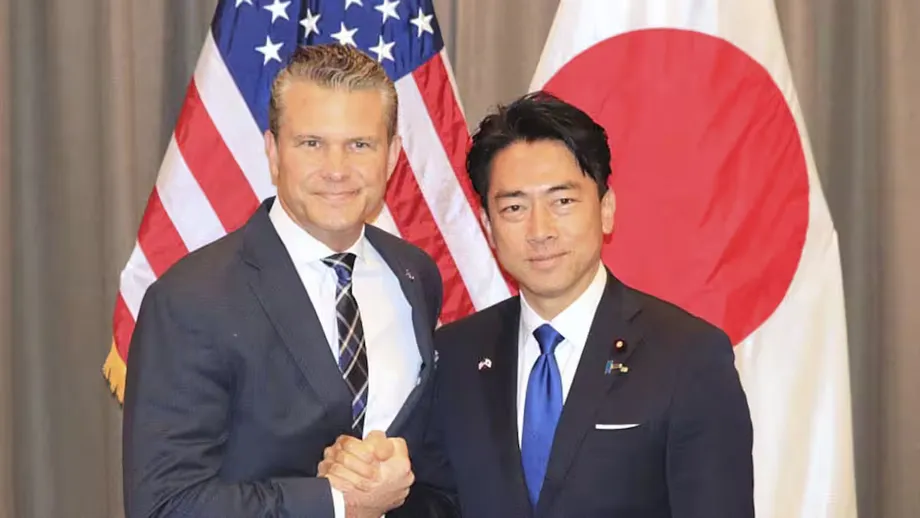
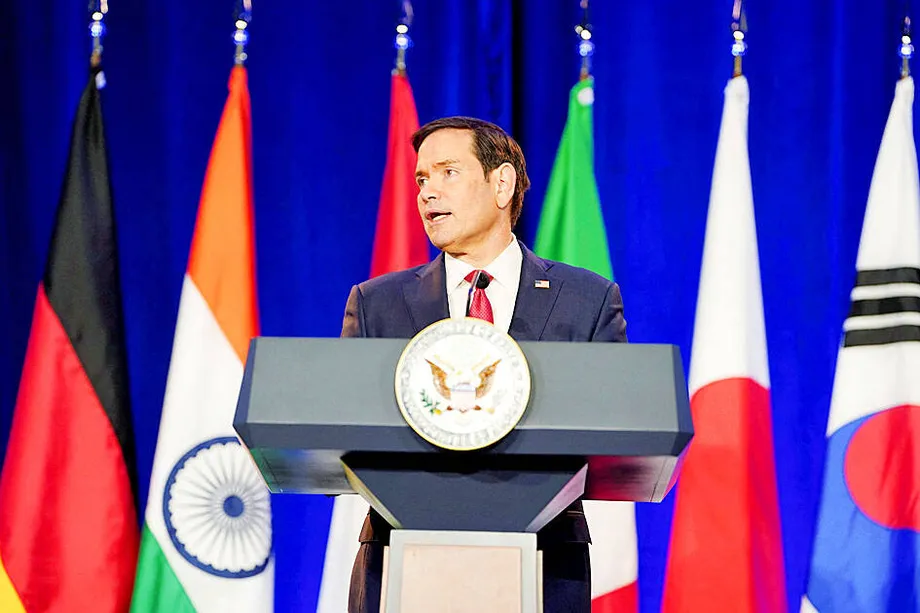
U.S. Secretary of State Marco Rubio, South Korean Foreign Minister Cho Hyun and Japanese Foreign Minister Toshimitsu Motegi met in Atlanta alongside a Group of 20 foreign ministers' gathering. South Korea's Foreign Ministry dated the meeting October 30.
The U.S. State Department described the three ministers' shared position on North Korea's nuclear weapons:
"The Secretary and Foreign Ministers reaffirmed their resolute commitment to the complete denuclearization" of North Korea.
The ministers also pledged to implement United Nations Security Council resolutions fully, including restrictions on activities that raise money for North Korea's nuclear and ballistic missile programs. They praised the Multilateral Sanctions Monitoring Team, known as the MSMT, for exposing violations and attempts to evade those restrictions.
Seoul's account placed particular weight on reducing tensions and restoring talks. The ministers agreed to maintain strong deterrence while pursuing peace, stability and denuclearization through dialogue. Deterrence means keeping military capabilities and commitments strong enough to discourage an attack.
Those two tracks, pressure and engagement, now face a government in Pyongyang that has written its nuclear status into law and repeatedly described its arsenal as permanent and irreversible. The immediate diplomatic challenge is to find an opening for negotiations while the three partners continue to demand an outcome North Korea rejects.
Missile launches sharpen the security concerns
South Korea's Joint Chiefs of Staff said North Korea fired around 10 ballistic missiles of short range from the Wonsan area at approximately 12:30 p.m. on Thursday. The missiles traveled about 250 kilometers toward the sea east of the Korean Peninsula.
The launches were North Korea's first ballistic missile test in 17 days. They followed Seoul's proposal for military talks aimed at easing tensions along the heavily fortified border between the two Koreas.
For South Korea and Japan, the nuclear negotiations sit alongside an immediate military concern: North Korea continues to test the missiles that form part of its weapons program. The Atlanta meeting therefore addressed both the eventual removal of nuclear weapons and the need to maintain defenses while diplomacy is pursued.
Japan's Foreign Ministry said the ministers also agreed to strengthen cooperation against North Korea's malicious cyber activities, which help finance its nuclear and missile programs. Tokyo also welcomed continued support from Washington and Seoul for resolving the abduction of Japanese nationals by North Korea.
Seoul wants a freeze before full dismantlement
South Korean President Lee Jae Myung has repeatedly offered talks without preconditions. In September, he suggested that Washington seek a halt to North Korea's nuclear program in exchange for sanctions relief, rather than demand immediate elimination of the program.
A freeze would seek to stop further activity covered by an agreement while negotiations continued. Dismantlement would go further, requiring weapons or facilities to be taken apart. The proposal therefore changes the order of the bargaining: pursue a narrower initial agreement before trying to secure the final goal.
Critics argue that lifting sanctions while North Korea retains its arsenal could leave Pyongyang with both nuclear weapons and economic relief. Lee's proposal places that trade at the center of any negotiation over an initial halt.
Cho described South Korea's intended role as a "pacemaker" in building peace and restarting dialogue between Washington and Pyongyang. South Korea's Foreign Ministry said he stressed that this work would proceed in close coordination with the United States.
Different wording reflects different diplomatic priorities
The three governments described the nuclear goal in different terms. The United States and Japan referred to the complete denuclearization of North Korea. South Korea's announcement referred to achieving peace, stability and denuclearization on the Korean Peninsula.
Similar wording differences appeared after meetings in July and September. A joint statement issued after the September gathering explicitly included North Korea's complete denuclearization, while Seoul's separate announcement used language centered on the peninsula.
South Korea's government maintains that the two formulations have the same practical target because North Korea is the party pursuing nuclear weapons on the peninsula. The broader geographical wording also reaches questions such as the possible deployment of tactical nuclear weapons in South Korea.
Lee's government has also used the phrase "a nuclear free Korean Peninsula." Together with Cho's proposed role in restarting dialogue and Lee's suggested freeze, Seoul's language shows where it is directing its diplomatic effort: creating conditions for talks while retaining denuclearization as the goal.
A Trump and Kim meeting remains a possibility
Trump has repeatedly expressed interest in renewed nuclear negotiations and has scaled back joint military drills with South Korea. Speculation has focused on a possible meeting with Kim around the next Asia Pacific Economic Cooperation summit in China. No meeting date or agreed negotiating agenda has been announced.
Trump previously described North Korea as "sort of a nuclear power" and said he was "100%" open to meeting Kim. Pyongyang gave no public response to that invitation.
South Korea's intelligence agency has suggested that Kim may have conveyed his position on possible talks with Trump to Beijing during a recent visit to the Chinese border city of Dandong. That would place China in a possible intermediary role as Washington tries to reopen contact.
China and Russia back North Korea, adding another layer to the diplomacy. Statements following a June meeting between Kim and Chinese President Xi Jinping omitted a call for North Korean denuclearization. Beijing's language is being watched closely because any effort to secure a negotiated agreement would involve North Korea's relationships with both its neighbors and the United States.
Sanctions monitors face an explicit rejection
Australia, Canada, France, Germany, Italy, Japan, the Netherlands, New Zealand, South Korea, the United Kingdom, the United States and the European Union joined a statement urging North Korea to abandon its weapons of mass destruction and ballistic missile programs. They also called for stronger action against sanctions evasion.
The participating governments set out their position on the existing U.N. measures:
We continue to strongly support the implementation of all DPRK-related U.N. Security Council resolutions.
DPRK is an abbreviation of North Korea's official name, the Democratic People's Republic of Korea. The sanctions discussed in Atlanta include restrictions on revenue supporting its nuclear and missile development. The MSMT's work concerns identifying violations and the methods used to get around those restrictions.
A North Korean Foreign Ministry spokesperson rejected the joint statement as a "wanton violation" of the country's sovereignty. The ministry's response also directly dismissed sanctions as a means of changing its position:
may work on the weak but never on us
Pyongyang warned that members of the monitoring team and the EU would be "held accountable" for what it called hostile actions. Its response underlined the distance between the partners' demand for disarmament and North Korea's insistence that it will retain its nuclear status.
Washington extends its China concerns to the Yellow Sea
Rubio raised concerns about China's actions in the South China Sea, East China Sea and Yellow Sea, as well as cooperation between China and Russia that Washington says undermines regional peace and stability. The three ministers also stressed the importance of peace and stability across the Taiwan Strait.
The U.S. State Department's explicit reference to Chinese coercive conduct in the Yellow Sea was its first such reference in announcements following the four trilateral foreign ministers' meetings held that year. The Yellow Sea, also called the West Sea in South Korea, is an area of direct concern to Seoul.
Cho told a parliamentary audit on October 27 that China had removed one of three structures installed in the provisional measures zone between China and South Korea, leaving two. That zone is an area where the two countries operate under temporary maritime arrangements.
South Korean and Japanese announcements after the Atlanta meeting referred to attempts to change the status quo through unilateral action, force or coercion, without naming China or the Yellow Sea. Washington's announcement attributed the specific concerns to Rubio; it gave no details of a joint response to the structures.
Arctic cooperation adds a practical agreement
The ministers signed a memorandum of cooperation establishing the Trilateral Arctic Pacific Partnership, or TAPP. The initiative expands their work beyond the Korean Peninsula into maritime safety, emergency response and economic cooperation in the Pacific Arctic.
A new working group is intended to identify areas for cooperation. South Korea's Foreign Ministry said the countries would also develop the work through the Arctic Council. The partnership covers interests including maritime activity, energy resources and more reliable supply chains.
The ministers discussed vulnerabilities in the supply of energy and critical minerals, along with artificial intelligence and other emerging technologies. Critical minerals are materials needed for products such as batteries and advanced electronics; dependence on a narrow range of suppliers can expose industries to disruption.
They also reviewed implementation of a July 7 memorandum on small modular reactors. These are nuclear power reactors designed in smaller units than conventional plants. The discussion linked energy security with industrial cooperation, adding a practical economic agenda to the three countries' security coordination.
A busy meeting schedule alongside bilateral friction
Atlanta was the fourth trilateral foreign ministers' gathering in the sequence described by the governments. The meetings have kept diplomatic coordination active while Seoul has pursued renewed contact with Pyongyang.
- July 7: The ministers met in Türkiye and signed a memorandum concerning small modular reactors.
- July 22: They met in the Philippines during regional diplomatic meetings.
- September 21: They met in New York alongside the U.N. General Assembly.
- October 30: They met in Atlanta and signed the Arctic Pacific partnership memorandum.
Cho and Rubio also held separate talks in Atlanta on bilateral relations, senior official exchanges and visa matters. South Korea's Foreign Ministry did not disclose the details of those discussions.
The visa issue had affected planned visits by South Korean lawmakers. Jin Seong-joon, chairman of the National Assembly's National Defense Committee, later said he had received an official A-2 visa and would travel as scheduled to meet U.S. Indo-Pacific Command officials in Hawaii.
The practical results of Atlanta therefore extend beyond another statement on nuclear weapons. The partners retained their disarmament goal, backed sanctions enforcement and diplomacy, and created a framework for Arctic cooperation. Negotiations with Pyongyang would still require agreement over the first step: what North Korea would halt or surrender, and what it would receive in return.
Key Points
- Rubio, Cho and Motegi reaffirmed the goal of North Korea's complete denuclearization during talks in Atlanta dated October 30 by South Korea's Foreign Ministry.
- The ministers backed enforcement of U.N. sanctions and praised the Multilateral Sanctions Monitoring Team.
- Seoul supports dialogue and has proposed seeking a nuclear freeze in exchange for sanctions relief before full dismantlement.
- South Korea's military said North Korea launched around 10 ballistic missiles of short range, traveling about 250 kilometers, on Thursday.
- Pyongyang rejected the sanctions campaign and continued to insist on retaining its nuclear status.
- The three countries signed an Arctic Pacific cooperation memorandum covering maritime and economic work.
- A possible Trump and Kim meeting remains unconfirmed.