Three case referrals in the first month
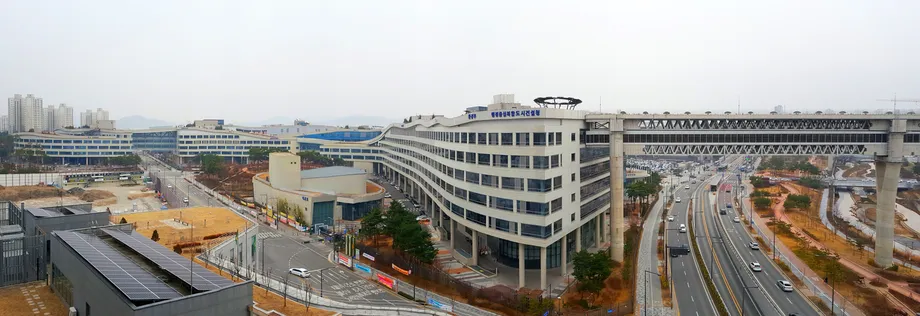
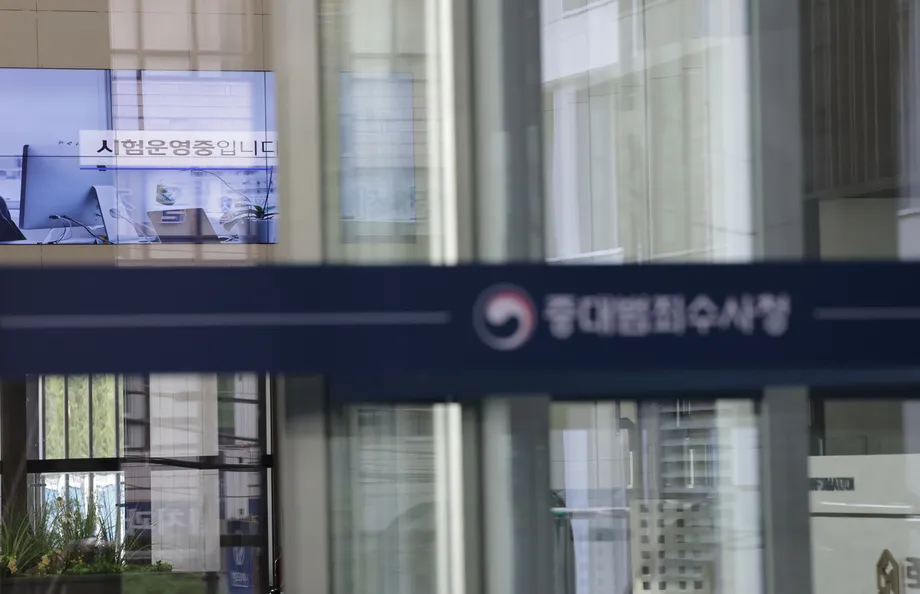
South Korea's new Major Crimes Investigation Agency referred just three cases for prosecution and made five arrests nationwide through October 30, 2026, after beginning operations with about 1,900 employees for 2,874 authorized positions. The agency charged with investigating seven categories of serious crime was still building offices, recruiting investigators and moving paper records by vehicle and cart.
Contents
- Three case referrals in the first month
- Missing investigators, rooms and computer functions
- A financial hacking case tests the division of work
- More police investigators, less average experience
- Why prosecutors keep sending cases back
- More warrant applications stop before reaching court
- Victims and suspects struggle to submit evidence
- Judges face pressure to help obtain evidence
- Recruitment, independence and the next deadlines
- Key Points
The figures show the difficult start to a sweeping criminal justice overhaul. Amendments to the Criminal Procedure Act took effect on October 2, closing the prosecution service after 78 years and separating the power to investigate crimes from the power to bring charges and argue cases in court.
Police, meanwhile, received 12,465 requests for supplementary investigations through October 29, according to National Police Agency figures submitted to People Power Party lawmaker Kim Ye-ji. That amounts to 445 requests a day to revisit evidence, interview witnesses or clarify facts in cases passed to prosecutors.
For victims and suspects, the consequences are practical: additional journeys through the system, longer waits and uncertainty about where to submit evidence. Lawyers have described difficulties presenting both material supporting a suspect's innocence and additional evidence from victims after trials have begun.
The new system distributes work among several bodies. The Public Prosecution Office decides whether to charge people and conducts prosecutions. The Major Crimes Investigation Agency handles designated serious offenses, while the Corruption Investigation Office for High-ranking Officials handles crimes involving senior officials. Special judicial police investigate areas including tax, labor, health, environment and food. Ordinary police handle the remaining cases.
Missing investigators, rooms and computer functions
The Major Crimes Investigation Agency opened with roughly 66% of its authorized workforce, leaving about 974 posts unfilled. Staffing ranged from 58% of the authorized number in Gwangju to 74% in Busan. The largest gaps were among operational staff in grades 4 through 8, where shortages ran to around 100 to 200 positions, while senior ranks were filled or exceeded their authorized numbers.
Seoul accounted for all three case referrals and four of the agency's five arrests during its first month. Suwon recorded the remaining arrest. Daejeon, Gwangju, Daegu and Busan recorded neither referrals nor arrests through October 30.
Investigators also lacked basic spaces for their work, including rooms where lawyers could meet clients and waiting areas for people being questioned. Construction and the installation of heating and cooling systems were continuing. Regional forensic facilities had recently been established, but some could not yet make effective use of bulky equipment.
Detention capacity was another constraint. The Seoul office arranged to use cells at several police stations and planned an additional facility in Incheon. More capacity was also needed in Gangwon.
The agency's Criminal Justice Information System could receive, register and assign transferred cases, but broader case processing functions were scheduled to open in December. A complete system of its own was expected to take about three years. Until then, police and prosecution offices were sending records on paper, and staff were carrying paper warrant applications to court.
A financial hacking case tests the division of work
A series of hacking attacks involving artificial intelligence exposed the difficulty of deciding which agency should handle a complex investigation. Police opened a formal investigation on October 5 and assembled 28 officers from four cyberterror investigation units. By October 14, they had identified 16 financial companies as victims, including KB Kookmin Bank, Shinhan Bank, Hana Bank and Hyundai Capital.
Police sought a formal interpretation from the Financial Services Commission because the legal status of the affected computer systems helped determine whether the case belonged with the major crimes agency. Around October 20, the commission said the systems could qualify as electronic financial infrastructure under the Electronic Financial Transactions Act. Police added a suspected violation of that law and referred the case.
The agency declined to open an investigation on October 23, three days after receiving the referral. It said police had already completed substantial work, including securing and analyzing access logs and seeking cooperation from the United States Federal Bureau of Investigation. Continuing with the existing team would be more efficient, it concluded.
The Seoul agency's cybercrime division chief position was vacant, and forensic equipment had not yet been transferred because the prosecution office was still using it to finish existing cases. Those gaps added to concerns among police about the agency's readiness to take responsibility for demanding investigations.
Police retained the hacking case and said their investigation continued throughout the referral process. More broadly, they had notified the agency of 2,002 identified cases by October 20, but the agency had requested the transfer of only one.
Hong Seok-gi, chief of the National Office of Investigation, explained at an October 27 briefing that notification was a procedural step while police work continued:
Notifying the agency about a case doesn't mean we stop investigating,
Police must generally comply when the agency requests a transfer under the relevant criteria, although they may object for a legitimate reason, such as an investigation nearing completion. A new investigative authority coordination council, intended to address disputes between agencies, was not due to take effect until February 2027. Agencies were meanwhile relying on hotlines to coordinate cases.
More police investigators, less average experience
Police increased their investigative workforce to 40,563 in September 2026, up 3,740, or 10.2%, from 36,823 in the second half of 2025. Officers were moved from patrol and mobile units to support the expanding workload.
National Police Agency data submitted to Democratic Party lawmaker Lee Sang-sik showed that 3,739 investigators, or 9.2%, had no previous investigative experience. Average experience fell from 8.5 years to 7.9 years. New investigators were learning how to select applicable laws, gather evidence and prepare records while already handling cases.
Experienced colleagues also had to review that work and provide guidance. Corporate crime, tax offenses and stock manipulation presented particular difficulties because investigators must understand detailed legal rules and complicated financial transactions.
Police held 416,203 cases at the end of September. Average monthly overtime among investigative department staff reached 73.1 hours in August, compared with 71.7 hours in 2025 and 60.7 hours in 2021. By September, 633 officers had voluntarily relinquished their investigative qualification, already exceeding the 565 who did so during the whole of 2025.
Case processing had slowed before the October overhaul. The average time from receiving a case to deciding whether to refer it for prosecution rose from 54.5 days in 2025 to 56.4 days in the first half of 2026. Investigators now face additional work on previously referred cases alongside their new assignments.
Why prosecutors keep sending cases back
Prosecutors can no longer conduct supplementary investigations themselves. When they identify missing evidence or unanswered questions, they must ask an investigative body to do the work. Tasks once completed within a prosecution office now require another exchange of records and instructions.
At his October 27 briefing, Hong put supplementary investigation requests at 8,995 through October 26, compared with 5,615 during the corresponding period a year earlier, an increase of about 60%. The later police tally reached 12,465 through October 29.
Police officers complained that requests increasingly covered spelling mistakes and document formatting as well as substantive evidence. Prosecutors were concerned that even changing wording in investigative documents could lead to disputes about whether they had crossed the new legal boundary.
A serial arson case in Yeoksam illustrated the extra procedural steps. After receiving the police file, the prosecution office asked police to obtain and share psychological analysis from a profiler attached to the prosecution office. Previously, a prosecutor could have arranged that work directly to examine motive and the reliability of statements.
The National Police Agency said the increase remained manageable. It explained that cases previously investigated directly by prosecutors were also being returned through the supplementary investigation process, adding to the total.
Support measures were themselves incomplete. New cooperation units, responsible for managing requests and responses between police and prosecutors, received 130 staff against a planned 144. The remaining positions were scheduled to be filled in the first half of 2027. A police support task force received about 480 procedural and legal questions between September 29 and October 30.
More warrant applications stop before reaching court
Police figures submitted to People Power Party lawmaker Park Sang-woong showed a sharp rise in the proportion of warrant applications that prosecutors declined to submit to a judge between October 2 and October 24. Prosecutors serve as the gateway through which police seek judicial authorization for these measures.
The rate for detention warrant applications reached 36.2%, compared with 22.2% during January through September 2026, 17.9% in 2025 and 11.7% in 2024. For arrest warrants, the corresponding figures were 21.0%, 8.4%, 7.4% and 6.9%.
For search and seizure warrants, the rate reached 11.7%, up from 2.8% in the first nine months of 2026, 2.0% in 2025 and 1.8% in 2024. The October rate was more than four times the average earlier that year.
Investigators said additional exchanges over warrant applications could slow urgent efforts to secure evidence. Prosecutors, operating without their former power to repair investigative shortcomings directly, were requiring police to complete the necessary work before an application went forward.
Victims and suspects struggle to submit evidence
Attorney Choi Seung-hwan of Barun encountered the new restrictions when he tried to give a prosecutor social media messages supporting a client's innocence. The prosecutor declined to accept them because of concerns about their use as trial evidence. The prosecution office requested supplementary police investigation, and Choi submitted the messages to police instead.
The amended law allows prosecutors to hear from people involved in a case and receive written opinions or other material to clarify facts when deciding whether to charge someone. Statements and material obtained through that process, however, cannot be used as evidence at trial. Evidence intended for court therefore needs to pass through an authorized collection procedure.
Victims face similar uncertainty. At a telephone scam trial in mid October, a victim appeared in court seeking a severe sentence and offering additional evidence. The judge indicated that the material could be received if the defense agreed, but the prosecutor expressed concern about accepting it directly.
Defense attorney Kim Byeong-guk said the hearing continued without a decision on the procedure for handling the victim's material. Attorney Lee Eun-eui, who represents victims of sexual offenses, also described a lack of clear rules on whether police should review additional evidence before forwarding it to court.
The procedural uncertainty extends to older cases. A transitional provision allows prosecution offices to finish certain unresolved investigations through December 30, including cases approaching the expiry of the legal time limit for prosecution or cases where investigation is otherwise unavoidable. The boundaries of those exceptions, and procedures for submitting additional evidence during trials, remain unsettled.
Judges face pressure to help obtain evidence
Prosecutors are considering greater use of court procedures to obtain evidence after trials begin. These include asking judges for search warrants, factual inquiries and orders requiring documents to be produced. Articles 494 and 115 of the Criminal Procedure Act provide a route for prosecutors to direct prosecution office staff in executing court issued search warrants during a trial.
An earlier gambling proceeds case shows how that route can work. A man in his 30s was charged in December 2025 with withdrawing and delivering 1.5 billion won in criminal proceeds. After admitting the conduct during investigation, he denied the allegations at trial.
The prosecutor asked the court for a warrant covering map application search records and an order for financial transaction information, helping establish the defendant's movements and transactions. Police conducted supplementary checks on fraud complaints associated with the accounts. The trial court convicted him on all charges in September 2026 and sentenced him to four years in prison.
Requests for court assistance depend on the trial judge's decision. Judges face a difficult balance: obtaining relevant evidence can help resolve a case, while taking an active role in gathering it can prompt defendants to question the court's neutrality. Prosecutors retain responsibility for proving the charges, and defendants are presumed innocent.
Recruitment, independence and the next deadlines
The Major Crimes Investigation Agency has formed task forces covering staffing, premises, division of duties and information systems. It is consulting the Public Prosecution Office and the Ministry of Personnel Management on recruitment. Special appointments of prosecution office staff are legally possible until April 30, 2027.
Experienced police officers, lawyers, accountants and patent attorneys are also expected to be recruited. The agency's chief has said specialists will make up about 15% of recruitment, with staffing and physical infrastructure expected to be completed in 2027.
The main milestones span several months:
- October 2, 2026: The amended Criminal Procedure Act takes effect and the new agencies begin operating.
- December 2026: Additional case processing functions are scheduled to open in the agency's information system.
- December 30, 2026: The transitional period for completing certain former prosecution investigations ends.
- February 2027: The investigative authority coordination council is due to take effect.
- April 30, 2027: The special appointment window for prosecution office staff closes.
- 2028: Police aim to complete an expansion of their investigation training institute.
Political independence is another immediate concern. The agency's chief attended successive Cabinet meetings chaired by President Lee Jae-myung. At the second meeting, on October 27, Lee suggested attendance about once a month, easing concerns about a weekly presence.
Hong supported participation in Cabinet discussions on the condition that investigative neutrality was protected, citing the value of cooperation on crime prevention and victim recovery. He said intervention by the president in an individual investigation should trigger protective steps, including an objection. The new agency must establish working arrangements that allow cooperation with government while keeping decisions about individual cases independent.
Key Points
- The Major Crimes Investigation Agency began with about 1,900 staff for 2,874 authorized positions and recorded three prosecution referrals and five arrests through October 30.
- Police received 12,465 supplementary investigation requests through October 29 as prosecutors adjusted to the loss of investigative powers.
- Police expanded their investigative workforce, but 9.2% had no previous investigation experience and average experience declined.
- A hacking investigation involving 16 financial companies remained with police after the major crimes agency declined to take it over.
- Lawyers and courts face unresolved procedures for additional evidence from victims and suspects.
- Computer upgrades, recruitment and a council to coordinate investigative authority are scheduled across December 2026 and 2027.