A 40 fighter ambition meets a costly choice
The Philippines is weighing South Korea's KF-21 Boramae as a possible answer to its requirement for at least 40 modern fighters, but the purchase faces a financial challenge extending far beyond the aircraft themselves. The Department of National Defense has allocated P61 billion for its fighter acquisition project, while South Korea's estimated production cost for 80 upgraded KF-21s has risen 29.5%, from 14.24 trillion won to 18.44 trillion won.
Contents
- A 40 fighter ambition meets a costly choice
- What Manila has requested
- Three different fleet numbers
- South Korea's production calendar matters
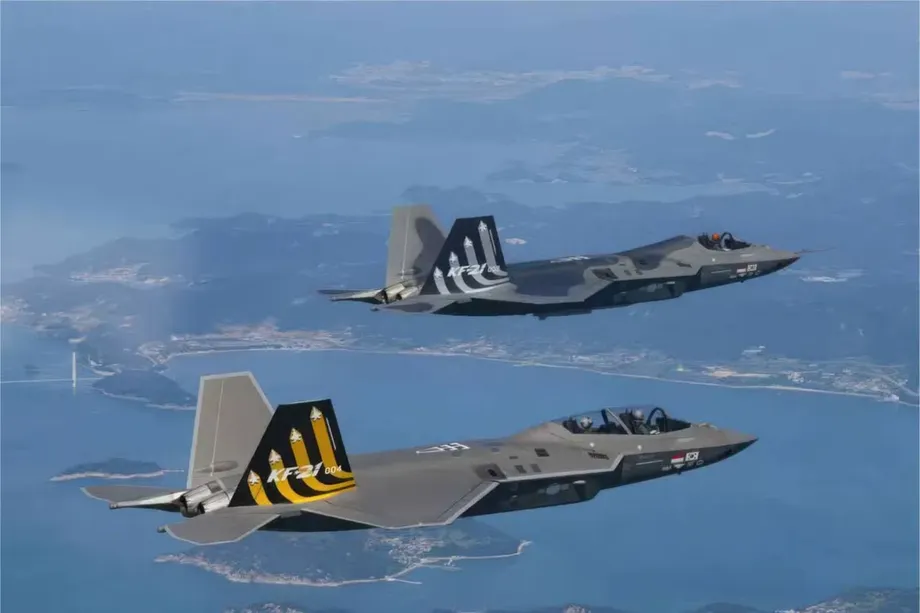
- What the KF-21 would bring
- Rising costs complicate the Korean offer
- How the alternatives compare
- The FA-50 connection and a local repair base
- Fighters need eyes, fuel and protected bases
- A regional opportunity with practical limits
- Key Points
Manila has not announced an aircraft selection, a signed KF-21 contract or an approved delivery schedule. The reported possibility of buying all 40 fighters from Korea Aerospace Industries, known as KAI, would concentrate a major part of Philippine air defense around one manufacturer. The F-16V, Gripen, Rafale and Eurofighter Typhoon also remain associated with the evaluation.
Defense Secretary Gilberto Teodoro Jr. has called for a fleet large enough to provide credible deterrence, backed by weapons, maintenance and surveillance aircraft. His position puts pressure on both suppliers and Philippine lawmakers: an attractive aircraft price must fit within a funded plan to operate the force for years.
KAI has discussed KF-21 procurement with the Philippine defense department and air force. Reported proposals have generally involved an initial 12 to 20 aircraft, rather than the entire 40 fighter requirement. Another proposed range extends to 24. A decision has been projected for late 2026 or the first half of 2027, but Philippine authorities have not adopted that timetable publicly.
For people living across the Philippine archipelago, the practical issue is how consistently the military could monitor approaching aircraft, intercept threats and protect maritime operations. Forty aircraft would expand the available force, while funding for crews, fuel, missiles and repairs would determine how many could actually fly.
What Manila has requested
Teodoro announced on August 29, 2024, that the Philippines had begun soliciting offers for 40 aircraft capable of several combat roles. Bidders had to propose financing arrangements allowing payments to be spread over time. He did not identify aircraft models, competing companies or a procurement deadline.
At a House of Representatives budget hearing, Teodoro specified that financing should extend over at least 60% of the aircraft's useful life. "My instruction is to divide it into at least 60% of the useful life of the asset," he told congressmen. "The financing should be that long to make it more digestible for the economy." He said the government wanted to buy the aircraft "as soon as possible." Speaking to reporters after the hearing, he said the military was allotting up to P400 billion for the jets, a different figure from the P61 billion allocation cited above.
President Ferdinand Marcos Jr. had approved Re-Horizon 3, a military acquisition plan worth P1.89 trillion, or about $33.64 billion at the exchange rate cited when it was announced. That plan covers military modernization broadly, rather than fighters alone. Teodoro also raised the possibility of syndicated loans, in which several lenders share the financing of a large purchase.
The defense chief has subsequently resisted buying only a few fighters and returning years later for more. He warned that delayed purchases could face much higher prices and said sufficient congressional funding was necessary to keep the project moving. The defense department is coordinating with the Department of Finance and Department of Budget and Management.
That position creates a negotiating challenge. An initial KF-21 package could establish pilot training and maintenance capacity, but Teodoro wants a commitment large enough to deliver operational weight. Financing must reconcile the government's preference for scale with the cost of introducing a new aircraft.
Three different fleet numbers
The number 40 appears in several distinct plans. Manila seeks at least 40 modern fighters across its acquisition program. South Korea has ordered 40 KF-21 Block I aircraft for its own air force. A KAI industrial proposal, meanwhile, envisaged a Philippine force of at least 40 FA-50 light combat aircraft and 20 KF-21s.
A KAI official presented the latter combination as a force suitable for Philippine air defense and large enough to support a local maintenance business. It would total 60 aircraft of two different types, with the lighter FA-50 complementing the larger KF-21.
Philippine discussions have also involved smaller opening packages. Proposals have been described as covering 12 to 20 KF-21s, while another reported negotiating range was 12 to 24. Those quantities concern possible initial acquisitions. Manila's 40 fighter objective describes the broader force it wants to build.
An acquisition consisting entirely of KF-21s would simplify parts of training, spare parts management and weapons support compared with operating two new fighter families. It would also make the Philippines more dependent on the delivery performance, upgrades and support arrangements of a single emerging program.
South Korea's production calendar matters
South Korea's Defense Acquisition Program Administration, or DAPA, announced completion of the KF-21 flight test program on January 12, 2026, two months ahead of schedule. Six prototypes completed 1,600 flights over 42 months, examining more than 13,000 test points. The final flight used the fourth prototype, departing from KAI's Sacheon facility.
The first production aircraft was delivered to the South Korean air force on September 22, 2026. Operational deployment is planned for the second half of 2027, after pilot conversion training, maintenance preparations and verification of weapons operations. Earlier delivery projections had ranged from the middle to the second half of 2026.
The key dates show how Philippine ambitions overlap with South Korea's introduction of its own fleet:
- August 29, 2024: Teodoro announces solicitation of offers for 40 fighters, with financing proposals required.
- June 2024 and June 2025: South Korea signs production contracts covering 20 KF-21s each.
- January 12, 2026: The KF-21 completes its flight test program.
- September 22, 2026: South Korea receives its first production aircraft.
- Second half of 2027: South Korea plans operational deployment.
- 2027 to 2029: The reported delivery window requested by the Philippines.
- 2028 and 2032: South Korea targets completion of its 40 Block I aircraft and its planned total fleet of 120, respectively.
A KAI official reportedly described the Philippine delivery request as dependent on signing a contract, anticipated at the time for 2026. Meeting that request would require export production to fit alongside South Korea's orders and the development of more extensive strike capabilities.
What the KF-21 would bring
The KF-21 is a larger aircraft with two engines, designed to give operators greater combat reach, payload and sensor capability than a light fighter such as the FA-50. Its appeal to Manila includes the ability to engage hostile aircraft beyond visual range, meaning at distances where pilots cannot see the target with their own eyes.
Its active electronically scanned array radar directs radar beams electronically rather than relying only on a moving antenna. That helps it search and track targets rapidly. An infrared search and track system can detect heat without transmitting a radar signal, while data connections can share information with other aircraft and command centers.
The aircraft is associated with Meteor missiles for engagements at longer distances and IRIS-T missiles for closer combat. Meteor uses a ramjet engine designed to sustain propulsion during flight. The weapons available to any Philippine squadron would depend on the purchased configuration, export approvals and integration schedule.
Early KF-21 versions carry four missiles partly recessed beneath the fuselage. The aircraft's shape reduces its radar signature, but those versions lack the full internal weapons bays planned for the future KF-21EX. The initial aircraft is generally described as a 4.5 generation fighter, combining modern sensors and weapons with some measures to reduce radar visibility.
Block I prioritizes combat against other aircraft. Block II is intended to add a broader range of attacks against ground targets. Manila would therefore need to specify which missions it expects on delivery, including any maritime strike role, and which upgrades would arrive later.
Rising costs complicate the Korean offer
DAPA data place the estimated production cost of 80 Block II fighters at 18.44 trillion won, up from 14.24 trillion won. The increase is 4.2 trillion won, or approximately $3.15 billion. Inflation, exchange rate movements and supply chain instability have contributed to the rise.
South Korea's first contract for 20 aircraft, signed in June 2024, was worth 1.96 trillion won. Its second contract, signed in June 2025, covered another 20 for 2.39 trillion won. Dividing the totals by aircraft numbers gives package averages of 98 billion won and 119.5 billion won per aircraft, an increase of about 22%.
Both contracts include logistical support, while engines are purchased separately. A Philippine budget would likewise need distinct allowances for aircraft, engines where applicable, weapons, training, simulators, spare parts and facilities. The cost of keeping the fleet flying would continue long after delivery.
Reported Korean proposals for an initial 12 to 20 Philippine aircraft have ranged from about $1 billion to $1.93 billion; another estimate put a package of similar size at $780 million to $1.6 billion, explicitly excluding weapons, training and support. Public details are too limited to calculate a complete Philippine acquisition budget.
Concessional financing could help Manila spread payments through favorable lending terms. The financing proposal would still need to identify repayment periods, borrowing costs and what equipment the money covers. A larger purchase would also commit future defense budgets to operating and maintaining the fleet.
How the alternatives compare
The United States approved a possible sale of 20 F-16C/D Block 70/72 aircraft and associated equipment to the Philippines in April 2025, valued at approximately $5.58 billion. Teodoro returned the proposal after it exceeded the approved Philippine budget ceiling.
The F-16 family offers a large international support network and extensive operating experience. Rafale and Typhoon also have established service histories and weapons catalogs. Gripen presents a different proposition, including operations from dispersed locations and an emphasis on comparatively economical support.
The KF-21 offers Manila a developing aircraft program with room for future upgrades and an existing relationship with its manufacturer. Purchasing it would bring exposure to the early years of service introduction, when maintenance demands, weapons certification and export support are still being worked through.
A useful comparison would price the same operational requirement for every bidder: a defined number of aircraft, missiles, training hours, spare engines, support years and required facilities. Manila's decision will also depend on how soon each supplier can deliver that complete capability.
The FA-50 connection and a local repair base
The Philippine Air Force received its first two FA-50s on November 28, 2015, with the remaining aircraft from its original order of 12 arriving in 2016 and 2017. Its relationship with KAI gives personnel experience dealing with a Korean aircraft supplier and support system.
Manila signed another agreement in June 2025 for 12 additional FA-50s, with deliveries planned in phases through 2030. Malacañang put the contract value at P18.9 billion. Those aircraft would remain the lighter combat layer alongside any future purchase of larger fighters.
KAI has discussed a Philippine maintenance, repair and overhaul facility since 2018, with Basa and Clark air bases in Pampanga identified as possible locations. Such a facility could reduce the need to send some work overseas and shorten repair delays. Its economic viability would depend on enough aircraft requiring regular service.
The KF-21 would still need its own specialist training, tools and engineering support. Its American designed F414 engines, manufactured under license in South Korea, also connect the program to foreign technology approvals and component supplies. Buying from a Korean prime contractor would retain those international supply relationships.
Fighters need eyes, fuel and protected bases
Teodoro has argued for support aircraft and sustainment alongside the fighters. The defense secretary described the requirement in terms of a complete operational force:
full package
Airborne warning and control aircraft carry powerful sensors above the limits imposed on ground radar by terrain and the horizon. They can help commanders see approaching aircraft and direct fighters toward them. Aerial tankers transfer fuel in flight, extending patrol time and allowing aircraft to operate farther from their bases.
Maritime missions add another requirement: finding and continuously tracking ships. A fighter carrying an appropriate missile needs accurate, timely target information from its own sensors or other platforms. Secure communications must connect surveillance aircraft, ships, ground stations and fighters.
Philippine geography makes basing equally consequential. Concentrating aircraft at one location simplifies repairs and supply, while distributing them across several airfields reduces dependence on a single runway or fuel store. Distributed operations require more security, communications, equipment and trained personnel.
Forty fighters would have to cover training, maintenance and operational missions simultaneously. Aircraft undergoing repairs or scheduled inspections would reduce the number available for patrols. Protected shelters, spare parts, munitions storage and crews able to generate repeated flights would shape the force's daily strength.
A regional opportunity with practical limits
A Philippine KF-21 order would expand South Korea's role as a supplier of major combat aircraft in Southeast Asia. A fleet of 40 would equal South Korea's own planned Block I fleet and amount to one third of its intended total of 120 KF-21s. Export volume could support a larger training and maintenance business around the aircraft.
Indonesia, a development partner, illustrates some of the program's financial pressures. In June 2025, Seoul and Jakarta renegotiated Indonesia's contribution from 1.6 trillion won to 600 billion won. Under the revised terms, Indonesia would no longer receive the fifth prototype for its own testing and weapons integration. Discussions have also been reported concerning 16 Block II aircraft.
KAI has presented future concepts connecting KF-21s with unmanned aircraft and communications satellites in low Earth orbit. For Manila, the immediate priorities are more concrete: a funded contract, a deliverable aircraft configuration, adequate weapons and a support system capable of keeping the force operational.
The potential attraction is a larger modern fighter fleet supported by a familiar industrial partner. The financial test is whether the Philippines can purchase that fleet while also paying for surveillance, fuel, maintenance and resilient bases. Those commitments will determine the military value of any eventual agreement.
Key Points
- The Philippines seeks at least 40 modern fighters but has not announced a signed KF-21 contract or selected aircraft.
- Reported initial KF-21 discussions have generally covered 12 to 20 aircraft, with another range extending to 24.
- The defense department has allocated P61 billion for fighter acquisition and is seeking sufficient funding and workable financing; Teodoro separately said the military was allotting up to P400 billion for the jets, with bidders asked to spread financing over at least 60% of the aircraft's useful life.
- South Korea's estimated cost for 80 Block II KF-21s has risen 29.5% to 18.44 trillion won.
- South Korea received its first production KF-21 on September 22, 2026, with operational deployment planned for the second half of 2027.
- The Philippines reportedly requested deliveries during 2027 to 2029, subject to a contract.
- Weapons, surveillance aircraft, possible tankers, maintenance and protected bases are central to the fleet's usefulness.