A new agency faces an early test of independence
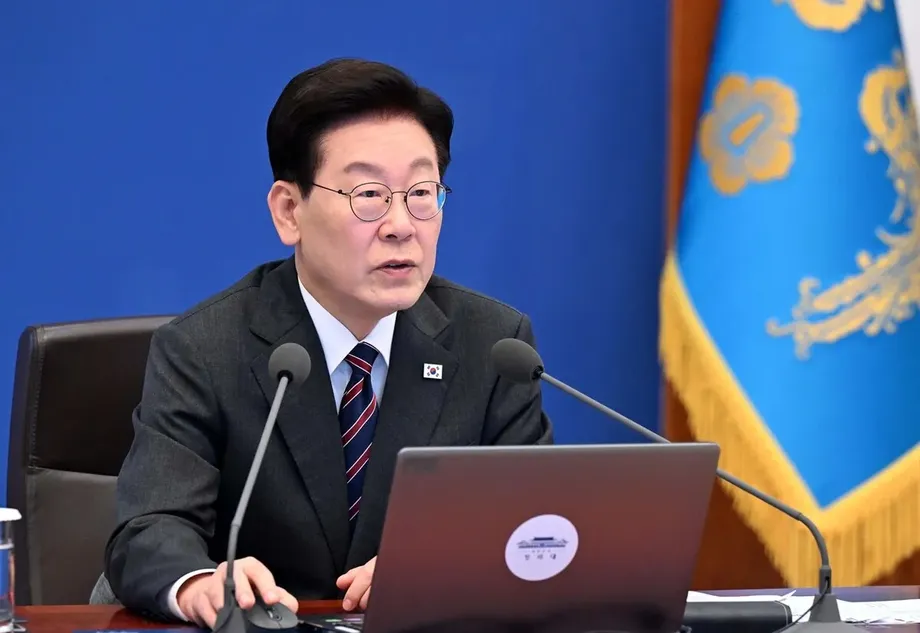
South Korean President Lee Jae-myung said on October 22, 2026, that abandoning supervision of the Serious Crimes Investigation Agency would violate the Constitution and the Government Organization Act, providing grounds for impeachment and criminal punishment for dereliction of duty. His remarks escalated a dispute over whether the agency's chief should regularly attend Cabinet meetings chaired by the president.
Contents
- A new agency faces an early test of independence
- What Lee says presidential supervision requires
- What the legal provisions allow
- How the attendance practice changed
- Why critics see pressure without direct orders
- Policy coordination and the limits on case instructions
- Lawmakers clash over cases involving the president
- Gemini becomes part of the political argument
- Caution also emerges within Lee's party
- Key Points
Kim Ji-yong, the agency's inaugural chief, attended his first Cabinet meeting on October 20, just 18 days after the agency began operating under a criminal justice overhaul that removed prosecutors' independent investigative powers. His acting predecessor, Jeon Jong-min, had attended on October 6 and 13, putting the agency's leadership at three consecutive meetings.
The presidential office says the meetings allow government bodies to coordinate policy and will exclude discussion of individual investigations or instructions about indictments. Legal scholars, civic organisations and some members of Lee's own party say regular contact with the president could still put pressure on officials who may have to investigate people in his administration.
The disagreement centres on how to combine two responsibilities: keeping investigative agencies accountable to elected government and allowing them to make decisions without political pressure. Lee argues that public meetings make supervision transparent. Critics favour attendance only when a particular issue requires the agency chief's participation.
The controversy has also reached a parliamentary audit, where opposition lawmakers alleged that Cabinet attendance could encourage prosecutors to drop charges involving Lee. Acting Prosecutor General Lee Jung-hyun rejected that claim, saying specific cases had never been mentioned at the meetings he attended.
What Lee says presidential supervision requires
Lee presented presidential oversight as a duty as well as a power. In his October 22 post on X, he argued that the investigative agency falls within the same government structure as bodies such as the Korea Meteorological Administration and the National Fire Agency.
President Lee explained his position in these words:
The president's command and supervision over state affairs are authority and responsibility at the same time.
Lee said excluding investigative chiefs from public meetings would leave a choice between abandoning supervision and exercising it privately. He also questioned why attendance by the heads of the Korea Forest Service, the fire agency and the Korea Coast Guard should be accepted while investigative bodies were treated differently.
His promise was that oversight would stop short of directing particular investigations. Lee compared that boundary with his relationship with ministers, saying he does not give them instructions on specific licensing decisions either.
The presidential office also challenged the value of the previous convention. Officials asked whether prosecutors had truly been politically independent when the prosecutor general stayed away from Cabinet meetings. Their argument is that the way power is exercised matters more than whether an agency chief sits in the room.
What the legal provisions allow
Article 66 of South Korea's Constitution places executive power in the government headed by the president. Article 11 of the Government Organization Act gives the president authority to direct and supervise the heads of central administrative agencies in accordance with the law. Article 18 describes the prime minister's supervisory role under the president's orders.
Cabinet attendance is addressed separately. Article 88 of the Constitution sets out the Cabinet's composition, while Article 8 of the Cabinet Meeting Regulations allows the chair to invite agency heads and other senior officials when their attendance is considered necessary. Officials can therefore attend without becoming Cabinet members.
Kim Seung-dae, a professor at Pusan National University Law School, said the government structure does not legally require the investigative chief to attend. He considered routine attendance inappropriate given the need for independent and fair investigations.
The practical choice is between occasional invitations for relevant business and a standing expectation of attendance. Presidential supervisory authority continues under either arrangement. Lee's impeachment warning reflects his interpretation of the duty to supervise; no court ruling on this attendance dispute was identified.
How the attendance practice changed
Government data supplied by the Ministry of the Interior and Safety to People Power Party lawmaker Shin Dong-wook showed that no prosecutor general attended Cabinet meetings from 2000 through 2025. During that period, only three National Police Agency commissioners attended.
Lee expanded participation to agency heads early in 2026. Acting prosecution and police chiefs began attending, extending Cabinet discussions beyond the ministers and officials who had traditionally taken part. Acting police commissioner Kim Jong-chul has also attended.
The new investigative agency inherited that broader attendance policy as it began work in October. Kim received his appointment letter on October 19 and attended the meeting the following morning, before his scheduled inauguration ceremony that afternoon. Before taking office, he had said he would review the relevant laws and consult the agencies concerned before deciding about attendance.
The main steps in the dispute were:
- Early 2026: Lee broadened Cabinet participation to include agency heads, including acting prosecution and police chiefs.
- September 29: Acting Prosecutor General Lee Jung-hyun began attending after taking office on September 23.
- October 2: The Serious Crimes Investigation Agency began operating as part of the criminal justice overhaul.
- October 6 and 13: Acting agency chief Jeon Jong-min attended Cabinet meetings.
- October 15: People's Solidarity for Participatory Democracy publicly objected to routine attendance by investigative and prosecution chiefs.
- October 20: Kim Ji-yong attended his first Cabinet meeting.
- October 21 and 22: President Lee defended the practice on X, and the dispute reached a parliamentary audit.
Why critics see pressure without direct orders
Investigative and prosecution agencies can face decisions involving the same senior officials they meet at Cabinet. Investigators gather evidence; prosecutors decide whether to bring criminal charges and pursue them in court. Political neutrality means making those decisions according to evidence and law, regardless of who benefits.
Lee Hwang-hee, a professor at Sungkyunkwan University Law School, acknowledged that Cabinet attendance could help an agency chief understand national affairs. He nevertheless warned that it could damage the public appearance of investigative fairness, which previous governments had sought to protect by keeping the prosecutor general away.
Lee Chang-hyun, a professor at Hankuk University of Foreign Studies Law School, pointed to the special laws governing the new investigative and prosecution agencies. He argued that their separate legal arrangements should guide how their independence is respected. Hanyang University professor Kim Sung-soo focused on the political convention maintained by both conservative and progressive administrations.
The concern also exists inside the investigative agency. An agency official said its worries about regular attendance had been conveyed to the presidential office. The official described a concrete problem: if investigators properly decided against referring a case involving the government for prosecution, the public might still suspect that repeated meetings with the president had influenced them.
Policy coordination and the limits on case instructions
The presidential office has drawn its stated boundary at individual cases. Seong Ghi-hong, Lee's senior secretary for the press, said Cabinet meetings would address the government's policy direction and current administrative issues, rather than investigative decisions.
Seong described the government's commitment to neutrality:
The government is strenuously working toward maintaining fairness and political neutrality in investigations and independence in indictments. This principle will remain unwavering going forward.
Some lawyers have supported the president's ability to invite agency heads to explain matters within their responsibilities. Others argue that regular attendance could weaken the established chain of command, under which the justice minister and interior minister have specified roles in communicating with prosecution and investigative leaders.
Their concern is that an agency chief may interpret even a general presidential comment as an instruction because the president holds appointment power. A remark about handling an issue firmly or cautiously could carry weight without an explicit order about a named case.
People's Solidarity for Participatory Democracy raised that concern in its October 15 statement. The organisation said a promise not to discuss individual cases was insufficient and urged the president to request attendance only when necessary. Yoo Seung-ik, who heads its judicial monitoring centre, also called for restraint in issuing invitations and protection of fairness and political neutrality.
Lawmakers clash over cases involving the president
The October 22 parliamentary audit brought the dispute closer to Lee's own legal exposure. People Power Party lawmakers argued that repeated meetings could pressure prosecution officials toward withdrawing charges involving the president. Withdrawing charges means ending the prosecution's pursuit of a case already brought before a court.
People Power Party lawmaker Kwak Gyu-taek cited a June Cabinet meeting, alleging that a presidential remark about apologising and withdrawing matters amounted to pressure on prosecutors. Acting Prosecutor General Lee Jung-hyun said specific cases had never been discussed at the meetings he attended and pledged to stake his position on political neutrality.
Asked by Democratic Party lawmaker Kim Han-kyu whether he had ordered or discussed reviewing the withdrawal of charges, the acting prosecutor general replied:
I have never even uttered the first syllable of 'dropping charges.'
The audit also revisited his April apology over investigative methods in the Ssangbangwool remittance case involving North Korea. Opposition lawmakers questioned his neutrality, while he defended the apology as opposition to investigations that humiliate suspects or search broadly for wrongdoing without a properly defined basis.
Lee Jung-hyun also alleged that former prosecutor general Yoon Suk Yeol had advocated indicting people in ambiguous cases and subjecting them to lengthy trials. That accusation added another dispute over prosecutorial conduct to a hearing already divided over the relationship between government and criminal justice agencies.
Gemini becomes part of the political argument
President Lee introduced another controversy on October 21 by posting a defence of attendance under the heading "I asked Gemini". He cited an answer from Google's artificial intelligence assistant supporting his argument about presidential supervision and the government's command structure.
People Power Party lawmaker Na Kyung-won accused him of using loaded questions to obtain a favourable answer. She also said she had asked Gemini to help make the opposing case, focusing on the political neutrality and judicial responsibilities of investigative agencies.
Independent lawmaker Han Dong-hoon argued that presidential authority does not extend to directing investigations or prosecutions. The dispute over Gemini then became part of a wider opposition attack on how Lee explained his constitutional position.
Lee responded on October 22 that he already understood the issue and had shared the answer to illustrate what he regarded as flaws in the opposing argument. The presidential office rejected suggestions that he was relying on artificial intelligence to run the government.
The substantive decision still concerns how the government uses its legal authority: who attends, how often they attend, what is discussed and how agency leaders retain control over decisions about cases.
Caution also emerges within Lee's party
Kim Yong-nam, standing vice chair of the Democratic Party's policy committee, suggested a narrower approach. He said the newly appointed investigative chief could reasonably attend once or twice for introductions, but should probably avoid appearing at every Cabinet meeting.
Jung Ji-woong, civic legislative committee chair at the Citizens' Coalition for Economic Justice, connected the issue to the purpose of the criminal justice overhaul. Separating investigation from prosecution was intended to distribute power and create checks between institutions. He urged caution about making attendance a weekly routine.
The political setting makes that argument especially sensitive. Lee won the presidency after Yoon's failed martial law attempt and removal from office, with a mandate to restore democratic government. His snap election victory also left him facing unresolved legal cases and a deeply divided political environment.
The presidential office says attendance remains the general principle, although individual participation can be assessed according to circumstances. Whether the new agency's chief will attend every week or only selected meetings has not been settled publicly.
For the agency, the immediate challenge is concrete: establish working relationships across government while persuading complainants, suspects and the wider public that decisions about investigations will follow the evidence, including when those decisions affect the administration.
Key Points
- Kim Ji-yong attended his first Cabinet meeting on October 20, following two appearances by the investigative agency's acting chief.
- President Lee says supervision is a constitutional duty and argues that abandoning it could justify impeachment and criminal punishment.
- Cabinet regulations permit invitations when the chair considers attendance necessary; they do not require routine attendance by the investigative chief.
- The presidential office promises that individual investigations and indictment instructions will stay outside Cabinet discussions.
- Legal scholars, civic groups and some ruling party figures favour limiting attendance because of political pressure and public trust concerns.
- Opposition lawmakers alleged pressure to withdraw charges involving Lee. The acting prosecutor general said specific cases had never been discussed at meetings he attended.
- The presidential office maintains attendance as its general policy, with room to assess participation according to circumstances.