October raids put a 14-day entry policy under scrutiny
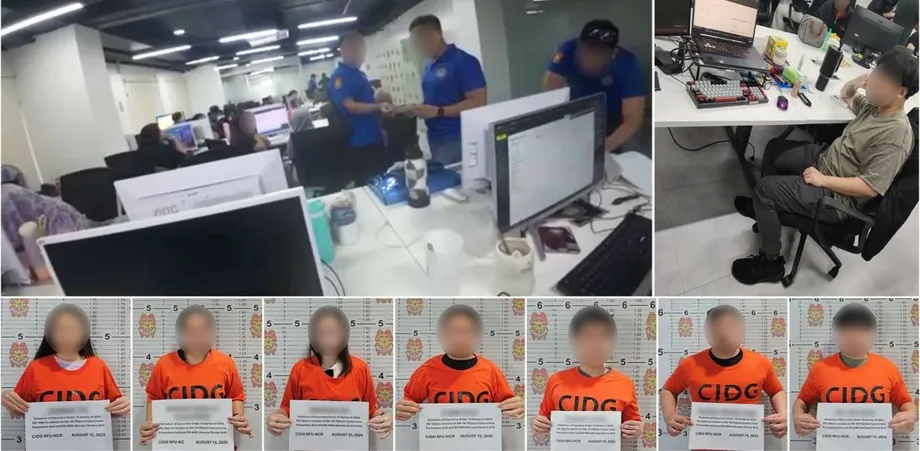
The Philippines is reviewing its 14-day visa-free entry arrangement for Chinese nationals after raids on suspected illegal offshore gaming operations in Zamboanga Sibugay on October 2 and Makati City on October 18, 2026. The assessment comes as tourism officials consider opening the arrangement to more airports.
Contents
- October raids put a 14-day entry policy under scrutiny
- What Chinese visitors can currently do
- What the raids uncovered
- How the ban developed
- Smaller rooms replace sprawling compounds
- Police turn to local officials and business checks
- Trafficking victims need a different response
- Why the investigation reaches beyond the Philippines
- Two policy decisions now run side by side
- Key Points
Claire Castro, press officer at Malacañang Palace, said on October 20 that the Department of Foreign Affairs would examine whether the entry policy was being exploited for crime. Plans to deport 101 foreigners following the Zamboanga Sibugay operation, including 82 Chinese nationals, helped bring the issue before the department. Another arrest figure put the Chinese total at 81.
The Chinese nationals facing deportation allegedly entered under the short visit arrangement. The Department of Justice is still compiling information on how foreigners found in suspected scam hubs entered the country, including whether they arrived without visas or overstayed an authorized visit. No decision to suspend or change the arrangement, or deadline for completing the review, has been announced.
Castro described the foreign affairs department's task as examining the policy's effects:
The DFA will look into the issues and determine whether the arrangement is having adverse effects, particularly whether it is being exploited to commit crimes in the Philippines.
The review brings two government priorities into the same debate: attracting Chinese visitors and stopping criminal businesses that continue operating after the nationwide offshore gaming ban. The immediate question for officials is how people enter, where they go afterward and how illegal operators recruit them.
What Chinese visitors can currently do
The entry arrangement began on January 16, 2026. Chinese nationals traveling strictly for tourism or business can stay for up to 14 days when entering through Ninoy Aquino International Airport in Metro Manila or Mactan-Cebu International Airport in Cebu.
Immigration law firm Erickson Immigration Group's entry policy notice, describing the foreign affairs department's announcement, says the stay cannot be extended or converted into another Philippine visa category. Travelers must present a passport valid for at least six months beyond their intended stay, confirmed hotel accommodation and a return or onward ticket.
The arrangement was introduced for at least one year, with a review before expiry. Its stated purpose was to support trade, investment, tourism and exchanges between people in the Philippines and China. A business or tourism visit gives a traveler a limited period in the country; offshore gaming operations remain prohibited.
Tourism Secretary Dita Angara-Mathay has raised the possibility of adding other entry points. Destinations under consideration include Clark, Caticlan, Bohol and Palawan. The Department of Tourism supports expansion to bring in more visitors and encourage additional charter flights from China.
For travelers and tourism businesses, the existing two-airport arrangement remains the starting point. The proposed expansion and the security review are both under discussion, placing decisions about access alongside closer examination of immigration records.
What the raids uncovered
Zamboanga Sibugay, on Mindanao, produced the largest reported arrest total in the recent operations: 244 foreign nationals in early October. The deportation plan concerned 101 foreigners. Authorities have not provided a full breakdown connecting that deportation group with everyone arrested in the wider operation.
Chinese nationals accounted for 82 of the 101 people listed for deportation, or about 81 percent. That concentration helps explain the attention on the Chinese entry arrangement, while the justice department's continuing work on arrival and overstay records will inform its recommendation.
Quezon City also featured in the enforcement campaign, with 76 foreigners arrested in a suspected POGO operation in mid-October. In Makati, police said five people were arrested and three others remained at large.
Investigators are examining computers, laptops, mobile phones, storage devices and other equipment seized in Makati for possible connections to other operators. Digital forensics means examining electronic evidence to trace communications, accounts and activity. Police chief Gen. Jose Melencio Nartatez Jr. directed investigators to follow search warrant and forensic procedures.
The Makati operation involved the Criminal Investigation and Detection Group, Makati police, the Presidential Anti-Organized Crime Commission, the Philippine Air Force, the Armed Forces of the Philippines and the police Anti-Cybercrime Group.
How the ban developed
Philippine Offshore Gaming Operators, commonly called POGOs, were businesses serving gamblers outside the Philippines under a category formerly licensed by the Philippine Amusement and Gaming Corp. The government abolished that category after linking the industry to serious crime and threats to public order.
The prohibition developed through a presidential directive, an executive order and legislation. The main dates are:
- July 2024: President Ferdinand Marcos Jr. ordered all POGO operations shut down during his third State of the Nation Address.
- November 2024: Marcos signed an order banning offshore gaming operations, citing national security and public order concerns.
- December 2024: The executive ban was implemented.
- October 23, 2025: Marcos signed Republic Act 12312, the Anti-POGO Act of 2025, putting the prohibition into law.
- January 16, 2026: The 14-day visa-free arrangement for Chinese tourists and business visitors began.
- October 2 and 18, 2026: Authorities raided suspected operations in Zamboanga Sibugay and Makati, respectively.
- October 20, 2026: Castro described the referral of the entry policy to the foreign affairs department.
The Anti-POGO Act criminalizes managing offshore gaming hubs, providing prohibited gaming services and allowing properties to be used for those operations. After the initial shutdown directive, the Bureau of Immigration gave affected foreign gaming workers 60 days to leave and stopped accepting new or pending visa applications for them.
Smaller rooms replace sprawling compounds
Justice Undersecretary Nicholas Felix Ty said recent raids generally uncovered smaller operations than the large compounds found before the ban. Some were operating from a single room. Earlier sites had occupied entire buildings and housed people from a much wider range of countries.
Ty said recent cases involved mostly Chinese nationals, compared with earlier raids that found Vietnamese, Indonesian, Myanmar, Nepali and African nationals alongside Chinese workers. He acknowledged that illegal activity could grow again and that the problem continued despite the reduced size of individual sites.
Former Presidential Anti-Organized Crime Commission spokesperson Winston Casio described a similar move into smaller premises, including condominium units. He estimated that thousands of people linked to the operations might remain in Metro Manila and nearby provinces. That estimate comes from Casio, while the justice department is still assembling its figures.
Interior Secretary Jonvic Remulla described another version of the smaller operation: houses accommodating 10 to 20 people each. He disclosed that three suspected operations remained active, with their locations still undetermined.
National Capital Region Police Office chief Brig. Gen. Christopher Abrahano said investigators were pursuing those suspected hubs and the people supporting them, including organizers, recruiters and financiers. The focus extends beyond finding a room full of computers to identifying who pays for it, supplies workers and directs its activities.
Police turn to local officials and business checks
Nartatez directed police station commanders to coordinate with local government units, including barangay officials, to identify suspicious establishments. Smaller operations in homes or ordinary commercial premises place more weight on local information and inspection.
The police chief warned that operators might resume prohibited activity under the appearance of legitimate businesses. He called for closer inspection, surveillance and information sharing between police and local authorities.
Casio alleged that some operations had presented themselves as business process outsourcing companies, technology businesses or lending agencies. He also alleged that corruption helped them survive and urged scrutiny of local officials in areas where suspected sites had been found.
Casio raised a related identity concern, saying around 1,500 birth certificate records had been confirmed as questionable before he left the commission, with thousands more under review. Such records matter because a person's claimed identity can affect how authorities check nationality and immigration status. His allegations broaden the enforcement debate beyond airport arrivals to documentation and local oversight.
Castro said the Presidential Anti-Organized Crime Commission and the Philippine National Police, including the Criminal Investigation and Detection Group, would continue pursuing remaining illegal operations. The visa assessment runs alongside that enforcement work.
Trafficking victims need a different response
The Department of Justice says human trafficking remains part of the problem surrounding scam hubs. People can be recruited for apparently legitimate jobs and then forced to carry out online fraud. Forced criminality describes exploitation in which someone is compelled to commit crimes for another person's benefit.
Casio alleged that foreign nationals had been recruited in this way. Ty also described earlier compounds where trafficking victims were forced to conduct scams. Authorities therefore have to identify both those directing an operation and people who may need rescue and protection.
The Inter-Agency Council Against Trafficking can coordinate raids with law enforcement agencies and arrange referrals of rescued victims to the Department of Social Welfare and Development. The Bureau of Immigration may handle repatriation or deportation where applicable.
Ty said the Philippines had recorded an 11th consecutive year at Tier 1 in the United States State Department's Trafficking in Persons report. Explaining the ranking, the justice undersecretary said:
It looks at how the country responds.
For people found inside a suspected hub, that response can involve several different processes: a criminal investigation, an assessment of exploitation, welfare assistance and an immigration case. Determining each person's role is central to deciding which action follows.
Why the investigation reaches beyond the Philippines
Filipinos continue to be rescued from scam operations in Myanmar, Laos and Cambodia, according to Ty. Recruitment and exploitation can happen in different countries, while organizers and financiers may operate elsewhere.
The justice department has called for cooperation with foreign governments and law enforcement agencies to investigate networks, rescue victims and pursue those responsible. ASEAN ministers meeting in Manila were also working on coordination against cybercrime and scam centers.
The cross-border pattern helps explain why an entry policy review is only one part of the government's response. Immigration records address how people arrived and how long they stayed. Investigations into recruitment, financing, electronic communications and property use address how the criminal business functions.
Ty said scam operators appeared to be targeting Chinese nationals already in the Philippines, including people who entered without visas or who overstayed. Establishing those pathways will help authorities decide whether changes are needed at entry points, during a visitor's stay or in the investigation of recruitment networks.
Two policy decisions now run side by side
The foreign affairs department must assess the security concerns raised by the raids while the tourism department argues for broader access. Expanding the arrangement to Clark, Caticlan, Bohol or Palawan would give eligible visitors more arrival options and could support charter services beyond Manila and Cebu.
The justice department's data will be central to that assessment. Officials are examining the use of visa-free entry, arrivals with visas and overstaying, while police examine how smaller operations obtain premises, equipment and workers.
The current response therefore has several concrete parts: reviewing the 14-day entry arrangement, pursuing suspects still at large, examining seized devices, locating suspected small hubs and identifying trafficking victims. The nationwide gaming prohibition remains in force throughout those processes.
Key Points
- The Department of Foreign Affairs is reviewing Chinese nationals' 14-day visa-free entry arrangement after raids in Zamboanga Sibugay and Makati.
- No suspension or revision of the entry arrangement has been announced.
- Eligible tourism and business visitors currently enter through Manila or Mactan-Cebu, with stays that cannot be extended or converted to another visa category.
- The justice department is still compiling figures on visa-free arrivals and overstays among foreigners found in suspected hubs.
- Police describe a shift toward smaller premises, including rooms, condominium units and houses.
- The Anti-POGO Act of 2025 prohibits offshore gaming operations and the use of properties for them.
- Authorities are pursuing operators and financial networks while arranging protection and assistance for trafficking victims.