A 300 citizen threshold puts criminal enforcement under scrutiny
South Korea's National Assembly Research Service has warned that allowing groups of at least 300 citizens to file criminal complaints directly against companies suspected of violating the Fair Trade Act could expose businesses to proceedings without an expert assessment of whether an offense occurred. Its warning comes as the government prepares to overhaul a complaint system established in 1980.
Contents
- A 300 citizen threshold puts criminal enforcement under scrutiny
- What the commission's exclusive authority actually means
- Two routes to broader complaint access
- Why the president wants a wider opening
- The warning is about evidence, not just numbers
- Smaller firms could face pressure as well as protection
- A 46 year system has already changed
- A narrower alternative focuses on cartels
- Foreign comparisons and other policy warnings
- The Essentials
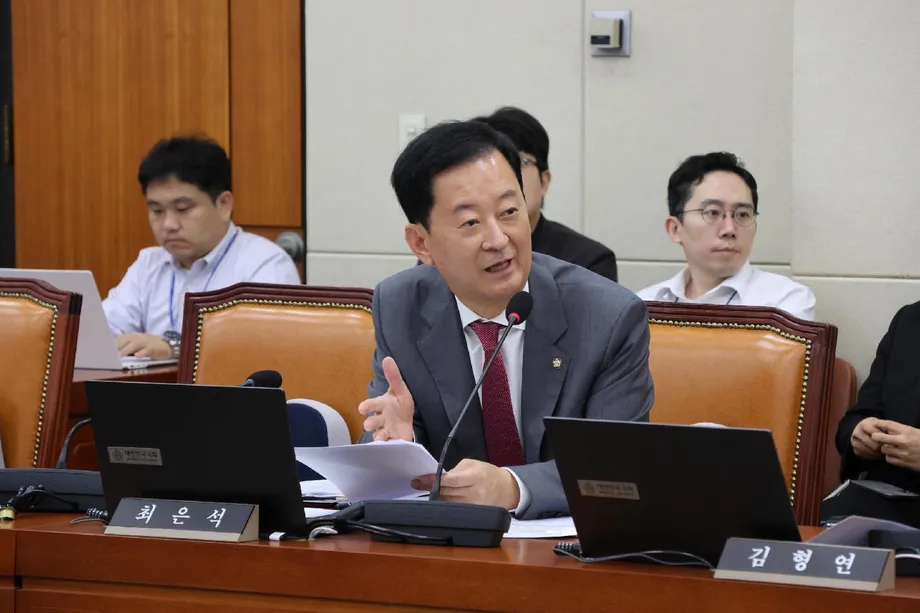
In a report submitted to Rep. Choi Eun-seok of the National Assembly's Political Affairs Committee, the research service urged a more careful review of the Fair Trade Commission's exclusive complaint authority. It said criminal punishment should be a last resort for serious violations, with the scope of eligible cases and the conditions for filing clearly defined.
The proposal presented at a March 31, 2026, Cabinet meeting goes beyond citizen complaints. It would also allow direct complaints from groups of at least 30 companies and expand the authority to request a commission complaint to 50 central administrative agencies, 17 metropolitan governments and 226 basic local governments.
President Lee Jae Myung has pressed for a broader change, asking whether local governments should be able to file directly and whether numerical limits are necessary at all. The government intends to submit legislation to the National Assembly within the year, but the final thresholds, eligible offenses and safeguards have not been settled.
What the commission's exclusive authority actually means
The current system makes a Fair Trade Commission complaint a legal prerequisite for prosecutors to bring charges over covered competition offenses. A consumer or business can report suspected wrongdoing to the commission, but that report does not itself replace the commission complaint required for prosecution.
This distinction matters: the proposed reform would change who can open the legal route to prosecution, not give citizens the power to indict or convict a company. Prosecutors would still make charging decisions, and courts would determine guilt.
The exclusive complaint framework covers six laws under the commission's jurisdiction, including the Monopoly Regulation and Fair Trade Act and subcontracting legislation. It was introduced to put a specialist economic assessment between allegations of unlawful business conduct and criminal prosecution.
Some competition cases depend on detailed analysis of markets, business behavior and competitive effects. Conduct that looks harmful to a competitor does not automatically amount to a criminal competition offense. The research service's concern is that collecting enough signatures would not, by itself, establish that the legal and economic conditions for prosecution had been met.
The system also has a weakness that its critics want addressed: when the commission declines to file a complaint, that decision can block prosecution even where affected consumers or businesses believe stronger action is justified.
Two routes to broader complaint access
Fair Trade Commission Chair Ju Byung-gi presented two distinct changes at the March 31 Cabinet meeting. One would allow groups meeting specified thresholds, provisionally 300 citizens or 30 companies, to file directly with investigative authorities without first obtaining a commission complaint.
The second would expand the right of public bodies to request a complaint from the commission. That is different from direct filing: under the request mechanism, the commission must file when an authorized body makes the request, even if it had previously decided not to do so after investigating.
Four officeholders currently possess that request authority: the Prosecutor General, the chair of the Board of Audit and Inspection, the head of the Public Procurement Service and the minister of SMEs and Startups.
The proposed expansion names 293 central and local bodies, comprising 50 central agencies, 17 metropolitan governments and 226 basic local governments. The two local government categories alone account for 243 bodies. Those figures show how widely the request mechanism could extend beyond its current holders, although they do not establish how many additional cases would result.
The government has also discussed replacing some economic criminal penalties with administrative sanctions, such as fines. That could change the reach of the reform: broader complaint access would have different consequences depending on which offenses remained subject to criminal prosecution.
Why the president wants a wider opening
President Lee argues that concentrating complaint authority in one institution can give that institution excessive control over whether cases proceed. At the Cabinet meeting, he described the problem in these terms:
Because the KFTC monopolizes this authority, it effectively also holds the power to bury cases,
His intervention reflects longstanding criticism that the commission has not always used its criminal complaint power actively enough. Concerns about former commission officials moving to major law firms have also fed perceptions that large corporate groups receive favorable treatment. Those concerns are part of the political case for reform, not proof that any particular complaint decision was improper.
Lee also questioned the proposed numerical restrictions and asked officials to consider direct filing rights for local governments, rather than giving them only the ability to request a commission complaint.
That leaves a material difference between the commission's initial proposal and the president's preferred direction. The first retains defined entry conditions and a commission role for public body requests. The second could remove more of those controls. Neither approach has yet been established as law.
The warning is about evidence, not just numbers
The National Assembly Research Service's central objection is that a threshold based solely on the number of complainants does not necessarily test the substance of an allegation. A large group can share a genuine grievance, but its size does not establish market power, unlawful coordination or another element of a competition offense.
The research service therefore called for clear rules defining both the scope of complaints and the requirements for making them. Its position is that serious violations should face criminal punishment, while criminal proceedings should remain a last resort.
Cabinet discussions also exposed concerns within the government. Trade, Industry and Energy Minister Kim Jeong-kwan warned about duplicate investigations and burdens on companies. Justice Minister Jung Sung-ho raised concerns about potential abuse of prosecutorial and complaint powers. SMEs and Startups Minister Han Sung-sook also expressed concern about business burdens.
Responding to concerns raised at the meeting, commission Chair Ju Byung-gi said:
I will review further.
The risk of duplicate proceedings is separate from whether a complaint ultimately succeeds. A business may have to respond to inquiries from more than one institution, retain legal advice and provide records before any final decision on wrongdoing. The accounts of the proposal do not establish a final mechanism for coordinating overlapping cases.
Smaller firms could face pressure as well as protection
Opening complaint access could help smaller businesses that believe they have suffered from unlawful conduct and cannot persuade the commission to seek prosecution. A group of 30 companies could, under the proposed threshold, take an allegation directly to investigative authorities.
The same route could create pressure on businesses accused by rivals. Concerns raised during the debate include the possibility that complaints could be used as a bargaining tactic or a means of threatening competitors, rather than solely to seek punishment for a substantiated offense.
Smaller firms are already described as making up a substantial portion of commission cartel investigations, though no percentage or case count is given. It is therefore not possible to measure their exposure precisely or assume that the main targets of a broader complaint system would be large conglomerates.
Suggestions made in the debate include strict filing conditions and a staged expansion of access. These are proposed safeguards, not confirmed features of the government's final bill. Their practical value would depend on whether they distinguish credible allegations from attempts to use criminal proceedings as commercial pressure.
A 46 year system has already changed
The commission's authority has not remained untouched since 1980. Public bodies have gained powers to require complaints over time, reducing the commission's ability to make the final decision on its own. The current debate concerns how much further that opening should go.
- 1980: The Monopoly Regulation and Fair Trade Act established the exclusive complaint system.
- 1995: The Constitutional Court recognized the system's legitimacy, including its role in limiting excessive exposure to criminal sanctions.
- 1996: The Prosecutor General gained authority to request a commission complaint.
- 2013 or 2014: Accounts give different dates for the expansion of request authority to the audit body, procurement agency and small business administration.
- March 31, 2026: The commission presented its overhaul proposal at a Cabinet meeting, and President Lee called for broader access.
- Within 2026: The government intends to submit an amendment to the National Assembly.
The date discrepancy concerns an earlier expansion, not the current proposal. A 2018 academic article dates that reform to 2013, while another account places it in 2014. The information does not establish whether the difference reflects legislative passage and implementation dates.
Accounts also differ on the venue of the March 31 meeting: one places it at Government Complex Seoul, while another places it at the presidential Blue House. They agree on the date, the proposed complaint thresholds and the president's push for direct local government filing rights.
A narrower alternative focuses on cartels
A 2018 Business Law Review article by Son Young-Hoa sets out options for retaining, fully abolishing or partly abolishing the exclusive complaint requirement. Published in volume 32, issue 4, pages 225 to 258, it provides a distinction relevant to the current debate: not all competition violations require the same kind of economic assessment.
The article discusses the prosecution requirement under Articles 66 and 67 of the act as they stood at the time. It argues that cases involving abuse of market dominance or business combinations can require economic analysis to determine whether conduct is unlawful. Its references to those provisions should not be treated as a statement of current article numbering.
Son identifies particularly serious cartels as a possible area for an exception to exclusive complaint authority. A cartel involves businesses coordinating conduct instead of competing independently, for example by agreeing on prices. The article argues that this category can be treated differently from conduct whose legality turns on a more complex assessment of market effects.
The article also proposes cartel penalties of about 20% of related sales and protection from criminal complaints for applicants who voluntarily disclose cartel activity. These are scholarly proposals, not confirmed provisions of the 2026 reform.
That protection matters because a company involved in a secret cartel may provide evidence that authorities could otherwise struggle to obtain. Son argues for close cooperation between prosecutors and the commission from the reporting stage. Broader direct complaint rights would need to be considered alongside those incentives, rather than as an isolated procedural change.
Foreign comparisons and other policy warnings
The National Assembly Research Service points to specialist institutional roles in other jurisdictions. Japan maintains a complaint system similar to South Korea's. In the United States, the Department of Justice investigates and prosecutes criminal competition cases. In the United Kingdom, prosecution of individuals involved in cartels requires consent from the competition authority or another relevant body.
These arrangements are not identical, but they support the research service's argument that specialist judgment remains part of criminal competition enforcement abroad. They do not, by themselves, determine whether South Korea should retain its current model or adopt a narrower exception.
The research service has also questioned other government economic policies. It asked whether sufficient advance review preceded single stock leveraged exchange traded funds introduced in May and whether two to three hours of investor education would be effective. Such funds seek a multiplied return tied to one company's shares, which can also magnify losses.
It separately said that target returns and investment recovery conditions for the Korea Growth Fund remained unclear after the planned size rose from 150 trillion won to 200 trillion won. That is an increase of 50 trillion won, or one third of the earlier figure.
Rep. Choi said the repeated concerns from a parliamentary research body should prompt the government to reconsider whether it had adequately assessed policy side effects. On competition enforcement, he urged caution over excessive complaints and the burden of criminal proceedings on companies.
The next concrete step is the government's intended bill submission within 2026. No specific submission date, parliamentary hearing date or vote date is given. The decisive details still to be settled include which offenses would permit direct complaints, whether the numerical thresholds would survive, what authority local governments would receive and how overlapping proceedings would be handled.
The Essentials
- The National Assembly Research Service warns that 300 complainants alone would not establish a competition law violation.
- The commission's proposal would allow direct complaints by at least 300 citizens or 30 companies.
- Complaint request authority would extend to 50 central agencies and 243 local governments.
- President Lee wants direct filing rights for local governments and has questioned numerical limits.
- Government ministers have raised concerns about duplicate investigations, business burdens and abuse of complaint powers.
- The commission is also considering replacing some criminal penalties with administrative sanctions.
- The government intends to submit legislation within 2026, but the final rules and safeguards remain undecided.