Two major naval projects face a long route to service
South Korea aims to launch its first nuclear submarine in the mid-2030s and introduce a carrier operating drones, helicopters and landing craft in the early 2040s, setting out a naval expansion that would extend well beyond the current government's term.
Contents
- Two major naval projects face a long route to service
- What the nuclear submarine plan involves
- A larger carrier with a different mix of equipment
- Why the Navy wants a wider reach at sea
- A lawmaker challenges the submarine's purpose
- Fuel, safety and maintenance shape the real fleet
- Destroyers and missile defenses fill the intervening years
- Procurement changes reach beyond the Navy
- Marines seek their own operational command
- The dates that will define progress
- Key Points
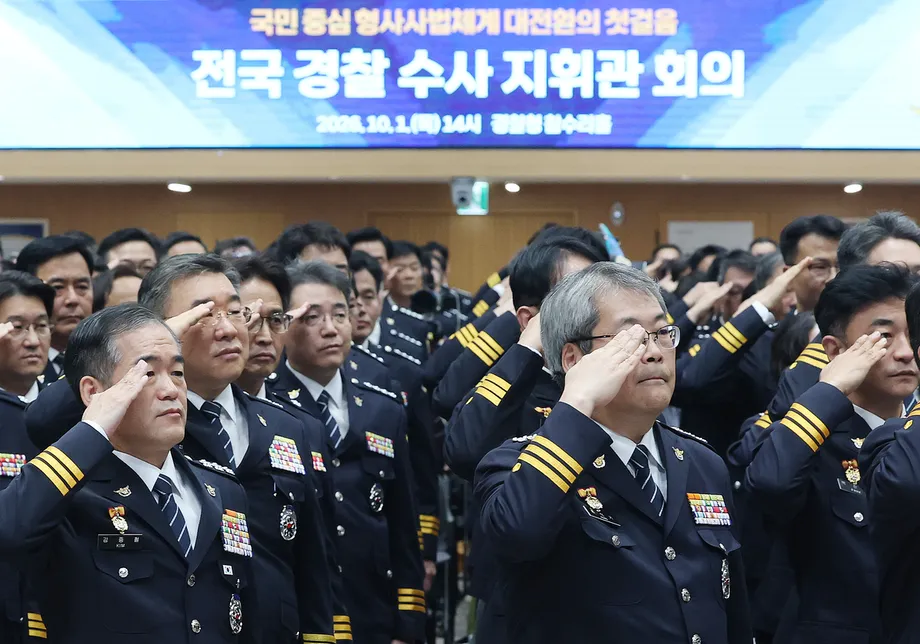
The Navy presented the plans at an October 20, 2026, parliamentary defense audit at Gyeryongdae military headquarters. Its temporary submarine task force, established on May 1, has 17 personnel across three teams under an officer of flag rank. The group is preparing for construction, testing, deployment and the creation of units to operate the vessels.
Under the government led Jangbogo-N program, the first nuclear submarine is intended to enter operational service in the late 2030s. Military authorities are reportedly considering three vessels of approximately 8,000 tons each, while a procurement account describes an ambition for at least three. Detailed specifications and a total program cost have not been publicly disclosed.
The carrier proposal is at a different decision point. The Navy submitted a revised military requirement to the Joint Chiefs of Staff in October 2025, replacing its earlier light aircraft carrier concept. A decision on that revised requirement is expected by the end of 2026.
Adm. Kim Kyung-ryul, South Korea's chief of naval operations, presented the expansion as part of a broader effort involving artificial intelligence, robotics and advanced naval technology. He described the purpose of stronger naval forces:
Strong naval power is the foundation of maritime security and a key capability supporting our maritime sovereignty, peace and prosperity,
The audit also exposed a central disagreement: whether the government has sufficiently defined what the nuclear submarines would do, and whether other vessels could perform those missions at a better cost.
What the nuclear submarine plan involves
The Defense Acquisition Program Administration, known as DAPA, says it will develop a nuclear propulsion system and prepare a blueprint for submarine construction. The program follows a bilateral summit agreement with the United States reached in October 2025.
Nuclear propulsion means a reactor supplies the energy that moves a submarine. The word nuclear describes its power source; the weapons it carries are a separate design choice. A reactor can support long periods underwater because generating propulsion power does not require drawing air from above the surface.
South Korea plans to use uranium enriched to below 20 percent uranium-235. Enrichment describes the proportion of the uranium isotope that can sustain the reactor's chain reaction. That fuel choice makes reactor design, reliable supply and arrangements for handling nuclear material central parts of the project.
The Navy's task force is preparing work across the submarine's development stages, from design and construction to testing and operational deployment. Dedicated organizations have also been established within the Defense Ministry, DAPA and shipbuilding companies.
The launch and service dates describe different milestones. Launching puts a completed hull into the water. Operational service follows testing, evaluation, crew preparation and acceptance by the Navy. The planned gap between the mid-2030s and late 2030s therefore includes work needed to turn a newly built submarine into a deployable military unit.
A larger carrier with a different mix of equipment
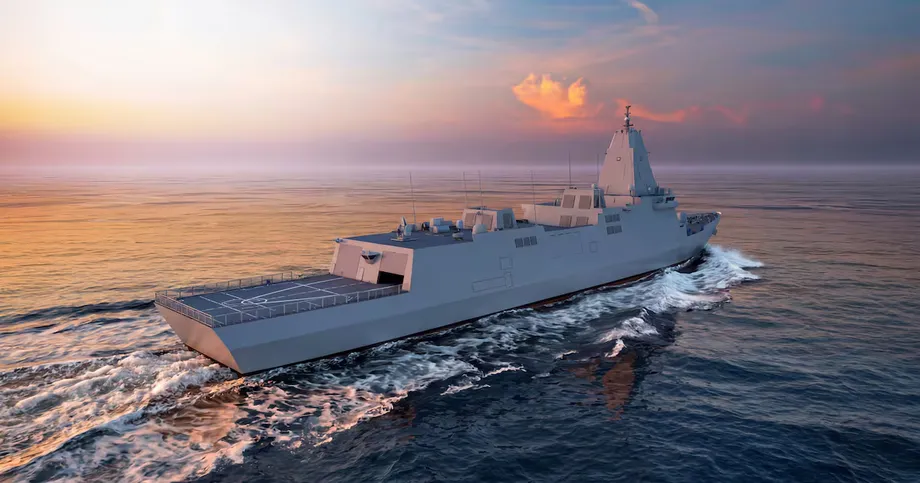
The proposed Manned-Unmanned Teaming Carrier would be approximately 270 meters long and 70 meters wide, with a light displacement exceeding 30,000 tons. Light displacement measures a ship's weight without its full operational load of fuel, stores and other supplies.
The earlier concept measured about 250 meters by 40 meters. The revised proposal adds 20 meters in length and 30 meters in width, making the planned width 75 percent greater. The Navy also intends to use an angled flight deck to improve aircraft operations.
The carrier would accommodate more than 20 unmanned systems and more than 20 crewed aircraft and landing craft combined. The second figure includes helicopters and boats, rather than describing a fleet of more than 20 crewed combat aircraft.
Its planned unmanned equipment includes maritime combat aircraft, surveillance drones and drones designed to strike targets by crashing into them. Uncrewed surface vessels would support swarm attacks and mine warfare. Crewed equipment would include helicopters for transporting troops and conducting attacks, as well as fast landing craft.
The ship would be much larger than the Navy's Dokdo, which measures 199 meters long and is described as belonging to the 14,000 ton class. The proposed carrier would be 71 meters longer, with a stated displacement more than twice that figure.
The Navy previously aimed to field a carrier in the late 2030s. Its revised target moves operational service into the early 2040s while shifting the ship's focus from crewed fighter aircraft toward a wider mix of unmanned and crewed equipment.
Why the Navy wants a wider reach at sea
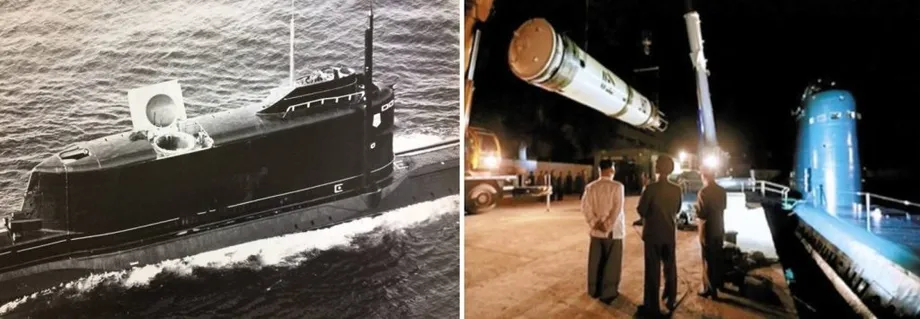
The Navy says North Korea is expanding the maritime role of its nuclear and missile forces through submarines capable of carrying submarine launched ballistic missiles and through new destroyers. South Korea wants stronger capabilities to watch potential launch areas and strike launch locations at sea.
The carrier is intended to extend surveillance coverage and the distance over which naval forces can operate. Drones could carry sensors beyond the ship itself, while different aircraft and surface vessels would give commanders several ways to gather information or attack a target.
Amphibious operations and humanitarian assistance are also part of the proposed mission. Helicopters and landing craft could move people and supplies between a ship and the shore, giving the vessel roles beyond surveillance and combat.
The submarine and carrier proposals therefore address different operational needs. The submarine program concerns sustained activity beneath the sea. The carrier would act as a mobile base for aircraft, drones and boats operating above and across it.
A lawmaker challenges the submarine's purpose
Han Ki-ho, a lawmaker from the People Power Party, questioned the nuclear submarine program during the October 20 audit. He argued that its military purpose and operating concept needed closer examination before the country committed to such a large acquisition.
Han said neither the Navy nor the Joint Chiefs had first proposed the requirement through an adequate military assessment, and that a rational requirements decision had not been made. His criticism concerns the process used to determine what capability the armed forces need and why they need it.
Han also raised conventional submarines as an alternative. He said he had heard that continued improvements to submarines using batteries could allow vessels of up to 6,000 tons, and called for their potential advantages to be examined alongside nuclear propulsion.
The Navy has separately proposed a KSS-IV conventional submarine program to prepare for the aging of its Jangbogo-II, or KSS-II, fleet. South Korea is therefore pursuing a future conventional submarine requirement while preparing its nuclear submarine project.
Han further questioned whether the nuclear vessels would primarily meet South Korea's own military needs or serve a strategy of countering China. He cited North Korea's 2022 nuclear force policy to argue that the country must prepare for possible nuclear use before the final stages of a war, while demanding a specific operational justification for the submarine investment.
Fuel, safety and maintenance shape the real fleet
Lee Ki-sik, a former commander of South Korea's Naval Operations Command, argues that fleet size should follow the missions the submarines must perform. His proposed calculation includes how frequently they deploy, how long missions last and how much time vessels spend in maintenance and training.
Three submarines on a fleet list would not mean three submarines constantly available for operations. Maintenance and crew preparation take ships out of the deployable force. Lee's argument places operational availability, rather than the number of hulls alone, at the center of deciding the program's size.
Lee also calls for agreements and contracts to set out long term fuel supply, maintenance support, access to necessary technical knowledge and each country's responsibilities if supplies or support are disrupted. He argues that personnel must understand the fuel's handling requirements well enough to incorporate them into design, operation and repairs.
South Korea has notified the International Atomic Energy Agency of its intention to discuss a separate arrangement and submitted related information, according to Lee. Such arrangements concern how nuclear material is managed while military information is protected.
Lee calls for an independent regulatory body capable of reviewing and inspecting reactors, fuel handling and radiation safety. His proposed financial planning extends from construction through operations, training and maintenance to fuel and waste management, ending with dismantling the vessels.
A Korea Economic Institute of America survey cited by Lee illustrates differing American attitudes toward the two nuclear issues. Among 1,207 American adults surveyed, 58 percent supported South Korea developing nuclear submarines, while 71 percent opposed it developing nuclear weapons. The questions concerned separate policies, each with its own public response.
Destroyers and missile defenses fill the intervening years
The Navy's nearer priorities include Korean Destroyer Next Generation vessels, known as KDDX, and Maritime Information Ship-III, with construction planned for the early to mid-2030s. It also seeks ship launched ballistic missiles for attacking land targets, long range maritime attack drones and SM-3 and SM-6 interceptor missiles.
From the late 2030s, the Navy plans further destroyers based on KDDX as existing Chungmugong Yi Sun-sin class and Sejong the Great class vessels age. Domestically developed naval ballistic missile interceptors are intended to strengthen its missile defense capability.
These plans combine replacement and expansion. Some ships would take over from aging vessels, while new missiles, sensors and unmanned systems would add ways to find threats, attack them or intercept incoming weapons.
DAPA is also seeking to accelerate the Gwanggaeto-III Batch-II Aegis destroyer program. Its third vessel, ROKS Daeho Kim Jong Seo, has been launched and is scheduled for delivery to the Navy in December 2027.
Procurement changes reach beyond the Navy
DAPA's wider acquisition agenda includes combat uncrewed surface vessels, small attack drones, laser air defense weapons and integrated systems for countering drones near frontline border areas. The agency also plans investment in artificial intelligence chips for guided missiles, robotics and advanced fighter engines.
Long range artillery interceptors designed to counter simultaneous attacks on the wider Seoul region are set to undergo operational testing and evaluation. They form part of the Korea Air and Missile Defense system, alongside other defenses against North Korean attacks.
The first aircraft from an additional purchase of 20 F-35A fighters is scheduled for delivery in the second half of 2027. Military reconnaissance and communications projects, including small surveillance satellites and the 425-II satellite program, are also part of DAPA's plans.
The government links these acquisitions to its effort to take over wartime operational control from Washington before President Lee Jae Myung's term ends in 2030. Operational control concerns authority to direct assigned forces during military operations. The submarine and carrier service targets fall beyond that deadline.
Marines seek their own operational command
The Marine Corps plans to establish a Marine Operations Command by 2028 as part of a move toward greater operational independence from the Army and Navy. The restructuring is tied to Lee's election pledge to give the Marines a stronger institutional position.
Under the proposal, Marine Corps headquarters would move from Hwaseong to Gyeryongdae, where the Army, Navy and Air Force headquarters are located. The existing headquarters building would then accommodate the new operational command.
The Marines aim to take over operational control of their 1st Division from the Army by the end of 2026, followed by the 2nd Division by 2028. Their equipment priorities include next generation amphibious assault vehicles, attack helicopters, fast combat boats, K2 tanks and drones for the northwestern islands.
The command changes and equipment purchases connect to the carrier's proposed amphibious role. Moving troops ashore requires coordination among ships, helicopters, landing craft and the formations that conduct operations on land.
The dates that will define progress
The next formal carrier milestone is the Joint Chiefs' expected decision on the revised requirement by the end of 2026. For the submarine program, design, fuel arrangements, safety preparations and testing must fit within a schedule extending into the following decade.
The main dates announced across the naval and wider procurement plans are:
- October 2025: A summit agreement with the United States preceded the submarine push; the Navy also submitted its revised carrier requirement that month.
- May 1, 2026: The Navy established its temporary nuclear submarine task force.
- End of 2026: A decision on the revised carrier requirement is expected, and the Marines target the transfer of operational control over their 1st Division.
- Second half of 2027: Delivery is scheduled for the first of 20 additional F-35A fighters.
- December 2027: Delivery is planned for ROKS Daeho Kim Jong Seo.
- 2028: The Marines aim to establish their operational command and take over operational control of their 2nd Division.
- Mid-2030s to late 2030s: The first nuclear submarine is targeted for launch, followed by operational service.
- Early 2040s: The revised carrier is targeted to enter service.
Parliamentary scrutiny will follow both the military purpose of the largest projects and the resources needed to operate them for decades. The Navy's immediate work is to translate its proposed fleet into approved requirements, workable designs, trained units and funded acquisition plans.
Key Points
- South Korea targets a first nuclear submarine launch in the mid-2030s and operational service in the late 2030s.
- The proposed carrier would exceed 30,000 tons and carry more than 20 unmanned systems alongside more than 20 crewed aircraft and landing craft combined.
- The Joint Chiefs are expected to decide on the revised carrier requirement by the end of 2026.
- Lawmakers have challenged the submarine program's military justification and called for comparison with conventional alternatives.
- Fuel supply, nuclear safety, maintenance, personnel and eventual dismantling are central planning issues.
- Destroyer acquisitions, missile defenses and a Marine Operations Command form part of the broader military changes.