A repair overlap left both ships unavailable
South Korea's entire fleet of two ocean intelligence ships was unavailable for more than 40 days after an unexpected breakdown overlapped with scheduled maintenance, according to information disclosed by People Power Party lawmaker Han Ki-ho on October 19, 2026. The interruption affected vessels used to collect North Korean signals, monitor Chinese and Russian naval activity and track illegal oil transfers at sea.
Contents
- A repair overlap left both ships unavailable
- Why Shinsegi's return to repairs matters
- What the ships collect at sea
- The Navy and Han disagree on the scale of the gap
- Why two ships leave little room for failure
- New ships are moving through design, not arriving soon
- Aircraft shortages have complicated ship operations before
- The expansion competes with larger naval programs
- A readiness dispute enters the wartime command debate
- Key Points
The 2,800-ton Shinsegi and 3,500-ton Shingiwon were both out of operation from September until around the middle of October. Shingiwon had entered scheduled depot maintenance in July. Shinsegi then needed repairs because of aging, just six months after completing an extended repair period.
The Navy had previously said it alternated work on the two vessels to keep one available. Their simultaneous absence exposed the vulnerability of a fleet with no third ship to cover an unexpected failure. Military authorities acknowledged the interruption but said other intelligence assets limited its effect on intelligence collection.
The disclosure comes as South Korea debates its readiness to assume wartime operational control from the United States. Han connected the breakdowns to that debate, arguing that the military's ability to gather intelligence independently needed closer examination.
A planned expansion would add two larger intelligence ships by 2035, with a reported budget of 1.94 trillion won. Until those vessels arrive, the Navy must manage maintenance and competing surveillance duties with its existing pair. The immediate problem is practical: when one ship enters a lengthy overhaul, the other becomes the only vessel of its type available for missions.
Why Shinsegi's return to repairs matters
Shinsegi entered service in 2003, making it about 23 years old at the time of the disclosure. Shingiwon, commissioned in 2012, was about 14 years old. Both vessels carry specialized equipment for gathering information rather than relying on the heavy weapons associated with destroyers.
Shinsegi's recent repair history makes the overlap particularly concerning. The vessel underwent approximately 18 months of repairs from September 2024 to March 2026, then reportedly broke down again about six months later. A long period in repair had therefore produced only a relatively short return to availability before another interruption.
Shingiwon's work was different: it entered planned depot maintenance, described as the highest level of maintenance, in July 2026. This involves more extensive work than routine servicing and requires the ship to leave operational duty.
The sequence shows how the Navy's alternating maintenance arrangement came under pressure:
- September 2024: Shinsegi began an extended repair period.
- March 2026: Shinsegi completed approximately 18 months of repairs.
- July 2026: Shingiwon entered scheduled depot maintenance.
- September to around mid-October 2026: Both ships were unavailable for more than 40 days.
- October 19, 2026: Han disclosed the simultaneous interruption.
- By 2035: The Navy plans to introduce two additional ocean intelligence ships.
What the ships collect at sea
Ocean intelligence ships gather information that helps commanders understand which vessels are nearby, how they operate and what conditions naval forces will encounter. Their work includes collecting radio and communications signals, underwater sound and information about the marine environment.
Signals intelligence means learning from electronic transmissions, including communications and other emissions. Acoustic intelligence involves listening to underwater sound. A ship or submarine produces a recognizable pattern of noise, sometimes described as an acoustic signature. Collecting and comparing those patterns helps naval forces identify vessels they encounter later.
Shinsegi and Shingiwon support surveillance of North Korea and monitoring of Chinese and Russian naval movements. They can also operate unmanned aircraft, extending information gathering beyond the immediate area around the ship. Their duties include tracking illegal transfers of oil involving North Korea on the high seas.
Information gathered by the vessels is reportedly used by military intelligence organizations and the National Intelligence Service. Their contribution therefore reaches beyond the crews and commanders conducting a particular patrol.
Regular collection also helps build a library of information about foreign ships and submarines. That makes availability important even outside a crisis: each patrol provides opportunities to record sounds, signals and operating patterns that may be useful in later operations.
The Navy and Han disagree on the scale of the gap
The Navy's earlier position was that its maintenance arrangements kept at least one ship ready. It described that approach in the following terms:
The two ships undergo alternating maintenance and repairs, ensuring one remains operational.
Both ships becoming unavailable showed that the arrangement could not absorb this combination of scheduled work and an unexpected breakdown. For this particular fleet, there was no remaining operational vessel during the overlap.
Military authorities argued that intelligence gathering continued through other assets. Their response addressed the wider intelligence system rather than the availability of these two ships:
Intelligence collection does not rely solely on specific assets, so the gap is not significant.
Han's criticism focused on the loss of independent surveillance capacity. The precise missions affected, the information missed and the assets used to cover the interruption were not disclosed, leaving the operational scale of the loss unclear.
The concrete difference between the two positions is the level being assessed. Han pointed to the complete interruption of a specialized ship fleet. Military authorities pointed to intelligence collection across the armed forces, where other equipment continued to operate.
Why two ships leave little room for failure
A normal rotation is commonly described as requiring three ships: one conducting a mission, one resting and one undergoing repairs or training. South Korea has only two ocean intelligence ships, one fewer than that basic rotation would require.
With two vessels, a scheduled overhaul immediately reduces the fleet to a single available ship. If that remaining ship develops a serious fault, the entire fleet can become unavailable. That is the pattern described in the latest disclosure.
Geography adds another demand. The ships must support information gathering in both the East Sea and the Yellow Sea, while also monitoring activity farther south. Earlier accounts of their operations described difficulty maintaining stable collection across both coasts with only two vessels.
The planned increase from two ships to four would double the fleet. It would provide more room to maintain a ship, train crews and continue missions elsewhere. Four vessels have also been identified in reporting on the program as a desired minimum for accumulating enough information on foreign ships to support operations against surface vessels and submarines.
South Korea previously operated another intelligence ship, the roughly 1,000-ton Shincheonji. Commissioned in 1993, it retired in December 2013. The present shortage therefore follows a period in which an older vessel left service without the fleet growing beyond the current pair.
New ships are moving through design, not arriving soon
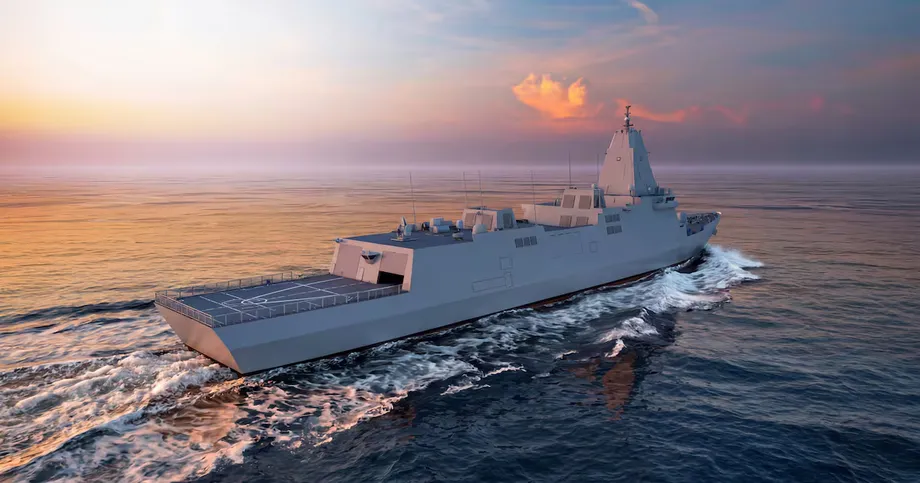
The next generation program, described as AGX-III in reporting on its design tender, calls for two ships of at least 4,000 tons each by 2035. The reported acquisition budget is 1.94 trillion won.
The Defense Acquisition Program Administration has issued a tender to select a contractor for basic design. That stage has a budget of approximately 27.4 billion won and is scheduled to take 26 months from the contract date.
Basic design establishes the main arrangement and technical requirements of a vessel. Detailed design and construction follow. The 26 months therefore cover a design contract, while the complete process of delivering operational ships extends much further.
Earlier plans anticipated launching the basic design procurement in the following year's first half. The subsequent tender marks progress from that planning stage to a competition for the design work.
HD Hyundai Heavy Industries, which carried out the concept design, and Hanwha Ocean have been identified as likely bidders. Security related scoring issues involving HD Hyundai Heavy Industries and the Korea Destroyer Next Generation program have also been cited as a possible factor in the competition.
The reported target remains 2035. For the existing crews and maintenance planners, that means the expansion is a future answer to the fleet shortage rather than an immediate source of replacement capacity.
Aircraft shortages have complicated ship operations before
The ships' unmanned aircraft have faced availability problems of their own. Earlier reporting described the Navy's use of American AAI Shadow-400 aircraft, followed by a switch to Austrian Schiebel Camcopter S-100 aircraft after Shadow crashes in 2007 and 2010.
The Navy acquired four Camcopter S-100 aircraft in 2013 and four more in 2018. Two operated aboard Shingiwon crashed in 2015 and 2017, leaving six in service at the time of that account.
An unnamed military official said the Navy planned to purchase three additional Camcopters the following year. The official explained that a ship needed two reconnaissance aircraft when conducting a mission and that additional aircraft would support maintenance and pilot training. Completion of that purchase is not established in the account.
The operational demands were also widening. From 2018, the intelligence ships were assigned patrols near Ieodo and in areas covered by South Korean, Chinese and Japanese air defense identification zones. Those assignments reduced time available for patrols near the Northern Limit Line, the maritime boundary used by South Korea in the Yellow Sea.
That earlier history adds another layer to the present availability problem. Keeping a ship ready involves its hull, machinery, intelligence equipment, aircraft and trained personnel. A small fleet must support all of those requirements while dividing time among several surveillance areas.
The expansion competes with larger naval programs
The Korea Destroyer Next Generation project, known as KDDX, plans to acquire six destroyers of about 7,000 tons at a cost of approximately 7.8 trillion won. Observers have linked the slower expansion of the intelligence fleet to the priority given to programs such as KDDX.
The reported destroyer budget is about four times the 1.94 trillion won planned for the two new intelligence ships. The comparison illustrates the scale of the competing programs: one buys six major combat vessels, while the other adds two specialized collectors of information.
Regional fleet figures have also been cited in support of expansion. A military official and a defense industry representative put China's ocean intelligence fleet at 12 ships and Japan's at six, compared with South Korea's two. The Japanese total includes three ocean survey ships and three acoustic measurement ships.
Those figures put South Korea at one third of the cited Japanese total and one sixth of the Chinese total. The practical concern expressed in the expansion plans is the amount of information South Korea can collect across its surrounding seas while keeping vessels available for maintenance and training.
A readiness dispute enters the wartime command debate
Han connected the outage to the government's argument that South Korea's military strength supports transferring wartime operational control. The government has cited a ranking placing the military fifth in the world when arguing that the transition is manageable.
Wartime operational control, often shortened to OPCON, concerns authority to direct forces during war. In this debate, intelligence matters because commanders need timely information about threats and movements before they can make operational decisions.
Han, a People Power Party lawmaker, called for a more precise assessment of the military's capabilities before making confident statements about the timing of the transition:
This confirms the current state of our military's self-reliant surveillance and reconnaissance capabilities. Before claiming 'OPCON transition can happen tomorrow,' an accurate assessment of our military's capabilities is needed.
The Navy's immediate task is narrower than that political dispute: sustain surveillance with two aging specialized ships while the next generation moves through design and construction. The maintenance overlap shows why the arrival of additional vessels matters to everyday mission scheduling as well as to arguments about national military readiness.
Key Points
- South Korea's Shinsegi and Shingiwon were both unavailable for more than 40 days, according to lawmaker Han Ki-ho.
- Shingiwon was undergoing scheduled depot maintenance when Shinsegi required further repairs.
- Shinsegi had completed approximately 18 months of repairs only six months before its latest reported breakdown.
- Military authorities said other assets limited the effect on intelligence collection.
- The Navy plans to add two intelligence ships of at least 4,000 tons by 2035, with a reported budget of 1.94 trillion won.
- The basic design contract is expected to last 26 months, followed by further design and construction work.
- Han linked the outage to the debate over South Korea's readiness for wartime operational control transfer.