Island defenses face a major test
Japan and the United States began Keen Sword 27 on October 19, 2026, bringing about 45,000 Japanese personnel and 12,000 American service members into exercises stretching from islands near Taiwan to waters off northern Japan. Running through October 29, the drills combine missile defenses, amphibious landings, aircraft deployments and the movement of supplies across Japan's scattered islands.
Contents
- Island defenses face a major test
- A larger force than in 2024
- Why Yonaguni and Ishigaki matter
- Japan practices with a missile reaching 1,000 kilometers
- A new command coordinates the operation
- Landings, live fire and a carrier group
- Supply plans change before training begins
- Local governments seek safety and tighter controls
- Deterrence and escalation divide opinion
- The dates shaping the exercise
- Key Points
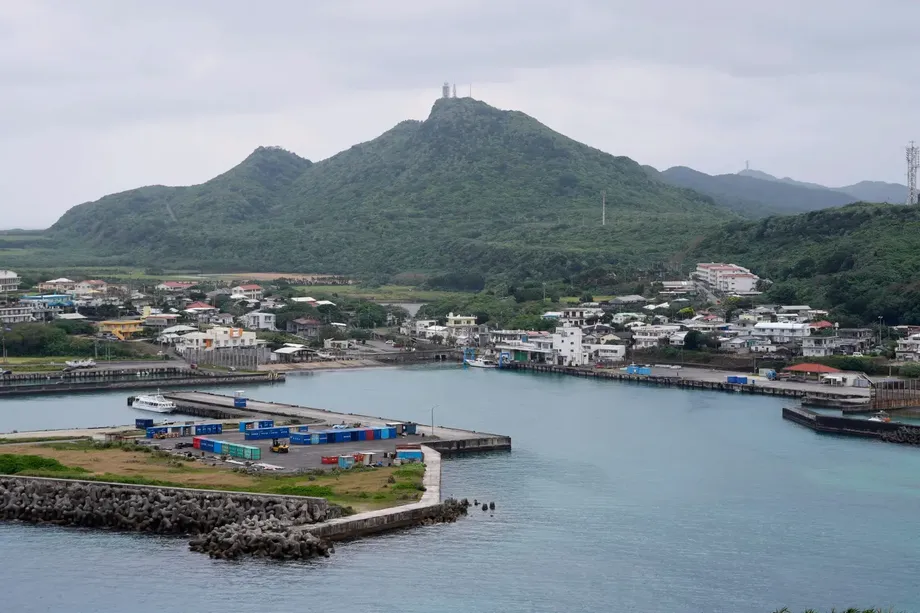
Yonaguni, Japan's westernmost island, about 110 kilometers east of Taiwan, is receiving the American NMESIS missile system and MADIS air defense system for the first time during the exercise. On nearby Ishigaki, American forces have deployed HIMARS mobile rocket launchers. Japan is also exercising its new Type-25 missile, which has a reported range of about 1,000 kilometers.
The American personnel total has two published estimates. The widely reported figure of 12,000 puts combined Japanese and American participation at 57,000; exercise spokesman Maj. Ephesian Poinsette gave an expected American contribution of approximately 11,000, producing a combined total of about 56,000.
Seven partner countries are joining parts of the exercise: Australia, Canada, France, Germany, the Netherlands, New Zealand and the Philippines. Japan's Joint Staff says the last five are participating as partner nations for the first time. South Korea and the United Kingdom are sending observers.
The deployments come during strained relations with China and renewed anger over American bases following the arrest of a U.S. Marine suspected of robbery and murder on Okinawa. Prefectural governments have requested safety measures, published changes to training plans and sought tighter controls on military personnel visiting local communities.
A larger force than in 2024
Japan's Joint Staff lists approximately 6,100 vehicles, 40 vessels and 260 aircraft for this exercise, alongside its 45,000 personnel. The scale gives commanders a substantial test of moving, supplying and coordinating forces across several islands and surrounding seas.
The Joint Staff's Keen Sword 25 outline provides a useful comparison. That exercise ran from October 23 to November 1, 2024, with about 33,000 Japanese personnel, 30 Japanese ships and 250 Japanese aircraft. American participation was listed at about 12,000 personnel, 10 ships and 120 aircraft.
Japan's personnel contribution has therefore risen by about 12,000, or 36%, from the 2024 figure of 33,000. Its vessel count has increased from 30 to 40, while aircraft numbers have risen more modestly, from 250 to 260.
The official 2024 outline also explains the exercise calendar. Japan and the United States began the joint series in fiscal 1985 and generally alternate exercises involving deployed forces with command post exercises, in which headquarters practice planning and decisions. Keen Sword 25 was the 17th exercise involving deployed forces. This helps explain why the wider training series can be described as generally annual while Keen Sword field exercises take place every two years.
Why Yonaguni and Ishigaki matter
Yonaguni's proximity to Taiwan puts its ports, airfield and military facilities close to waters that could become central to a regional conflict. Taiwan governs itself, while Beijing claims it as Chinese territory. Japan has strengthened its southwestern islands with missiles and interceptors as Chinese military activity has expanded around Japan and into the Pacific.
Approximately 60 personnel from the U.S. Army and the 12th Marine Littoral Regiment are deploying to Yonaguni with NMESIS and MADIS. NMESIS launches missiles against ships from land. MADIS provides protection against threats in the air at shorter distances. Their deployment combines the ability to threaten vessels offshore with protection for forces operating on the island.
Japanese plans also include temporarily moving Type 88 missiles against ships and Type 03 air defense systems to Yonaguni. On Ishigaki, Japanese missile units and American systems, including HIMARS, add to a wider network of island positions.
The exercise follows Japan's Yonaguni air defense plans announced in November 2025. At that time, the island already hosted a radar site and an electronic warfare unit. Electronic warfare uses signals to disrupt or counter an opponent's equipment. The current drills test how additional forces can reach and operate from these small islands.
Japan practices with a missile reaching 1,000 kilometers
Japan's Type-25 surface-to-ship missile is taking part in Keen Sword for the first time after entering service in March. Developed from the Type 12 missile family, it has a reported range of approximately 1,000 kilometers, enough to reach parts of the Chinese coast from positions in southwestern Japan.
Launchers were transported from Camp Kengun in Kumamoto Prefecture to the Onobaru Maneuver Area, which spans Nagasaki and Saga prefectures. The Type-25 has also been reported as deployed to Yonaguni during the exercise, leaving its precise exercise location unclear.
The Type-25 will not be fired. Training instead involves identifying maritime targets, sharing targeting information between Japanese and American forces, and practicing launch procedures. Those steps require different units to work from the same information so that a launcher receives the correct target position and instructions.
Japan describes weapons with this reach as part of its counterstrike capability, intended to deter attacks and strike enemy bases or other targets during a conflict. Standoff weapons allow a force to attack from a distance, reducing the need to move the launch platform close to an opposing force. Their reach is also central to regional concern about Japan's expanding military capabilities.
A new command coordinates the operation
Keen Sword 27 is the first iteration since Japan established its Joint Operations Command in March 2025. Adm. Tateki Tawara, who commands the organization, and Adm. Steve Koehler, commander of the U.S. Pacific Fleet, are leading the drills.
The command's task is to coordinate Japan's ground, maritime and air forces. During an island defense operation, those services must arrange transport, protection, communications and supplies together rather than operate as disconnected units.
Gen. Hiroaki Uchikura, chief of Japan's Joint Staff, said the exercise would coordinate space, cyber and electromagnetic operations alongside conventional military activities. He also described training for gray-zone situations, meaning pressure or confrontation below the level of open war, as well as armed attacks.
Uchikura said the exercise was "not aimed at any specific country." Poinsette likewise described the American position as training for cooperation rather than a response to a single regional event.
At the opening ceremony on Ishigaki, Tawara said the goal included protecting the peaceful lives of people as well as Japanese territory. Explaining why preparation and cooperation mattered, he said:
In order to do so, it is essential to be fully prepared and cooperate with our allies and partners to prevent the crisis.
Landings, live fire and a carrier group
The USS Theodore Roosevelt departed Yokosuka on October 19 to join Keen Sword after arriving at 9:20 a.m. on October 16 with the cruiser USS Chosin and destroyer USS Decatur. The stop allowed maintenance, resupply and exchanges with Japanese naval personnel. Carrier Strike Group 9 also includes the destroyers USS Paul Hamilton and USS Carl M. Levin.
Roosevelt's arrival was its first visit to Yokosuka and the first call there by an American carrier based outside Japan in four years. Its participation follows earlier uncertainty over which carrier group would join while the Yokosuka based USS George Washington operated in the Middle East.
On Oki-Daito, an uninhabited island about 500 kilometers southeast of Okinawa, an integrated exercise using live ammunition was scheduled for October 19 and 20. Japanese plans included two AH-64D helicopters, four F-2 fighters and a V-BAT unmanned aircraft providing observation support.
Other missile defense and operations against ships are expected to proceed without live firing. Amphibious landing drills, in which troops move from sea onto land, are scheduled at Kin Blue Beach and Camp Hansen on Okinawa from October 20 to 23. Around 400 Marines and 1,500 Japanese Ground Self-Defense Force personnel are also due to train on Tanegashima.
The exercise extends beyond the southwestern islands. Air and missile defense activities include the Sea of Japan, waters south of Shikoku and areas east of Kyushu. Japanese F-15 fighters will also practice dispersing to other airfields under a scenario in which Naha Air Base becomes unusable.
Supply plans change before training begins
Kagoshima Prefecture's exercise updates document changes affecting how supplies will reach the islands. On October 7, the prefecture announced the cancellation of a planned Marine Corps drill using an Autonomous Low-Profile Vessel, a semi-submersible unmanned craft, to carry supplies at Shibushi Port and Tanegashima.
A different transport drill was revised rather than canceled. An offshore support vessel replaced a U.S. Army landing craft for a route from Oita Port through Shibushi and Naze to the Naha port facilities.
These movements are a practical part of island defense. Troops need ammunition, fuel, food and medical supplies after they arrive. Keen Sword also tests casualty evacuation and facilities repair, linking combat operations with the work needed to keep forces functioning.
A separate American led demonstration of the Ghostwake unmanned surface vessel is planned off White Beach, Okinawa, during October 19 to 23. Japanese maritime personnel will observe its autonomous surveillance capabilities. This is a different activity from the canceled unmanned resupply drill.
Local governments seek safety and tighter controls
Oita Prefecture's training notices show how the exercise reaches civilian facilities. About 40 American personnel were expected at the Hijudai training area by October 19. Four F-2 fighters from Tsuiki Air Base were scheduled to use Oita Airport between approximately 2:30 p.m. and 4:30 p.m. on October 20.
The prefecture established a response team on October 13, and the Kyushu Defense Bureau opened a local liaison office at 1 p.m. on October 16. Oita also announced that a planned integrated communications drill in the prefecture would not take place. Its governor requested thorough safety management and early disclosure of information.
The arrest of a Marine suspected of robbery and murder on Okinawa has added urgency to those requests. Oita's notice says American authorities ordered a pause in operations, a ban on leaving bases and a drinking ban for personnel in Okinawa from noon October 7 to noon October 9, followed by a midnight curfew for 30 days.
Japan's government also asked the American side to limit outings to the minimum necessary during Keen Sword, including outside Okinawa. Kagoshima submitted renewed written requests to the Joint Staff chief and Kyushu Defense Bureau director on October 16 after the arrest.
On Miyakojima, residents have expressed anxiety and opposition as military aircraft use the civilian airport and troops enter local facilities. The city announced that exercise aircraft using Miyako Airport would follow civilian flight routes and avoid the city center, following an explanation from the Okinawa Defense Bureau.
Most of the approximately 50,000 American troops stationed in Japan under the bilateral security pact are based on Okinawa, where residents have long complained about noise, pollution and crime. Yokosuka Mayor Katsuaki Kamiji also sought government action to ensure visiting American crews follow Japanese rules.
Deterrence and escalation divide opinion
Japan's government presents stronger island defenses as a way to discourage attack. Relations with Beijing have been strained since Prime Minister Sanae Takaichi said in November 2025 that Chinese military action against Taiwan could justify Japanese involvement. China reacted angrily, and the dispute spread into economic ties, including large flight cancellations between the countries.
China's Liaoning carrier group entered the western Pacific for training days before Keen Sword began. Japan has also raised concerns about Chinese military activity around remote Japanese islands in the Pacific. Uchikura argues that forces must be able to move quickly and place the necessary capabilities where they are needed.
Atsushi Koketsu, professor emeritus at Yamaguchi University, takes the opposite view. He said the Japanese missile deployment and the arrival of new American systems on Yonaguni would worsen regional tensions. Takakage Fujita, secretary general of the Association for Inheriting and Propagating the Murayama Statement, also criticized the exercise and called for its cancellation.
The disagreement centers on the same concrete changes: missiles reaching farther, more forces operating on small islands and closer coordination between Japanese and American commands. Military leaders say those capabilities make an attack less attractive. Critics say the deployments increase tension and expose nearby communities to greater danger during a confrontation.
The dates shaping the exercise
Preparations involved several revisions before the October 19 opening. Prefectural notices give residents a more detailed calendar than the exercise's opening and closing dates alone.
- September 29: The Kyushu Defense Bureau provided the exercise outline to prefectural authorities.
- October 7: Kagoshima announced cancellation of the unmanned resupply drill at Shibushi and Tanegashima.
- October 16: USS Theodore Roosevelt arrived at Yokosuka, and Kagoshima renewed written requests following the Marine's arrest.
- October 19: Keen Sword began, and Roosevelt departed Yokosuka to join it.
- October 19 to 20: Live fire training was scheduled at Oki-Daito.
- October 20 to 23: Amphibious landing drills are scheduled at Kin Blue Beach and Camp Hansen.
- October 29: Keen Sword 27 is scheduled to end.
For island communities, the immediate effects include military flights, transport through local ports and additional personnel. For commanders, the central test is whether those movements can support a coordinated defense while keeping forces supplied and operating across a wide area.
Key Points
- Keen Sword 27 runs from October 19 to 29, 2026, with about 45,000 Japanese personnel and an estimated 11,000 to 12,000 American personnel.
- Seven partner nations are joining parts of the exercise, five for the first time as partner participants.
- American NMESIS and MADIS systems are deploying to Yonaguni for the first time during the drills.
- Japan's Type-25 missile is participating without being fired.
- Official prefectural notices confirm canceled training, revised transport arrangements and requests for safety measures.
- The drills are the first Keen Sword iteration since Japan established its Joint Operations Command in March 2025.
- Local opposition and concerns about military conduct accompany the expanded training.