A small island at the center of a growing dispute
Japan is moving ahead with plans to deploy a Type 03 Chu SAM air defense unit on Yonaguni, an island about 110 kilometers east of Taiwan with roughly 1,700 residents. Defense Minister Shinjiro Koizumi says the deployment will help discourage an attack on Japan. China calls the move extremely dangerous, while Taiwan welcomes stronger defenses on nearby Japanese territory.
Contents
- A small island at the center of a growing dispute
- What Koizumi says Japan is trying to achieve
- What the Type 03 missile system would do
- Why China calls the deployment dangerous
- Taiwan welcomes stronger defenses nearby
- How American forces fit into the picture
- Residents seek shelters and evacuation plans
- How Yonaguni could operate during a crisis
- The wider buildup across Japan's southwest islands
- What to Know
The plan has gained attention after Japanese fighter jets recently scrambled to intercept a suspected Chinese drone flying between Yonaguni and Taiwan. That narrow corridor would be crucial in a crisis over the Taiwan Strait, putting the island's skies, ports and military facilities close to any confrontation.
Yonaguni has two small ports and a short airfield. It already hosts a Self Defense Forces radar site that watches surrounding seas and airspace, along with an electronic warfare unit established in 2024. Electronic warfare involves using electronic signals to disrupt or counter an opponent's systems. The United States Marine Corps has also set up a forward arming and refueling point, a place where American aircraft can replenish fuel and weapons close to the strait.
Japan's planned missile battery would add protection to this growing collection of military assets. For residents, however, the same geography that makes Yonaguni useful to defense planners also brings concern about shelters, evacuation and the future of their community.
As of November 27, 2025, the deployment remains a plan. No deployment date has been given. Japan's defense ministry says it will brief local officials and residents once the plans are finalized.
What Koizumi says Japan is trying to achieve
Defense Minister Shinjiro Koizumi visited Yonaguni and said the deployment would proceed. His argument is that stronger protection makes an attack less attractive, reducing the chance that Japan would have to fight.
Koizumi described the deployment as a measure to strengthen deterrence, meaning an effort to discourage an adversary from attacking by increasing the risks it would face. During his visit, he said:
The deployment can help lower the chance of an armed attack on our country. The view that it will heighten regional tensions is not accurate.
Tokyo says the plan fits its constitution and its stated focus on defending Japanese territory. Over the past decade, Japan has updated its security laws to allow limited collective self defense, which permits Japan to help defend an ally under certain conditions. The government continues to describe its military posture as defensive.
Yonaguni's battery is intended to make an attack on Japanese soil less likely. Japan's reasoning is straightforward: aircraft or missiles operating close to the island would face another defensive system, while the radar site and other facilities would gain protection.
Beijing sees the same deployment differently. Its response reflects both the island's proximity to Taiwan and a wider diplomatic dispute over when Japan might become involved in a conflict there.
What the Type 03 missile system would do
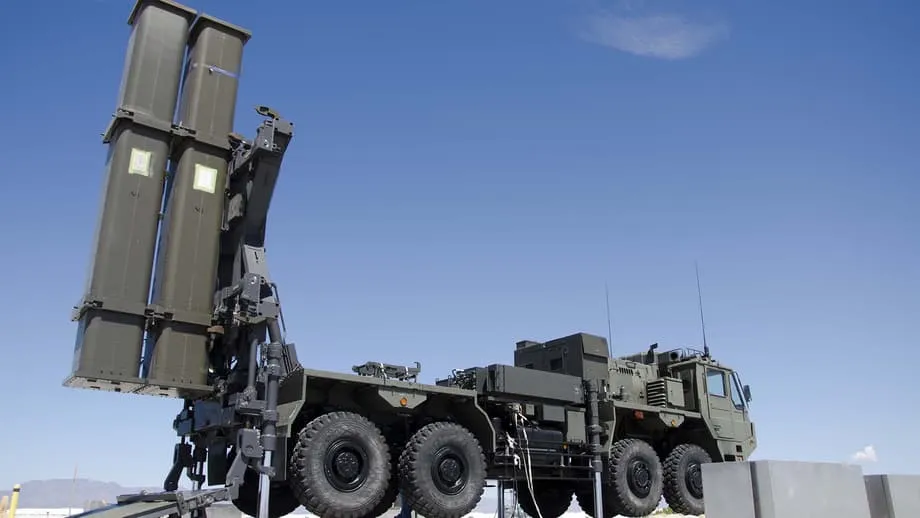
The Type 03 Chu SAM is a domestically designed surface to air missile system intended for engagements at medium range. Surface to air missiles are launched from the ground to intercept threats in the sky. The planned Yonaguni unit would focus on aircraft, helicopters and cruise missiles.
The system's launchers are mounted on trucks with eight wheels. Its phased array radar can track many targets at once, and the battery can engage multiple targets at ranges of up to roughly 48 kilometers, with interceptions at medium altitude.
Mobility is part of its protection. Crews can move the system into position, set it up, fire and relocate. Changing position reduces the time an opponent has to locate and attack a launcher.
The Type 03's role on Yonaguni would be local air defense. Its stated range is much shorter than the roughly 110 kilometers separating the island from Taiwan, and it cannot threaten targets on Taiwan or the Chinese mainland. It can cover airspace immediately around Yonaguni and the sea lane to the island's east and south.
That coverage would complicate operations for pilots, drone operators and cruise missile planners approaching the island. The battery could also protect assets placed there during a crisis, including sensors or mobile launchers for missiles intended to attack ships or targets at longer distances.
Japan would integrate the Type 03 into a wider air and missile defense network. That network includes Patriot PAC 3 batteries on land and Aegis destroyers at sea equipped with SM 3 interceptors, with SM 6 also planned for the future.
Yonaguni already supplies radar information to that network. A missile battery would make it a forward defensive node, protecting the island while supporting the shared picture of air activity in the channel between Taiwan and the Ryukyu islands.
Why China calls the deployment dangerous
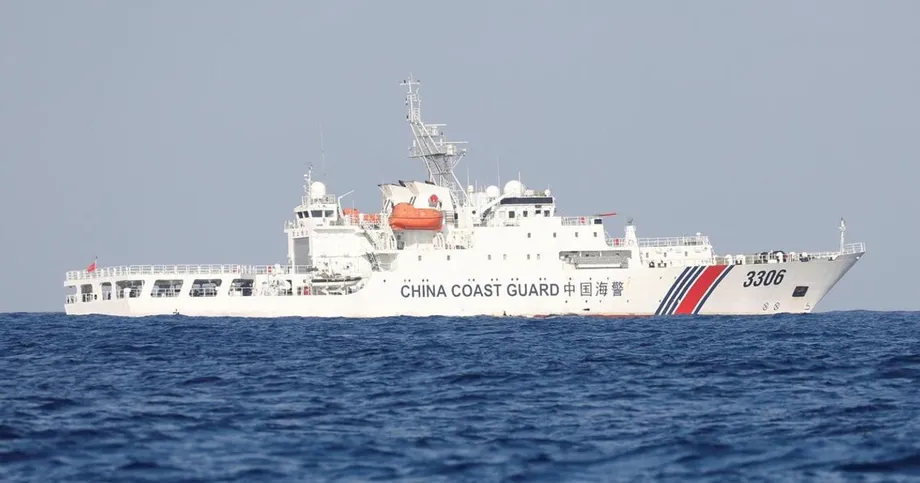
China's government has condemned the plan, arguing that missiles so close to Taiwan invite confrontation. The dispute comes during a sharper downturn in relations following remarks by Japanese Prime Minister Sanae Takaichi about a possible Chinese military blockade of Taiwan.
Takaichi said such a blockade could meet the constitutional threshold of a survival threatening situation. That threshold would allow Japan to exercise collective defense with the United States. Her comments linked a possible Taiwan crisis to the legal conditions under which Japan could act alongside its ally.
Mao Ning, a spokesperson for China's Ministry of Foreign Affairs, criticized the Yonaguni plan at a regular press briefing. She described the deployment as offensive and connected it directly to Takaichi's remarks:
Japan's deployment of offensive weapons to southwest islands close to China's Taiwan is a deliberate move that creates regional tensions and stokes military rivalry. Given Prime Minister Takaichi's erroneous remarks on Taiwan, this move is extremely dangerous. Neighboring countries and the world should be on high alert.
Chinese state media voices have also accused Tokyo of reviving militarism. A Chinese company posted a video simulating attacks on Japanese targets with a new hypersonic missile, adding to the heated messaging surrounding the dispute.
Japan and China are therefore presenting opposing explanations of the same military move. Tokyo describes protection for its territory and a means of discouraging attack. Beijing describes a dangerous expansion of military activity close to Taiwan.
Taiwan welcomes stronger defenses nearby
Taiwanese officials have welcomed stronger defenses on Japan's nearby islands, seeing them as a contribution to stability in the Taiwan Strait. Taiwan's Deputy Minister of Foreign Affairs Francois Wu said Japan has the right to safeguard its territory.
Wu also said measures on Yonaguni could help maintain security in the strait and that this aligns with Taiwan's interests. His position places Taipei closer to Tokyo's explanation of the deployment than to Beijing's criticism.
Yonaguni sits at the western end of the Ryukyu archipelago, which stretches northeast toward Okinawa and Kyushu. The arc forms part of what military planners call the first island chain, a line of islands that matters to movement between coastal waters and the wider ocean.
Control of that chain, or the ability to prevent an opponent from controlling it, shapes plans to pressure or defend Taiwan. Yonaguni's location makes it useful for watching nearby air and sea routes and for supporting forces operating close to the strait.
Taiwan's support for the deployment reflects that geography. A defensive position on Japanese territory can also affect the conditions in which aircraft and ships operate around Taiwan, even when the weapons themselves are intended to protect the Japanese island.
How American forces fit into the picture
The United States sees Yonaguni as part of a wider strategy built around the first island chain. American Marines have practiced moving supplies from Okinawa to Yonaguni to simulate establishing a forward base during a crisis.
The Marine Corps refueling and arming point gives aircraft a place to replenish close to the Taiwan Strait. Such facilities matter because military operations depend on moving fuel, ammunition and supplies as well as deploying weapons.
Washington is also helping Taiwan strengthen its defenses. That support includes approval of National Advanced Surface to Air Missile Systems and assistance such as aircraft parts.
Across Japan, American units have brought in mobile launchers that could be moved closer to Taiwan during a crisis. They include Typhon, which can fire SM 6 surface to air missiles and Tomahawk missiles for attacks on land targets, and High Mobility Artillery Rocket Systems used for precision fire over long distances.
The Navy Marine Expeditionary Ship Interdiction System, which fires the Naval Strike Missile, could also be useful on islands overlooking Chinese sea routes. Its role is different from Yonaguni's planned Type 03 battery: one targets ships, while the other provides local air defense.
China has invested in surveillance, electronic warfare and a large inventory of ballistic and cruise missiles intended to keep foreign forces at a distance. Those capabilities would make supplying and protecting forward positions difficult during a war.
Each additional radar site, mobile missile unit and logistics hub nevertheless gives Japan and the United States more options to contest air and sea activity around Taiwan. Their effectiveness would depend on how well the positions are supplied, protected and connected.
Residents seek shelters and evacuation plans
Yonaguni's mayor has asked Tokyo to help fund air raid shelters so residents have protection if a crisis erupts. The request brings the debate back to the people living beside facilities that military planners consider valuable.
Contingency planning discussed by officials includes evacuating residents to Kyushu if there is time. Officials have also discussed underground shelters across the southwest islands that could support people unable to leave for up to two weeks.
Yonaguni is a tourist destination known for clear waters and scuba diving sites. Residents want security without losing the character of their community. Ports and an airfield that serve everyday island life would also be important for moving people and supplies in an emergency.
The island has already experienced the proximity of military activity around Taiwan. In 2022, China held large exercises following a high profile visit to Taiwan by a senior American lawmaker. Several ballistic missiles splashed down near Yonaguni.
That episode helped drive civil defense planning across the Ryukyus. Local governments have considered drills, siren systems and reinforced facilities alongside evacuation and shelter preparations.
The main developments span several years:
- 2022: Several Chinese ballistic missiles splashed down near Yonaguni during large exercises around Taiwan, helping drive civil defense planning.
- 2024: An electronic warfare unit was established on Yonaguni, adding to the island's existing radar presence.
- By November 27, 2025: Koizumi had visited Yonaguni and said the planned air defense deployment would proceed, while China criticized it and Taiwan welcomed stronger Japanese defenses nearby.
How Yonaguni could operate during a crisis
A standoff or war over Taiwan would quickly make the waters and airspace between Taiwan's east coast and the Ryukyus contested territory. Yonaguni's radar and any air defense unit would provide early warning information to Japan and the United States.
The Type 03 could defend the island against aircraft flying at low altitude and cruise missiles for a period. Operators would improve its chances of surviving by keeping it concealed, moving frequently and using decoys to mislead enemy sensors.
China has several ways to attack fixed locations, including ballistic missiles, cruise missiles designed for land attacks and drones capable of traveling long distances. The Type 03 is not optimized to intercept ballistic missiles, making support from other defensive systems necessary.
Patriot PAC 3 batteries and Aegis ships would take on more of the ballistic missile defense task. The Type 03 would concentrate on aircraft and cruise missiles. This division of work is what planners mean by layered defense: different systems handle different threats rather than relying on one weapon for every task.
A single battery could still be overwhelmed by the volume of incoming fire. Protection would depend partly on dispersion and integration, spreading units across different positions while allowing them to share information. Many small, mobile units can be harder to neutralize than a few large, fixed targets.
Yonaguni's military value therefore comes with vulnerability. Its radar, missile unit and support facilities would help defend nearby territory, while also giving an opponent reasons to target the island.
The wider buildup across Japan's southwest islands
Japan has spent years adding military units across the Nansei islands. Ishigaki hosts missiles intended to attack ships along shipping lanes south of Okinawa. Miyako has become a center for air surveillance and ammunition storage.
Okinawa, farther east, remains home to major Japanese and American bases. Tokyo has increased defense budgets and is pursuing counterstrike capabilities, arguing that it needs the ability to disrupt attacks directed at Japanese territory.
Japanese and American forces are also testing ways to operate when bases and supply routes face attack. Marines and soldiers are practicing deployments of small units to islands with limited facilities, along with logistics operations under threat.
Sensors on land, at sea and in the air are being connected to build a common operating picture. In simple terms, forces in different locations aim to share what they detect so commanders can make decisions using the same information.
SM 6 and Tomahawk missiles fired from launchers on land, along with Naval Strike Missiles in mobile shore batteries, could complicate Chinese fleet movements. These systems could be moved to the southwest islands in an emergency, even if they are not stationed on Yonaguni during peacetime.
The logic behind the planned Type 03 deployment is deterrence by denial: Japan wants an adversary to expect that an operation near Yonaguni would encounter defenses and face a greater chance of failure. The tradeoff is that forward defensive positions can become targets, while Beijing already treats the plan as a provocation.
Managing that tension would require clear communication among governments, reliable channels during a crisis and training that reduces the risk of miscalculation. Japan and its partners aim to make conflict less attractive through preparation, while keeping military pressure from turning into a fight.
What to Know
- Japan plans to deploy a Type 03 Chu SAM air defense unit on Yonaguni, about 110 kilometers east of Taiwan.
- The island has roughly 1,700 residents, two small ports, a short airfield, a radar site and an electronic warfare unit established in 2024.
- Defense Minister Shinjiro Koizumi says the deployment will reduce the chance of an attack on Japan.
- China's Foreign Ministry calls the plan extremely dangerous, while Taiwan's Deputy Foreign Minister Francois Wu supports Japan's right to defend its territory.
- The Type 03 can engage aircraft, helicopters and cruise missiles at ranges of up to roughly 48 kilometers.
- Japan's wider defensive network includes Patriot PAC 3 batteries and Aegis destroyers with SM 3 interceptors, with SM 6 planned for the future.
- American Marines have established an arming and refueling point and practiced moving supplies from Okinawa to Yonaguni.
- Local preparations include requests for air raid shelters, possible evacuation to Kyushu and shelters that could support people for up to two weeks.
- Japanese and American planning across the southwest islands combines mobile weapons, shared surveillance and logistics under threat.