Malaysia still faces payments lasting until 2039
Malaysia still owes RM8.9 billion in obligations linked to 1Malaysia Development Bhd (1MDB), including RM3.9 billion in interest, Prime Minister Anwar Ibrahim said on October 19, 2026, rejecting claims that the investment company's debts had been fully settled.
Contents
- Malaysia still faces payments lasting until 2039
- How the RM51.4 billion account works
- Why interest remains a substantial bill
- What the payment timeline shows
- Earlier official figures need reconciliation
- Asset recovery continues, with a shortfall expected
- Borrowing less while paying inherited debts
- Governance reforms accompany the repayments
- Budget promises sit alongside the debt bill
- Key Points
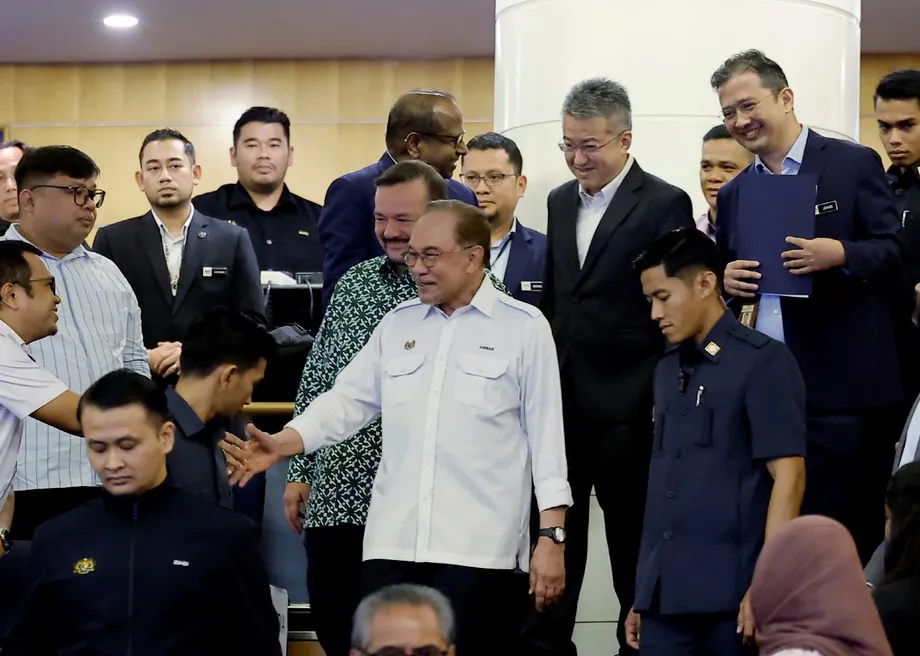
Speaking at the Finance Ministry's monthly assembly in Putrajaya, Anwar said the government must continue paying inherited debts while limiting new borrowing. The remaining 1MDB commitments include RM5 billion in principal on government guaranteed Islamic medium term notes that mature in 2039.
The Finance Ministry puts total 1MDB obligations, covering payments already made and commitments still outstanding, at RM51.4 billion. It says RM42.5 billion has been paid and RM31.3 billion recovered in funds and assets. After subtracting those recoveries from total obligations, the potential net cost to the government is RM20.1 billion.
Anwar, who is also finance minister, directly challenged the claim that the debt had disappeared:
Some say all 1MDB debts have been paid. I don't know what book they read that from, but it is not true. Our debts, including the interest, must be paid.
The figures describe different parts of the same financial problem. RM8.9 billion is the amount still scheduled for payment. RM20.1 billion is the estimated cost across the full account after recovered money and assets are deducted, assuming no further recoveries.
For public finances, that means Malaysia is dealing with both a payment schedule stretching into 2039 and a substantial cost from commitments it has already met.
How the RM51.4 billion account works
Deputy Finance Minister Liew Chin Tong set out the figures in Parliament in response to Stampin MP Chong Chieng Jen, who asked how much the federal government had assumed, paid and recovered from 1MDB.
The RM42.5 billion already paid includes principal repayments, interest, legal fees, operational costs and other commitments. Principal means the original sum borrowed; interest is the charge for borrowing it. Legal and operational costs add expenses beyond the loan itself.
The ministry's calculation can be broken into four parts:
- RM42.5 billion has already been paid towards 1MDB commitments.
- RM8.9 billion remains payable, bringing total obligations to RM51.4 billion.
- RM31.3 billion has been recovered in funds and assets.
- RM51.4 billion minus RM31.3 billion leaves an estimated net cost of RM20.1 billion.
Liew's parliamentary explanation also contained a reference to RM21 billion remaining, while the ministry's detailed calculation and Liew's stated net estimate were RM20.1 billion. The published figures of RM51.4 billion in obligations and RM31.3 billion in recoveries produce RM20.1 billion.
RM42.5 billion represents about 83% of the stated total commitments, leaving about 17% still to be paid. Recoveries of RM31.3 billion cover about 61% of that total, leaving roughly 39% as the potential net cost.
Why interest remains a substantial bill
The remaining RM8.9 billion relates to government guaranteed sukuk, or Islamic financing instruments. A government guarantee means the government stands behind the payment commitments.
Liew told Parliament in July that these obligations comprise RM5 billion in principal and RM3.9 billion in interest, with maturity in 2039. Interest therefore accounts for about 44% of the remaining commitments. The maturity date marks when the principal falls due, while the financing also carries payments over its remaining life.
Anwar's warning centres on this continuing obligation. Malaysia must budget for payments that remain due even as it tries to reduce its need for new borrowing and finance current services and development.
What the payment timeline shows
Parliamentary answers and ministerial statements provide several checkpoints for the debt account. They also show that the same headline totals have appeared at different reporting dates.
- Since 2017: RM18.7 billion has been spent from annual operating and development budget allocations to meet 1MDB obligations, according to Liew.
- March 13, 2023: Deputy Finance Minister Ahmad Maslan said RM43.8 billion had been paid and RM9.7 billion remained outstanding.
- June 30, 2026: Liew's parliamentary figures put payments at RM42.5 billion and recovered funds and assets at RM31.3 billion.
- July 2026: Liew detailed RM8.9 billion in remaining sukuk commitments, including RM5 billion in principal and RM3.9 billion in interest.
- August 31, 2026: A subsequent written Finance Ministry reply again put payments at RM42.5 billion.
- October 19, 2026: Anwar rejected claims that all 1MDB debt had been settled.
- 2039: The remaining government guaranteed Islamic medium term notes mature.
The RM18.7 billion drawn from annual budgets shows how the obligations have reached ordinary government spending decisions. Operating budgets fund recurring expenses, while development budgets fund projects and investment. Money assigned to 1MDB payments reduces the room available for other uses unless the government raises revenue, borrows or adjusts spending elsewhere.
Earlier official figures need reconciliation
The Finance Ministry's March 2023 statement records Ahmad Maslan telling the Dewan Rakyat that RM43.8 billion had been paid, compared with RM42.5 billion in the 2026 parliamentary figures. It also records RM33.6 billion in recovered 1MDB assets, compared with the later RM31.3 billion recovery total.
Ahmad said the RM43.8 billion in payments came through RM24.5 billion in shareholder advances and RM19.3 billion from a trust account. Shareholder advances are money supplied by an owner to a company; a trust account holds funds for a designated purpose. He also cited RM8 billion from a settlement with Abu Dhabi's International Petroleum Investment Company (IPIC).
The 2023 statement put outstanding commitments at RM9.7 billion, comprising RM5 billion in principal and RM4.7 billion in interest. It separately described the principal loan total as RM33.6 billion and interest as RM14.9 billion.
The ministry has not explained here how the payment and recovery totals in its 2023 statement reconcile with the 2026 figures. A consistent account showing the scope and treatment of each total would help readers track payments, recoveries and remaining costs across the years.
Asset recovery continues, with a shortfall expected
The Finance Ministry says legal action and international cooperation will continue to maximise recovery of misappropriated 1MDB assets. Liew described criminal prosecutions, civil suits against people linked to the scandal and legal action involving international financial institutions.
Liew nevertheless said future recoveries were unlikely to cover the remaining net liabilities because a substantial share of recoveries had already been realised. The government's position is therefore to pursue more money while preparing to carry much of the estimated RM20.1 billion cost.
Each additional recovery could reduce that cost. The timing also matters: financing payments must be made when due, while legal proceedings and asset recovery can take time.
Liew identified costs beyond the direct bill, including damage to Malaysia's reputation and the loss of opportunities to use the money elsewhere. For households, the connection is through public budgets: funds used to meet old obligations are funds that cannot simultaneously pay for another service or project.
Borrowing less while paying inherited debts
Anwar said controlling new borrowing and meeting existing commitments must happen together. A government can reduce the amount it borrows in a year while its total debt still rises, because the new borrowing adds to what it already owes.
At a July 20 meeting with the Universiti Islam Selangor community in Kajang, Anwar said debt was decreasing while the total amount had increased because interest rates were high. In October, he acknowledged that national debt could rise as the government met other debt payments and current economic needs. Those remarks were not accompanied by a common numerical measure showing the change.
Anwar also identified past obligations involving the Federal Land Development Authority (Felda) and Tabung Haji. He linked Felda's losses to later decisions, including the transformation of Felda Global Ventures Holdings Bhd, and said the government was paying RM980 million annually to service past financial obligations.
At the Finance Ministry assembly, Anwar described the principle he wanted applied to borrowing:
Responsible government means you only borrow what you have to in order to manage the economy, but you always plan ahead. You should not burden the future generation to pay for the excesses of the present.
The government's stated approach is to moderate debt accumulation, rebuild financial reserves and bring more private capital into development, while maintaining funding for essential services.
Governance reforms accompany the repayments
Anwar linked debt management to stronger governance and political commitment. He cited the Public Finance and Fiscal Responsibility Act as a way to strengthen parliamentary oversight, and the Parliamentary Services Act as part of efforts to limit executive power and strengthen democratic accountability.
Liew also cited amendments to the Audit Act and work on legislation governing government owned companies. Together, the measures described by the two ministers address how public money is managed, checked and scrutinised.
The practical issue is who can question financial decisions, examine accounts and require ministers or public bodies to explain their actions. Chong's parliamentary questions illustrate that process: they sought separate figures for obligations assumed, payments made and assets recovered.
In Kajang, Anwar framed the problem as one of integrity rather than ethnicity. Speaking as prime minister and finance minister, he said:
Our problem is not Chinese, Indian or Malay. The problem is one of integrity, corruption and failing to uphold values.
Budget promises sit alongside the debt bill
Anwar's October remarks also connected fiscal management with the 2027 budget, which he said he tabled in the Dewan Rakyat on October 9. He acknowledged that it could not meet every demand but said the government had sought to address the needs of different groups.
He pointed to registrations for Bandar Madani homes in Sungai Besi and a special RM1,000 aid payment for taxi drivers. Those initiatives sit alongside the government's continuing responsibility to service inherited commitments.
The immediate financial task is concrete: meet the remaining RM8.9 billion payment schedule, pursue further asset recovery and account for the public money already spent. The longer budget task is to fund present needs while controlling the debts passed to future taxpayers.
Key Points
- Anwar rejected claims on October 19, 2026, that all 1MDB debts had been paid.
- The Finance Ministry puts total obligations at RM51.4 billion, including RM42.5 billion already paid.
- RM8.9 billion remains payable, comprising RM5 billion in principal and RM3.9 billion in interest, with maturity in 2039.
- Recoveries of RM31.3 billion leave an estimated net cost of RM20.1 billion without further recoveries.
- RM18.7 billion has come from annual operating and development budget allocations since 2017.
- Earlier official payment and recovery totals require reconciliation with the 2026 figures.
- Legal recovery efforts continue, although Liew expects a substantial financial shortfall to remain.