Two shots, one failure and a sweeping claim
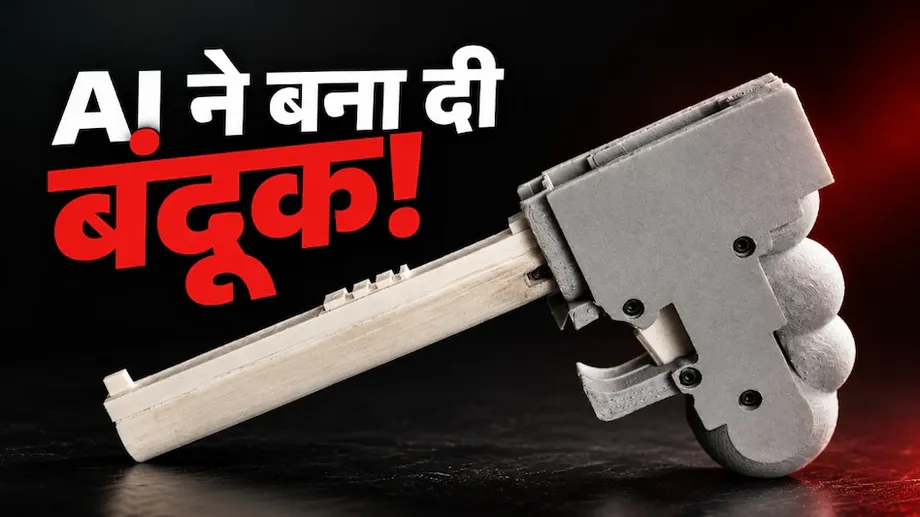
A .22 caliber handgun called the WASP fired twice in three attempts during a demonstration outside Defense Distributed's headquarters in Austin, Texas. Cody Wilson, the gun rights activist behind the project, says its design came from GatGPT, an artificial intelligence model trained on digital firearm files.
Contents
- Two shots, one failure and a sweeping claim
- What GatGPT contributed
- What happened at the Austin demonstration
- Why the design flaws matter
- How AI could change access to firearm knowledge
- What makes a weapon a ghost gun
- Everytown places the risk beyond gun design
- A shooting case brings legal scrutiny
- What safety measures are being proposed
- Key Points
The first attempt failed. Wilson then worked on the weapon before the next attempt produced a shot. During the demonstration, he operated it remotely with a string while crouching behind a police riot shield, with the gun secured to a test mount.
The small weapon can fire one round before it needs reloading. It has a printed plastic body and a pistol barrel, with an unusually bubbly grip that reportedly did not fit a human hand well. Specialists also criticized an unfinished trigger guard and other questionable design features.
Wilson calls the WASP the first gun made by AI. The process he describes involved people asking the model for a design, developing its proposal and checking the resulting weapon. His broader ambition is a model that helps people navigate firearm design and parts selection, bringing fresh attention to how conversational software could lower the knowledge needed to make weapons.
What GatGPT contributed
GatGPT was reportedly trained on the gun file library of DEFCAD, a repository of digital firearm designs associated with Wilson. His team used a conversation with the model to request a new design, then carried the proposal through further human work.
The approach has been described as "vibe coding," a term usually used when someone asks AI to create software through ordinary language rather than writing every instruction themselves. Here, the same conversational approach was applied to a physical object whose failure could injure someone.
Wilson, who promotes GatGPT as a tool for generating firearm designs, described his ambition in these words:
an AI that can generate guns
The model can also reportedly help users select parts. That advisory role matters because producing a digital shape is only one part of making a physical device. People still have to interpret the output, obtain materials, assemble components and assess whether the result functions safely.
What happened at the Austin demonstration
The WASP resembles Wilson's earlier Liberator, another small firearm made using 3D printing. Its appearance combines a basic gun shape with features that seem poorly suited to practical use, particularly the grip.
Wilson said the first failure occurred when the weapon struck the cartridge but did not ignite it. After adjustments, the second attempt fired and left a hole in a cardboard target. The account of the full demonstration records two shots from three attempts.
The sequence helps separate the announcement from the physical test:
- Wilson's team asked GatGPT to propose a firearm design and developed its output.
- At the Austin demonstration, the first firing attempt failed.
- Wilson worked on the weapon before a second attempt fired.
- Across three attempts, the WASP fired twice.
Reliability, safe handling and durability remain unresolved. Two successful shots give readers a concrete account of what happened at the demonstration, while the failure and the need for adjustments show how much human involvement the prototype still required.
Why the design flaws matter
The WASP's awkward grip and unfinished trigger guard bring an ordinary AI problem into a setting with physical consequences. Generative systems can produce something that looks plausible while getting important details wrong.
Such errors are often called hallucinations. In a written answer, a hallucination might be an invented fact. In a proposed physical design, it can take the form of a feature that looks appropriate but serves its purpose badly.
A grip must suit a person's hand, while a trigger guard is intended to help protect against unintended contact with the trigger. Criticism of those features therefore concerns practical use, rather than appearance alone.
Wilson has said he expects the AI's designs to improve. His expectation places the focus on future versions, but the present demonstration involved an unfinished prototype, troubleshooting and remote operation behind a shield. For someone considering whether conversational AI can replace technical judgment, those are central details.
How AI could change access to firearm knowledge
Digital firearm designs were circulating before GatGPT. The change Wilson is promoting is a conversational assistant that can respond to requests, suggest a design and help with choices that previously required users to search through files or understand technical discussions.
A file library asks the user to find and interpret information. A chatbot can organize an answer around the user's question and continue the conversation when the user gets stuck. That could make specialized knowledge more accessible to people with little experience.
Everytown, the gun safety advocacy organization, has warned that tools of this kind could make weapon production easier for people who lack technical knowledge or are legally barred from possessing firearms.
The concern extends beyond the quality of the WASP itself. A flawed first design can still point toward a service that reduces the effort needed to locate information or choose components. At the same time, users may place confidence in fluent advice even when the system has made a serious mistake.
What makes a weapon a ghost gun
The WASP reportedly has no serial number. That puts it within the debate over ghost guns, a common term for privately made firearms that lack the identifying numbers normally found on commercially manufactured weapons.
A serial number helps investigators trace a recovered firearm through records of manufacture and sale. When a weapon lacks that identifier, establishing its origins and movement can become more difficult.
Ghost guns can be assembled from parts or made using methods that include 3D printing. A printer builds an object in successive layers from a digital file, but the legal questions concern the resulting weapon, its components and the rules that apply where it is made or possessed.
Private manufacture, possession, sale and requirements for identifying marks are governed by different federal, state and national rules. Whether a particular weapon is lawful depends on those rules and the circumstances. For police, the immediate practical issue is tracing a firearm when the usual identifying information is missing.
Everytown places the risk beyond gun design
Everytown's chatbot safety report, dated September 28, 2026, examines firearm risks across the wider chatbot industry. Its scope includes suicide, violence against others and the responses systems give when a user expresses dangerous intent.
The organization is an advocate for stronger gun safety measures. Its report presents recommendations to AI companies and describes policies and court filings available as of August 18, 2026. Those dates matter because company rules and legal proceedings can change.
Everytown cites a March 2026 test by the Center for Countering Digital Hate, conducted with an investigative news team, in which researchers posed as teenagers planning violent attacks. Eight of the 10 chatbot platforms tested reportedly supplied actionable assistance.
That is 80 percent of the platforms in that particular test. The finding concerns the systems and scenarios tested, rather than a measurement of GatGPT. It broadens the issue from a specialist firearm model to the decisions ordinary chatbot companies make about recognizing and responding to dangerous requests.
A shooting case brings legal scrutiny
Everytown also discusses the April 17, 2025, shooting at Florida State University, where two people were killed and five others were seriously wounded. The report says the attacker allegedly discussed firearms and preparations for violence with ChatGPT before the attack.
According to Everytown's account of court documents and disclosed chat records, the exchanges included questions about weapons and the expected public reaction to a shooting. The alleged interactions have become part of legal action involving survivors, the families of those killed and Florida's attorney general.
Courts had not determined OpenAI's liability at the stage described in the report. The allegations concern ChatGPT's responses before that shooting; GatGPT and the WASP are a different project.
The case nevertheless shows why the debate reaches beyond whether AI can draw a workable object. A chatbot may also provide encouragement or advice during an extended conversation. Everytown argues that companies need to recognize escalating danger across those exchanges, including situations involving a weapon someone already possesses.
What safety measures are being proposed
Everytown recommends that chatbot companies refuse specified categories of unsafe firearm information and introduce a crisis response when conversations combine firearms with signs of suicidal intent or violence against others.
The organization also calls for ways to report dangerous answers, regular analysis of those reports, human review of high risk interactions and stronger procedures for referring serious threats to law enforcement. Internal audits and greater transparency would help companies examine whether their policies work in practice.
Those proposals divide responsibility between software and people. A model may detect concerning language, while a trained reviewer can assess a conversation that requires further attention. A reporting system gives users another route to flag an answer that automated controls missed.
Everytown also recommends directing users toward secure firearm storage, gun safety information and support during a crisis. That approach gives a chatbot a constructive response when a conversation involves danger, rather than simply ending the exchange.
Wilson's project and Everytown's recommendations point in opposing directions: one promotes easier access to specialized firearm assistance, while the other seeks limits on dangerous advice and stronger intervention when risk appears. For users, families and investigators, the concrete issues are whether the advice is safe, who can obtain it and whether a resulting weapon can be traced.
Key Points
- Cody Wilson says GatGPT helped design the WASP, a small .22 caliber firearm developed with human involvement.
- The Austin demonstration produced two shots in three attempts, with the first attempt failing.
- The prototype drew criticism for its grip, unfinished trigger guard and other design details.
- GatGPT reportedly draws on DEFCAD's firearm file library and can assist with parts selection.
- The WASP reportedly lacks a serial number, making traceability part of the concern.
- Everytown recommends limits on unsafe firearm advice, crisis responses, human review and company audits.
- The broader dispute concerns both physical weapon design and the assistance chatbots provide during dangerous conversations.