Samarkand announcement opens a new payment option
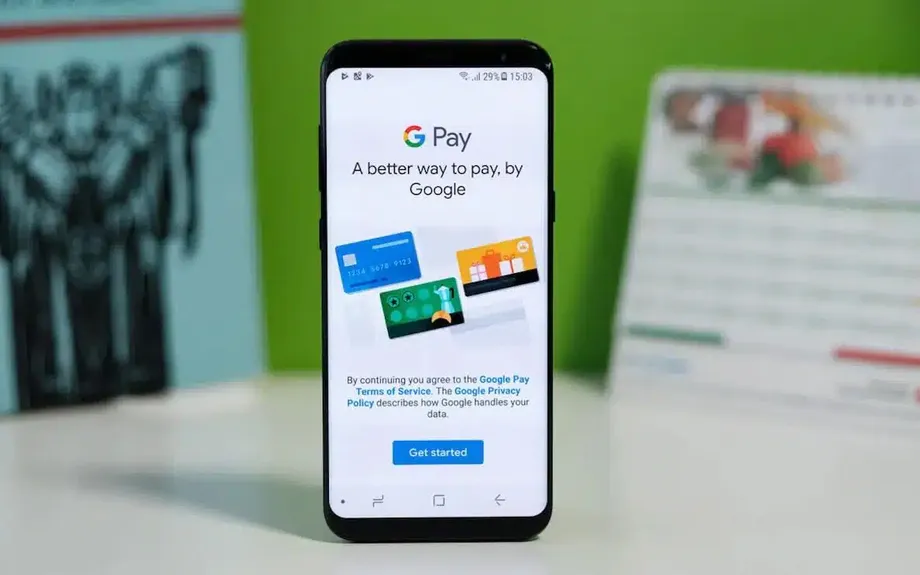
Google announced the launch of Google Pay in Uzbekistan on October 19, 2026, following changes to the country's personal data law and months of work by banks and payment networks. Customers will need a supported bank card and compatible device to use the service, while Google said its Wallet app would become available to download locally in the coming weeks.
Contents
- Samarkand announcement opens a new payment option
- When can customers start using it?
- Google Wallet holds the card, Google Pay makes the payment
- Humo and Uzcard are central to wider access
- How payment information is protected
- The March law changed where data can be processed
- From tourism negotiations to the October announcement
- A payment service within a wider business partnership
- Key Points
Marcin Krasuski, Google Cloud's director of government affairs and public policy for Central and Eastern Europe, made the announcement during a Digital Technologies panel in Samarkand. Uzbekistan's Ministry of Digital Technologies published a video of his remarks.
The event formed part of the C5+1 meetings between the five Central Asian countries and the United States. Government representatives and technology companies attended the business programme, placing the payment announcement within a wider discussion about digital services and economic cooperation.
For shoppers, the practical change is straightforward: an eligible bank card can be added to Google Wallet and used through Google Pay, including by holding a compatible phone near a terminal that accepts contactless payments. Supported purchases in apps and on websites are also part of the service.
The rollout has several moving parts. Google provides the wallet and payment technology, banks enable their cards, and shops need suitable payment terminals. The announcement starts a new stage for Uzbekistan's payment market, with access for individual customers depending on those pieces working together.
When can customers start using it?
Google described October 19 as the launch date, while saying Google Wallet would become available in Uzbekistan's Google Play store in the following weeks. The company gave no exact download date or complete list of banks and cards supported at launch.
Each bank issuing cards must arrange support for its own products. Customers will therefore need to check whether their particular card is eligible, even after the app becomes available. Other banks can join later as their integration work is completed.
The Central Bank had already said commercial banks and payment systems were preparing to connect to Google Pay. For customers, the next practical milestones are local app availability and announcements from their banks identifying which cards can be added.
Google Wallet holds the card, Google Pay makes the payment
Google Wallet is the app where users keep supported payment cards and other digital items. Google Pay is the payment service used to make purchases. The two names describe connected parts of the same shopping experience.
Users with compatible Android phones or devices running Wear OS, Google's operating system for watches, will be able to add eligible cards from participating banks and payment networks. Contactless purchases require NFC, a technology that lets a device exchange information with a nearby payment terminal over a very short distance.
In a shop, a customer with a supported card added to Wallet can bring a compatible, unlocked phone close to a contactless terminal to pay. Online and app payments depend on whether the seller supports Google Pay.
Google Wallet can also hold loyalty cards, tickets and boarding passes. Those functions give it a role beyond banking: a customer may use the same app to keep a payment card and a travel pass, where the relevant provider supports digital versions.
Humo and Uzcard are central to wider access
Uzbekistan's Central Bank wants cards from the national payment systems Humo and Uzcard to work with international digital wallets alongside Visa and Mastercard. That makes integration with domestic payment networks an important part of extending access to more customers.
Jamshid Usmanov, head of the Central Bank's Payment Systems Development Department, said in late July that Apple Pay and Google Pay could arrive in the following months. He said the regulator, commercial banks, Humo and Uzcard had begun negotiations with Apple and Google, as well as technical integration, after the personal data legislation changed.
Usmanov also said banks were working on card tokenization, the process that allows a digital substitute to represent a payment card. Connecting a wallet involves more than making an app available: banks and payment systems must be able to recognise and process transactions made through that substitute.
Support for Humo and Uzcard is therefore a concrete part of the Central Bank's programme. Customers holding those cards will need confirmation from their issuing bank that the relevant card can be added.
How payment information is protected
Google says its payment service uses multiple layers of protection and encryption for financial information. Encryption turns readable information into coded data that authorised systems can process.
For contactless transactions, Google Pay uses tokenization and a virtual account number instead of sharing the customer's actual card number with the merchant. In simple terms, the payment uses a digital stand-in for the card number.
That arrangement changes what information passes to the shop during a purchase. The merchant receives the payment credentials needed for the transaction, while the customer's actual card number is kept out of that exchange.
Tokenization also explains why the banks' technical work matters. The wallet, issuing bank and payment network need compatible systems so a payment made with a virtual number can be connected to the correct account and authorised.
The March law changed where data can be processed
President Shavkat Mirziyoyev signed Law No. ZRU-1125 on March 26, 2026, amending Uzbekistan's Law on Personal Data. The changes removed the blanket requirement to keep all personal data on servers inside the country.
Biometric and genetic data, along with telecommunications subscriber data, remain subject to local storage requirements. Other types of personal data may be stored and processed abroad when the required protection conditions are met.
For international digital services, the location of data processing is a practical operating issue. A platform using computing infrastructure in several countries needs a legal route to process relevant customer information across borders. Uzbekistan's revised rules opened that route while retaining local storage requirements for the specified categories.
Krasuski linked Google's launch to Uzbekistan's approach to digital regulation. Mirziyoyev had also connected the planned legal changes to the arrival of Apple Pay and Google Pay during meetings with American companies, investment funds and financial institutions in November 2025.
The president's plans extended beyond payments to a digital academy and a network of startup hubs. The wallet launch is one specific service emerging from that wider effort to make the country's rules workable for international technology businesses.
From tourism negotiations to the October announcement
Uzbekistan's work on international payment services began before the latest legislative changes. In October 2024, the government directed the Tourism Committee, Central Bank and Ministry of Digital Technologies to negotiate connections with Alipay, Apple Pay, Google Pay, PayPal and Unipay.
The instruction was part of measures to make better use of the country's tourism potential. It also called for proposals to review national legal requirements. The sequence connects the initial effort to improve payment access with the later changes to data rules and banking technology.
- October 2024: The government tasked three public bodies with negotiations involving five international payment services.
- November 2025: Mirziyoyev discussed updates to personal data legislation during meetings with American businesses and financial institutions.
- January 20, 2026: The Legislative Chamber approved amendments to the Law on Personal Data.
- February 2026: The Senate approved the legislation.
- March 26, 2026: Mirziyoyev signed Law No. ZRU-1125.
- Late July 2026: Usmanov described negotiations, technical integration and banks' work on tokenization.
- October 19, 2026: Google announced the Uzbekistan launch during the Samarkand meetings.
Google Pay's arrival gives those negotiations a specific result. The earlier government programme also named several other services, each requiring its own arrangements with payment providers and regulators.
A payment service within a wider business partnership
The Samarkand C5+1 gathering brought together foreign ministers from Central Asia and the United States, with US Secretary of State Marco Rubio leading the American side. A delegation representing more than 100 American companies also participated in the events.
US Ambassador to Uzbekistan Jonathan Henick welcomed Google Wallet and Google Pay, linking their arrival to stronger economic ties and opportunities for businesses in both countries. Dmitry Stiran, who leads Google Pay and Wallet partnerships across Europe, the Middle East and Africa, said the launch would help advance Uzbekistan's digital transition through secure digital payments.
Uzbekistan has a stated goal of bringing the share of cashless payments to 75% by 2030. Expressed simply, that target is three quarters of payments. Google Pay adds another way for customers to pay without cash as banks and merchants expand their digital services.
For a participating retailer, the immediate benefit is another payment option at a suitable terminal or supported online checkout. For an eligible customer, it is the ability to use a card through a phone or watch instead of taking out the physical card.
The next stage is operational: Google Wallet must become available locally, banks must identify supported cards, and their integrations must let customers complete purchases. Those steps will determine how widely the Samarkand announcement translates into everyday use.
Key Points
- Google announced Google Pay's launch in Uzbekistan on October 19, 2026, during C5+1 events in Samarkand.
- Google said Wallet would become available to download locally in the following weeks.
- Access depends on a supported card, a participating bank and a compatible device. Contactless payments require NFC.
- The Central Bank is seeking support for Humo and Uzcard alongside Visa and Mastercard.
- A law signed on March 26 permits some personal data to be processed abroad under protection requirements, while specified categories must remain stored locally.
- Uzbekistan aims for cashless payments to reach a 75% share by 2030.