Epoxy coated steel pipes show the highest detection rates
Toxic solvents were detected in hundreds of laboratory tests of water supply products in South Korea between 2022 and 2025, exposing a gap in rules governing materials that touch drinking water. Among 45 steel pipes coated with epoxy resin, xylene was detected in 44, ethylbenzene in 41 and toluene in 33. Current hygiene and safety standards for water supply materials set no leaching limits for those three chemicals.
Contents
- Epoxy coated steel pipes show the highest detection rates
- What the 587 product tests found
- How solvents can remain inside a protective coating
- A regulatory gap flagged in 2022
- What the proposed limits would mean
- Earlier epoxy studies explain why application matters
- Plastic connectors reveal another route into water
- Why flushing after contamination can take more work
- What changes would address the Korean findings
- Key Points
The findings appear in a final study on monitoring and managing unregulated hazardous substances, obtained by Democratic Party lawmaker Lee Yong-woo's office. Korea Conformity Laboratories and other researchers carried out the work and submitted the report to the Korea Water Technology Certification Institute in December 2025.
Across 587 products, toluene was detected in 174, or 29.6%; ethylbenzene in 102, or 17.4%; and xylene in 120, or 20.4%. The products included pipes, valves, pumps, coatings and faucets submitted to testing institutions for certification, inspection or quality testing.
The researchers proposed limits on how much of each solvent may pass from epoxy resin materials into test water. They also recommended beginning with epoxy coated water pipes showing high releases and helping manufacturers move to paints that use less solvent or none.
For households, the immediate issue concerns the products through which water travels. The Korean measurements came from laboratory tests that placed materials in contact with water under specified conditions. Household exposure depends on conditions in the installed system, including water flow and how long water stays against a surface. Measuring those conditions requires testing water in actual use.
What the 587 product tests found
Toluene appeared across several categories rather than in a single type of plumbing product. Detection rates reached 46% for metal pipes, 36% for valves, 34% for pumps and 30% for paints and coatings. Researchers also detected it in 29% of nonmetal pipes and 26% of faucets.
The study selected products containing materials suitable for analysis of volatile organic compounds. These are chemicals that can readily move into the air; some can also dissolve in water. Toluene, ethylbenzene and xylene are organic solvents used in industrial processes, including making and applying coatings.
The 587 products came through testing institutions, so the percentages describe that group of products. A survey designed to represent all products sold or installed across South Korea would require a different sampling approach.
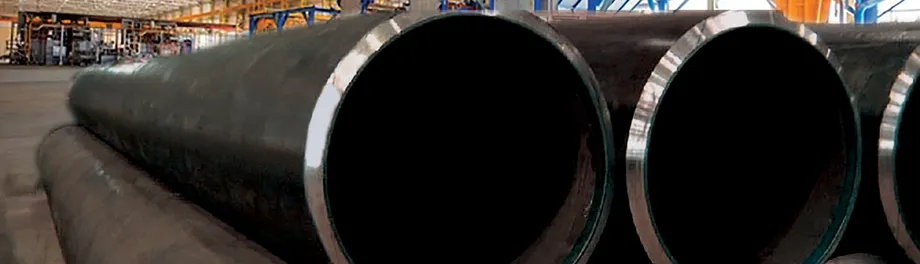
Epoxy coated steel pipes stood out within the tested group. Their detection rates were 73.3% for toluene, 91.1% for ethylbenzene and 97.8% for xylene. Compared with the respective rates across all 587 products, those percentages were about 2.5 times, 5.2 times and 4.8 times as high.
Detection frequency answers whether a chemical appeared in a test. The amount released is a separate measurement, needed to compare a product with a numerical safety limit. Researchers cited both repeated detections and high releases from some products in recommending controls at the materials stage.
How solvents can remain inside a protective coating
Epoxy coatings protect steel pipes against corrosion by putting a barrier between the metal and water. The Korean researchers identified residual solvent within that barrier as a likely source of the chemicals found in the tests.
Solvents used to make or apply paint can remain inside the coating as it hardens. If the outside hardens before the interior, some solvent can become trapped. A thick coating or one given too little time to cure can also retain solvent that later passes into water.
Curing is the process through which a coating develops its hardened, stable structure. Its duration matters because a surface that feels hard can still contain material inside that has not finished curing.
The US Environmental Protection Agency's Permeation and Leaching paper describes earlier research connecting epoxy performance with curing time. Longer curing produced more stable linings, and the document recommends extending curing and soaking newly lined pipes before putting them into service.
That evidence gives manufacturers a concrete point of intervention: the formulation, thickness and curing of a coating can affect what subsequently enters water. The Korean proposal combines control of the finished product with support for changing the paints used to make it.
A regulatory gap flagged in 2022
South Korea's Board of Audit and Inspection raised the need for standards for the three solvents in 2022. The Environment Ministry, now the Ministry of Climate, Energy and Environment, acknowledged their absence in its 2025 performance management implementation plan.
The ministry said it had been pursuing an amendment to the Enforcement Decree of the Water Supply Act since February 2024 in response to the audit findings. The sequence places the latest research within a regulatory process that had already been under way for several years.
- 2022: The Board of Audit and Inspection flagged the need for standards covering the three solvents.
- 2022 to 2025: Researchers examined 587 water supply products submitted to testing institutions.
- February 2024: The ministry began pursuing an amendment to the Water Supply Act's Enforcement Decree.
- 2025: The ministry's performance plan acknowledged that the material safety standards lacked limits for the chemicals.
- December 2025: The final monitoring report was submitted to the Korea Water Technology Certification Institute.
Lee, a member of the National Assembly's Climate, Energy, Environment and Labor Committee, called for an investigation into the causes of detection. He also urged the ministry to add the substances to hygiene and safety standards and establish the related official testing methods promptly.
No date was given for adoption of the proposed limits or completion of those testing methods. Both matter to enforcement: a numerical ceiling tells manufacturers how much is permitted, while a common method tells laboratories how to measure it.
What the proposed limits would mean
The Korean researchers proposed three leaching limits for water supply materials made with epoxy resin: 0.07 milligrams per litre for toluene, 0.03 milligrams per litre for ethylbenzene and 0.05 milligrams per litre for xylene.
Each proposed ceiling is one tenth of the corresponding drinking water quality standard. Expressed in smaller units, the proposed limits are 70 micrograms per litre for toluene, 30 for ethylbenzene and 50 for xylene. A microgram is one thousandth of a milligram.
A product leaching limit controls the contribution from a material tested under defined conditions. A drinking water standard applies to the water itself. Setting the product limit lower leaves room for contributions from other components and sources along the water supply route.
The EPA paper describes a similar approach under the version of ANSI/NSF Standard 61 it discusses. Its single product allowable concentration is generally one tenth of the applicable regulatory or guidance limit. The standard sets minimum health requirements for contaminants that drinking water acquires from components, materials and products.
Certification involves more than placing a pipe in water and taking one sample. The EPA document describes review of chemical formulations, product capacity and maximum intended operating temperature. Testing conditions can vary with the surface area touching the water, exposure time, cleaning, soaking and sampling schedule.
Those details are especially relevant to epoxy coatings because water contact and curing affect chemical release. A usable Korean rule would need to pair the proposed concentrations with repeatable test conditions.
Earlier epoxy studies explain why application matters
The EPA paper reviews experiments on epoxy coated steel panels in which solvents accounted for 51% of the material released from the coating. The identified solvents included methyl isobutyl ketone and different forms of xylene.
Using results from laboratory experiments lasting 30 days, researchers predicted initial solvent release rates for storage tanks of 40 to 187 micrograms per litre per day. After 30 days, the predicted rates fell to 8 to 37 micrograms per litre per day. The figures describe rates of release over time.
Field observations supported the concern about residual solvents: methyl isobutyl ketone and xylenes were detected in water leaving two of three storage tanks monitored a month after epoxy application.
Experiments by the City of Calgary also showed large differences between epoxy products. Water held for 72 hours against five epoxy resins contained combined BTEX concentrations ranging from 0.2 to 48.0 milligrams per litre. BTEX is the collective name for benzene, toluene, ethylbenzene and xylenes.
These older studies involved their own coatings, preparation methods and water contact conditions. Together, they explain why regulators examine both the material recipe and the way a lining is applied. The EPA review found that releases of organic additives generally declined over time, making preparation before service an important part of controlling initial releases.
Plastic connectors reveal another route into water
A separate study published on August 1, 2024 examined seven plastic water supply connectors, including products used for faucets, appliances and washing machines. The authors, Kristofer P. Isaacson, Halley Le, Akshat Verma, Jeffrey P. Youngblood, Amisha D. Shah and Andrew J. Whelton, studied both chemical release from new products and what happened after exposure to contaminated water.
Their water connector study found that new PVC tubing released phenol at concentrations of 1.3 to 6.4 milligrams per litre. Clear PVC exceeded the US EPA's health advisory of 6 milligrams per litre for exposure lasting one day during the first exposure period.
The connectors were described as certified under NSF/ANSI Standard 61. The researchers also noted previous studies identifying toluene, ethylbenzene and xylenes among chemicals released from plastic pipes.
Flexible connectors sit close to where people draw water, such as beneath a kitchen faucet or beside a refrigerator. Their material formulations differ from those of rigid pipes, so examining the main water pipe alone leaves part of the route to the tap unexamined.
Why flushing after contamination can take more work
The 2024 connector study also examined a different situation: contaminants entering plumbing from water affected by hydrocarbons. Researchers exposed the connectors for 24 hours to contaminated water containing toluene at 6,620 micrograms per litre, ethylbenzene at 292 and total xylenes at 2,513.
The materials took up more than 90% of the hydrocarbon contaminants during the initial exposure. Researchers then drained and rinsed the connectors and filled them with fresh test water for three successive periods of 72 hours. Chemicals moved back out of the plastics into that water, sometimes at concentrations above health limits.
Isaacson and his fellow researchers described the result in the study's abstract:
The majority of sorbed mass remained in the plastics at the end of the decontamination effort, indicating the products posed continued leaching risks.
Here, sorption means that a material takes up chemicals from the water touching it. Fresh water can subsequently draw some of those chemicals back out. The finding matters for recovery after incidents such as chemical spills or wildfires, when replacing contaminated water may leave chemicals stored within plumbing materials.
What changes would address the Korean findings
The Korean researchers recommended beginning phased controls with epoxy coated water pipes showing high leaching levels. They also called for support to help manufacturers switch to coatings that use smaller amounts of solvent or none.
Researchers cited overseas toxicity assessments describing potential effects on the liver, kidneys and nervous system, depending on exposure route and amount. For water suppliers and regulators, the practical task is to measure chemical release consistently and control products before they enter the supply system.
The Korean monitoring, the EPA review and the connector experiments identify different points along that task: residual chemicals from manufacturing, coating application and curing, and chemicals absorbed during a contamination incident. Each requires attention to the material touching the water, alongside testing of the water delivered to consumers.
Key Points
- Testing of 587 South Korean water supply products detected toluene in 174, ethylbenzene in 102 and xylene in 120.
- Among 45 epoxy coated steel pipes, xylene appeared in 44 and ethylbenzene in 41.
- Current material hygiene and safety standards lack leaching limits for the three solvents.
- Researchers proposed limits equal to one tenth of the corresponding drinking water standards and recommended starting controls with epoxy coated pipes showing high releases.
- The Korean results came from laboratory product tests. Household exposure requires measurements reflecting actual water use.
- Separate research highlights the importance of curing coatings properly and assessing plastic connectors after chemical contamination.