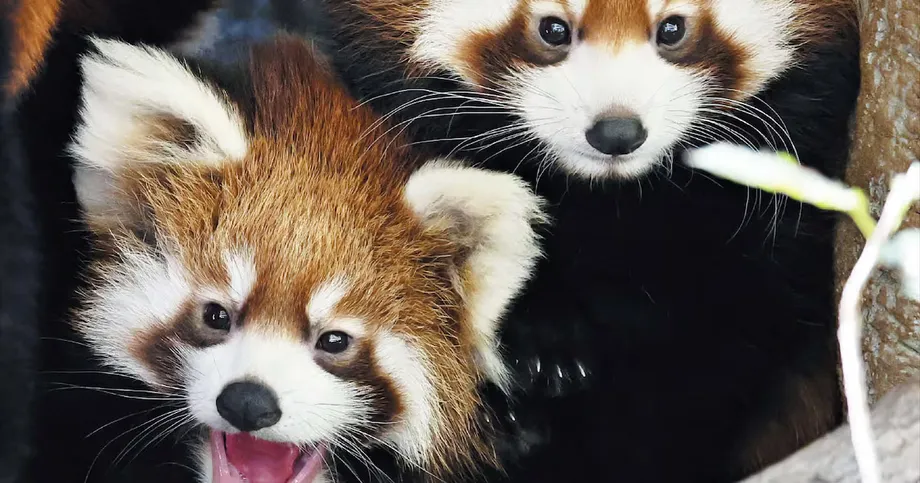
Maru and Marong emerge after months of careful care
Maru and Marong, the first red panda twins born through successful natural breeding in South Korea, made their public debut at Seoul Grand Park in Gwacheon, Gyeonggi Province, on October 14, 2026. Born around 10 a.m. on June 19, the male and female cubs had both grown beyond 1 kilogram and completed their required vaccinations before visitors were allowed to see them.
Contents
- Maru and Marong emerge after months of careful care
- A family brought together across borders
- Why a few days required years of preparation
- From a protected nursery to the public enclosure
- Learning to climb, with room to retreat
- A public debut without a fixed performance
- Names chosen by the public
- What the birth means for conservation
- Key Points
Their appearance followed three years of breeding efforts involving animals brought from Canada and Japan in 2023. Red pandas, also called lesser pandas, have an unusually narrow opportunity to reproduce: females are typically receptive to mating for only two or three days each year. Keepers combined close observation with quiet shelters, careful feeding and restricted access to help the parents breed and the cubs develop.
Seoul Grand Park announced the opening on October 9. By then, the twins were following their mother between indoor and outdoor spaces, learning to walk, climb trees and come back down. Their public debut came 117 days after their birth, a period during which care took priority over display.
A family brought together across borders
The twins' father, Rabi, arrived from Calgary Zoo in Canada in 2023 through the Association of Zoos and Aquariums Species Survival Plan. Their mother, Rian, came from Tama Zoo in Japan that same year alongside another male, Sei, under a red panda conservation agreement between zoo associations in South Korea and Japan. Earlier birth announcements rendered the parents' names in English as Ravi and Lian.
The international arrangements connected Seoul Grand Park's breeding work with conservation programmes beyond South Korea. The Species Survival Plan is a programme through which participating zoos coordinate the care and breeding of animal populations. In this case, the transfers gave the park the animals needed to attempt breeding locally.
Seoul Grand Park first tried pairing Rian with Sei in 2024, without success. Keepers began pairing Rabi and Rian the following year, eventually achieving the twin birth in June 2026. The sequence shows why the milestone took several years: bringing animals into the same collection was followed by patient observation and changes to the pairing.
Why a few days required years of preparation
Female red pandas' brief annual mating window made timing a central part of the work. Because the species usually lives alone, keepers also had to judge when to bring the animals together. Behaviour monitoring helped staff identify the short period when a pairing had the best chance of succeeding.
Seoul Grand Park described that process in its announcement of the successful birth:
As a result, we were able to pinpoint the breeding window, which lasts only 2-3 days a year, attempt pairing of the solitary red pandas, and achieve successful breeding.
Keepers created a quiet shelter protected from outside noise and installed modular hideouts that gave the animals choices about where to rest and breed. They also used environmental enrichment, meaning changes or features that encourage animals to explore and carry out their usual behaviours. The aim was to reduce stress while providing suitable places for the animals to spend time.
Weight management was another part of the preparation. Staff closely managed nutrition and body condition because excess weight can interfere with breeding. The successful pairing therefore depended on more than identifying the right days: the animals also needed suitable surroundings and good health when that opportunity arrived.
From a protected nursery to the public enclosure
Seoul Grand Park initially kept the twins away from visitors while they grew under their mother's care. Staff monitored behaviour through cameras around the clock, restricted access and separated nursery areas from spaces used for routine animal care. Even keeper visits were kept to a minimum to reduce disturbance.
The park's early plan was to postpone public display until the cubs had completed vaccinations and reached a stable stage of development. Young red pandas are vulnerable to illness, making protection from outside exposure a priority. Growth videos were planned for release in stages while the family remained out of public view.
By the October announcement, both cubs had received the required vaccinations and weighed more than 1 kilogram. Keepers continued checking their weight and health, while providing extra nutrition to Rian as she nursed them. The move into public view was part of a gradual expansion of their activity, with the park planning to widen access according to their health and behaviour.
The main steps in the breeding and public debut were:
- 2023: Rabi arrived from Calgary Zoo, while Rian and Sei arrived from Tama Zoo.
- 2024: An attempted pairing of Rian and Sei did not result in successful breeding.
- 2025: The park began pairing Rabi and Rian.
- June 19, 2026: The twins were born around 10 a.m.
- October 9, 2026: Seoul Grand Park announced that public viewing would begin on October 14.
- October 14, 2026: Maru and Marong made their first public appearance.
Learning to climb, with room to retreat
Maru and Marong have been extending their activity by following Rian between indoor and outdoor areas. Their early outings include walking and climbing up and down trees, with intermittent visits to the outdoor enclosure as they become familiar with new surroundings.
Keepers covered the indoor floor with pine chips and installed modular play structures at different heights. Those features give the cubs opportunities to move, climb and practise the behaviours they will use as they grow. The enclosure serves as a place for development as well as a place where visitors can see them.
Red pandas spend much of their lives above ground. Seoul Grand Park's official red panda profile describes them as skilled climbers that often stay and sleep in trees. It also describes a mainly solitary animal, active from dusk to dawn, that eats bamboo, fruits and insects.
A public debut without a fixed performance
Visitors may find the twins resting or out of sight during the day. Red pandas tend to be more active in the early morning or after 4 p.m., so the opening of public viewing does not mean the cubs will remain visible throughout visiting hours.
Yeo Yong-gu, director of Seoul Grand Park's zoo, said the animals would be allowed to move freely between indoor and outdoor spaces as part of their health management. He asked visitors to avoid tapping viewing windows, making loud noises or crowding close to the glass, all of which can cause stress for animals sensitive to noise.
The park plans to expand the scope of public viewing while observing the twins' condition and responses to their surroundings. No timetable was given for that expansion. For visitors, the practical expectation is a chance to see a growing family on the animals' own schedule, rather than continuous activity in the outdoor enclosure.
Names chosen by the public
Maru, the male cub, and Marong, the female, received their names through a social media naming contest open to the public. The selection gave each twin a name carrying a wish for its future.
Maru's name expresses the hope that he will be a precious, foremost presence bringing comfort and love to many people. Marong's name draws on the image of a full chestnut, expressing a wish that she embrace the world generously and warmly.
The naming contest gave residents a connection to the twins before their first public appearance. Their care, meanwhile, continued around the same practical tasks: feeding the nursing mother, tracking the cubs' growth and giving them space to learn new movements without unnecessary disturbance.
What the birth means for conservation
Fewer than 10,000 red pandas are estimated to remain in the wild, where habitat loss and poaching threaten their survival. The International Union for Conservation of Nature lists the species as endangered; Seoul Grand Park's official species profile describes it as critically endangered worldwide. These are different descriptions of the threat level, with endangered being the IUCN category cited in the birth announcement.
The park's profile identifies sensitivity to environmental conditions, specialised food needs, a naturally low birth rate and low population density as reasons the species is vulnerable. For an animal that breeds within such a short annual window, successful reproduction also depends on keeping adults healthy and supporting the survival of their young.
Park Jin-soon, director of Seoul Grand Park, linked the birth to the wider pressures facing wildlife when the twins' arrival was announced. He said:
We are delighted to share the news of the birth of endangered red pandas at a time when climate change and biodiversity loss pose growing threats.
Park also set out the zoo's responsibility toward the newborn animals:
We will provide meticulous care to help the cubs grow healthy while further strengthening the zoo's role in species conservation and animal welfare.
Maru and Marong's birth adds two animals to the population cared for by zoos and marks a successful breeding result for South Korea. The work now continues through their growth: monitoring health, supporting their mother and adjusting public access as the cubs become more comfortable in their surroundings. Protecting wild red pandas also requires action against the habitat loss and poaching affecting the remaining population.
Key Points
- Male Maru and female Marong debuted at Seoul Grand Park on October 14, 2026.
- Born on June 19, they are South Korea's first red panda twins produced through successful natural breeding.
- Their parents arrived from Canada and Japan in 2023, followed by several years of breeding efforts.
- Both cubs weighed more than 1 kilogram and had completed required vaccinations before public viewing began.
- The twins are learning to walk and climb while following their mother between indoor and outdoor spaces.
- Visitors are asked to remain quiet, avoid tapping windows and give the animals space.
- Fewer than 10,000 red pandas are estimated to remain in the wild, threatened by habitat loss and poaching.