Japan targets the point where genetic designs become physical material
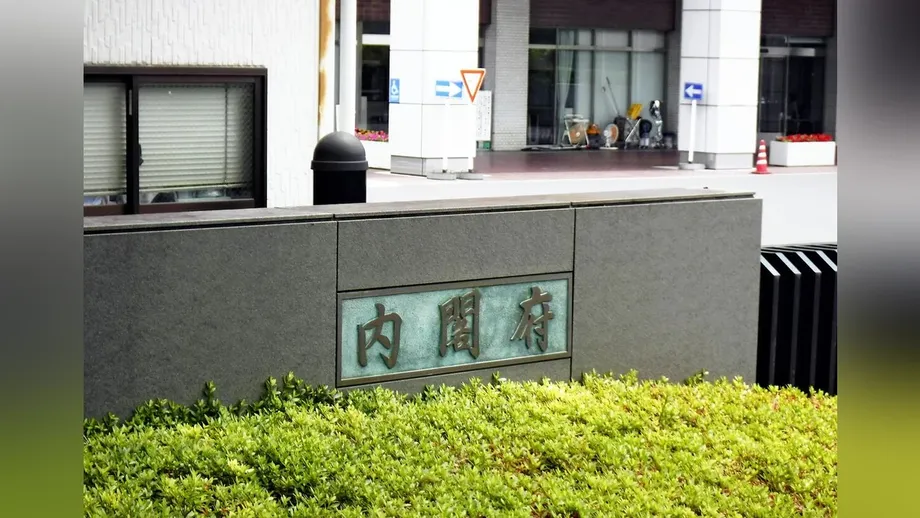
Japan's Cabinet Office plans to develop rules for companies that manufacture DNA and RNA to order, putting safety checks at a critical point between a digital genetic design and material that can be used in a laboratory. The proposal centers on checking potentially dangerous sequences and the people ordering them, as artificial intelligence makes biological design more accessible.
Contents
- Japan targets the point where genetic designs become physical material
- What companies would be asked to check
- Parliament asks who is responsible
- How the American approach has expanded
- AI exposes a weakness in existing screening
- Why checking customers matters as much as checking sequences
- Standards need a way to measure performance
- Key dates in the policy discussion
- Japan also wants more research capacity at home
- Key Points
The Cabinet Office outlined the initiative at an expert panel meeting on October 13, with guidelines expected early the following year. Discussion is being organized through an expert meeting on the government's Bioeconomy Strategy. The planned safeguards would address a service widely used by pharmaceutical companies and researchers: asking a specialist manufacturer to produce a particular genetic sequence.
Official research gives Japan a concrete reason to act. A study published in Science on October 2, 2025, found that sequences redesigned using AI could escape existing commercial screening tools. Researchers working with four DNA synthesis companies then developed and deployed software changes that improved detection.
Japan's discussion also extends beyond security checks. The Cabinet Office is concerned about experimental data flowing abroad when major Japanese pharmaceutical companies outsource research to Chinese businesses. It is considering support for domestic research capacity, including greater automation of laboratory equipment.
The two priorities meet in the same industry: Japan wants biotechnology companies to conduct useful research efficiently while placing stronger controls on orders that could enable harm. The immediate policy task is to decide how manufacturers should assess an order before producing and delivering its genetic material.
What companies would be asked to check
Specialist synthesis companies assemble DNA or RNA according to sequences specified by customers. A sequence is the order of chemical building blocks that carry genetic instructions, rather like letters arranged to form a message. Researchers use these materials in genetic studies and pharmaceutical development.
Japan's proposed approach would ask suppliers to examine those instructions for possible hazards. The government discussion also includes checking customers, because the safety of an order depends on both the material requested and the legitimacy of the person or institution seeking it.
A sequence associated with disease or toxicity may have a legitimate research purpose. A practical screening process therefore needs a way to examine concerning requests, establish who the customer is and determine whether the proposed work has a legitimate purpose. That makes customer verification an essential companion to checking the genetic sequence itself.
The announcement describes a plan to develop guidelines. It leaves the final legal status, enforcement arrangements and detailed obligations to be settled during that process. The target of early the following year is a drafting timetable, rather than a confirmed date when companies must begin following a completed framework.
Parliament asks who is responsible
A June 12, 2026, meeting of the House of Representatives Cabinet Committee shows how the issue has reached parliamentary scrutiny. In the Cabinet Committee record, committee member Satoshi Takayama asked whether the government knew how domestic contract synthesis companies were screening sequences, verifying customers and keeping records.
Takayama also asked which ministry had direct responsibility for screening at the ordering stage. His questions bring the policy discussion down to operational matters: who monitors suppliers, which checks already exist and which government body is responsible for overseeing them.
The published passage ends just as government representative Inoue begins his response, so it contains no substantive government answer to those questions. Establishing responsibility matters because a screening rule needs an agency that can explain requirements, handle concerns and assess how companies apply it.
How the American approach has expanded
The United States offers a detailed example of how screening recommendations have changed as synthesis technology has advanced. The Department of Health and Human Services, through its Administration for Strategic Preparedness and Response, describes the changes in its synthetic nucleic acid guidance.
The 2010 guidance focused on synthetic DNA in its double stranded form and recommended detecting sequences of 200 base pairs or longer that were unique to specified regulated agents. Updated guidance recommends a smaller screening window of 50 nucleotides and covers DNA and RNA in both single and double stranded forms.
Nucleotides are the individual building blocks of DNA and RNA; base pairs describe paired building blocks in double stranded material. In practical terms, the updated recommendation asks screening systems to examine shorter stretches of genetic information and more types of synthetic material.
The definition of a sequence of concern has also widened. The updated guidance includes sequences that contribute to the ability to cause disease or produce toxic effects, whether they come from regulated or unregulated biological agents, as soon as screening for them is practical. That directs attention toward what a sequence can do, alongside whether its source appears on a regulatory list.
American guidance also reaches beyond the companies accepting orders. It recommends that customers, providers and intermediaries verify the legitimacy of recipients of material containing sequences of concern and retain records of transfers. Manufacturers of benchtop synthesis equipment are advised to check sequences before synthesis and verify customers, extending safeguards to machines that can produce genetic material within a laboratory.
AI exposes a weakness in existing screening
The October 2025 Science study, Strengthening nucleic acid biosecurity, tested a problem directly relevant to Japan's proposed rules: screening software may struggle when AI changes the sequence of a protein that remains a biological concern.
Proteins perform many tasks inside living things, and genetic sequences provide instructions for making them. AI tools can suggest altered protein designs. If screening relies heavily on recognizing familiar sequences, a substantially changed design can be harder to identify even when it is related to a protein that warrants scrutiny.
Wittmann and colleagues worked with four commercial DNA synthesis companies to test screening methods and develop improvements. They found that AI redesigned sequences could evade detection by existing tools, then deployed patches that greatly improved detection of synthetic homologs more likely to retain functions resembling those of the original proteins. A homolog is a related version of a sequence or protein.
The result gives policymakers a practical lesson: screening software needs testing and updates as biological design tools change. Japan's framework will have to address the performance of the checks companies use, alongside the basic requirement to conduct them.
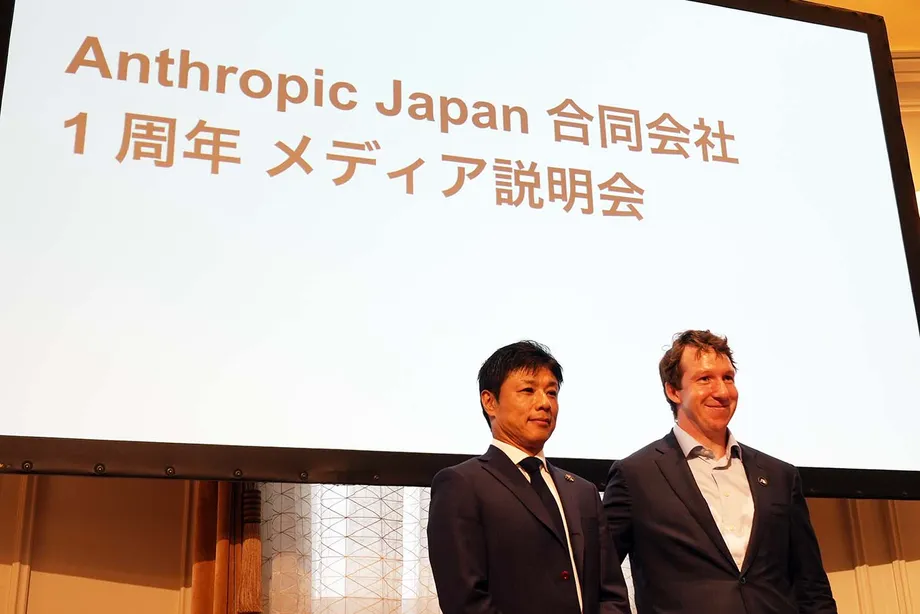
Interest in AI supported biological research is also growing commercially. Anthropic announced the establishment of a biological research institute in the autumn described in Japan's announcement, with research using its AI models. The Cabinet Office sees developments in AI design and robotic experiments as part of the setting in which synthesis safeguards must operate.
Why checking customers matters as much as checking sequences
A RAND study published on December 10, 2024, examined the commercial screening system and identified weaknesses extending beyond software. Forrest W. Crawford and five coauthors found that providers used different screening practices, lacked a shared system for information about suspicious customers or orders, and operated without a US government mechanism for assessing conformity with screening policies.
Crawford and his coauthors, writing in the RAND study Securing Commercial Nucleic Acid Synthesis, described the lack of agreement on screening standards at the time:
There is currently no universally accepted standard for screening customers or orders.
The study recommended identity verification requirements, clearer criteria for reporting suspicious orders to law enforcement and a database managed by a third party to record orders and check for concerning patterns. Such a system could help identify related requests placed across multiple providers, where each company otherwise sees only its own transactions.
The authors also recommended more precise guidance about what information companies should collect and how decisions should be made at each screening stage. For Japan, those details would help turn a broad instruction to check customers into a process that suppliers can apply consistently.
Records are another part of the same task. Customer information, order histories and transfer records can help a company explain a decision and allow authorities to follow up on concerning activity. Designing rules for collecting and sharing that information would require attention to confidentiality, especially where orders contain sensitive commercial research.
Standards need a way to measure performance
RAND's recommendations include conformity assessments, meaning procedures for checking whether a provider's screening practices actually meet the required standard. This would address a different question from whether a company says it screens orders: how reliably does its system work?
The Science study illustrates the value of that distinction. Testing with commercial providers exposed a weakness, and software changes improved detection. A screening framework can build on that approach by setting expectations for evaluation, updates and documented decisions when an order needs closer examination.
US policy has used public funding as another tool. RAND's 2024 study describes Executive Order 14110, issued in 2023, which directed the development of a screening framework and required agencies to restrict federal funding to entities purchasing synthesis services from providers following that framework.
The American policy process has since moved on. The HHS page states that the May 5, 2025, executive order titled Improving the Safety and Security of Biological Research instructed federal departments and agencies to revise or replace the 2024 framework issued by the White House Office of Science and Technology Policy.
Japan's Cabinet Office has cited guidance in both the United States and the United Kingdom, alongside moves to explore legislation. The American example provides detailed options, but its continuing revision means Japan is considering an international policy area that is still changing.
Key dates in the policy discussion
The policy debate stretches across older screening guidance, newer AI research and Japanese parliamentary questions. The main dated developments are:
- 2010: US health authorities issued guidance focused on synthetic double stranded DNA.
- 2023: US guidance broadened its scope, while Executive Order 14110 directed work on a screening framework.
- December 10, 2024: RAND published recommendations on customer checks, shared order information, reporting and conformity assessments.
- May 5, 2025: A US executive order directed agencies to revise or replace the 2024 screening framework.
- October 2, 2025: Science published research showing that AI redesigned sequences could escape existing screening tools and that patches improved detection.
- June 12, 2026: Japan's Cabinet Committee discussed screening practices, customer verification, record keeping and ministerial responsibility.
Japan's October 13 announcement set a separate target of completing guidelines early the following year. The announcement does not specify the calendar year, so that target cannot be assigned a precise deadline.
Japan also wants more research capacity at home
The Cabinet Office's concern about outsourcing adds an industrial dimension to the security proposal. Many major Japanese pharmaceutical companies commission parts of their research and development from Chinese companies, sending substantial volumes of experimental data abroad in the process.
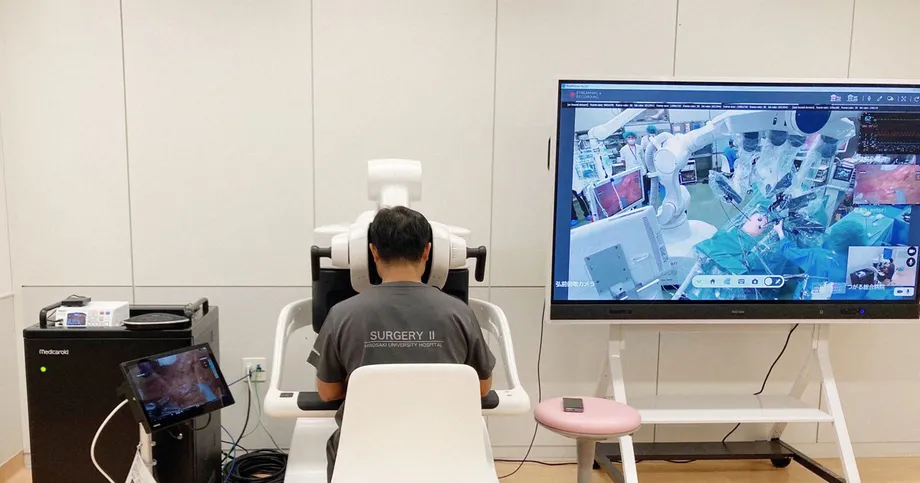
Japan is considering ways to strengthen its domestic production and research base, including promoting automation of laboratory equipment. Robots can carry out repeated experimental tasks, while AI tools can help design sequences for particular purposes. Together, those technologies can support domestic research capacity and increase the volume of work that screening systems must handle.
The policy therefore has two connected tasks. One concerns the safety of genetic material moving through synthesis services. The other concerns where research is carried out and where the resulting data goes. Domestic investment would address the second task, while sequence screening, customer checks and oversight would address the first.
Pharmaceutical firms and legitimate researchers need dependable access to synthetic DNA and RNA. The strongest practical direction in the official studies is to make checks consistent, assess their performance and keep them current as AI tools develop. Japan's drafting process will determine how those principles become requirements for its own synthesis industry.
Key Points
- Japan's Cabinet Office plans guidelines for companies that synthesize DNA and RNA to order, focusing on hazardous sequences and customer checks.
- A June 2026 parliamentary discussion raised questions about screening practices, records and which ministry is responsible.
- Updated US guidance recommends screening windows of 50 nucleotides and covers more types of DNA and RNA.
- A study involving four synthesis companies found weaknesses in detecting AI redesigned sequences and improved detection through software patches.
- RAND recommended verified customer identities, shared order information, clearer reporting rules and assessments of screening performance.
- Japan is also considering laboratory automation to strengthen domestic research capacity and reduce the flow of experimental data abroad.