924 families receive land out of 103,140 applicants
Nepal has provided land to 924 landless Dalit families out of 103,140 applicant families, according to a written government response to Nepali Congress lawmaker Nishkal Rai. Eleven years after the Constitution promised land to landless Dalits, fewer than one in every 100 families applying for that protection have received it.
Contents
- 924 families receive land out of 103,140 applicants
- What the Constitution promised
- How the new ordinance would work
- Who can receive occupied land?
- Fifteen Dalit families among 57 receiving certificates
- Why the national counts vary
- Older data show a sharper disadvantage in Madhesh
- Displaced families struggle to find rooms
- A local project shows the work behind a claim
- Key Points
The Ministry of Land Management, Cooperatives, Federal Affairs and General Administration put the share receiving land at about 0.895 percent. The figures leave 102,216 applicant families outside the group recorded as having received land, although applications still require verification before eligibility is confirmed.
A government ordinance issued on October 13, 2026, promises another deadline: eligible landless Dalits must receive land within two years of the relevant provision taking effect. If the government cannot provide a plot, it must offer a grant to buy one.
For families waiting for ownership papers, the promise concerns a place to live, a means of earning a living and something they can pass to their children. For families whose settlements have been demolished, the immediate need is more urgent. Some displaced residents say caste discrimination has prevented them from renting even a room, interrupting their work and their children's schooling.
The government has replaced the former politically appointed commission with district committees led by chief district officers. Those committees must turn applications into verified claims and identify land that can legally be distributed. Recent certificate distributions show that the process is moving in some places, but the national figures reveal the distance between the constitutional promise and delivery.
What the Constitution promised
Nepal adopted its Constitution on September 20, 2015. Article 40 provides for the state to give land to landless Dalits once, in accordance with law. A separate provision requires housing arrangements for Dalits without homes.
Dalits are communities historically subjected to caste exclusion and untouchability. Article 40 also promises participation in state bodies, special measures for representation and employment, free education with scholarships, and protections relating to higher education, health and social security.
The Constitution required legislation to implement fundamental rights within three years, setting a September 2018 deadline. Eleven years after its adoption, the federal legislation needed to give full effect to these Dalit rights has still not been enacted. Existing land laws provide routes for distributing plots, while the wider package of constitutional protections remains incomplete.
The main milestones show how long the commitment has been pending:
- September 20, 2015: Nepal adopts the Constitution, including Article 40's land and housing guarantees.
- September 2018: The constitutional deadline for legislation implementing fundamental rights passes.
- Early 2020: A Land Issues Resolution Commission is formed to provide ownership certificates to landless families.
- October 13, 2026: The government issues an ordinance providing a new two year period for land distribution or grants.
- October 16, 2026: Committees distribute ownership certificates to 57 families in three districts, including 15 landless Dalit families.
How the new ordinance would work
The ordinance amends five laws: the Lands Act, 2021; Land Revenue Act, 2034; Land Use Act, 2076; Guthi Corporation Act, 2033; and Land Survey and Measurement Act, 2019. Those years follow Nepal's Bikram Sambat calendar.
The amendment to Section 52A of the Lands Act requires the government to provide land to landless Dalits once, within two years of the provision beginning. A grant to purchase land becomes the alternative when a plot cannot be provided. The ministry says applications will be checked and eligible families allocated available public land, or other vacant land where necessary.
The ordinance leaves the detailed method for identifying plots, selecting beneficiaries and financing the programme unspecified. It also leaves the grant amount to be prescribed. Families therefore still need practical rules explaining what assistance they can receive and how to claim it.
The grant option changes what the government can offer when it cannot find land. Its usefulness will depend on whether the amount buys a suitable plot and whether families can complete a purchase. A promise of money and a completed land transfer are separate stages in securing a permanent home.
Who can receive occupied land?
The ordinance also addresses families already living on certain plots. Its provisions cover landless Dalits, other landless squatters and informal settlers, categories that have different eligibility rules. Some applicants need a new place to settle; others seek legal recognition of land they already occupy or cultivate.
Long occupation is one condition for certain allocations. The provisions refer to at least 10 years of cultivation or occupation. The ministry identifies Magh 28, 2066, in Nepal's calendar as the reference date for calculating the qualifying period for informal settlers.
Some land recorded during the original survey as grazing ground, a fairground, a landing place or a market may also qualify. The local executive must specifically confirm that it is no longer used for its recorded purpose and that occupation began before the applicable threshold.
Families living beside rivers or lakes, within road boundaries or in other hazardous locations must be provided accommodation elsewhere. For those households, the ordinance calls for relocation rather than ownership of their present site. Local decisions about land use and safety will therefore shape where families can eventually settle.
Fifteen Dalit families among 57 receiving certificates
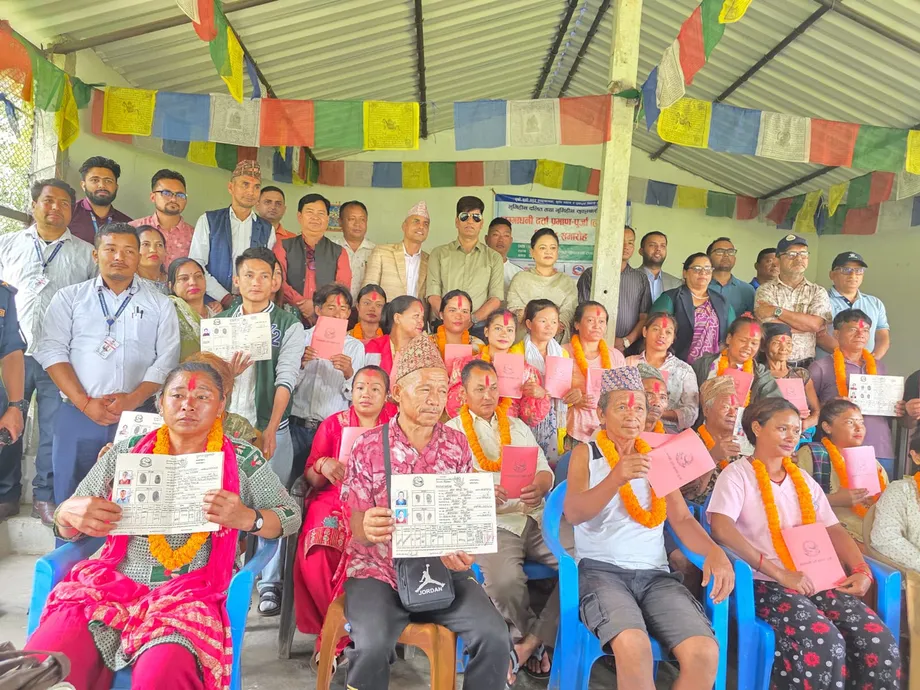
Land Problem Settlement Committees distributed 57 ownership certificates in Chitwan, Jhapa and Rupandehi on October 16, 2026. Of those recipients, 15 were landless Dalit families, about 26 percent of the total.
Chitwan issued certificates to one landless Dalit family and 32 landless squatter families in Ward 7 of Ichchhakamana Rural Municipality. Rupandehi issued certificates to 14 landless Dalit families and two landless squatter families in Wards 8 and 9 of Gaidahawa Rural Municipality. Jhapa's seven recipients were informal settler families in Ward 11 of Arjundhara Municipality.
Land Management Minister Pratibha Rawal said there were no legal obstacles to proceeding and promised faster action, with cooperation from local governments. Her statement places attention on the administrative work needed to complete transfers: checking eligibility, surveying plots, resolving claims and issuing ownership documents.
The ministry's national total remains 924 Dalit families. Whether the 15 families receiving certificates on October 16 are already included in that total was not specified, so adding them would risk counting the same recipients twice.
Why the national counts vary
The ministry's written response lists 103,140 Dalit applicant families. Other commission figures cited in reporting put Dalit applicants at 98,502, while a further commission count gives 79,144 landless Dalit families. The coverage and verification status behind those totals are not explained.
Counting landlessness is difficult because the term covers different circumstances. A family may have no land at all, occupy public land, farm as a tenant or live for generations on a plot without ownership papers. Each situation requires different help, and a count of all these groups will be larger than a count limited to landless Dalits.
The academic study Landlessness in Nepal describes the gaps in official statistics broken down by social group. It cites a 2020 Land Issue Resolving Commission estimate of 406,502 households across 287 local government units in all seven provinces. That figure combines landless Dalits and other squatters, without separating them.
The study also describes a fragmented information system. Local governments collect land revenue records, while federal survey and land revenue offices generate and digitise land information. Those records have not consistently been analysed to show which social groups lack land. A reliable register would help officials match each household to the appropriate form of assistance and track completed transfers.
Older data show a sharper disadvantage in Madhesh
The academic study draws on the Nepal Living Standards Survey conducted in 2010/11, which covered 5,988 households in 499 primary sampling units. A later analysis of that survey found that 51.8 percent of Madheshi Dalits owned no agricultural land, compared with 16.1 percent of Hill Dalits.
The gap was 35.7 percentage points, with agricultural landlessness more than three times as common among Madheshi Dalits in that analysis. A 2014 study cited in the paper also found landholdings below the national average among 88.2 percent of Madheshi Dalits and 48.8 percent of Hill Dalits.
The paper's provincial table, based on the 2011 census, the 2010/11 survey and 2012 statistics, places Dalit landlessness at 58.41 percent in Madhesh, 43.69 percent in Koshi and 37.04 percent in Bagmati. Its national Dalit figure is 29.74 percent. These are historical estimates; current applicants need a fresh assessment of their household circumstances.
Padam Bahadur Pariyar, the Nepali Congress chief whip in the National Assembly, puts Dalits at 13.44 percent of Nepal's population and says 60 percent of Dalits engaged in agriculture in the Tarai are landless. He has criticised successive governments for failing to prioritise constitutional rights and questioned the timing of another promise before elections.
Displaced families struggle to find rooms
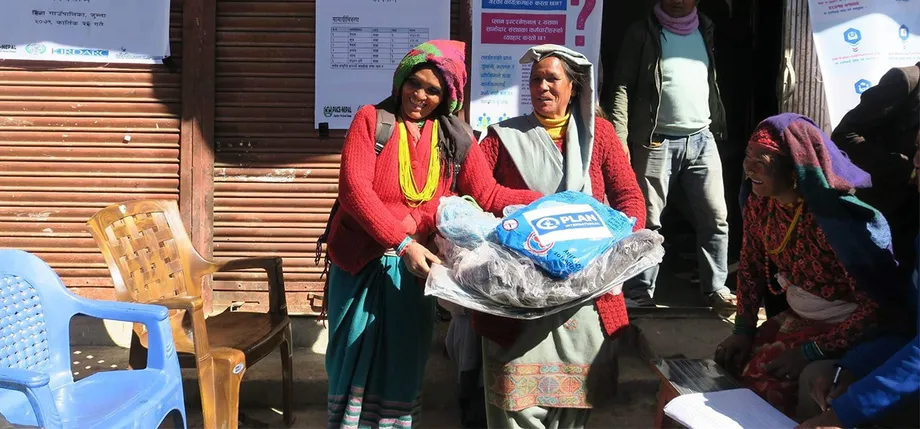
Laxmi Pariyar said she had lived for 22 years in a settlement at Tripureshwor before it was demolished. She moved to her daughter's settlement in Gothatar and searched for a room, but said landlords refused her because she was Dalit. Her family then faced another warning to leave when police announced that the Gothatar settlement would also be cleared.
Laxmi said her belongings were stored with a scrap dealer and her daughter was unable to attend school while the family searched for accommodation. For a household of seven or eight people, the loss of a settlement had become a daily search for shelter.
Sukmaya Bishwakarma, displaced from Gairigaun, said she had spent three days looking unsuccessfully for a room and was sheltering at the Radhaswami Satsang Vyas Ashram in Kirtipur. She described travelling between Kirtipur and Tinkune, losing work and trying to keep her children in school.
Som Bahadur B.K., 64, of the Manohara settlement also described caste discrimination and feared his sons would remain landless. Their allegations concern Article 24 of the Constitution, which protects people against untouchability and discrimination in private and public places.
The government's 100 point governance reform programme promised a formal state apology and a reform programme for Dalits and historically excluded communities within 15 days. Subsequent reporting said the apology and corresponding programme had not been delivered. For displaced families, protection against discrimination and access to immediate shelter remain as urgent as eventual land ownership.
A local project shows the work behind a claim
A December 18, 2020, IIED case study documents a practical approach in Dangisaran Municipality. The Community Self Reliance Centre found that 2,844 of 4,426 households, about 64 percent, had no land or lacked documents for their plots.
Seven young Tharu community workers helped survey 2,712 families over three months. They gathered household evidence, photographed homes and plots, collected GPS coordinates and helped neighbours agree on boundaries using satellite maps. Completed digital files were shared with the government. The municipality allocated US$6,000 to support the work.
Local farmer Yasoda Neupane explained why legal recognition mattered to her family:
We have been cultivating around one hectare of public land since 1978, without legal rights. Because of this, we have always been afraid of being evicted – we have been threatened by forest management authorities many times. Sometimes we have been charged as encroachers. So I need the right to this land to be safe and for my children's future.
The project also helped the municipality map land where families without any plot could settle and identify farmland available for leases. Municipal and ward officials attended meetings, checked information and supplied missing records.
IIED's case study describes duties under the 2019 Land Act requiring municipalities to identify landless families and informal settlers, map municipal land and allocate available plots. The Dangisaran experience shows how those duties can become household files ready for government decisions. Nepal's new district committees now face that work on a much larger scale, alongside the need to find safe sites and fund any purchase grants.
Key Points
- The ministry says 924 of 103,140 Dalit applicant families have received land, about 0.895 percent.
- Article 40 of the 2015 Constitution promises land to landless Dalits and housing arrangements for Dalits without homes.
- The October 2026 ordinance provides two years for land distribution, with purchase grants where land cannot be supplied.
- District committees led by chief district officers have replaced the former politically appointed commission.
- Fifteen landless Dalit families were among 57 families receiving certificates in three districts on October 16.
- Displaced residents describe rental discrimination, lost work and interrupted schooling while they search for shelter.
- Detailed eligibility procedures, grant amounts and programme funding still need to be specified.