Rs 184.86 Million Distributed Across Three Districts
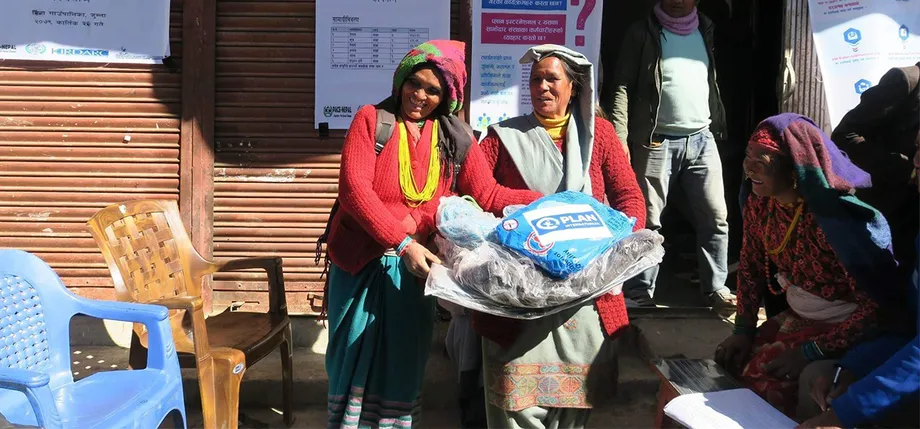
Nepal has distributed Rs 45,000 each to 4,108 households affected by the Bhotekoshi flood in Rasuwa, Nuwakot and Dhading, while preparing payments for about 1,400 more households whose details are still being checked. The completed payments amount to Rs 184.86 million in assistance provided by the World Food Programme.
Contents
- Rs 184.86 Million Distributed Across Three Districts
- What the Payment Covers
- Why Household Verification Matters
- A Recovery Stretching From August Into October
- The Scale of Damage Behind the Payments
- Tent Residents Put Shelter First
- Housing Plans Reach Four Districts
- Schooling, Grief and Access to Relief
- Red Cross Support Extends Beyond Cash
- Key Points
The Office of the Prime Minister and Council of Ministers said the money was distributed in coordination with local governments through a single window system. This means agencies coordinate household identification and payments through one process, aiming to avoid paying the same assistance twice while leaving another eligible family without support.
The distribution covers 11 local government areas: five in Rasuwa, four in Nuwakot and two in Dhading. Officials said they intended to pay the remaining households within three days of the announcement, once verification was complete.
The cash arrives as displaced families face a longer wait for housing. Dharma Raj Upreti, executive chief of the National Disaster Risk Reduction and Management Authority, has outlined a target of temporary accommodation within six months and permanent homes within three years. In Nuwakot, families were still living in tents as Dashain arrived, with some saying shelter, rather than food, had become their most urgent need.
What the Payment Covers
Upreti said the government had decided to provide affected families with Rs 15,000 a month for five months. He also described assistance of Rs 45,000 for the coming three months. At the stated monthly rate, Rs 45,000 represents three months of basic support.
A household receiving the basic amount for all five months would receive Rs 75,000. Families with more than four members are also to receive Rs 2,000 for each additional member under the announced arrangement.
The pending payments to approximately 1,400 households would require another Rs 63 million at Rs 45,000 each. Together with the completed distribution, that would bring this payment round to about Rs 247.86 million for roughly 5,508 households.
The immediate task is therefore substantial: verify the remaining household records and deliver the money. The wider recovery effort also requires accommodation, access to schools and health services, and decisions about where displaced communities can safely live.
Why Household Verification Matters
A joint meeting of the central and district monsoon response command posts on October 9 agreed to speed up the identification and verification of affected households. The meeting brought together the central response structure and officials from the three districts covered by the cash distribution.
The government has instructed local authorities and relevant agencies to follow the Disaster Sensitive Social Security and Relief Distribution Standards, 2024, identified in the Nepali calendar as the 2081 standards. The instructions seek both to prevent duplicate payments and to ensure that every eligible household receives assistance.
The Red Cross and other development partners have also expressed interest in providing cash. Coordination matters because several organisations may be helping families in the same places, while displaced residents may now be living outside their home districts.
Nuwakot illustrates that administrative challenge. People displaced from Rasuwa are staying there, but Nuwakot Chief District Officer Shambhu Prasad Regmi said their official paperwork was being handled by the Rasuwa administration. A Rasuwa contact office has been established locally to help address their problems.
A Recovery Stretching From August Into October
The flood response has moved from rescue and emergency shelter toward cash assistance and resettlement planning. The main dates show how long some families have already spent away from home:
- August 26: Flooding displaced residents, including families from Betrawati who later gathered in tents at Swardanda.
- September 26, identified as Asoj 10: A government update described the first month of rescue, relief and damage assessment.
- October 9, identified as Asoj 23: Central and district monsoon response command posts agreed to accelerate household identification, verification and recovery.
- October 14: Around 25 Betrawati households remained in tents, while officials described accommodation procedures still under way.
The government has announced targets of six months for temporary accommodation and three years for permanent housing. It has not given a calendar date for completing those moves.
The Scale of Damage Behind the Payments
The government's September relief update described destruction far beyond individual homes. Citing the National Disaster Risk Reduction and Management Authority, it recorded 1,453 deaths, 5,550 people missing and 13,795 people rescued at that stage of the response.
The same update said 20,477 security personnel had been deployed for search, rescue, relief and related services. Its rapid damage and needs assessment put damage and losses above Rs 408.28 billion, with reconstruction and rehabilitation needs estimated at Rs 723.3152 billion.
A rapid damage and needs assessment estimates both what a disaster destroyed and what recovery will require. Here, the estimated recovery requirement was about 1.77 times the recorded damage and losses, using the government's two figures.
The update listed 7,570 damaged private homes, 48 public buildings, 18 schools, seven health facilities and 30 cultural heritage sites. It also recorded damage to 69 kilometres of roads, 37 bridges for vehicles, of which 33 were swept away, and 68 suspension bridges.
Thirteen hydropower projects with a combined capacity of 759 megawatts and five solar plants totalling 24 megawatts were affected. Damage also reached 1,806 hectares of crops, livestock and fish farming, 17 bank branches and 4,800 businesses. Families seeking to rebuild their lives are therefore dealing with damaged services and livelihoods as well as lost housing.
Tent Residents Put Shelter First
Around 25 households from Betrawati were still living in tents at Swardanda in Nuwakot on October 14. Residents were sharing food, utensils and cooking arrangements, while some family members moved between Swardanda, Batar and Kathmandu.
Narayanman Dangol, a resident of Betrawati in Ward 10 of Bidur Municipality, described the conditions after leaving his home on August 26:
Dashain has arrived, but we are still in tents. It is hot inside during the day, and dew falls at night.
Shashi Dangol, another local resident, said food stocks could last around six months. His priority was a place to live that would allow families to remain connected to their homes and land.
Shashi Dangol explained why a cash payment had not resolved the housing problem for everyone:
We cannot leave our village, and we have nowhere to go and stay with relatives. Those who cannot afford to rent a room for Rs 15,000 are still living in tents.
Regmi confirmed that about 25 Betrawati households remained in tents. He said more than 380 people displaced from Rasuwa were also living in tents in Bidur Municipality Ward 5, where authorities had arranged relief supplies and shelter materials.
Most recipients of Rs 15,000 assistance had left holding centres and made their own arrangements, according to the district account. Some Betrawati residents had chosen not to take that payment while waiting for a resettlement package.
Housing Plans Reach Four Districts
Upreti said temporary accommodation would be built for 5,116 families from Rasuwa, Nuwakot, Gorkha and Dhading before permanent housing was arranged. This housing programme covers four districts, while the announced Rs 45,000 distribution covers three.
The practical choices include where families will live and whether people displaced from Rasuwa will return there or remain in Nuwakot. Regmi said those discussions were continuing. Rasuwa Chief District Officer Kamal Prasad Pandey said local governments had proposed possible resettlement locations and that procedures for temporary and permanent accommodation were under way.
Five holding centres in Rasuwa were still sheltering 218 people. They were located at Seeds, Bhimsensthan Secondary School, Komen Secondary School, Lingling Kanig Chholing Monastery and Ganesh Secondary School.
Sanjay Upreti, a professor at the Institute of Engineering, said rehabilitation needed to take account of social, economic and cultural needs alongside engineering and disaster risks. The concerns expressed in Betrawati make that issue concrete: a new dwelling must also fit how families earn a living and maintain ties to their community.
Schooling, Grief and Access to Relief
Phurbu Dorje, headteacher of Nepal Rastriya Basic School in Timure, said 10 of the school's students were missing and its building had been completely destroyed. He described uncertainty about how classes would operate and what learning conditions would be available.
Nilkantha Secondary School has been converted into a hostel for students, including children displaced by the floods, according to Pandey. Decisions about where displaced residents would stay after Dashain were still being discussed when he described the arrangements.
Timure resident Chhedin Dolma said people continued to live with fear after the flood. Another resident, Namgyal Ghale, described complete displacement and uncertainty over where to go. Rasuwa journalist Nirajan Poudel said he had lost five family members, including his parents, and had received no relief 50 days after the disaster.
Families with missing relatives also face legal and financial obstacles. Nepal's death declaration reform, issued on October 10 according to the President's Office spokesperson, sought to shorten the disaster related waiting period to 45 days. Coverage of that change carried a later missing persons figure of 5,285, following the 5,550 recorded in the September government update.
A death certificate can allow relatives to seek bereavement payments, claim insurance, access pensions or transfer property. For displaced families, civil registration and household verification are both part of the work needed to obtain financial help.
Red Cross Support Extends Beyond Cash
The September government update said the Nepal Red Cross had already provided cash assistance to 198 households in Dhading and 262 in Nuwakot, a combined 460 households. It also described approval of US$1.2 million through the International Federation of Red Cross and Red Crescent Societies' Disaster Response Emergency Fund, following coordination by its secretary general and chief executive, Jagan Chapagain.
The fund supports an immediate response, including rescue, shelter materials, drinking water, health services and sanitation supplies. The Red Cross figures show how those needs extend beyond the current cash distribution.
According to the update, Red Cross services reached 2,200 households with water, sanitation and hygiene support. It recorded 1,710 people receiving mental health or psychosocial support and 1,239 receiving emergency clinic services. Psychosocial support helps people cope with distress, grief and disruption after a disaster.
The organisation also reported food assistance for about 2,000 families, services for 1,189 children through safe spaces, and 17 information or assistance desks. Around 350 complaints, questions, requests and suggestions had been collected from communities.
Nepal's next immediate commitment is to complete verification and pay the approximately 1,400 remaining households. The longer commitments involve moving families out of emergency shelter, restoring education and services, and delivering housing on the announced timetable.
Key Points
- 4,108 households received Rs 45,000 each, totalling Rs 184.86 million, with World Food Programme assistance.
- About 1,400 additional households await verification and payment.
- The cash distribution covers 11 local government areas in Rasuwa, Nuwakot and Dhading.
- The government plans temporary accommodation within six months and permanent housing within three years for a programme covering 5,116 families across four districts.
- About 25 Betrawati households and more than 380 people displaced from Rasuwa remained in tents in Nuwakot.
- School destruction, missing relatives and disrupted livelihoods continue to shape families' recovery needs.