A public park gives up hundreds of war dead
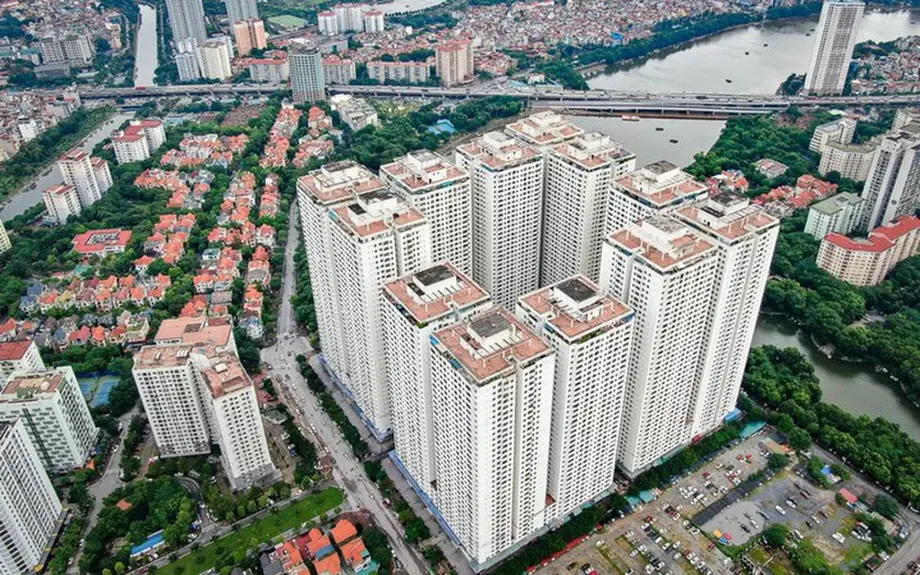
Vietnam buried the remains of 731 people believed killed during the 1968 Tet Offensive on October 14, 2026, after months of excavation at Le Thi Rieng Cultural Park in Ho Chi Minh City. The funeral brought hundreds of the missing to a cemetery, but most families still lack the answer they need most: whose remains have been found.
Contents
- A public park gives up hundreds of war dead
- How the fighting left graves beneath the city
- A photograph helped locate the burial trenches
- Months of digging, followed by laboratory work
- A wallet helped restore one soldier's name
- A national campaign with a July 2027 deadline
- How large is the unfinished search?
- Better DNA recovery meets a race against time
- For families, burial and answers are separate milestones
- Key Points
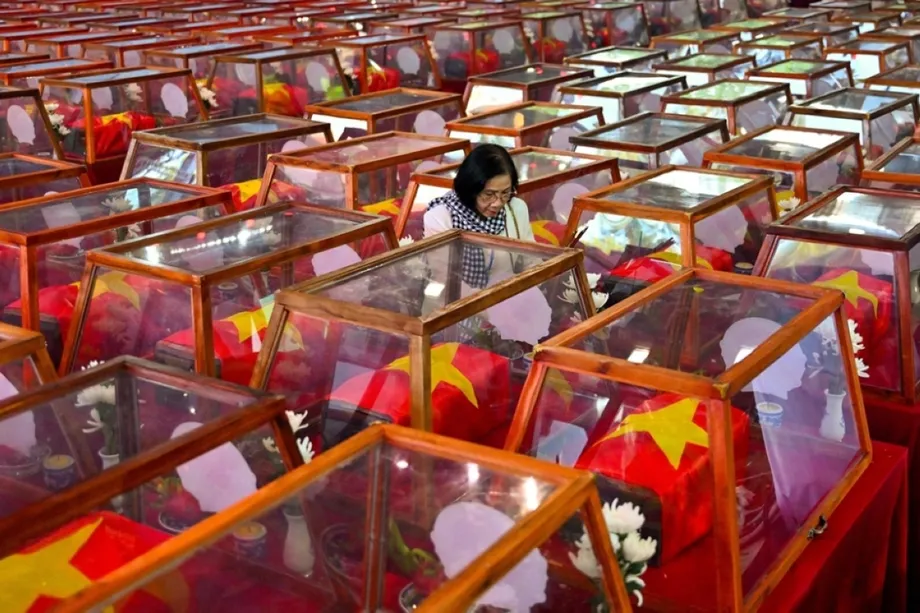
Prime Minister Le Minh Hung attended the memorial service at the park, which occupies the former Do Thanh Cemetery site. Thousands of people lined the route to Ho Chi Minh City Martyrs' Cemetery in Long Binh Ward, carrying white flowers, praying or watching buses transport terracotta caskets covered with Vietnam's national flag.
City officials described the burial as 698 individual sets of remains and one collective set containing the remains of 33 people. The total of 731 captures the scale of the recovery, while the collective burial shows how difficult it can be to separate remains after decades underground.
The ceremony is part of a national campaign to recover about 7,000 war dead by July 2027. Its work reaches from a busy urban park to former battlefields in Vietnam, Laos and Cambodia, and from archival photographs to laboratories trying to extract genetic information from damaged bones.
Ho Chi Minh City Deputy Mayor Nguyen Manh Cuong, who heads the city's efforts to identify the war dead, explained why the burial was proceeding while identification continued.
Due to the harsh conditions of war and the passage of time, we have been unable to identify the names, ages, or hometowns of the majority of the martyrs in this group.
How the fighting left graves beneath the city
The Tet Offensive brought coordinated communist attacks across South Vietnam during the Lunar New Year holiday in late January 1968. The main attacks are dated January 31 in the accounts describing the recovery, while January 30 is also given as the offensive's starting date.
Saigon, now Ho Chi Minh City, saw fierce fighting around the United States Embassy, military installations and government buildings. Communist forces suffered a military defeat, but the attacks shocked Washington and weakened American public support for the war.
The South Vietnamese government collected bodies of communist fighters and civilians and placed them in mass graves during and after the fighting, according to the Vietnamese government's account. Nearly six decades later, investigators returned to the former cemetery to find those burial places beneath the park.
The military described the recovered remains as those of fighters killed in the suppression of the 1968 uprising. Most individuals still await identification, so the work now combines the history of the burial site with evidence attached to each set of remains.
A photograph helped locate the burial trenches
Architect Nguyen Xuan Thang spent years studying wartime images and comparing old military maps with the modern city. A color photograph taken on February 12, 1968, by a French photographer credited as Gautron became a crucial clue.
The image showed men carrying a body, other people watching and a water tower in the background. Its caption described three large burial trenches, each holding about 300 bodies. A figure of about 200 bodies per trench has also been given. The water tower provided a physical landmark that researchers could compare with maps and later surveys.
Thang traveled through Ho Chi Minh City by motorbike, checking landmarks against historical records. His team's work with the military was described as running from November 2018 to May 2026; dates of November 2017 to May 2025 have also been given for that research effort.
Investigators combined photographs, satellite images, military maps and archives from Vietnam and abroad with field surveys and witness memories. Each type of evidence helped answer a different part of the search: where the graves were dug, how the surrounding land had changed and which areas deserved excavation.
Months of digging, followed by laboratory work
Vietnam's government news portal dated the start of excavation at the former Do Thanh Cemetery site to June 23. June 12 and June 13 have also been given as starting dates. By July, hundreds of soldiers and specialists were working through layers of remains.
Bulldozers, excavators and water pumps helped open and drain the ground, but workers often sifted through mud by hand. They recovered bones and fragments alongside weapons, ammunition, military hammocks and personal belongings.
Team K74, the city's military search and recovery unit, found another 19 sets of remains on October 1, bringing its stated site total at that stage to 701. The funeral total was subsequently put at 731.
State media put the number of sets recovered with personal belongings at 307, about 42 percent of the 731 buried. Figures of 265 and 245 have also been given. Objects recovered with remains can supply names, unit information or other clues for investigators to check against records and relatives' accounts.
Samples were sent to the Vietnam Academy of Science and Technology in Hanoi for DNA testing. DNA is inherited genetic information. Investigators compare information extracted from remains with samples from living relatives to help establish a person's identity.
A wallet helped restore one soldier's name
Authorities announced the identification of squad leader Huynh Van Quen in July. A wallet found with his remains contained a faded military document bearing his name, and DNA samples matched his relatives.
Quen served in the 1st Long An Battalion, a communist unit that fought a battle lasting seven days at Saigon's Y-shaped Bridge. His identification connected a surviving personal record, the history of his unit and genetic evidence from his family.
Nguyen Manh Cuong said authorities would continue searching and testing after the funeral. The deputy mayor described the city's commitment in these words:
will not overlook any opportunity or method to continue the journey of searching for the fallen comrades.
Quen's case shows the two tasks running alongside each other at the park: recovering the dead and restoring their names. A funeral provides a place of burial; identification allows relatives to learn where a particular family member rests.
A national campaign with a July 2027 deadline
Vietnam's campaign is described as a drive lasting 500 days, with a target of recovering about 7,000 sets of remains by the end of July 2027. The launch ceremony was dated April 2 at Quang Tri Citadel, a major wartime battlefield; the national drive has also been described as beginning in March.
More than 1,500 people have been deployed to search former battlefields in Vietnam, Laos and Cambodia. Thousands more are collecting and analyzing records. Officials reported nearly 1,500 sets of remains recovered and seven mass graves located during four months of work.
Search teams recovered 850 sets of remains in Cambodia during the 2025–26 dry season. Vietnam and Cambodia agreed to continue the mission during the following season, extending the search beyond the country's borders.
Defense Minister Phan Van Giang said in July that changed terrain, incomplete burial records and maps, and limited DNA testing capacity were slowing the work. A location remembered by a witness may now lie beneath farmland or development, while a surviving map may contain too little detail to guide a search directly.
The main dates connect a wartime burial to a continuing effort to identify the dead:
- Late January 1968: The Tet Offensive brought fierce fighting to Saigon and other parts of South Vietnam.
- February 12, 1968: A photograph recorded burial activity and a water tower that later helped researchers locate the site.
- June 2026: Excavation began at Le Thi Rieng Park.
- July 2026: Authorities announced Huynh Van Quen's identification.
- October 14, 2026: Vietnam buried 731 war dead at Ho Chi Minh City Martyrs' Cemetery.
- End of July 2027: The national recovery campaign is scheduled to finish.
How large is the unfinished search?
Government figures put the number of Vietnamese soldiers whose remains have yet to be recovered at about 175,000; a lower figure of about 150,000 has also been cited. Hundreds of thousands more have been buried without confirmed identities.
The government has described 230,000 graves as belonging to unidentified soldiers. A broader count places the number of graves lacking full identification above 300,000, including graves whose identifying information remains incomplete.
Vietnam estimates that up to 1.2 million Vietnamese soldiers were killed between 1945 and 1975, during wars involving France and later the United States and its allies. Thousands of the missing are believed to remain beneath remote jungle, farmland and former battlefields.
The campaign's target of 7,000 recoveries equals about 4 percent of the estimated 175,000 still missing. That comparison explains why even a major operation will leave many families waiting after July 2027. Alongside searches, the government plans to collect samples from unidentified graves, analyze 18,000 samples of remains and build a genetic database of relatives.
Better DNA recovery meets a race against time
At the Center for DNA Identification in Hanoi, technicians cut bone fragments to obtain material for testing. Director Tran Trung Thanh said the state institution had acquired and developed a process for handling severely degraded remains.
A pilot using technology funded by the United States through the International Commission on Missing Persons extracted genetic data from 54 of 58 samples. That is about 93 percent, giving investigators useful genetic information from bones that can be difficult to process.
A newer sequencing method developed by the national science academy with support from the same commission examines more than 5,000 genetic markers. Markers are points in genetic information that can be compared between samples. In a pilot at a war cemetery in Cao Bang Province, the share of bones yielding usable DNA rose from about 20 percent to more than 80 percent, at least four times the earlier rate.
Thanh warned that the process takes time. Bones continue to deteriorate in natural conditions, making genetic material harder to recover. Surviving relatives are also aging and dying, reducing the number of close family members who can provide reference samples.
Families therefore have a role in the laboratory work as well as the search for graves. A sample from a relative can give technicians the comparison they need when remains finally arrive for testing.
For families, burial and answers are separate milestones
Le Ngoc Mai Uyen, 36, regularly visited the park named after her grandmother, revolutionary fighter Le Thi Rieng, before realizing that her grandmother's body might be buried there. After burning incense near a memorial plaque, she described the connection she felt to the place.
I have always felt something sacred here at this park,
Uyen said finding her grandmother would be "extremely difficult," but she retained "strong faith" that the remains would be found. Her family's search now depends on the excavation and identification effort at a place already familiar to her.
Doan Van Cong, 68, and his family spent years visiting cemeteries and speaking with witnesses about his uncle, who died in 1950 while in his early twenties. They believe he was buried with other communist combatants after an ambush by French troops, about 50 kilometers from home. The suspected locations had not been excavated, and Cong described the government campaign as his final hope.
Further burials were planned for October 15: 93 remains in Tuyen Quang, 65 in Hai Phong and 120 in Can Tho. The Tuyen Quang total has also been given as 82 or 73, and the Hai Phong total as 45. Most of those buried in Ho Chi Minh City still await names, and authorities gave no date for completing their identification.
Key Points
- Vietnam buried 731 war dead on October 14, 2026, after recovering remains at Le Thi Rieng Park in Ho Chi Minh City.
- The remains are believed to belong to people killed during the 1968 Tet Offensive; most remain unidentified.
- Wartime photographs, maps, witness accounts and field surveys helped investigators locate the graves.
- A military document and DNA comparison helped identify squad leader Huynh Van Quen.
- The national campaign aims to recover about 7,000 sets of remains by July 2027.
- Improved DNA methods are helping investigators, while deteriorating remains and aging relatives make the work urgent.