A new district of homes, schools and services at Ba Diem
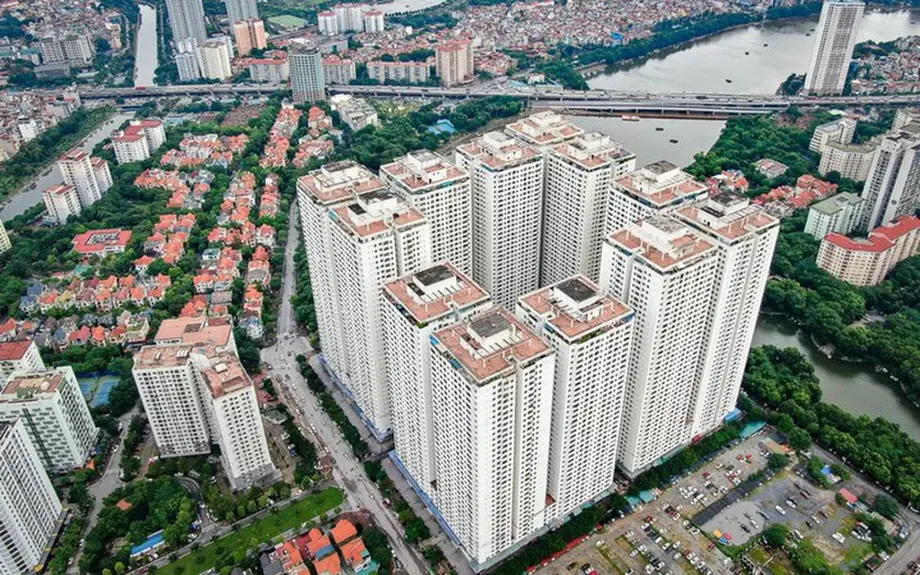
Ho Chi Minh City has approved a housing development at Ba Diem commune with about 37,620 homes, including 29,964 social housing units, and preliminary investment exceeding 64.053 trillion dong. Decision No. 6749/QD-UBND, dated October 12, 2026, assigns Delta Joint Stock Company to develop the 191.61 hectare site in the former Hoc Mon district, with the full project scheduled to run through the end of 2030.
Contents
- A new district of homes, schools and services at Ba Diem
- How the 37,620 homes are divided
- What the tower limits mean
- Why Ring Road 3 is excluded from the site area
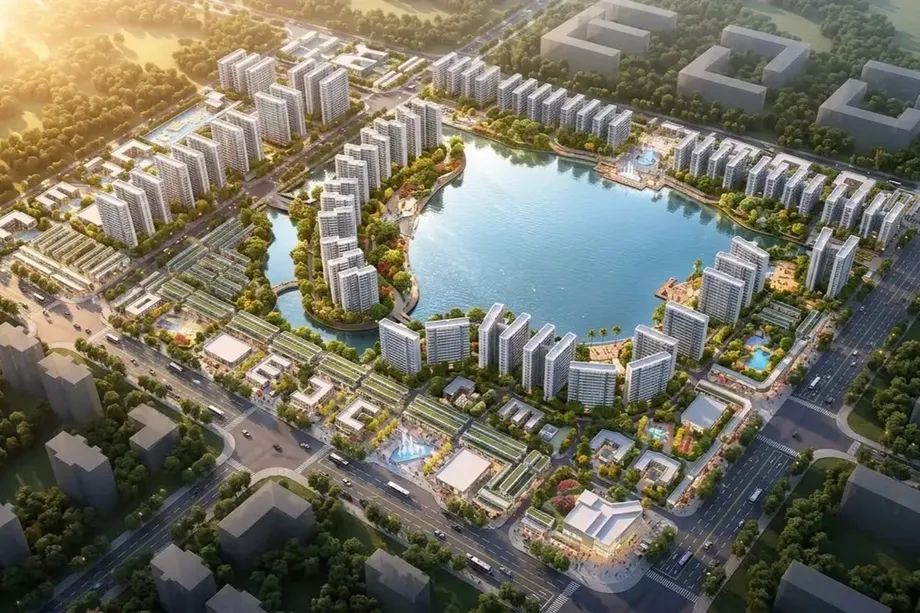
- Schools, healthcare and open space are part of the plan
- Residents raised practical concerns before approval
- Delta must finance the project and settle the former land use
- December 2026, 2028 and 2030 are the key milestones
- Ba Diem enters a much larger city housing programme
- Key Points
The city's Department of Construction expects work to begin in December 2026 and aims to complete the social housing portion in 2028. The development combines apartments with schools, a hospital, shops, parks, roads and other services, making it a planned urban neighbourhood rather than a collection of residential towers.
The detailed planning figures put the intended population at 67,645 people; earlier planning figures used 67,465. Either figure means the project must accommodate more than 67,000 residents, making the delivery of public services a central part of the construction task.
Ba Diem could provide a substantial share of the city's planned affordable housing supply. Its 26,004 social housing units and 3,960 social rental units together equal about 16.5% of Ho Chi Minh City's target of 181,257 social and rental homes for 2026 to 2030. That comparison uses planned homes in both cases, with delivery dependent on construction and the required approvals.
How the 37,620 homes are divided
The housing plan separates the development into three categories: 7,656 commercial homes, 26,004 social housing homes and 3,960 social homes reserved for rent. Social housing accounts for almost four fifths of all planned homes when the two social categories are combined.
Social housing is housing developed under rules intended to serve eligible households at regulated prices or rents. Commercial homes follow a different sales framework. Residents seeking a social home will therefore need to meet the applicable eligibility requirements, rather than simply choose an apartment and pay a deposit.
Delta must follow the legal conditions governing sales, rentals and lease purchases. A lease purchase allows a household to make payments under an agreement that can lead to ownership, while an ordinary rental provides accommodation without transferring ownership.
The earlier corporate plan for Ba Diem was somewhat different. In June 2026, Vingroup announced approximately 4,500 rental apartments, covering about 146,000 square metres of residential floor space. The detailed housing breakdown now gives 3,960 social rental homes, 540 fewer than that earlier announcement.
Apartment prices, rents, application dates and the allocation of homes among eligible groups have not been announced. Those details will determine how households can access the project once it reaches the legally required stage for sales or rentals.
What the tower limits mean
The detailed plan describes 43 residential buildings with a maximum of 30 storeys and a maximum building height of 150 metres. It also gives a maximum building coverage of 40% and a floor area ratio of 8.5. The broader zoning figures allowed residential buildings of up to 35 storeys and a floor area ratio of up to 10.
Building coverage measures how much of a land parcel can be occupied by the footprint of buildings. A maximum of 40% leaves the rest of that parcel for other uses, subject to the approved layout. The floor area ratio compares the total floor space across all storeys with the area of the relevant land parcel.
The housing land covers about 37.76 hectares, or roughly 19.7% of the 191.61 hectare project site. Much of the remaining area is intended for services, transport, education, greenery and water. This is why the project's large land area cannot be translated directly into apartment space.
Why Ring Road 3 is excluded from the site area
Ring Road 3 passes through the wider planning area, but the land assigned to the road is excluded from Delta's housing project. The planning area covers about 200.21 hectares, including approximately 8.6 hectares for the road. Subtracting that road land produces the 191.61 hectare housing project footprint.
The initial study area was larger still, at about 205.21 hectares. These figures describe different boundaries: the area studied, the area covered by the plan and the land included in the housing investment. Keeping those boundaries separate explains why descriptions of the development range from nearly 192 hectares to more than 200 hectares.
The site borders An Ha canal to the west and Lien Vung canal to the east. Its southern boundary adjoins Canal 7 and land designated for industrial production, warehouses and mixed uses. These waterways are part of the setting that the plan intends to incorporate into the new neighbourhood.
Ring Road 3 has a planned corridor width of up to 74.5 metres through the area. Main internal road corridors are planned at widths of 30, 23, 21 and 19 metres. Those corridors provide space for the connections between housing, schools, services and the surrounding transport network.
Schools, healthcare and open space are part of the plan
Ba Diem's education provision extends from preschool through primary school, lower secondary school and upper secondary school. Earlier planning details allocated approximately 12.64 hectares to neighbourhood education facilities and another 2.75 hectares to an upper secondary school.
The hospital is planned on about 3.5 hectares, with a building of up to 10 storeys. Its land area is close to 2% of the project footprint. A parking building of up to nine storeys is also included, alongside cultural, sports, market and commercial facilities.
Service land covers about 17.99 hectares. Earlier planning figures also set aside more than 14 hectares for transport, nearly 14 hectares for greenery within residential areas and 15.4 hectares for public greenery serving the wider urban area.
Water occupies approximately 40.52 hectares, equal to about 21% of the housing project footprint. Around 84 hectares in the broader plan lie outside the residential neighbourhood units, mainly as water and green space. Those planning categories describe different parts of the layout and should be used within their respective boundaries.
The city requires housing, technical infrastructure and social infrastructure to be built together. Technical infrastructure includes systems such as roads, drainage, electricity and water supply. Social infrastructure covers facilities such as schools and healthcare. For future residents, the construction schedule therefore matters beyond the date their apartment is ready.
Residents raised practical concerns before approval
Ba Diem commune organised a community consultation on the draft detailed plan at 110 Dang Cong Binh. Residents of Xuan Thoi Thuong 14 hamlet attended alongside local authorities, Delta representatives and INNO, the planning consultant.
Residents raised issues concerning the construction timetable, the existing condition of the area, the proposed layout, traffic, electricity, water supply, communications and solid waste treatment. Delta and INNO representatives responded before work continued on the planning documents.
The consultation concerned a plan drawn at a scale of 1:500. At that scale, one centimetre on a drawing represents five metres on the ground, allowing a relatively detailed view of building locations and infrastructure. The broader zoning plan uses a scale of 1:2,000, where one centimetre represents 20 metres.
The zoning approval was identified as Decision No. 3062/QD-UBND dated June 12, 2026; another planning description places approval of the 1:2,000 plan in August. The consultation details show that residents were considering the practical layout and services before the investment approval issued in October.
Delta must finance the project and settle the former land use
Delta was established in 2007 and has its headquarters in Ba Diem. The company previously operated in agriculture in Hoc Mon. Vinhomes became its parent company in 2019, and its principal activities were listed in the 2025 annual report as property investment, construction and business.
Vinhomes and related companies acquired Delta in July 2019 for approximately 4 trillion dong. Delta now has responsibility for delivering a housing development on land previously associated with plant and livestock breeding and an industrial facility for centralised livestock slaughter.
The former project ceased operations on October 12, 2026. Delta must complete the liquidation procedures, settle financial obligations and deal with land use rights and assets attached to the land in accordance with the law.
The preliminary investment of more than 64.053 trillion dong was proposed by the investor. The amount will be determined in greater detail as the project is prepared, assessed and approved. Delta must maintain sufficient equity, demonstrate financial capacity and secure other funding through lawful channels.
The city expressly bars the company from raising capital or conducting property business before it meets the required conditions. The approval therefore places financial and procedural duties on Delta before homes can be brought to market.
December 2026, 2028 and 2030 are the key milestones
The Department of Construction's intended start in December 2026 leaves a relatively short period after the October investment approval to finish the preparations needed for construction. Delta must complete procedures concerning planning, land, investment, construction, the environment and fire prevention before implementation.
The department's goal of finishing the social housing portion in 2028 sits within the broader project timetable extending to the end of 2030. The earlier date concerns the social homes; the later date covers the complete development.
- July 2019: Vinhomes and related companies acquired Delta for approximately 4 trillion dong.
- June 2026: Vingroup announced a plan for about 4,500 rental apartments at Ba Diem.
- October 8, 2026: The Department of Construction outlined the city's annual social and rental housing targets.
- October 12, 2026: Decision No. 6749/QD-UBND approved the investment and assigned Delta as developer. The former agricultural project also ceased operations on this date.
- December 2026: The Department of Construction expects construction to begin.
- 2028: The department aims to complete the social housing portion.
- End of 2030: The full project's approved implementation period ends.
The development can receive social housing incentives under the 2023 Housing Law, National Assembly Resolution No. 201/2025/QH15 and related regulations, provided it meets the applicable conditions. Buildings must also undergo the required completion inspections and acceptance procedures before use.
The Department of Construction will lead guidance, checks and progress monitoring, reporting to the city government every six months. Other agencies will handle their respective planning, land and environmental duties and monitor the developer's financial capacity. Violations, delays and failures to meet conditions are subject to action by the responsible authorities.
Ba Diem enters a much larger city housing programme
Government Resolution No. 303 assigns Ho Chi Minh City a target of 181,257 social and rental homes for 2026 to 2030. The city's planned split is 129,257 homes for sale or lease purchase and 52,000 for rent. Rental homes account for about 28.7% of that total.
At its October 8 briefing, the Department of Construction set annual targets of 9,000 homes in 2026, 57,657 in 2027 and 38,200 in each year from 2028 through 2030. The first two years together amount to 66,657 homes. The 2027 target alone is more than six times the 2026 figure, showing how sharply delivery is expected to accelerate.
Since the beginning of 2026, three projects containing 2,283 homes have entered use, while 13 projects with approximately 14,000 homes have begun construction. Across the city, 25 projects containing about 22,900 homes are under construction. The projects that recently began work form part of that wider construction pipeline.
The city expects 13 projects with about 9,000 homes to be completed during 2026. Another 17 projects, totalling approximately 18,000 homes, are expected to reach the construction stage needed for consideration for market launch, including completion of foundation work. Delivery and permission to market homes are separate stages in that pipeline.
Land preparation is another major task. The city has identified 191 sites covering roughly 740 hectares: 100 sites covering 412.5 hectares in the former Ho Chi Minh City, 59 covering about 184 hectares in the former Binh Duong and 32 covering about 143.6 hectares in the former Ba Ria-Vung Tau.
The longer planning horizon to 2040 envisages approximately 1,730 to 1,740 hectares for social housing. The identified 740 hectares amount to about 43% of the upper figure. The Department of Planning and Architecture has been tasked with reviewing public land and studying the conversion of inefficient factory and industrial projects.
Ba Diem brings a large housing commitment into that programme, with a defined developer, investment estimate and completion horizon. Its next practical test is completing the procedures for the intended December start while organising housing and essential services around the same delivery schedule.
Key Points
- Ho Chi Minh City approved Delta's 191.61 hectare Ba Diem project on October 12, 2026.
- The plan contains approximately 37,620 homes, including 26,004 social homes and 3,960 social rental homes.
- Preliminary investment exceeds 64.053 trillion dong, with the full development scheduled through 2030.
- The Department of Construction expects work to start in December 2026 and aims to complete the social housing portion in 2028.
- Schools, a hospital, roads, parks, commercial services and extensive water areas are included in the planning.
- Delta must meet financing, construction, sales and rental requirements, with city progress reports every six months.
- The project's 29,964 social and rental homes equal about 16.5% of the city's target for 2026 to 2030.