Three countries prepare a common voice for mountain herders
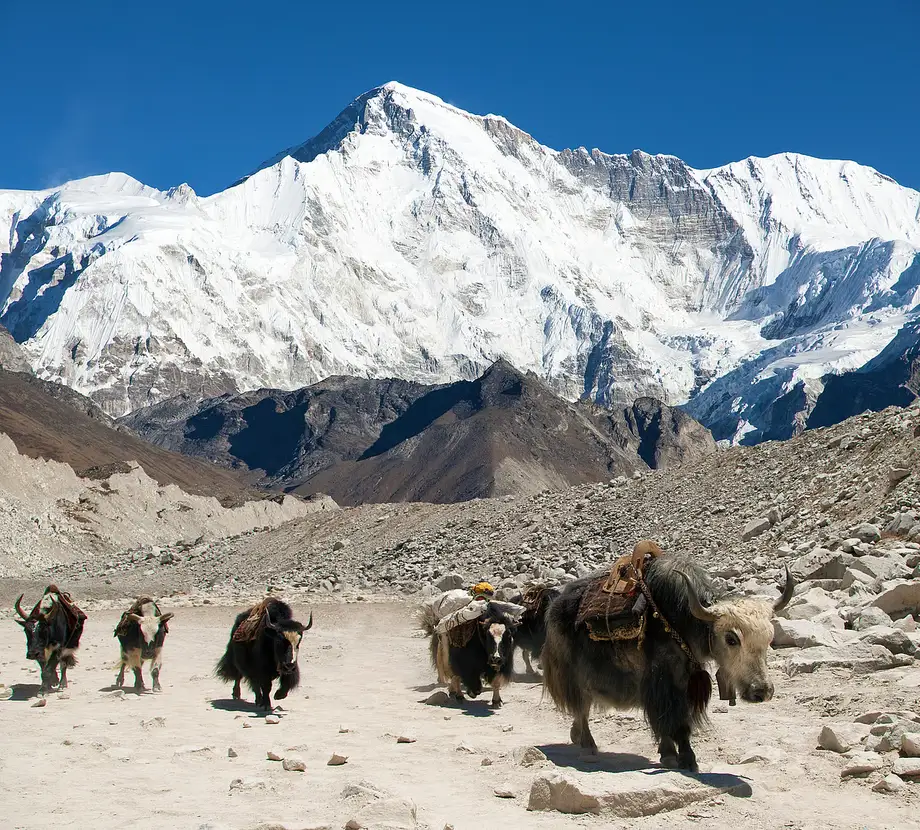
Bhutan lost about 28% of its yak population between 2020 and 2024. Now herders from Bhutan, India and Nepal are preparing to launch a regional organisation aimed at protecting the animals, pastures and livelihoods that sustain communities across the Himalaya.
Contents
- Three countries prepare a common voice for mountain herders
- What the livestock figures reveal
- A regional organisation nearly a decade in the making
- Why younger people are leaving herding
- Border cooperation has already improved breeding
- Restoring grasslands requires careful management
- Dagala puts better processing at the centre of incomes
- India prepares its own conservation roadmap
- Laya prepares for visitors and a larger role
- Key Points
The Himalayan Yak Herders' Network will be launched at noon Bhutan Standard Time on October 23, 2026, during the ninth Royal Highland Festival in Laya, Gasa District, Bhutan. The festival runs October 23 and 24, with Bhutan's King and prime minister expected to attend.
The International Centre for Integrated Mountain Development (ICIMOD), an intergovernmental organisation based in Kathmandu, says in its network launch announcement that herders will own and lead the organisation. Bhutan will host its secretariat, the office responsible for coordinating its work.
The founding participants are the Bhutan Yak Federation, the Yak and Chauri Farmers Federation Nepal and the Yak Federation of India. Their shared problems include shrinking pastures, livestock losses to wild animals, limited markets and services, declining genetic diversity and the departure of young people from highland communities.
Rangelands occupy more than 60% of the Hindu Kush Himalaya and provide essential resources for an estimated 25 million to 30 million Indigenous and culturally diverse people, according to ICIMOD. These grazing landscapes connect the future of yak herding with a much wider question: how mountain families can continue earning a living where they live.
What the livestock figures reveal
Bhutan's National Statistics Bureau recorded 29,432 yaks across 746 households in 2024, an average of about 39 animals per household. Yak herding contributes 4% of the country's livestock products. The reported decline of about 28% since 2020 means Bhutan lost more than a quarter of its herd within four years.
India's 20th Livestock Census recorded approximately 58,000 yaks in 2019. The Yak Federation of India said its 526 household members collectively kept about 32,000 yaks in 2026. The newer figure covers federation members, while the census counted the national population, so an updated national total is still needed to measure the change.
Nepal's National Sample Census of Agriculture for 2021/22 recorded 53,195 yak, nak and chauri across 9,899 agricultural holdings. Nak are female yaks, while chauri are hybrids of yaks and domestic cattle. Nepal's total therefore includes a broader mix of animals than a count of yaks alone.
ICIMOD says yak populations have declined across all three countries in recent decades as land use, grazing conditions, climate and economic circumstances have changed. Each country's figures describe a different year and counting category. Together, they show the scale of the communities the new network hopes to represent and the need for more current, consistent records.
A regional organisation nearly a decade in the making
Herders, researchers and government representatives first discussed the regional network in 2016 through ICIMOD's Kangchenjunga Landscape Conservation and Development Initiative. The three countries subsequently chose to build national federations before creating a shared regional organisation.
The model drew inspiration from Arctic herders. Representatives attended the Arctic Frontiers conference in Norway in 2018 and engaged with the Association of World Reindeer Herders, learning from an organisation that connects pastoral communities across borders.
The main steps toward the Himalayan network were:
- 2016: Herders, researchers and officials from Bhutan, India and Nepal began discussing a regional organisation.
- 2018: Representatives met Arctic reindeer herders in Norway.
- November 9, 2019: An ICIMOD conference session in Pokhara, Nepal, examined a proposed Himalayan yak network.
- 2022 and 2023: National federations were formalised in Bhutan and Nepal respectively.
- 2025: India's federation was formalised, and federation leaders and government representatives committed to the regional network at the 10th Sustainable Animal Agriculture for Developing Countries conference in Vietnam.
- October 23, 2026: The network is scheduled to launch in Laya.
ICIMOD's 2019 session programme already identified practical possibilities: regional festivals, exchanges of breeding bulls and sharing knowledge about processing, technology and sales. The new organisation gives those ideas a permanent platform led by herders.
Why younger people are leaving herding
Tashi Dorji, ICIMOD's senior livestock and rangeland specialist, identifies declining youth interest as the biggest challenge facing yak herding. He connects that change to economic opportunities, aspirations and the policies shaping mountain life.
The difficulty lies in sustaining herding as an attractive and viable way of life," he said. "It is not simply a matter of choice, it reflects changing aspirations, limited economic opportunities, and policy and institutional challenges.
Cordyceps collection has also drawn interest away from herding over the past decade or so, Dorji said. Cordyceps is a valuable fungus collected in high mountain areas. Attractive prices offer families another source of income, although Dorji warned that its reliability over the longer term is uncertain.
Dorji described ambitions to support more than 50 new highland enterprises and create more than 500 green jobs targeted at young people. He also described a wider vision linking 11 nations where yaks are herded. The announced launch brings together the three founding national federations; no timetable or funding details were given for the enterprise and employment targets or wider participation.
For a young person deciding whether to remain in a highland village, those ambitions become meaningful through dependable income, access to services and opportunities to build a business. Improving the returns from dairy products, fibre and crafts is therefore central to keeping herding viable.
Border cooperation has already improved breeding
Restrictions on movement affect the animals as well as the people. ICIMOD's 2016 volume Yak on the Move brought together 14 articles covering Afghanistan, Bhutan, China, India, Nepal and Pakistan. It identified closed borders and restrictions on grazing and movement as pressures on herders, alongside a shortage of current field research.
When small herds remain isolated for generations, closely related animals are more likely to breed. This can reduce growth, fertility and survival. Exchanging breeding animals between suitable herds introduces genetic variety, which helps maintain healthier populations.
ICIMOD's genetic exchange account documents an early example from 2005, when Bhutan gifted 30 yaks to Sikkim, India. Their offspring showed improvements in body size, the interval between calves and milk yield.
Bhutan transferred two breeding bulls to Nepal and one to Sikkim in 2020. Officials tested the animals' health, and the receiving authorities observed a quarantine lasting 14 days before introducing them to local herds.
The Nepal bulls went to Charrate in Panchthar district, at 3,560 metres. The Sikkim bull went to Zema Yak Breeding Station in Lachen, at 3,100 metres. By the middle of 2021, the bulls had bred with cows expected to calve in spring 2022.
The transfers required government approvals, health checks and compliance with rules governing biodiversity and the movement of genetic resources. That experience gives the network a concrete example of what cooperation can achieve: access to breeding animals through an organised process involving herders and national authorities.
Restoring grasslands requires careful management
Bhutan's grazing lands, known as tsamdro, are largely open spaces within forest ecosystems, apart from some summer pastures above 4,000 metres. Dorji said herders traditionally used controlled burning to limit shrubs and weeds and encourage grass growth.
Burning restrictions over three to four decades have allowed shrubs and weeds to spread in some areas, reducing grazing quality. The effects extend to wild herbivores, including blue sheep and deer, which also depend on these landscapes.
Bhutan's Forest and Nature Conservation Policy 2023 recognises fire's role in forest management, according to Dorji. With ICIMOD support, prescribed burning has been tested, operating procedures developed and the practice incorporated into forest management systems.
Prescribed burning means a planned fire carried out under defined conditions and supervision. Dorji warned that uncontrolled fire is dangerous and said burning requires procedures, monitoring and oversight. The practical aim is to manage open grasslands alongside forests while maintaining food for livestock and wildlife.
ICIMOD's 2019 conference programme also described how rising temperatures affect pasture, fodder supplies, yak health and reproduction. Herders face several pressures at once: changing vegetation, restrictions on access, climate stress and the cost of moving animals between seasonal grazing areas.
Dagala puts better processing at the centre of incomes
On October 19, 2026, Bhutan's Thimphu Dzongkhag Administration launched a project in Dagala to improve yak dairy processing and the value of products sold by pastoralists. It also inaugurated the Dagala Craft Innovation and Development Centre.
The dairy project, titled Empowering Dagala Pastoralists through Improved Yak Dairy Processing and Value Addition, aims to improve infrastructure, diversify products and support sustainable management of alpine rangelands.
Value addition means earning more from a resource by processing or improving it before sale. For a herding household, better dairy equipment and a wider range of products could provide more ways to earn from milk already being produced. The Dagala project places those business needs alongside the condition of the pastures supporting the animals.
Medicinal plants provide another economic connection to rangelands. ICIMOD says Nepal's Karnali rangelands contain 92 medicinal species, of which 82 are actively traded, generating approximately 36 million Nepalese rupees annually. Protecting grazing landscapes therefore matters to people collecting and trading plants as well as those keeping livestock.
India prepares its own conservation roadmap
On October 17, 2026, Arunachal Pradesh Chief Minister Pema Khandu called for a comprehensive plan for yak conservation and herder incomes at the Yak Economy Summit and Yak Mela in Mago, Tawang district.
Khandu proposed mapping yak populations, herders and seasonal movements, including summer and winter grazing camps. He also called for an Arunachal Pradesh Yak Herders and Products Development Cooperative Society, which would allow herders to pool resources and market products together.
The proposed roadmap would involve the Army, the ICAR National Research Centre on Yak, government departments and other participants. Suggestions included improved breeding records, insurance, better dairy and fibre processing, basic amenities at seasonal stations and tourism opportunities for Brokpa communities.
Khandu announced a follow-up meeting in February to review progress and finalise the roadmap. His proposals connect local needs with the regional network's goals: healthier herds, stronger organisations and better prices for products. Their success would depend on turning those proposals into funded services and practical support for families in remote grazing areas.
Laya prepares for visitors and a larger role
Laya expects more than 5,000 visitors for the Royal Highland Festival, whose theme is Rangelands for Life: Empowering Herders. The programme includes the network secretariat's launch and a planned declaration of October 23 as National Yak Day.
Representatives from 10 highland dzongkhags, or districts, will participate alongside the Department of Livestock and yak cooperatives from Nepal and India. Samtse Dzongkhag will take part for the first time. Livestock displays, highland products, cultural performances and traditional games will bring herders and potential customers together.
The Langothang festival ground is nearly 4,000 metres above sea level and more than a two-hour walk from the roadhead. Carrying heavy supplies is difficult, and cold weather and occasional snowfall can disrupt preparations. Those conditions show the everyday transport challenges behind efforts to expand mountain businesses.
Around 113 village homes have registered to host guests. A local youth group is managing accommodation in village homes, horse services and transport for the first time, while the Gasa Dzongkhag Administration will monitor service rates and quality.
Laya restaurant owner Phuntsho said he earned around Nu 100,000 during the previous festival and had upgraded his restaurant for this year's event. His experience illustrates an immediate opportunity around the gathering: visitors can bring income to local food, accommodation and transport businesses while herders work toward more lasting regional cooperation.
Key Points
- The Himalayan Yak Herders' Network will launch at noon on October 23, 2026, in Laya, Bhutan.
- Herders will own and lead the network, bringing together national federations from Bhutan, India and Nepal.
- Bhutan's yak population fell about 28% between 2020 and 2024, reaching 29,432 animals across 746 households.
- Priorities include healthier pastures, genetic diversity, better markets and opportunities for young people.
- Earlier transfers of breeding animals from Bhutan to Nepal and Sikkim provide a working example of regional cooperation.
- Dagala's new dairy project and Arunachal Pradesh's proposed roadmap connect conservation with herder incomes.
- The Royal Highland Festival runs October 23 and 24, with more than 5,000 visitors expected.