Tamil Nadu order fails the test of community membership
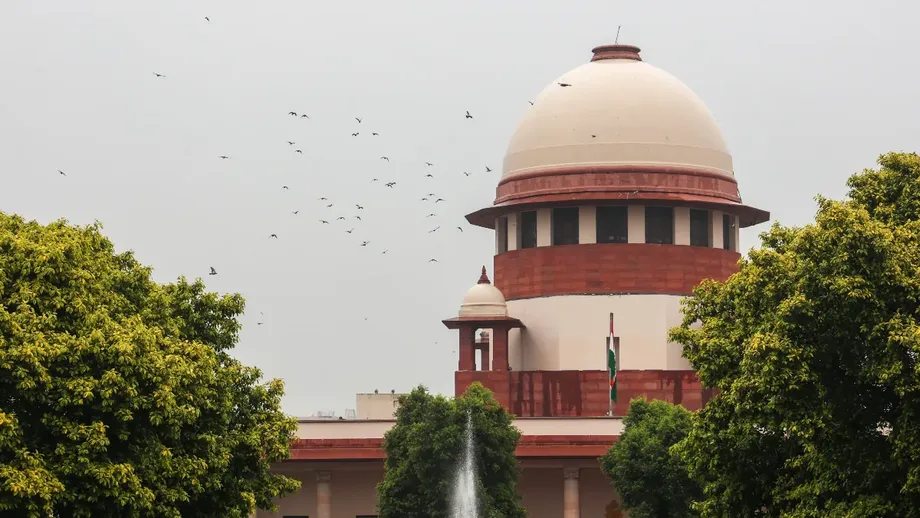
India's Supreme Court on October 15, 2026, upheld the cancellation of a Tamil Nadu government order that allowed people from certain reserved communities who converted to Islam to obtain certificates identifying them as Backward Class Muslims. The court ruled that conversion alone does not make someone a member of any of the state's seven recognised Muslim backward communities.
Contents
- Tamil Nadu order fails the test of community membership
- How one certificate application became a constitutional case
- The dates behind the dispute
- Why Tamil Nadu defended the order
- Seven social communities, not seven branches of Islam
- Why the certificate could not create eligibility
- What Article 16(4) requires
- Scheduled Caste status follows a specific religious rule
- Reconversion also requires an individual assessment
- Key Points
Justices Prashant Kumar Mishra and Shree Chandrashekhar rejected the state government's challenge to the Madras High Court judgment striking down Government Order (Ms) No. 31, dated March 9, 2024. The order covered converts from Backward Classes, Most Backward Classes, Denotified Communities and Scheduled Castes.
The central issue was how a person qualifies for a particular reservation category. The Supreme Court held that an applicant's former caste status cannot automatically become membership of a different community after conversion. Applicants must satisfy the legal conditions attached to the community under which they seek benefits.
Justice Mishra, who authored the judgment, and Justice Chandrashekhar explained the bench's conclusion:
A person who converts to Islam does not by that act alone become a member of any one of the seven notified backward class Muslim communities in the state. His former caste or community status cannot automatically be transposed into the Muslim backward class category, nor can a private religious body conclusively determine such statutory entitlement.
The decision leaves the 2024 order invalid. For applicants seeking certificates, the practical consequence is that their earlier reservation category and their conversion to Islam cannot, by themselves, secure recognition as members of a listed Muslim community.
How one certificate application became a constitutional case
The dispute began with Sameer Ahamed, who was born into a Hindu family in Thoothukudi, Tamil Nadu, and was previously named Paramasivam. He converted to Islam in 2015, and a gazette notification followed in 2016. He married under Islamic rites in 2016 and has two children.
Ahamed applied for a community certificate identifying him as Muslim Lebbai, a community included in Tamil Nadu's list of Backward Class Muslims. A Tahsildar, a local revenue official responsible for such administrative decisions, rejected his application.
Ahamed challenged the refusal before the Madras High Court and relied on the March 2024 government order. While examining his claim, the High Court brought the state government into the proceedings to consider whether the order itself was lawful.
A division bench of Justices G.R. Swaminathan and P.B. Balaji struck down the order on June 25. Tamil Nadu then approached the Supreme Court. The challenge was listed as The Secretary to the Government, Government of Tamil Nadu v. Sameer Ahmed and Ors., SLP(C) No. 25507/2026.
In its June 25, 2026 judgment in WP(MD) No. 7127 of 2022, the High Court sustained the Tahsildar's rejection of Ahamed's application and declared the government order unconstitutional. Its operative conclusion stated:
We accordingly declare that the said G.O is unconstitutional. The order impugned in the writ petition is sustained. This writ petition is disposed of accordingly. No costs. Connected Miscellaneous Petition is closed. As a corollary, we hold that a convert to Islam cannot claim the status of Backward Class Muslim. He is only a Muslim and that's all there is to it.
The High Court's reasoning was that membership of the notified communities arose by birth, not conversion. It relied on G. Michael v. S. Venkateswaran, which held that a Hindu converting to Islam becomes a Muslim without carrying the former caste into Muslim society. The bench said that decision had been approved by the Supreme Court in Kailash Sonkar v. Maya Devi, K.P. Manu v. Scrutiny Committee and C. Selvarani v. Special Secretary cum District Collector. It also held that an executive order could not override a binding judicial decision, and found the order arbitrary for grouping converts from Scheduled Castes and other backward categories together despite their distinct legal positions.
The dates behind the dispute
The case developed over more than a decade, from Ahamed's conversion to the Supreme Court's decision. The key events were:
- 2015: Paramasivam converted to Islam and became Sameer Ahamed.
- 2016: A gazette notification followed, and Ahamed married under Islamic rites.
- March 9, 2024: Tamil Nadu issued Government Order (Ms) No. 31 covering certificates for converts from specified reserved communities.
- June 25, 2026: The Madras High Court struck down the government order.
- October 15, 2026: The Supreme Court upheld the cancellation and rejected Tamil Nadu's challenge.
The proceedings moved beyond whether one applicant should receive a certificate. The courts examined whether the government could create a general rule treating conversion and earlier reserved status as sufficient grounds for membership of another listed community.
Why Tamil Nadu defended the order
Tamil Nadu argued that its order protected people from losing reservation benefits when they exercised their freedom of religion. Article 25 of India's Constitution protects freedom of conscience and the right to profess, practise and propagate religion, subject to constitutional limits.
The state said the order, issued following a recommendation from the Tamil Nadu Backward Classes Commission, preserved affirmative action benefits when people changed faith. Senior advocates Mukul Rohtagi and Siddharth Luthra represented the government. Senior advocate Gopal Sankaranarayanan appeared for the respondents.
The High Court judgment records that the commission made its recommendation in a letter dated February 6, 2024. It describes Government Order (Ms) No. 31 as allowing converts from Backward Classes, Most Backward Classes, Denotified Communities or Scheduled Castes to be treated as Backward Class Muslims for reservation purposes and to receive certificates identifying them with one of the seven notified communities. Before the High Court, the government argued that the recommendation followed consultation with stakeholders, that converts from forward communities would not qualify and that the relevant Jamath's acceptance of a convert into a listed group should not be questioned by revenue authorities.
The state's position connected two concerns: a person's freedom to choose a religion and the disadvantage that had previously qualified that person for reservation. The Supreme Court focused instead on the legal basis for entering the particular category being claimed after conversion.
The bench held that earlier social disadvantage could not, by itself, establish membership of another recognised backward community. Reservation eligibility had to rest on the conditions governing that community, rather than a general instruction carrying benefits from one category to another.
Seven social communities, not seven branches of Islam
Tamil Nadu recognises seven Muslim communities as backward classes within its reservation framework. Their recognition is associated with the Tamil Nadu Backwards Classes, Scheduled Castes and Scheduled Tribes (Reservation of Seats in Educational Institutions and of Appointments or Posts in the Services under the State) Act, 1993.
The listed communities are:
- Ansar
- Dekkani Muslims
- Dubekula
- Labbais, including Rowthar and Marakayar
- Mapilla
- Sheik
- Syed
The Supreme Court explained that these are social communities whose identities have developed through historical membership. They are different from theological denominations or schools of religious belief, such as Sunni or Shia.
That distinction was central to Ahamed's request for a Muslim Lebbai certificate. Becoming Muslim establishes a religious identity. Recognition as a member of a particular listed social community requires the relevant social and legal connection to that community.
Why the certificate could not create eligibility
The Supreme Court found a defect in the rule created by the government order. People from several different categories were being given a route into seven existing Muslim communities without the order establishing the connection between those earlier identities and the communities they sought to join.
The bench explained why it considered the problem broader than an individual official's decision to issue or refuse a certificate:
The impugned G.O. does not explain why a Hindu belonging to one Backward Class community, another belonging to a Most Backward Class community, a member of a Denotified Community and a person formerly belonging to a Scheduled Caste should, upon conversion to Islam, become members of one or another of seven pre-existing Muslim communities.
A community certificate, the court said, is declaratory. In simple terms, it records a status that a person qualifies for under the law; it does not create that status. An executive instruction also cannot expand or remove the constitutional and statutory conditions governing eligibility.
The court applied the same reasoning to private religious bodies. Such a body cannot conclusively decide a person's entitlement to a statutory reservation category. The responsible public authority must assess eligibility under the applicable law.
The judgment does not set out a complete list of evidence that every applicant would need to establish membership of each of the seven communities. Its stated requirement is that the necessary social and legal connection must be established.
What Article 16(4) requires
Article 16(4) permits the state to reserve public appointments or posts for backward classes that are inadequately represented in public services. Reservation means setting aside a share of opportunities for groups recognised under the relevant legal framework.
The Supreme Court held that a person cannot claim such affirmative action solely because of social backwardness associated with their status before conversion. The category under which a benefit is sought must have its own valid legal foundation.
Justice Mishra's judgment expressed that principle directly:
The social backwardness which formed the basis of the person's pre-conversion status cannot by itself furnish the legal foundation for conferring upon him membership of a different notified backward class community after conversion.
For officials assessing applications, the judgment makes community membership the central inquiry. A person's earlier certificate and later religious conversion are part of their history, while eligibility depends on satisfying the rules for the category now claimed.
Scheduled Caste status follows a specific religious rule
The judgment also addressed Scheduled Caste status under paragraph 3 of the Constitution (Scheduled Castes) Order, 1950. That provision limits recognition as a member of a Scheduled Caste to people professing Hinduism, Sikhism or Buddhism.
Under this framework, a person who converts to Islam, Christianity or another religion outside those three ceases to hold Scheduled Caste status. Benefits legally dependent on that status consequently lose their foundation.
Article 341 provides for the notification of Scheduled Castes, while Article 366(24) defines Scheduled Castes by reference to that constitutional process. Together with the 1950 order, these provisions determine who falls within the category.
Justice Mishra referred to Chinthada Anand v. State of Andhra Pradesh, a separate Supreme Court decision in March concerning a Christian pastor. The pastor had alleged caste abuse and assault and sought action under the Scheduled Castes and Scheduled Tribes (Prevention of Atrocities) Act.
In that case, the court considered his public practice of Christianity, including conducting prayer meetings, and held that he could not retain Scheduled Caste status under the 1950 order. Possession of a caste certificate did not preserve a status for which the legal conditions were no longer met.
The two cases therefore address related but different legal requirements. The pastor's case concerned continued Scheduled Caste recognition and protection tied to that status. Ahamed's case concerned entry into a particular Muslim backward community after conversion.
Reconversion also requires an individual assessment
The Supreme Court addressed the reverse situation as well: a person who leaves the Hindu social order and later returns to it. Reconversion alone does not automatically restore reservation benefits associated with the person's earlier caste identity.
The competent authority must examine the facts independently. It must determine whether the original caste or social identity has genuinely revived and whether the person meets the constitutional and legal requirements for the benefit sought.
The ruling therefore requires more than a record of religious change in either direction. For converts seeking recognition in a listed Muslim community, the relevant community connection must be established. For people seeking benefits after reconversion, the authority must assess the revival of the earlier identity and the applicable eligibility conditions.
Tamil Nadu's 2024 order can no longer serve as the automatic bridge between the categories it covered and the state's Muslim backward communities. The Supreme Court upheld the High Court's central conclusion while explaining its decision through those constitutional requirements.
Key Points
- The Supreme Court on October 15, 2026, upheld the cancellation of Tamil Nadu's March 9, 2024, government order.
- Conversion to Islam alone does not establish membership of any of Tamil Nadu's seven recognised Muslim backward communities.
- Sameer Ahamed's rejected application for a Muslim Lebbai certificate led to the litigation.
- The High Court declared the order unconstitutional, sustained the Tahsildar's rejection and held that a convert to Islam cannot claim Backward Class Muslim status.
- Community certificates record legal status; they cannot create eligibility or replace the conditions governing it.
- The Constitution (Scheduled Castes) Order limits Scheduled Caste recognition to people professing Hinduism, Sikhism or Buddhism.
- People seeking reservation benefits after reconversion must undergo an independent assessment of their identity and legal eligibility.