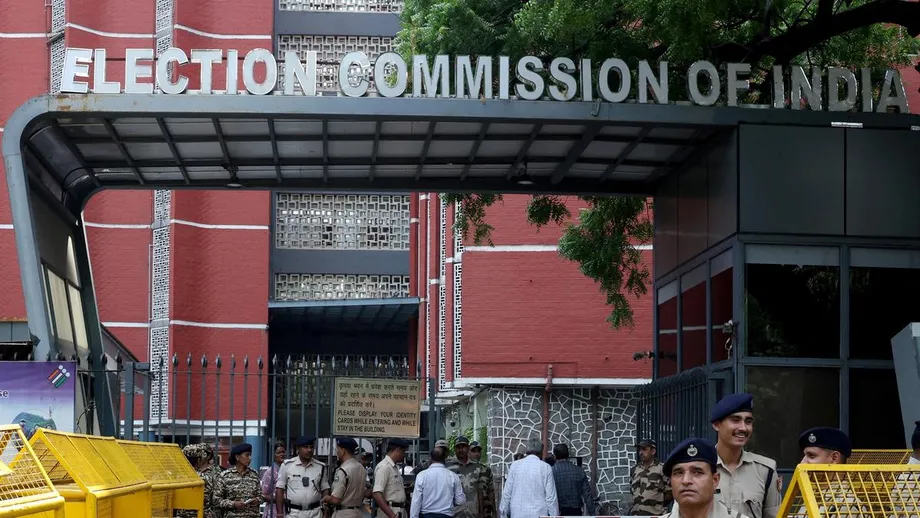
Voter lists to be revised before five states head to polls
The Election Commission of India has ordered a Special Summary Revision of electoral rolls in 17 states and Union Territories, with draft lists due on November 12, 2026, and final lists scheduled for January 4, 2027. The exercise includes Uttar Pradesh, Punjab, Uttarakhand, Manipur and Goa, where assembly elections are due early next year.
Contents
- Voter lists to be revised before five states head to polls
- Which states and territories are covered?
- The dates that determine this revision
- How registration differs from the intensive exercise
- Young voters can apply ahead of later birthdays
- Deletion requests face additional checks
- Parties will receive readable lists and records of changes
- Polling stations must be closer and easier to reach
- Staffing and public scrutiny will shape implementation
- Key Points
Announced on October 15, the revision will accept registration claims against a qualifying date of January 1, 2027. It also introduces readable PDF voter lists for political parties, tighter scrutiny of deletion requests and help centres for people who need assistance registering.
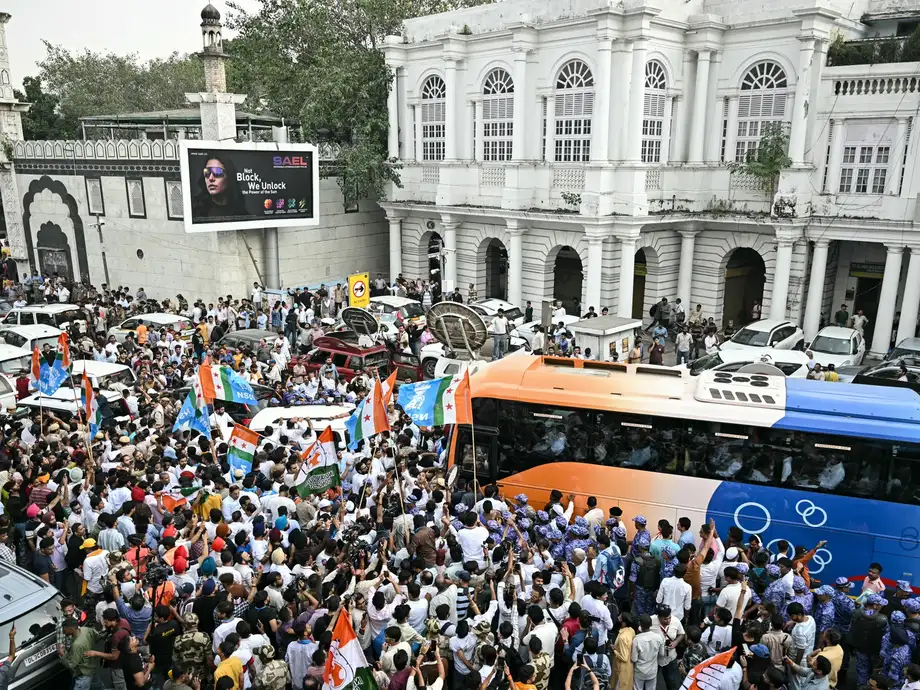
The decision comes amid protests against the separate Special Intensive Revision, or SIR, and Chief Election Commissioner Gyanesh Kumar. The controversy includes the reported deletion of 13 crore names, equivalent to 130 million entries, and objections to additional declarations required during that exercise.
The summary revision, known as SSR, updates existing electoral rolls rather than rebuilding them through the intensive process. It resumes an annual exercise that was interrupted while the Commission conducted or prepared SIR in phases across the country.
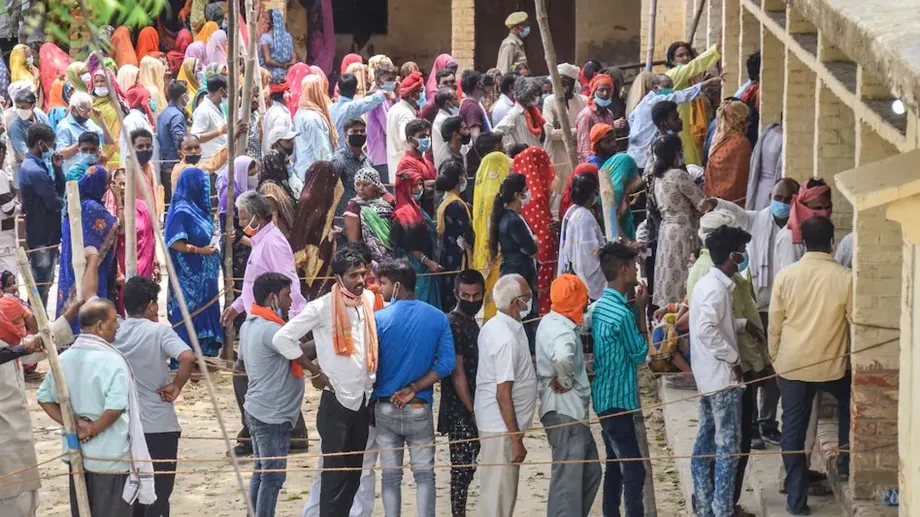
For voters, the immediate opportunity is concrete: check the draft list, apply if a name is missing and raise an objection or correction within the announced window. Booth level officers will not conduct house visits as part of this SSR. Draft and final lists will instead be displayed at polling booths.
Which states and territories are covered?
The October 15 order covers Andaman and Nicobar Islands, Assam, Bihar, Chhattisgarh, Goa, Gujarat, Kerala, Lakshadweep, Madhya Pradesh, Manipur, Puducherry, Punjab, Rajasthan, Tamil Nadu, Uttar Pradesh, Uttarakhand and West Bengal.
Five of these states have assembly terms ending in March or May 2027. Uttar Pradesh's Assembly has 403 seats and its term ends on May 22. The terms of the assemblies in Manipur, with 60 seats, Goa, with 40, Punjab, with 117, and Uttarakhand, with 70, end on different dates in March.
Together, those five assemblies contain 690 seats, of which Uttar Pradesh accounts for 403, or about 58%. Their approaching elections make the revision especially consequential for voters seeking to have their names included before polling.
The Commission will announce later schedules for Andhra Pradesh, Arunachal Pradesh, Chandigarh, Dadra and Nagar Haveli and Daman and Diu, Haryana, Jharkhand, Karnataka, Maharashtra, Meghalaya, Mizoram, Nagaland, Delhi, Odisha, Sikkim, Tripura and Telangana, where SIR is continuing or has recently finished.
Himachal Pradesh, Jammu and Kashmir, and Ladakh will also receive separate schedules. The Commission said it would take weather conditions into account in those three places, where SIR has not begun.
The dates that determine this revision
The Commission has directed the revision under Section 21 of the Representation of the People Act, 1950, which governs the preparation and revision of electoral rolls. Its timetable separates preparation of polling stations, publication of the draft and decisions on applications.
- September 29, 2026: The Commission instructed officials to conduct a special enrolment drive for people left out, young people and first time eligible voters.
- October 7: A clarification said ordinary registration forms apply outside the SIR period.
- October 9: An order set limits on Form 7 applications to discourage bulk deletion requests by individuals.
- October 15: The Commission announced SSR in 17 states and Union Territories.
- November 2: Polling station reorganisation must be completed.
- November 12: Draft electoral rolls will be published and the claims and objections period will open.
- December 11: The claims and objections window closes.
- December 28: Officials must finish deciding those claims and objections.
- January 4, 2027: Final electoral rolls are scheduled for publication.
The previous SSR schedule was issued on August 7, 2024, with final rolls published in January 2025. The new timetable restores a regular opportunity to update the rolls after the interruption associated with SIR.
How registration differs from the intensive exercise
Applicants seeking inclusion during SSR will use the ordinary Form 6 prescribed under the Registration of Electors Rules, 1960. They will not have to submit the additional SIR declaration linking themselves or their parents to an earlier intensive revision.
The additional declaration has been a central point of dispute because it required applicants to map family details to electoral rolls from roughly two decades earlier. The declaration issue is among the matters being heard by the Supreme Court.
The Commission's October 7 clarification said that this extra document applies only where SIR is being conducted. During a period outside SIR, ordinary forms govern applications. Applicants still need to meet the usual registration requirements, but the additional SIR process for establishing citizenship and links to earlier rolls does not apply.
The September 29 enrolment drive also uses the original Form 6 without the appended SIR declaration. That drive includes special camps and visits to homes by booth level officers. The SSR itself follows a different arrangement, with no such house visits.
Aadhaar is voluntary for applications to join the roll or change an existing entry. The Commission's letter expressly protects applicants who cannot provide it.
"However, no application for inclusion of name in electoral roll shall be denied, and no entries in electoral roll shall be deleted for inability of an individual to furnish or intimate Aadhaar number," the letter said.
Young voters can apply ahead of later birthdays
January 1, 2027, is the main qualifying date for this revision. A qualifying date is the date against which officials assess whether a person meets the age requirement for registration, including having turned 18.
The Commission will also accept advance applications from people becoming eligible on April 1, July 1 and October 1, 2027. Claims relating to January 1 will be decided in the current round; applications for the later dates will be handled in the relevant quarter.
A young person who turns 18 after January 1 therefore has another qualifying date to work towards during the year. The advance application arrangement allows officials to receive the paperwork before that later date rather than requiring everyone to wait for another annual revision.
District help centres will assist migrants and people from vulnerable and disadvantaged groups with registration. The Commission has also instructed officials to treat women, transgender people, Scheduled Tribes, senior citizens and people with disabilities with sensitivity.
Electoral registration officers, or EROs, are responsible for deciding applications for their constituencies. Their stated task is to include every eligible citizen while keeping ineligible people off the list. Officials must examine earlier data on the proportion of residents registered, the balance between male and female electors, and registration among people aged 18 and 19 to identify gaps.
Deletion requests face additional checks
Form 7 is used to object to an entry or seek its deletion. The Commission's October 9 order limits submissions by individual electors in response to concerns about applications being filed in bulk. The numerical cap for an ordinary individual's submissions was not specified in the announcement described here.
EROs must personally verify cases where proposed deletions exceed 2% of the electors at a polling station. They must also check cases in which the same person has objected to more than five entries.
At a station with 1,200 electors, the 2% threshold equals 24 names. Deletions exceeding that number would trigger the additional personal check. The threshold therefore links scrutiny to the size of the local voter list rather than applying one fixed number everywhere.
Each deletion requires a reasoned decision, described as a speaking order, after the affected person has an opportunity to be heard. A speaking order sets out why the official reached the decision. It must be uploaded to the Commission's ECINET platform.
No decision on a claim or objection can be taken until at least seven clear days after the relevant lists are published. Appeals can be made to the District Magistrate and then to the chief electoral officer.
The Commission's instructions also address confirmed cases involving similar personal details or photographs, permanently shifted voters and deceased voters. Removal requires Form 7 from the elector or, in the case of a deceased voter, a near relative or family member.
The Commission may return to software that flags demographically similar entries and photographically similar entries, known as DSE and PSE. These checks compare personal information or photographs to identify entries needing examination. That software was not used during SIR.
Parties will receive readable lists and records of changes
Political parties will receive draft and final rolls without photographs in readable PDF format, replacing the earlier image PDF format. The Commission also announced alphabetically arranged readable rolls for contesting candidates and recognised parties during elections.
Opposition parties have sought machine readable lists that can be searched, indexed and checked digitally. An image PDF stores a page much like a photograph; a text based document makes it easier to find names and examine entries using software. The Commission described its new format as a readable PDF.
Recognised parties will also receive supplements showing additions, deletions and modifications at the draft stage. These records were previously retained for record and future use. Sharing them gives parties both the list and a record of how it has changed.
Lists of claims and objections must be published on chief electoral officers' websites and handed to parties every week. This creates a continuing record during the application period, rather than leaving parties to inspect only the opening draft and final roll.
Booth level agents appointed by recognised parties may submit no more than 10 forms a day to a booth level officer. If an agent files more than 30 forms during the claims period, the ERO or assistant ERO must personally verify them. These are separate rules from the scrutiny triggered by an individual objecting to more than five entries.
Polling stations must be closer and easier to reach
The November 2 deadline covers reorganisation of polling stations as well as preparation for the voter list revision. Stations generally must have no more than 1,200 electors unless the Commission gives prior approval.
Voters should not have to travel more than two kilometres or cross natural barriers to reach a polling station. Stations should be on the ground floor. The Commission has directed surveys for new booths in qualifying apartment complexes, group housing premises and urban slum clusters.
For housing developments, officials are to examine premises with shared facilities or community halls on the ground floor. For residents, a booth inside or close to their neighbourhood could reduce the distance and physical difficulty of voting.
Families sharing the same door or flat number must not be split between sections of the electoral roll or between polling stations. Officials must standardise addresses and identify any notional house numbers, which are numbers assigned for organising the roll rather than existing street addresses.
These instructions connect the paperwork of registration with the practical task of reaching a booth. A correct name and address on the roll help determine where a person is assigned to vote, while station boundaries determine whether members of one household vote at the same location.
Staffing and public scrutiny will shape implementation
Chief secretaries have been directed to provide election officials with enough staff and resources. Invoking Article 324 of the Constitution, the Commission has directed that posts designated as district election officer, electoral registration officer or assistant electoral registration officer must remain filled during the exercise.
The Commission has also barred transfers of officials connected with SSR between draft and final publication without its prior approval. That period runs from November 12 to January 4, covering the receipt, examination and disposal of claims and objections.
The revision proceeds amid protests by opposition parties and youth activists demanding the removal of Chief Election Commissioner Gyanesh Kumar. Election Commissioners S. S. Sandhu and Vivek Joshi are understood to have raised the interruption of the annual SSR as an anomaly, among other issues.
For an applicant, the practical sequence is to check the November 12 draft, submit the required form within the claims period and follow the decision. For officials, the central test is whether the deadlines, hearings, verification checks and public records produce an accurate final list on January 4.
Key Points
- SSR covers 17 states and Union Territories, including five states with assembly elections due in early 2027.
- Draft rolls are due November 12, 2026. Claims and objections close December 11, and final rolls are due January 4, 2027.
- Ordinary Form 6 applies without the additional SIR declaration. Aadhaar is voluntary.
- Advance applications will be accepted for people becoming eligible on April 1, July 1 and October 1, 2027.
- Deletion requests face verification thresholds, hearings, reasoned orders and appeal routes.
- Political parties will receive readable PDF rolls and supplements recording additions, deletions and changes.
- SSR will not include house visits by booth level officers; district help centres will assist with registration.