Three months to close an enforcement gap
A team of four at Singapore's Open Government Products built Roadbuster in three months, giving Traffic Police a way to process speeding offences captured by existing red-light cameras. The tool went live on April 1, 2024, handled 120,000 speeding cases over two years and was retired in April 2026 after a permanent police system took over.
Contents
- Three months to close an enforcement gap
- Why police wanted more speed enforcement
- What Roadbuster changed behind the camera
- Several organisations had to make it work
- A faster process still included police review
- What motorists saw on the roads
- What the 66 per cent decline means
- Why a useful tool was retired
- Key Points
Its immediate task was practical: cameras could already capture images of speeding vehicles, but the police's older software could not process those images in bulk and turn them into cases for notification. Roadbuster connected those two parts of enforcement, helping officers move from a camera image to a case that could be reviewed and acted upon.
The time officers needed to process each case fell from 10 minutes to three. Open Government Products director Li Hongyi also said speeding violations fell by 66 per cent at locations where the tool was activated, with the same trend appearing at locations activated later.
The project began amid growing concern about road deaths. By January 2024, Traffic Police wanted to expand camera enforcement urgently, while a vendor was developing a permanent integrated replacement without a clear completion date. Roadbuster became the temporary system that allowed enforcement to proceed.
Why police wanted more speed enforcement
Singapore recorded 131 fatal traffic accidents in 2023, up from 104 in 2022, according to Traffic Police's annual figures. That was an increase of 27 fatal accidents, or about 26 per cent. These figures count accidents in which someone died, rather than the number of people killed.
The Traffic Annual 2023 statistical tables recorded 136 people killed in 2023, up from 108 in 2022. Total road traffic casualties rose from 8,549 to 9,077, including an increase in the number injured from 8,441 to 8,941. The fatality rate rose from 1.9 to 2.3 per 100,000 people.
A police update in September 2023 had already highlighted rising deaths associated with speeding and running red lights. Annual statistics released on February 20, 2024, then showed an uncomfortable combination: fewer violations detected by traffic enforcement cameras, but more fatal accidents.
Traffic Police said motorists were breaking the rules at places where they believed nobody was watching. Speeding and running red lights together accounted for 75 per cent of traffic violations in 2023, making those offences a central focus of the response.
Police planned to begin activating speed enforcement in red-light cameras during the second quarter of 2024. Singapore had 252 red-light cameras operating at the time, providing an existing network that could be put to wider use. Activation would be gradual, with priority given to places where accidents and violations were more common.
What Roadbuster changed behind the camera
Red-light cameras traditionally capture vehicles crossing a junction after the signal turns red. Their speed enforcement capability also allows them to detect vehicles travelling too fast, including vehicles passing through a green light. A green signal permits a driver to proceed, but the road's speed limit still applies.
The camera capability was only part of the job. Speeding cases require information about the vehicle's speed and location, and can produce a much larger volume of images than red-light offences. Police needed a reliable way to organise that material and enter it into their case management system.
Roadbuster gathered images centrally and used optical character recognition, or OCR, to extract information such as registration numbers and recorded speeds. OCR is software that reads letters and numbers in an image and turns them into text that another computer system can use.
The tool brought together registration numbers, speeds, locations and other case information in a format that could be uploaded to the police system. Officers no longer had to assemble all of that information manually for every case. The case management process could then support the steps leading to an offence notice.
Several organisations had to make it work
Open Government Products, an experimental division under Singapore's Government Technology Agency, built Roadbuster with a team of four. Its work depended on cooperation with Traffic Police, the Home Team Science and Technology Agency, known as HTX, technology vendor NCS and red-light camera supplier Jenoptik.
The organisations had to coordinate system changes and testing so that information collected from the cameras could move through Roadbuster and into police systems. A registration number or speed reading is useful to an officer only when it stays connected to the correct image, location and case.
The April 1 launch was followed by about six months of refinements to improve image accuracy and reduce errors. Development therefore continued after officers began using the tool, with the team improving how it handled the material coming from cameras.
The main milestones show how an urgent software project became part of routine enforcement before handing its work back to the permanent system:
- September 2023: A Traffic Police update highlighted rising deaths associated with speeding and running red lights.
- January 2024: Police sought an urgent way to process speeding offences from red-light cameras.
- February 20, 2024: Annual police statistics documented the rise in fatal accidents during 2023.
- April 1, 2024: Roadbuster went live as speed enforcement activation began.
- April 29, 2024: Police disclosed more than 800 speeding violations detected during the first three weeks.
- April 2026: Roadbuster was retired after the upgraded police system took over.
A faster process still included police review
A police officer reviewed every image before an offence was recorded. That human check helped guard against penalties arising from an incorrectly identified vehicle or an incorrect speed detection. Roadbuster automated the preparation of information while officers retained responsibility for reviewing the evidence.
Reducing processing time from 10 minutes to three meant a saving of seven minutes per case, or 70 per cent. For a unit handling large numbers of images, the benefit was less time spent collecting and entering details, leaving more of the workflow available for checking cases.
The three minutes referred to processing an individual case. In April 2024, police described the broader process of handling and reviewing camera footage as typically taking two to three weeks. That period covered the journey through the camera review process, rather than an officer's time on a single record.
When a violation met the criteria for a traffic offence, the vehicle's owner would be asked to provide the offending driver's particulars. Traffic Police would then issue the driver a Notice of Traffic Offence. Depending on the seriousness of the violation, consequences could include demerit points, fines, licence suspension or imprisonment, with more serious cases prosecuted in court.
What motorists saw on the roads
Traffic Police detected more than 800 speeding violations in the first three weeks after activation began, a figure disclosed on April 29, 2024. The early total showed the volume of cases that the expanded use of existing cameras could generate almost immediately.
Deputy Superintendent of Police William Foo, the officer in charge of the Traffic Police Camera Surveillance Unit, said enforcement would continue:
We will continue to step up on our enforcement and will not hesitate to take action against errant motorists who choose to flout traffic rules.
Police said activation would be progressive and would change in response to driving behaviour. Locations with more accidents or violations would receive priority. The policy gave Traffic Police a way to adjust enforcement across the island as patterns changed.
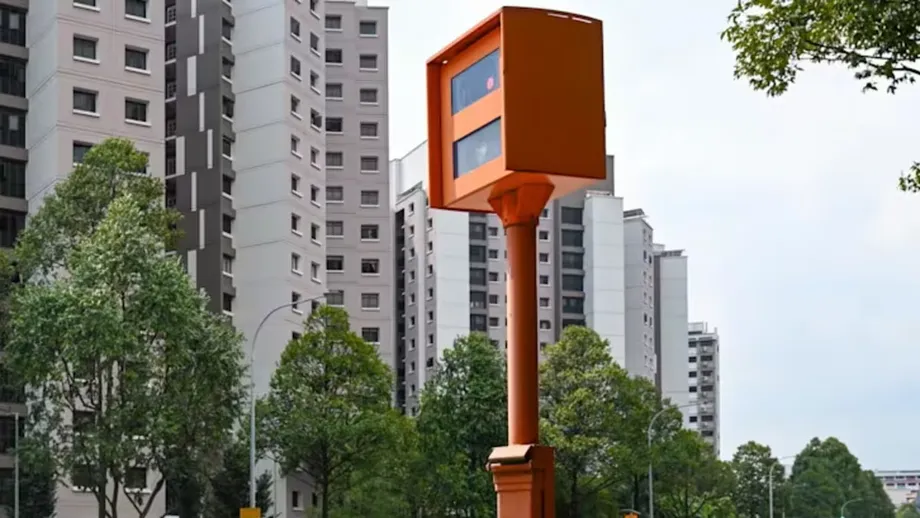
The cameras were prominently painted orange and white, with warning signs reading "Traffic Police Camera Zone" and the road's speed limit displayed above. Camera locations were also published on the Singapore Police Force website. For drivers, the practical change was that a familiar camera at a junction could enforce speed limits as well as red signals.
What the 66 per cent decline means
Li said speeding violations at locations where Roadbuster was activated fell by 66 per cent. In simple terms, a reduction of that size would take 100 violations down to about 34. He said locations activated later showed the same trend, which supported his confidence that the reduction was connected to the enforcement rollout.
The precise measurement period, starting totals and number of camera locations behind the 66 per cent figure were not specified. Those details would help readers understand the size and duration of the change. The figure describes speeding violations at activated locations; the national fatal accident figures describe a different measure across Singapore.
The two sets of figures nevertheless explain the project's purpose and its reported result. Rising fatal accidents drove the push for broader enforcement, while the later decline in recorded speeding at activated locations suggested that drivers were changing their behaviour where the cameras were operating.
Roadbuster's 120,000 cases also show why processing capacity mattered. A camera network can produce a large quantity of evidence, but officers still need that evidence organised into records they can check. The tool addressed that administrative workload while preserving review by a police officer.
Why a useful tool was retired
Traffic Police eventually upgraded their systems to handle the capability directly, ending the need for Roadbuster as a separate tool. Its retirement in April 2026 completed the temporary role it had been built to perform while the permanent system was under development.
The replacement adopted Roadbuster's interface, allowing officers to continue with a familiar workflow without downtime for additional training. Keeping the working layout meant that the change behind the scenes did not require officers to relearn the process they used to review cases.
Open Government Products securely retained a copy of the case data so it could be returned to Traffic Police if needed. The handover therefore covered both the officers' working process and access to records generated during the tool's operation.
Roadbuster's contribution was concrete: it made an existing camera capability usable at scale sooner, shortened the preparation of cases and supported two years of enforcement before a permanent replacement was ready. The police system now carries that work forward, using a workflow shaped during the temporary project's operation.
Key Points
- A team of four built Roadbuster in three months, and it launched on April 1, 2024.
- The tool organised speeding evidence from red-light cameras for upload into police case management systems.
- Officers reviewed every image, while processing time per case fell from 10 minutes to three.
- Roadbuster processed 120,000 speeding cases over two years.
- OGP director Li Hongyi said speeding violations fell by 66 per cent at activated locations.
- The tool was retired in April 2026 after an upgraded police system took over with a familiar interface.