Two Faces Can Be Cleared Together at Woodlands
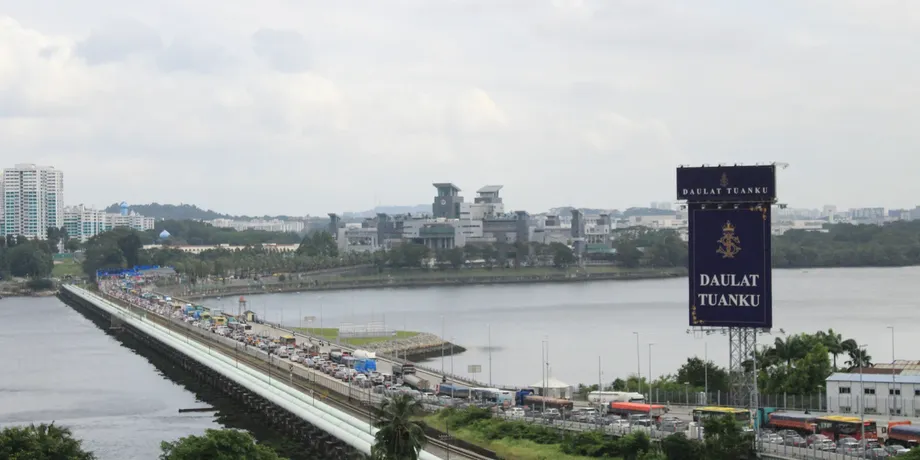
Motorcyclists and their pillion passengers can use selected car lanes for automated departure clearance at Singapore's Woodlands Checkpoint from October 15, with facial recognition checking both travellers at the same time. The Immigration and Checkpoints Authority (ICA) estimates that clearance takes about two seconds less per motorcycle, a reduction of roughly 10 per cent compared with manual lanes.
Contents
- Two Faces Can Be Cleared Together at Woodlands
- What Changes for Departing Motorcyclists?
- Who Can Use the Automated Lanes?
- What Riders Need to Do at the Lane
- Why Faces Are Replacing Fingerprints
- How the Rollout Reached the Car Lanes
- What a Two Second Saving Means
- QR Codes Still Require Passport Preparation
- Key Points
The change gives eligible riders another departure option at a busy land crossing. Singapore residents, long term pass holders and foreign visitors who have previously entered Singapore can use the lanes, subject to the requirements for automated clearance.
ICA expects the arrangement to help during peak periods because more lanes can operate without an officer stationed at every lane. The potential benefit comes from combining a shorter identity check with greater capacity to process motorcycles.
Riders must still complete several steps: uncover their faces, insert an Autopass card if their motorcycle is registered outside Singapore, scan a passport or a QR code generated through the MyICA app, and look at the screen for facial verification. They can leave once verification succeeds.
What Changes for Departing Motorcyclists?
Selected car lanes at Woodlands are being allocated to motorcycles for automated departure clearance. The October 15 change concerns travellers leaving Singapore, following earlier introductions of facial recognition in dedicated motorcycle lanes.
The system can capture and verify two faces simultaneously, allowing a rider and a pillion passenger to complete the facial check together. For people sharing a motorcycle, both need to have their faces visible before entering the lane.
ICA has not specified how many car lanes will be allocated to motorcycles or published a timetable for expanding this particular arrangement. Riders should follow the lane allocation in operation when they reach the checkpoint.
Who Can Use the Automated Lanes?
Singapore citizens, permanent residents, long term pass holders and eligible foreign visitors are covered by the automated clearance arrangements. A foreign visitor who has entered Singapore before can use facial recognition once the necessary identity records are in place.
ICA's QR code guidance says travellers using automated immigration lanes must have their biometric identifiers enrolled with ICA or the Ministry of Manpower (MOM). Biometric identifiers are physical features, such as a facial image or fingerprints, that a system uses to check a person's identity.
First time foreign visitors entering Singapore must undergo manual clearance. Travellers returning with a different passport from the one used on their previous visit must also present that passport. During manual clearance, facial images and fingerprints are scanned and recorded so that automated clearance can be used on subsequent trips.
A renewed passport therefore requires attention before the next journey. Travellers must complete the required passport presentation and update their MyICA QR code to reflect the new document.
What Riders Need to Do at the Lane
Motorcyclists and passengers should prepare before entering the automated lane. A clear view of each face allows the camera to capture the images needed for verification.
- Lift helmet visors and remove sunglasses, face masks and other accessories that cover facial features.
- Insert the Autopass card if the motorcycle is registered outside Singapore.
- Scan a passport or the QR code generated using the MyICA app.
- Look at the screen so the system can capture and verify the rider's and passenger's faces.
- Exit the lane after successful verification.
The passport or QR scan supplies the traveller's identity details. Facial recognition then checks the person in the lane against the enrolled record. Both steps form part of clearance, even when a passport does not have to be scanned.
Riders and passengers should also pay attention to instructions on the screen. ICA used feedback from trials to improve detection of covered facial features and introduce prompts asking travellers to remove obstructions.
Why Faces Are Replacing Fingerprints
Facial images are replacing fingerprints as the primary biometric identifier in automated motorcycle clearance at Singapore's land checkpoints. ICA began testing the approach in January 2026 at selected motorcycle lanes in the Woodlands arrival zone.
More than 150,000 motorcyclists and pillion passengers participated in the trials, according to ICA's media release dated March 26, 2026. ICA said their feedback, together with observations at the checkpoint, helped improve the clearance process.
Rain is one practical reason for the change. Superintendent Eliane Chee, senior assistant director of ICA's operations development branch, explained why facial recognition can help riders who arrive with wet hands:
This is especially useful on rainy days, when wet fingerprints are harder to detect,
Motorcyclists are exposed to the weather during their journey. Using a facial image reduces reliance on obtaining a readable fingerprint after rain, while the requirement to uncover the face gives the camera a clear view for the identity check.
The trials also revealed the need for direct instructions when masks or sunglasses obstructed scanning. Onscreen prompts now guide riders and passengers to remove those items so verification can proceed.
How the Rollout Reached the Car Lanes
Woodlands' latest departure option follows a staged introduction across Singapore's two land checkpoints. The March rollout began with a limited group of arrival lanes, while the expansion at Tuas later covered both travel directions.
In its March 26, 2026 announcement, ICA said facial images would become the primary biometric identifier at 18 automated motorcycle lanes in Woodlands' Arrival Zone from March 31, 2026, before being progressively extended to all 70 automated arrival and departure motorcycle lanes there. ICA originally planned to introduce the initiative at Tuas Checkpoint in the third quarter of 2026.
- January: ICA began facial recognition trials at selected motorcycle lanes in the Woodlands arrival zone.
- March 15: QR code clearance was being used by 62 per cent of motorcyclists and pillion passengers at Singapore's land checkpoints.
- March 31: Facial recognition began rolling out to 18 automated motorcycle arrival lanes at Woodlands, with an announced plan to extend it to all 70 automated motorcycle lanes there.
- September: ICA said facial recognition had expanded to all 80 motorcycle arrival and departure lanes at Tuas Checkpoint.
- October 15: Selected departure car lanes at Woodlands opened to eligible motorcyclists and pillion passengers for automated clearance.
The 70 lanes in the Woodlands expansion plan are automated motorcycle lanes. The October arrangement adds the use of selected departure car lanes, giving motorcycles access to another part of the checkpoint's clearance capacity.
What a Two Second Saving Means
ICA's estimate of about two seconds saved per motorcycle may sound small to an individual rider. Across a steady stream of motorcycles, shorter checks can help a lane process more vehicles.
The authority puts the reduction at approximately 10 per cent compared with manual clearance. Using those rounded figures, a manual check would take roughly 20 seconds and an automated check roughly 18 seconds. This calculation illustrates the scale of the estimated saving.
ICA also points to staffing flexibility: automated clearance allows more lanes to operate without placing an officer at each one. Opening more operating lanes during a peak period can provide capacity beyond the time saved on each motorcycle.
A rider's total journey still includes the queue before reaching the clearance point. The two second estimate concerns processing at the lane; the time spent approaching the checkpoint will depend on traffic and the number of lanes operating.
QR Codes Still Require Passport Preparation
The MyICA app allows travellers to create a profile and generate an individual or group QR code before reaching the checkpoint. ICA's guidance permits QR codes in place of passport presentation for eligible travellers arriving or departing by car, motorcycle, lorry or bus at Woodlands and Tuas.
To generate a code, travellers need a phone with the MyICA app downloaded from the official Apple App Store or Google Play. They also need their passport details, or Singpass where available to Singapore citizens, permanent residents and long term pass holders.
According to ICA's March 26 announcement, as of March 15, 2026, 62 per cent of motorcyclists and pillion passengers were using QR clearance at Singapore's land checkpoints. That left 38 per cent using other clearance methods, showing there was still room for wider adoption as facial recognition expanded.
ICA has encouraged more travellers to use the app, while reminding them to keep their travel documents with them. The authority stated:
Travellers must continue to carry their passport as ICA may still require them to produce their passport for verification.
Travellers who change passports must update their QR code or it will be rejected during clearance. Preparing the correct code, carrying the passport and uncovering the face are the practical steps riders can take before reaching the automated check.
Key Points
- Selected Woodlands departure car lanes opened to eligible motorcyclists and pillion passengers from October 15.
- Facial recognition can verify the rider and passenger simultaneously.
- ICA estimates clearance is about 10 per cent faster than at manual lanes, saving roughly two seconds per motorcycle.
- Riders and passengers must lift visors and remove sunglasses, masks and other facial obstructions.
- Foreign motorcycles require an Autopass card, followed by a passport or MyICA QR scan and facial verification.
- First time foreign visitors and travellers returning with a different passport must complete the required manual clearance before using QR clearance on later trips.
- Travellers must continue to carry their passports, including when using a QR code.