A new office brings AI testing and public services closer together
Anthropic opened its fifth Asia-Pacific office in Singapore on October 14, 2026, pairing its commercial expansion with a government agreement covering artificial intelligence safety, security, model evaluation and incident response. The company says more than 1,500 engineers and technical staff at Singapore's Government Technology Agency already use Claude Code, while its Economic Index places Singapore second among 121 countries for Claude.ai use relative to population.
Contents
- A new office brings AI testing and public services closer together
- What the government agreement covers
- Why new models need safety evaluations
- Singapore wants faster answers when incidents occur
- Three years of testing before the office opened
- What the Singapore team will do
- How government agencies are using Claude
- Banks, investment teams and technology companies expand use
- What heavy use means for Singapore's workforce
- Key Points
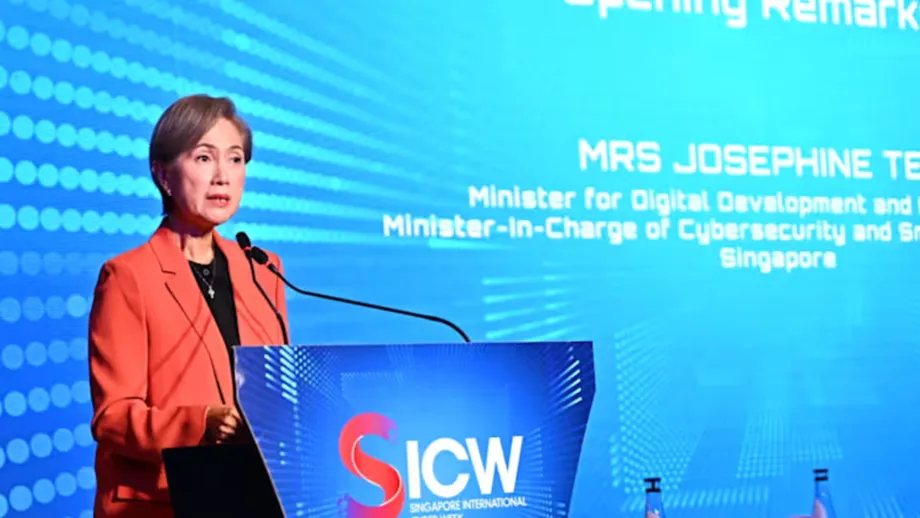
The office is in Raffles Place, Singapore's business district. The launch event took place at Capella Singapore, a day after Anthropic co-founder Benjamin Mann and Chng Kai Fong, permanent secretary at the Ministry of Digital Development and Information, signed the memorandum of understanding during Singapore International Cyber Week. Digital Development and Information Minister Josephine Teo and Anthropic's Asia-Pacific policy head, Michael Sellitto, witnessed the signing.
Anthropic's Singapore office announcement sets out a partnership that joins practical adoption with technical scrutiny. The company plans to exchange information on testing standards, share research on AI use and help businesses and public officers develop the skills to use the technology responsibly.
Singapore is already using Claude in government software development, banking, investment work, sales support and online shopping services. The agreement brings those expanding uses alongside a central government concern: understanding what increasingly capable AI systems can do, where they might cause harm and how quickly developers will share information when something goes wrong.
What the government agreement covers
The Ministry of Digital Development and Information and Anthropic have identified three broad areas of cooperation: AI safety, security and model evaluation; research into adoption and its effects; and responsible use across government and business. Technical exchanges will cover evaluation methods, testing standards and responses to incidents.
Chng, the ministry's permanent secretary, described public confidence as a condition for wider adoption:
Singapore's approach to AI has always been to enable innovation while keeping pace with its evolving risks. Trust is critical for businesses, workers, and the public to use AI with confidence.
Anthropic also plans to provide technical and policy expertise as Singapore develops its AI rules. It will look for ways to help small and medium-sized businesses adopt AI and support the government's effort to build AI capability among public officers.
The memorandum sets out areas for cooperation rather than a detailed operating schedule. No dates were announced for the technical exchanges, research releases or a completed incident response process. Those practical arrangements will determine how the partnership works beyond the signing ceremony.
Why new models need safety evaluations
Mann told the Builder Summit at Capella Singapore that training a new AI model does not give its developers a complete picture of its abilities. Training is the process through which a model learns patterns from data; evaluation comes afterward and during development to test how it behaves on particular tasks.
Mann, Anthropic's co-founder, identified Singapore's AI Safety Institute as a potential partner in examining those abilities and risks:
When we train a new model, nobody really knows exactly what its capabilities are. Working with AI safety institutes like the new one in Singapore, as well as those around the world, is very important to understanding the risks and benefits of these new models as they're being developed.
Anthropic says it conducts similar exchanges with safety institutes internationally. Sharing technical information can give governments a closer view of powerful models and help developers improve their testing. In plain terms, the work involves checking what an AI system can reliably do, identifying dangerous behaviour and agreeing on how problems should be handled.
Sellitto said Singapore does not receive priority access to unreleased Anthropic models. Organisations in Singapore can apply to the company's cyberverification programme to access its latest launched models for internal cybersecurity testing. The programme offers a route for testing security uses, while the government partnership provides a broader channel for cooperation.
Singapore wants faster answers when incidents occur
K Shanmugam, Singapore's senior minister and coordinating minister for national security, called on major technology companies to share information more quickly as AI risks grow. His comments on October 13 put speed and transparency at the centre of the government's expectations.
Shanmugam described Singapore's request to technology firms in direct terms:
The key ask from Singapore, as well as many of the other countries, was: when some things happen, can we have full transparency immediately?
Sellitto said Anthropic was committed to sharing information about cyberincidents as quickly as it responsibly could and to helping governments understand and regulate the technology. He was also responding to Prime Minister Lawrence Wong's call for a global independent body to govern AI.
Incident response is therefore a practical part of the memorandum. When an AI system is involved in a security problem, officials and developers need information about what happened and how to contain it. Singapore's request for immediate transparency and Anthropic's commitment to responsible disclosure put the timing of that information exchange at the heart of future cooperation.
Three years of testing before the office opened
Anthropic's relationship with Singapore began in 2023, when it joined the Generative AI Evaluation Sandbox run by the Infocomm Media Development Authority (IMDA) and the AI Verify Foundation. A sandbox is a controlled setting where organisations can try evaluation methods and learn how systems behave before using them more widely.
Anthropic later worked with the two organisations on a red-teaming project in English, Mandarin, Malay and Tamil. Red teaming means deliberately challenging a system to find weaknesses, including unsafe responses or failures under difficult instructions. Testing across four languages helps examine behaviour beyond English.
Singapore has also developed partnerships with other major AI companies. The sequence shows how the Anthropic agreement fits into a wider programme of adoption and safety work:
- 2023: Anthropic joined the Generative AI Evaluation Sandbox run by IMDA and the AI Verify Foundation.
- May 2026: Singapore signed an agreement with OpenAI to support applied AI innovation.
- June 2026: IMDA and Microsoft signed a memorandum on AI safety and security.
- October 13, 2026: Anthropic and the digital ministry signed their memorandum during Singapore International Cyber Week.
- October 14, 2026: Anthropic announced the agreement and launched its Singapore office at Capella Singapore.
GovTech is also working with Google DeepMind on detecting scams directly on devices as they happen. Together, these projects connect Singapore's interest in AI development with specific public service and cybersecurity needs.
What the Singapore team will do
Anthropic's Singapore office follows its offices in South Korea, Japan, India and Australia. Dale Finlay, its general manager for ASEAN, said the local focus is on bringing the company's products to customers and expanding a team that already serves government organisations, large businesses, technology companies and startups.
Anthropic listed 12 local vacancies as of October 14, spanning sales, marketing, recruitment and finance. The company did not disclose its current Singapore headcount or its target team size.
Finlay pointed to Singapore's technical talent, research institutions and expectations for reliable, secure AI as reasons for the expansion. In the company's announcement, he explained what a permanent local presence would mean:
We're committed to Singapore for the long term. Our customers here hold AI to an extremely high standard, especially when it comes to reliability and security. Having a team on the ground means we can get even closer to the organizations putting Claude to work on their hardest problems.
Anthropic also brought its developer community together during the launch week. More than 300 developers attended Builder Summit Singapore, and more than 700 attended a community meetup earlier in the week. Those gatherings connect the office opening with people already building products and services using Claude.
How government agencies are using Claude
GovTech's adoption is one of the clearest measures of Claude's existing role in Singapore. According to Anthropic, more than 1,500 engineers and technical staff use Claude Code to modernise government systems and accelerate software delivery.
Claude Code is an AI tool that assists with software work, including writing and debugging code. Anthropic says it helps GovTech teams build and maintain digital services more efficiently at national scale. The adoption figure describes the number of technical users; the announcement gives no numerical measure of time saved by GovTech.
Singapore's Cyber Security Agency is exploring how Claude could support the country's cyber defence. That work is at an exploratory stage, while GovTech's software development use is already underway. The two applications illustrate different roles for the technology: helping create public services and assisting efforts to protect digital systems.
Mann said Anthropic's early models were too limited to support substantial government collaboration when the relationship began three years earlier. His account links the current adoption to improving model capabilities, while the memorandum adds a channel for studying the risks that accompany those improvements.
Banks, investment teams and technology companies expand use
DBS uses Claude in its Singapore operations for software development and everyday productivity, Anthropic says. Those applications operate within the bank's security and governance framework. GIC, Singapore's sovereign wealth fund, is rolling out Claude across its investment and corporate services teams.
Anthropic says organisations in regulated sectors can run Claude through Amazon Bedrock with inference within the region. Inference is the process through which a trained model handles a request and produces an answer. Where that processing takes place matters to organisations with strict requirements for handling data.
Grab uses Claude to power BriX, its sales assistant. Anthropic says BriX saves Grab's sales teams approximately 40,000 hours each quarter and identifies new sales opportunities. If that quarterly pace continued for four quarters, it would amount to about 160,000 hours in a year, a calculation based on the company's stated figure.
Sea, the company behind Shopee, Garena and Monee, uses Claude to help Shopee's customer service chatbot respond faster and more accurately. Thousands of Sea employees also use it to write and debug code, according to Anthropic. Supabase, a developer platform with roots in Singapore, is another Claude Code user.
GIC has a financial relationship with Anthropic as well as being a customer. It first invested in September 2025 during a funding round totalling US$13 billion and led a US$30 billion Series G round in February 2026. Those amounts are the sizes of the funding rounds; GIC's individual contributions were not disclosed.
What heavy use means for Singapore's workforce
Singapore ranks second among 121 countries in Anthropic's latest Economic Index for Claude.ai usage relative to population. The company's estimate puts use at 5.81 times the level expected from Singapore's population size, showing a high concentration of activity in a relatively small market.
The Economic Index analyses anonymised Claude conversations to study how AI is used across occupations, industries and everyday tasks. Under the memorandum, Anthropic plans to share research and data from the initiative with Singapore's government, giving the partnership a way to examine adoption alongside technical safety.
Mann said large job displacement caused by AI was inevitable, although Anthropic had not yet seen it happening. His statement was a forecast about employment, set against current examples such as coding assistance, sales support and customer service automation.
Singapore's existing uses show why the workforce part of the agreement matters. GovTech engineers are using AI to speed software work, Grab is reporting hours saved by a sales assistant, and Sea employees are receiving help with code. Studying which tasks change, how organisations use the saved time and what skills workers need will help explain how adoption affects employment.
The partnership brings those questions into the same framework as model evaluation and incident response. Its next practical steps are technical exchanges, research sharing and support for responsible adoption. Singapore is combining a growing base of AI users with direct cooperation on testing, while Anthropic is building a local business presence in one of its most active markets.
Key Points
- Anthropic opened its Raffles Place office on October 14, 2026, its fifth office in Asia-Pacific.
- The government memorandum was signed on October 13 and covers AI safety, security, evaluation, adoption research and incident response.
- More than 1,500 GovTech engineers and technical staff use Claude Code, according to Anthropic.
- Singapore ranks second among 121 countries for Claude.ai use relative to population, at 5.81 times the expected level.
- Local users include DBS, GIC, Grab and Sea, with applications ranging from coding to customer service and sales support.
- Anthropic listed 12 Singapore vacancies but did not disclose its local team size or hiring target.
- No implementation dates were announced for the planned technical exchanges and research sharing.