Three economies separated by just $53.5 billion
India is projected to become the world's fourth largest economy in 2027, with output of $4.5211 trillion, narrowly ahead of the United Kingdom at $4.4889 trillion and Japan at $4.4676 trillion, according to the International Monetary Fund's October 2026 World Economic Outlook.
Contents
- Three economies separated by just $53.5 billion
- How the projected order changes
- Why the expected crossover has moved
- What is supporting India's growth?
- Why India's GDP calculations are under scrutiny
- Oil costs test India's resilience
- Japan faces pressure from prices and demographics
- AI investment creates gains and financial risks
- A larger economy, with household gains still central
- Key Points
The forecast would move Japan from fourth place in 2026 to sixth in 2027, leaving the United States, China and Germany as the world's three largest economies. India's projected lead over Japan is $53.5 billion, about 1.2% of Japan's expected output. The British lead over Japan is smaller still, at $21.3 billion.
India's advance combines stronger economic growth with changes in prices, currencies and national statistics. The IMF now expects Indian growth of 7% in both financial years ending March 2027 and March 2028. Japan's growth is forecast at 0.7% in 2026, as expensive energy, inflation and an ageing population weigh on activity.
The rankings measure nominal gross domestic product, or GDP, in US dollars. GDP is the value of goods and services produced within an economy. Nominal GDP uses current prices, and converting it into dollars makes exchange rates part of the calculation.
For households, the more immediate issue is what happens to purchasing power. India's stronger forecast comes alongside projected inflation of 5%, while Japanese consumers face higher import costs and interest rates at their highest level in three decades. The competition for fourth place therefore sits beside a shared challenge: keeping economic activity growing while energy becomes more expensive.
How the projected order changes
Japan is expected to retain fourth place in 2026, with nominal GDP of $4.3419 trillion. The United Kingdom follows at about $4.27 trillion, ahead of India at $4.0602 trillion.
India would move from sixth to fourth in a single year under the forecast. Japan would fall two places even though its dollar GDP is projected to increase. The change reflects faster increases elsewhere, rather than a projected fall in Japan's total dollar output.
India's nominal GDP is forecast to rise by $460.9 billion between the two estimates, while Japan's increases by $125.7 billion. Those figures represent increases of about 11.4% and 2.9%, respectively. They include price and currency effects, which explains why they differ from the headline growth rates of 7% and 0.7%.
The narrow margins also make the order sensitive to revisions. The 2027 positions remain forecasts, with final rankings dependent on economic results and the exchange rates used to convert national output into dollars.
Why the expected crossover has moved
India's anticipated arrival in fourth place has already shifted across forecast rounds. Earlier projections placed the crossover in 2025, while the latest outlook puts it in 2027. The United Kingdom's expected move ahead of Japan has been brought forward from an earlier projection of 2029.
Indian officials had described fourth place as achieved in December 2025, citing government calculations and IMF projections. At the time, the IMF's April 2025 figures put India at $4.187 trillion and Japan at $4.186 trillion, a projected difference of only $1 billion. The latest estimates replace that earlier ordering.
The earlier fourth place announcement therefore belongs to a previous set of estimates. A short timeline shows how the outlook has developed:
- April 2025: IMF projections put India marginally ahead of Japan in 2025.
- December 30, 2025: Indian officials described India as the fourth largest economy, while final annual figures were still awaited.
- July 2026: The IMF's forecast for Indian growth in the financial year ending March 2027 stood at 6.4%.
- October 2026: The IMF raised that growth forecast to 7% and projected India would pass Japan in 2027.
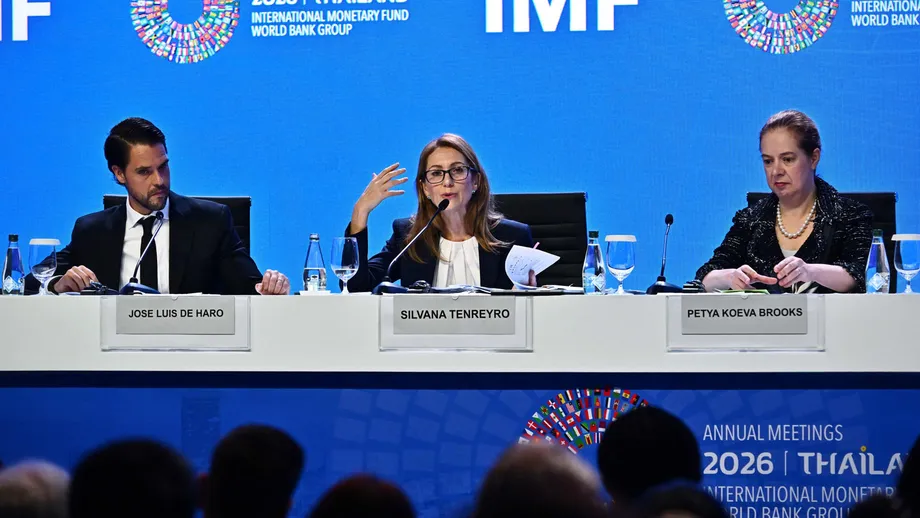
- October 15, 2026: The IMF presented its regional outlook for Asia and the Pacific in Bangkok.
Exchange rates help explain why a stronger growth forecast can arrive alongside a later crossover date. An economy can produce more in its own currency while a weaker currency reduces the dollar value used in international rankings.
What is supporting India's growth?
India's economy expanded by 7.8% from a year earlier in the April to June quarter, the first quarter of the financial year ending March 2027, according to government data. That performance gave forecasters a stronger starting point for their annual estimates.
The IMF attributes its upgrade to resilient domestic demand and robust services activity. Domestic demand means spending inside the country by households, businesses and government. A large home market gives companies customers even when overseas conditions become more difficult.
The IMF also identifies India's population trends, expanding domestic market and continuing economic reforms as supports for growth. These factors underpin its forecast of another 7% expansion in the financial year ending March 2028, an increase from its previous estimate of 6.7%.
The Reserve Bank of India has raised its own growth forecast for the financial year ending March 2027 to 7.1%, from 6.7%. Its estimate is slightly above the IMF's, but both point to sustained expansion near 7%.
India's latest growth upgrade is substantial: the IMF's forecast for the financial year ending March 2027 is 0.6 percentage points higher than its July estimate. India's financial year runs from April through March, while the IMF's global growth figures refer to calendar years.
Why India's GDP calculations are under scrutiny
India's revised GDP series uses the financial year ending March 2023 as its base year. A base year provides a reference for measuring economic output and separating changes in production from changes in prices. Updating it helps statistical calculations reflect a changing economy.
Krishna Srinivasan, director of the IMF's Asia and Pacific Department, welcomed the revision and said the approach followed advice from the institution's statistics department. He also acknowledged work by India's Ministry of Statistics and Programme Implementation while leaving room for further improvements.
In terms of GDP numbers, what they have done is consistent with good practices. I would say there's always room for improvement, but let's recognise the good work done by MOSPI (Ministry of Statistics and Programme Implementation) for improving GDP statistics.
The revision has become politically contentious. Former finance secretary S C Garg alleged that the government had compressed the previous year's figures, making the latest growth rate appear higher. Opposition parties subsequently challenged the credibility of the statistics.
Chief Economic Adviser V Anantha Nageswaran rejected Garg's analysis as "cherry-picking". He said the new base year and methodological changes had also required revisions to quarterly figures for the previous year. Revising earlier figures changes the starting point against which later growth is calculated, making the treatment of both periods central to the dispute.
Oil costs test India's resilience
The energy shock linked to the US-Israel war on Iran has increased pressure on countries that import oil, including India. More expensive crude raises the import bill and can feed into transport, manufacturing and household costs.
Srinivasan said India entered the disruption with strong growth, fiscal restraint and substantial reserves. At the regional outlook presentation in Bangkok, he described the country's response:
India entered this with very strong fundamentals," he said. "Growth was strong, fiscal prudence was pretty much enshrined, they had lots of reserves and so on. And so in that context, they have responded well to the shock.
The IMF projects Indian consumer inflation at 5% in the financial year ending March 2027, up from 2% in the preceding year, before easing to 4.4% in the year ending March 2028. Faster price increases mean families need more money to maintain the same level of spending.
India's current account deficit is projected to widen from 0.7% of GDP to 1.5% over the same first two years, before narrowing to 1.3% in the following year. The current account records trade in goods and services alongside income and transfers. A larger deficit means India needs more financing from abroad to cover the gap.
The IMF's regional outlook also identifies India among economies whose currencies came under pressure after the energy shock. India intervened in foreign exchange markets, and the pressure partly eased in recent months. Srinivasan said exchange rates respond to global interest rates, investor willingness to take risks and oil prices, helping explain the currency pressure alongside strong domestic growth.
Japan faces pressure from prices and demographics
Japan's projected growth of 0.7% in 2026 reflects a much slower expansion than India's. An ageing population weighs on economic activity, while rising energy costs and a weak yen make imported goods more expensive.
Japanese consumer prices have increased steadily since spring 2022, following years when falling prices were a persistent concern. Energy price increases associated with the Iran war have added to that inflation.
The yen reached its weakest level against the dollar in 40 years over the summer. A weaker yen means importers need more Japanese currency to buy goods priced in dollars. It also reduces the dollar value of Japan's GDP, putting pressure on its international ranking.
The Bank of Japan has raised interest rates to their highest level in three decades. Higher rates make borrowing more expensive, affecting spending decisions by households and businesses already dealing with higher prices.
Japan nevertheless performed better in the second quarter than IMF staff had expected. Government support helped cushion the impact of expensive energy. That stronger quarter sits alongside the slower annual outlook and shows that public support is helping absorb part of the shock.
AI investment creates gains and financial risks
Investment in artificial intelligence is supporting parts of Asia's economy, but the benefits are uneven. Srinivasan said Japan was gaining from the investment boom, although less than some regional neighbours.
South Korea provides a comparison. The IMF raised its growth forecast to 3.3% for 2026, with semiconductor exports and products linked to AI helping drive activity. That compares with Japan's projected 0.7% expansion.
Deniz Igan, a division chief in the IMF's Research Department, said AI investment and favourable terms of trade were contributing to uneven global growth. Terms of trade describe the relationship between the prices a country receives for exports and the prices it pays for imports.
Igan also warned about excessive optimism over AI's economic returns. Tokyo's Nikkei index fell nearly 5% on October 15 as technology shares declined amid doubts about profitability in the sector. For businesses, the spending boom brings orders and investment, while investors are also demanding evidence that the spending will generate earnings.
A larger economy, with household gains still central
India's projected growth stands well above the IMF's forecasts for other large economies. The institution expects China to grow by 4.5% in 2026 and 4% in 2027, while US growth is projected at 2.3% in 2026. Global growth is forecast at 3.1% in 2026 and 3.4% in 2027.
The global backdrop remains difficult. The October World Economic Outlook, subtitled "Resilience Under Strain, Urgent Choices", projects worldwide inflation of 4.7% in 2026 as higher energy and food prices put pressure on budgets.
Fourth place would give India greater weight in the world economy. With more than 1.4 billion people, it also has a much larger population across which to spread that output. Economic output per person remains far below Japan's, keeping better jobs, higher incomes and affordable essentials central to the domestic challenge.
Japan's projected move to sixth place similarly combines several changes: slow real growth, population ageing and the dollar effect of a weak currency. Its expected dollar GDP still rises between 2026 and 2027. For both countries, the practical test is how growth translates into spending power and investment while energy costs remain high.
Key Points
- The IMF projects India will rank fourth in 2027 with nominal GDP of $4.5211 trillion.
- The United Kingdom is forecast to rank fifth at $4.4889 trillion, ahead of Japan at $4.4676 trillion.
- Japan is expected to remain fourth in 2026, ahead of both countries.
- India's growth is forecast at 7% in each of the financial years ending March 2027 and March 2028.
- The IMF welcomed India's revised GDP methodology amid a domestic dispute over the figures.
- Higher energy prices, inflation and currency movements affect both the rankings and household budgets.
- The projected order remains sensitive to economic results, statistical revisions and exchange rates.